로마의 미망인, The Roman Widow (Dîs Manibus)
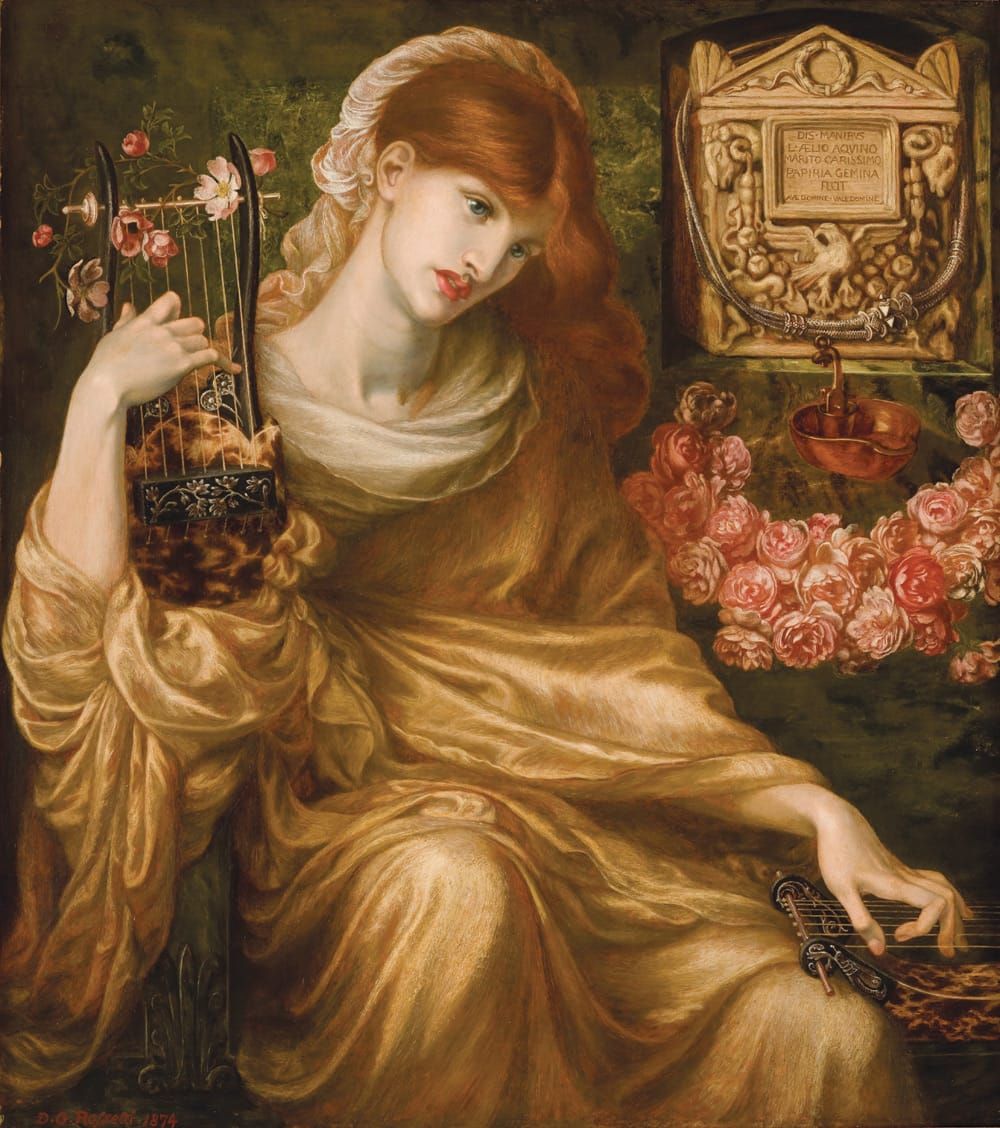
19세기 영국 라파엘로 전파의 거장 단테 가브리엘 로세티(Dante Gabriel Rossetti, 1828–1882)가 1874년에 완성한 기념비적 상징주의 유화 로마의 과부 (디스 마니부스)(The Roman Widow (Dîs Manibus), 공식 소장품 등록번호: 60.0149)는 105.4 cm × 92.7 cm 크기의 캔버스에 유채로 그린 대표적인 후기 최고 걸작입니다.
푸에르토리코의 루이스 A. 페레 재단(The Luis A. Ferré Foundation)의 소장을 거쳐, 현재 푸에르토리코의 세계적인 폰세 미술관(Museo de Arte de Ponce)에 영구 소장되어 보존되어 오고 있습니다.
작가의 고뇌/비하인드
1874년 런던에서 활동하던 단테 가브리엘 로세티는, 고대 로마 시대의 장례 문화와 죽은 남편을 그리워하는 과부의 슬픔을 음악적 애도라는 주제로 결합하여 화폭에 담고자 깊은 몰두에 빠졌습니다.
화가는 세속의 화려함을 모두 거부하고, 남편의 유골함 옆에서 두 개의 작은 하프(리라)를 연주하며 사색에 잠긴 여인의 처연한 모습을 자신의 가장 완벽한 뮤즈였던 알렉사 와일딩(Alexa Wilding)의 얼굴로 재현하며 치열하게 번민했습니다.
폰세 미술관의 공식 소장 도록 및 학술 기록에 따르면, 이 작품은 화면 오른쪽 상단에 새겨진 고대 로마의 유골함 비문(지하 세계의 신들에게 바치며, 파피리아 제미나가 가장 사랑하는 남편 루시우스 엘리우스 아퀴누스를 위해 만들었노라는 헌정문)과 장미 화환, 그리고 두 손으로 악기를 켜는 동작을 통해 영원한 사랑과 죽음을 초월한 기억을 상징하는 도상학적 핵심 장치로 분석됩니다.
화가는 어두운 실내와 고풍스러운 대리석 무덤 벽면을 배경으로, 상실의 아픔을 예술로 승화시키는 과부의 숭고한 순간을 화폭에 담았습니다.
화면 중앙에는 붉은 갈색 머리칼을 느슨하게 땋아 내린 여인이 흰색 베일과 황금빛 드레스를 입은 채 고개를 살짝 기울여 깊은 슬픔에 잠겨 있으며, 그녀의 창백하고 고혹적인 뺨과 붉은 입술이 비장한 아름다움을 자아냅니다.
몸에는 부드러운 질감의 황금빛 옷자락을 걸치고 있으며, 오른손으로는 장미가 얽힌 수직의 리라를 쥐고 왼손으로는 가로 방향의 작은 리라 줄을 섬세하게 뜯고 있습니다.
화면 오른쪽 상단 배경에 새겨진 묵직한 대리석 유골함과 그 아래를 장식한 풍성한 장미 화환, 그리고 붉은 잔은 고대 로마의 엄숙한 장례 분위기를 손에 잡힐 듯 생생하게 웅변합니다.
무의식 속 시선 및 심리 흐름
그림을 마주하는 순간 관람객의 무의식적 시선은 화면 중앙에서 짙은 우수와 애원 어린 그리움을 품은 채 아래를 내려다보는 여인의 창백한 얼굴과 악기 줄을 짚은 손가락의 애처로운 동작으로 가장 먼저 빨려 들어갑니다.
세상의 모든 소음이 멈춘 듯 슬픔에 잠긴 인물의 처연한 표정은 보는 이에게 강렬한 시각적 몰입감과 함께 깊은 연민의 감정을 선사합니다.
이어 시선은 그녀의 손끝을 따라 화면 오른쪽으로 이동하여 유골함에 새겨진 라틴어 비문과 주변을 감싸 안는 붉은 장미 화환의 정교한 텍스처로 자연스럽게 눈길을 건네게 됩니다.
죽음과 생명이 교차하는 장례의 공간적 엄숙함을 체감하는 순간, 관람객은 고대 로마의 신비로운 성소 속으로 온몸이 빨려 들어가게 됩니다.
마지막으로 시선은 화면 왼쪽 구석에 적힌 작가의 서명과 제작 연도(1874)를 거쳐, 화면 전체를 짓누르는 묵직하고 따스한 황금빛 대기감으로 멈춥니다.
전면 인물의 매혹적인 심리적 깊이와 후면 상징적 유골함의 조화를 마주하며, 관람객은 남겨진 자의 영원한 사랑과 그리움을 예술로 승화시킨 거장 로세티의 압도적인 조형 의지를 가슴 깊이 마주하게 됩니다.
미술계의 평가 및 조형미
미술계와 폰세 미술관 공식 도록은 이 작품을 로세티가 말년에 이뤄낸 가장 품격 있고 고전적인 아름다움이 응축된 대표적인 최고봉 마스터피스로 평가합니다.
단순한 고대 복고풍 인물화를 넘어 19세기 후반 라파엘로 전파가 지닌 극도의 장식적 완성도와 베네치아 르네상스 회화의 풍부한 색채감을 가장 완벽한 유화 기법으로 융합해 냈기 때문입니다.
인간의 영원한 사랑과 상실의 아픔을 가장 격조 높은 시각 예술로 승화시킨 로세티의 이 소중한 화폭은, 오늘날까지도 전 세계 수많은 감상자들에게 깊은 감탄과 잊을 수 없는 시각적 전율을 전해주는 불멸의 명작으로 손꼽히고 있습니다.
The Roman Widow (Dîs Manibus)
Painted in 1874 by the master of the Pre-Raphaelite Brotherhood Dante Gabriel Rossetti (1828–1882), The Roman Widow (Dîs Manibus) (Accession No. 60.0149) is a monumental symbolist masterpiece in oil on canvas measuring 105.4 cm × 92.7 cm (41 1/2 in × 36 1/2 in).
Preserved through esteemed collections including the Luis A. Ferré Foundation, it is housed today in the celebrated permanent collection of the Museo de Arte de Ponce in Ponce, Puerto Rico.
Historic Context & Arcadian/Genre Depth
During 1874 in London, Dante Gabriel Rossetti drew profound inspiration from classical Roman funerary culture, seeking to capture the poignant theme of a grieving widow performing a musical eulogy for her deceased husband.
Moving beyond conventional narrative, the master meditated deeply on how to portray the noble mourner seated beside a cinerary urn, utilizing his cherished model Alexa Wilding to embody the widow's grace and sorrow.
According to curatorial records from the Museo de Arte de Ponce, this grand canvas incorporates rich symbolic elements such as the Latin inscription on the tombstone in the upper right—dedicated to the spirits of the underworld for her dearest husband Lucius Aelius Aquinus—alongside entwined rose garlands and double lyres, serving as powerful iconographic emblems of eternal remembrance.
Rossetti staged the heavy-hearted composition against a dark, atmospheric interior setting paired with a classical stone sepulcher.
In the center, the widow is depicted seated with her rich auburn hair loosely braided, draped in a white veil and a luminous golden robe, her melancholic gaze directed downward as she plucks the strings of her instruments.
She holds a vertical lyre entwined with roses in her right hand while skillfully playing a horizontal lyre with her left hand.
In the upper-right background, the carved marble cinerary urn and lush floral wreaths complete a solemn visual allegory of devotion, loss, and classical antiquity.
Subconscious Trajectory of the Gaze
The observer's subconscious gaze is immediately magnetized by the central register, drawn to the widow's pale, sorrowful expression, her delicate profile, and her hands delicately playing the musical instruments.
Her profound vulnerability and tragic beauty establish an instant focal point of psychological intensity, emotional gravity, and narrative suspense.
The visual path then shifts upward and toward the right toward the stone cinerary urn, taking in the tactile details of the carved Latin inscription and the surrounding rose garlands.
Taking in the rich textural contrasts between the soft golden fabrics, polished wood, and classical stone, the viewer directly experiences the solemn, meditative atmosphere of a Roman memorial space.
Finally, the visual trajectory moves toward the artist's signature and date in the lower-left corner, before sweeping across the harmonious warm background.
Observing the harmonious equilibrium between classical symbolism, figural emotion, and precise Pre-Raphaelite draftsmanship, the spectator perceives the timeless poetry of grief and the profound aesthetic brilliance Rossetti embedded within the canvas.
Critical Legacy
Art historians revere the Museo de Arte de Ponce's The Roman Widow (Dîs Manibus) as a supreme milestone in Rossetti’s late oeuvre, illustrating his consummate ability to unite classical antiquity with breathtaking painterly mastery on canvas.
By orchestrating delicate textural contrasts between rich golden garments, classical marble, soft flesh tones, and shifting atmospheric shadows within a unified format, Rossetti transformed an ancient funerary tribute into an exquisite aesthetic treatise on love, memory, and artistic immortality.
This magnificent historical canvas endures as an inspiring testament to the master's creative fortitude, celebrating the quiet poetry of human endurance and the transformative grace of living art.
본 컨텐트의 저작권은 팔렛트제주에 있습니다. 허가없는 무단전제를 금지합니다.
Copyright © Palette Jeju. All rights reserved. Unauthorized reproduction or redistribution is strictly prohibited.