레다와 백조 (Leda and the Swan)
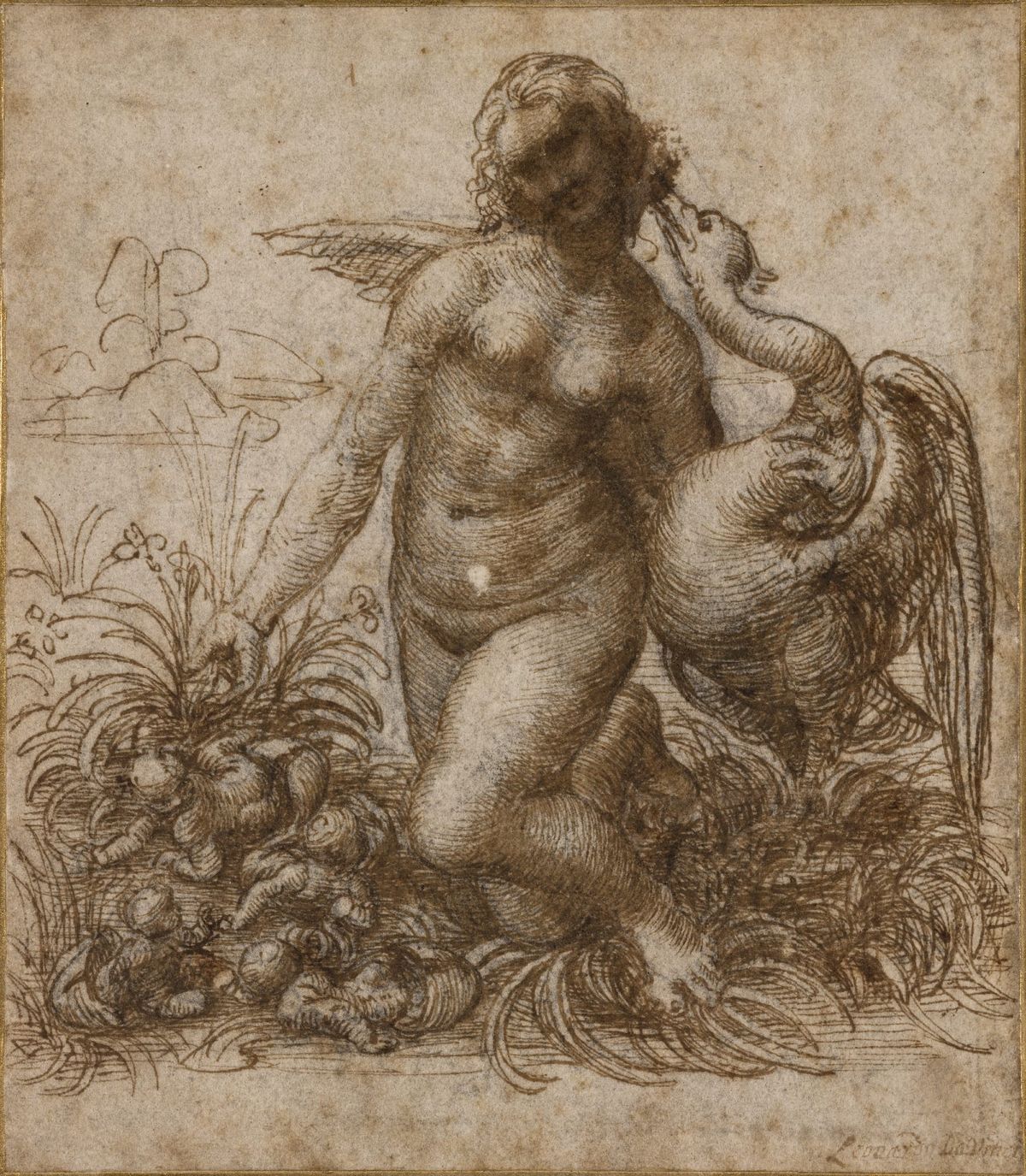
그리스 신화 속 유혹과 관능의 신화를 거장의 치밀한 생체 역학적 관점으로 재해석한 르네상스 소묘의 정수, <무릎 꿇은 레다와 백조 (Study for a Kneeling Leda and the Swan)>입니다. 이 작품은 천재 거장 레오나르도 다 빈치(Leonardo da Vinci, 1452–1519)가 1505–1507년경 완성한 준비 드로잉 유작으로, 실제 규격은 가로 13.9cm, 세로 16cm 크기이며 현재 영국 체스워스 하우스(Chatsworth House, Devonshire Collection)에 소장되어 있습니다. 종이 위에 흑연 크레용, 펜, 잉크, 워시 기법을 사용하여 백조로 변신한 제우스에게 몸을 맡긴 레다와 그 아래 알에서 막 깨어나는 아이들의 모습을 정교하게 담아낸 소묘 수작입니다.
화면 중심부에서 몸을 비틀며 무릎을 꿇고 있는 레다의 포즈는 다 빈치 특유의 '콘트라포스토(Contrapposto)' 응용과 관능적 곡선미를 극대화해 보여줍니다. 레다의 목을 부드럽게 감싸 안는 백조의 길쭉한 날개와 날개깃의 사선 해칭은 신성한 힘과 야성적 에로티시즘이 절묘하게 교차하는 지점입니다. 좌측 하단 수풀 속에는 갓 파열된 알껍데기 사이로 태어난 쌍둥이 아이들(카스토르, 폴룩스, 헬레나, 클리타임네스트라)이 오밀조밀하게 묘사되어 있어, 생명의 탄생과 생체적 유기성을 기하학적 수채 선으로 은유하고 있습니다.
이 소묘에는 거장의 실전된 명작과 관련된 극적인 미술사적 비하인드 스토리가 숨어 있습니다. 레오나르도는 생전에 '무릎 꿇은 레다'와 '서 있는 레다' 두 가지 구도로 대형 유화를 기획했으며, 특히 이 무릎 꿇은 구도는 그가 <모나리자>를 작업하던 시기에 병행하여 몰두했던 주제였습니다. 안타깝게도 다 빈치가 그린 최종 유화 완성작은 17세기 이후 왕실 소장품 목록에서 사라져 영구 실체 불명이 되었으나, 이 작은 종이 위 스케치는 거장이 기획했던 원래 유화의 생생한 아이디어와 조형 구도를 증명하는 유일무이한 원본 기록으로 남아 있습니다. 현대 미술사학자들은 이 드로잉을 인체 운동성과 신화적 상상력이 결합한 르네상스 최고의 드로잉 유산 중 하나로 평가합니다.
이 드로잉을 가만히 바라보고 있으면 감상자의 시선은 매우 독특하고 감각적인 곡선 동선을 그리며 움직입니다. 가장 먼저 백조의 날카롭고 긴 목이 레다의 뺨을 부드럽게 쓰다듬는 스킨십 지점에 시선이 강렬하게 쏠립니다. 이어 레다의 매끄러운 어깨선과 풍만한 몸통, 무릎으로 이어지는 나선형 윤곽을 따라 시선이 내려간 뒤, 좌측 하단 수풀 속에서 꼬물거리는 아기들의 조그만 형태에 머물게 됩니다. 이후 수풀의 들풀 필치와 백조의 커다란 날개 곡선을 타고 다시 위로 올라가 레다의 고개 숙인 온화한 얼굴 표정으로 되돌아옵니다. 이러한 자연스러운 무의식적 시선 순환은 인지적 피로를 풀어주며 신비로운 몰입감과 정서적 평온을 안겨줍니다.
This masterpiece, titled Study for a Kneeling Leda and the Swan, was created around 1505–1507 by the High Renaissance genius Leonardo da Vinci (1452–1519). Measuring 13.9 cm in width by 16 cm in height, this detailed pen, ink, wash, and black chalk drawing on paper is permanently preserved in the Devonshire Collection at Chatsworth House, United Kingdom. Depicting the mythological queen Leda kneeling beside Zeus transformed into a swan alongside their newly hatched infants, the sheet stands as a landmark triumph of Renaissance sensual draftsmanship.
The composition explores dynamic anatomical twisting through Leda’s sinuous, spiraling posture as she leans into the embrace of the swan. The broad, layered feathering of the swan’s wing cradles her torso, establishing a powerful harmony between divine power and erotic grace. On the lower left, nestled amidst detailed botanicals, her infant quadruplets emerge from cracked eggshells, demonstrating Leonardo’s matchless ability to integrate mythic narrative with organic biological observation.
Fascinating historical stories elevate the legacy of this rare preparatory sheet. Leonardo intensively studied two distinct compositions for the story—a standing version and this kneeling arrangement—during the same period he was at work on the Mona Lisa. Although the final oil painting executed by Leonardo’s own hand was tragically lost or destroyed by the 17th century, this surviving autograph sheet serves as indispensable primary evidence of his original master concept. Today, art historians revere the drawing as one of Leonardo's most vibrant and inventive studies of kinetic human grace.
Engaging with this intimate drawing guides the viewer through an expressive, winding visual path. The eye is initially captured by the dramatic point of contact where the swan’s neck curves over Leda’s shoulder. The view glides effortlessly down the spiraling contour of her torso and thigh to inspect the delicate infants nestled among the grasses at the bottom left. Sweeping back upward along the dramatic curve of the swan’s wing, the gaze returns naturally to Leda’s serene, downcast face, completing a soothing visual loop that invites quiet fascination and aesthetic tranquility.
본 리뷰에서 작품을 제외한 컨텐츠의 저작권은 팔렛트제주에 있습니다.
"퍼블릭도메인 고전명화"를 제외한 모든 창작 콘텐츠는 저작권법 제4조 및 제10조에 의거하여 보호됩니다. 무단 도용시 저작권법 제136조(벌칙)에 의거, 당사의 사전 서면 승인 없는 저작권 침해 행위를 금지합니다.