라자로의 부활: 작은 판본(The Raising of Lazarus: Small Plate)
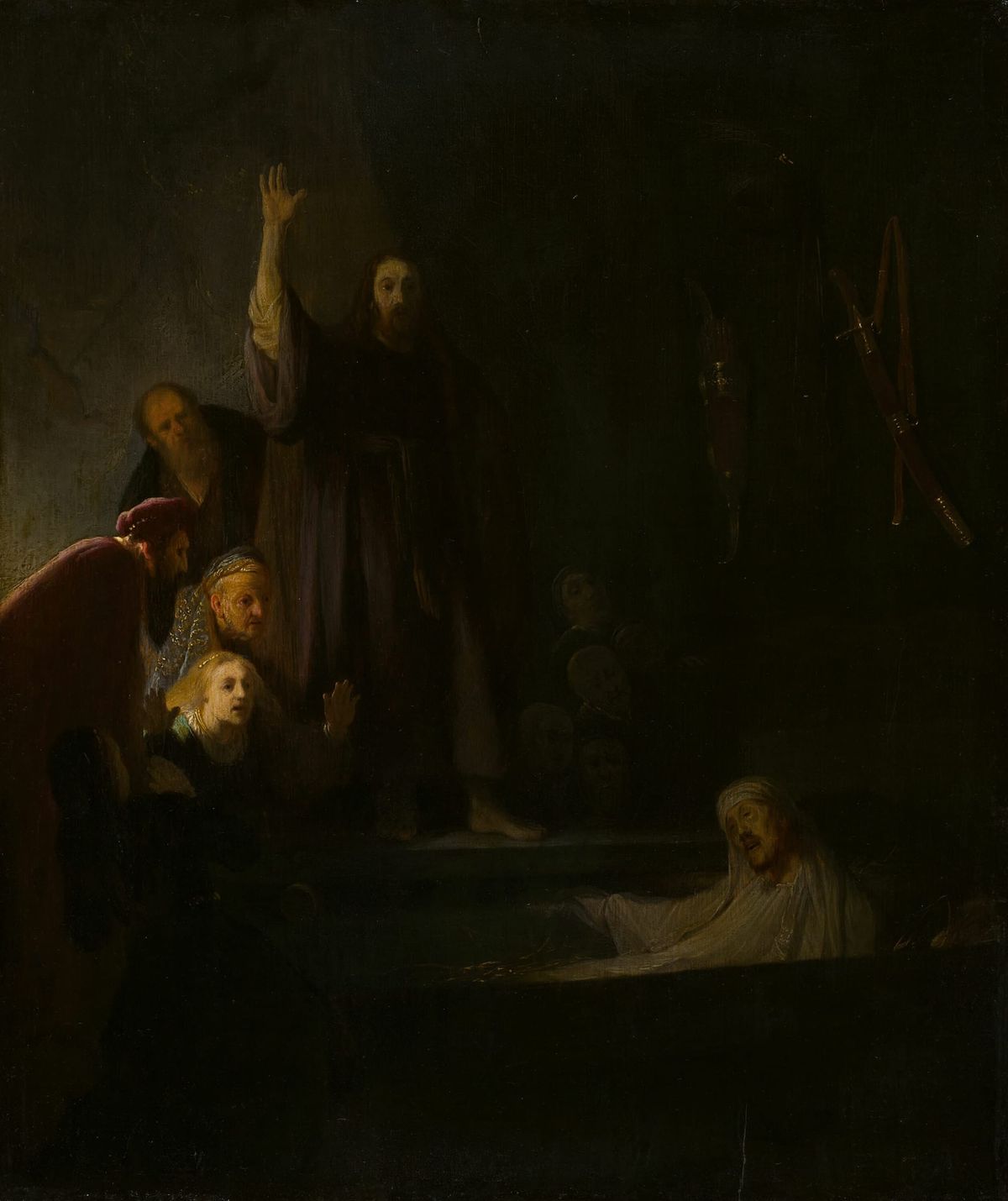
라자로의 부활 - The Raising of Lazarus
1630년경 17세기 네덜란드 황금기를 대표하는 거장 렘브란트 반 레인(Rembrandt van Rijn)이 제작한 유화 작품 《라자로의 부활》은 패널에 유채로 그려진 종교 역사화로, 현재 미국 로스앤젤레스 로스앤젤레스 카운티 미술관(LACMA)에 소장되어 있으며 실제 크기는 약 96.2 × 81.3 cm입니다.
이 화면은 요한복음 11장에 등장하는 예수 그리스도가 죽은 지 나흘이 지난 라자로를 무덤에서 일으켜 세우는 기적의 순간을 렘브란트 초기 특유의 연극적이고 극적인 명암대비법(키아로스쿠로)으로 포착해 낸 걸작입니다. 화가는 손을 들어 올려 기적을 명령하는 그리스도의 신성한 동세와, 어두운 무덤 속 석묘에서 천에 싸인 채 천천히 몸을 일으키는 라자로, 그리고 이를 목격하고 놀라움과 경외감에 휩싸인 관중들의 다채로운 표정을 화면 속 연극적인 빛으로 부각시켰습니다.
작품 속에는 렘브란트가 레이던 시절 동료 화가 얀 리벤스(Jan Lievens)와 경쟁하며 대담한 연출력을 시험했던 비하인드 스토리가 흐릅니다. 렘브란트는 성서의 기적 사건을 장엄한 거대 성화가 아닌, 동굴 무덤이라는 어둡고 밀폐된 공간 속에 연극 무대처럼 배치했습니다. 오른쪽 벽면에 걸린 무기류와 활통 등의 이국적인 소품, 그리스도의 손짓 하나로 무덤 전체로 퍼져나가는 초자연적인 빛의 연출은 생명과 죽음이 교차하는 순간의 극적 긴장감을 배가시킵니다.
후대 평단과 관객들은 이 작품을 렘브란트 청년기 종교화가 보여주는 극적 명암 연출과 인물 심리 묘사의 정수로 평가합니다. 어둠을 뚫고 터져 나오는 초자연적인 빛의 줄기와 경악에 찬 군중의 손짓은 관객에게 시대를 초월한 신성한 감동과 압도적인 몰입감을 선사합니다.
이 그림을 마주하는 관람객의 무의식적 시선은 가장 우뚝 서서 오른손을 높이 들어 올린 그리스도의 손과 신성한 신체 윤곽으로 가장 먼저 끌려갑니다. 어둠 속에서 높게 들린 손짓과 정숙한 그리스도의 모습은 관람객의 마음에 강렬한 시각적 중심점과 숙연한 평온함을 선사합니다.
이어 시선은 그리스도의 손이 지휘하는 빛의 방향을 따라 아래로 흘러, 석묘 안에서 신의 부름에 응하듯 스의르르 고개를 일으키는 라자로의 흰 세마포 천과 아연실색한 표정으로 이동합니다. 우측 하단에서 서서히 깨어나는 라자로의 동세와 좌측에서 손을 벌리며 경악하는 마르다와 마리아 등 군중의 실루엣은 화면 전체에 시각적 긴장감과 극적인 풍성함을 더해줍니다.
마지막으로 시선은 우측 상단 어둠 속에 걸려 있는 칼과 활통의 이국적인 윤곽, 그리고 무덤 깊은 곳을 둘러싼 깊은 어둠 속으로 낙하하여 정착합니다. 이러한 무의식적 시선의 흐름은 죽음을 넘어서는 기적의 안식처로 감상자를 자연스럽게 인도하며, 마음에 닿는 차분하고 정갈한 여운을 오래도록 남깁니다.
In 1630, Rembrandt van Rijn, one of the paramount masters of the Dutch Golden Age, created the theatrical oil painting titled "The Raising of Lazarus." Preserved in the Los Angeles County Museum of Art (LACMA), this original panel measures approximately 96.2 × 81.3 cm. This artwork finely captures the miraculous moment of resurrection through a dramatic, early application of chiaroscuro.
The painting visually manifests the biblical narrative from the Gospel of John, depicting Christ with a raised hand commanding the deceased Lazarus to rise from his tomb. Historical context highlights this work as a landmark from Rembrandt's early Leiden period, created in creative rivalry with his contemporary Jan Lievens. By setting the miracle within a cavernous, darkened tomb lit by a supernatural burst of radiance, Rembrandt transformed a sacred event into an intense psychological drama.
Art historians and critics continuously extol this masterwork for its theatrical staging and dynamic emotional realism, celebrating Rembrandt's ability to render awe, shock, and divine power with sculptural intensity. The striking contrast between the luminous figures emerging from the grave and the surrounding darkness creates an enduring atmosphere of sacred wonder.
The moment an observer encounters this artwork, their gaze is subconsciously drawn straight to the elevated right hand and commanding silhouette of Christ standing at the center. His powerful, authoritative gesture immediately diffuses tension, instilling a comforting sense of divine majesty and quiet serenity.
Next, the eye glides smoothly down the path of light toward the pale, shrouded figure of Lazarus slowly awakening from his stone tomb. The expressive gestures of the onlookers, wide-eyed with astonishment, add dramatic texture and structural tension to the scene.
Finally, the viewer's gaze drifts toward the exotic arms and quiver hanging in the upper right shadows before coming to rest upon the vast darkness of the cavern background. This natural visual journey guides the spectator into a state of quiet wonder, leaving a lasting impression of grace, miracle, and timeless peace.
본 리뷰에서 작품을 제외한 컨텐츠의 저작권은 팔렛트제주에 있습니다.
"퍼블릭도메인 고전명화"를 제외한 모든 창작 콘텐츠는 저작권법 제4조 및 제10조에 의거하여 보호됩니다. 무단 도용시 저작권법 제136조(벌칙)에 의거, 당사의 사전 서면 승인 없는 저작권 침해 행위를 금지합니다.