라 페로니에르 (La Belle Ferronnière)
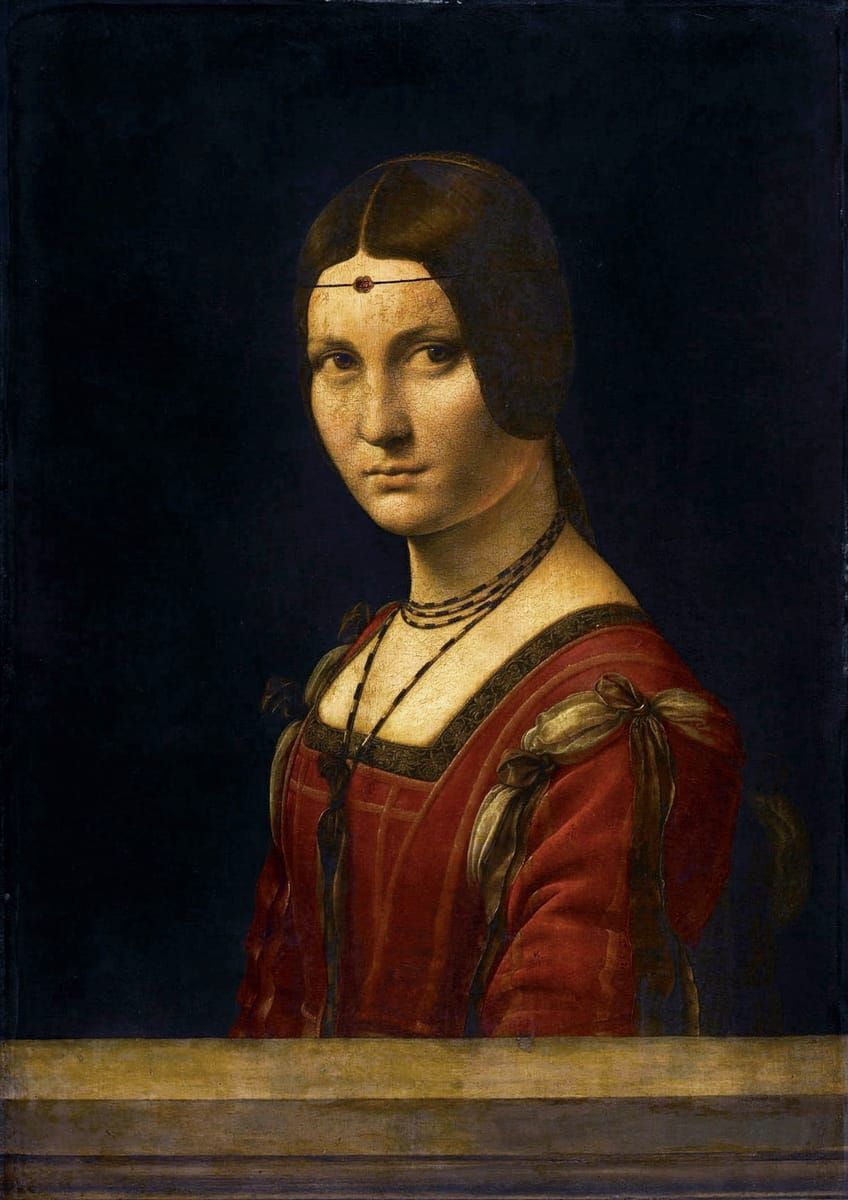
1920년대 미국 예술품 경매 시장을 크게 흔들었던 위작 논란의 중심이자, 르네상스 초상화의 걸작으로 손꼽히는 <라 벨 페로니에르 (La Belle Ferronnière)>입니다. 이 화작은 르네상스 천재 거장 레오나르도 다 빈치(Leonardo da Vinci, 1452–1519)가 1490–1496년경 완성한 작품으로, 실제 규격은 세로 62cm, 가로 44cm 크기이며 현재 프랑스 파리의 루브르 박물관(Musée du Louvre, Paris)에 소장되어 있습니다. 어두운 배경 속에서 나무 난간 뒤에 서서 관람객을 강렬하게 응시하는 여인의 냉철한 눈빛과 밀라노 궁정의 화려한 복식을 담아낸 유화 명작입니다.
이 작품의 전면에 배치된 목재 난간은 감상자와 인물 사이에 일종의 물리적·심리적 경계를 형성하면서도, 3차원적 공간감을 극대화하는 조형적 장치로 기능합니다. 인물의 이마를 가로지르는 보석 장식 띠(페로니에르)와 목을 감싼 검은색 체인 목걸이는 당시 밀라노 상류층 여성들 사이에서 유행하던 장신구로, 인물의 우아함과 고귀한 신분을 가늠하게 합니다. 레오나르도는 특유의 스푸마토 명암법을 활용해 여인의 붉은 드레스에 드리워진 붉은 반사광이 뺨과 턱선에 부드럽게 스며들도록 표현하였으며, 이는 인물의 내면적 기품과 살아 숨 쉬는 듯한 생동감을 완성해 냅니다.
화품에 얽힌 역사적 배경 또한 대단히 흥미롭습니다. 이 초상화의 주인공은 밀라노의 통치자 루도비코 스포르차 공작의 애첩이었던 루크레치아 크리벨리(Lucrezia Crivelli)로 추정됩니다. 오랫동안 프랑스 왕실 소장품 목록에 보관되는 과정에서 프랑스 왕 프랑수아 1세의 애첩이었던 대장장이의 아내 '라 페로니에르'로 잘못 이름 붙여진 채 전달되었으나, 현대 학계에서는 다 빈치가 밀라노 궁정 화가로 재직하던 시절 그린 진품 초상화로 명확히 인정받고 있습니다. 특히 20세기 초 미국 법정에서 이 작품의 진위 여부를 두고 미술 전문가들이 치열한 공방을 벌였던 사건은, 명화의 진품 판정과 미술품 시장의 역사에서 가장 знамени한 에피소드 중 하나로 기록되어 있습니다. 현대 미술사학자들은 이 작품을 <모나리자>보다 먼저 완성된 심리 초상 회화의 결정판이자 르네상스 인물화의 정수로 높이 평가합니다.
이 그림을 들여다보고 있으면 감상자의 시선은 아주 입체적인 경로를 따라 움직입니다. 가장 먼저 이마 중앙에서 영롱하게 빛나는 작은 보석과 그 아래 배치된 여인의 강렬하고 침착한 눈빛에 시선이 사로잡힙니다. 이어 뺨과 목을 지나 붉은 비단 의상의 정교한 끈 장식과 하단의 목재 난간으로 부드럽게 시선이 내려앉습니다. 난간의 차분한 질감을 지나 오른쪽 어깨와 정갈한 머리타래의 곡선을 따라 올라가다 보면, 다시 여인의 깊은 눈동자로 동선이 자연스럽게 되돌아옵니다. 이러한 시각적 순환 과정은 시각적 몰입감을 더해주는 동시에 마음속에 잔잔한 평온과 몰입감을 더해줍니다.
This masterpiece, titled La Belle Ferronnière, was created around 1490–1496 by the High Renaissance genius Leonardo da Vinci (1452–1519). Measuring 62 cm in height by 44 cm in width, this oil on walnut panel is permanently preserved in the Musée du Louvre in Paris, France. Depicting a noblewoman standing behind a wooden parapet with a piercing, contemplative gaze against a dark background, the portrait represents a triumph of Renaissance psychological portraiture.
The composition utilizes a parapet in the foreground to establish both spatial depth and a subtle barrier between the sitter and the viewer. The delicate headband adorned with a single jewel—known as a ferronnière—and the multi-strand dark necklace capture the height of Milanese court fashion. Leonardo applied subtle sfumato lighting along the contours of her face, allowing the warm red reflections from her crimson dress to illuminate her jawline and cheekbones, imbuing the panel with intense vitality and sculptural presence.
Fascinating historical stories elevate the legacy of this celebrated canvas. Identified by most scholars as Lucrezia Crivelli, a mistress of Ludovico Sforza, Duke of Milan, the painting derived its popular title from a historical misidentification with the wife of an ironmonger (ferronnier) in the French royal collection. In the 1920s, a sensational court case in the United States involving a duplicate version placed the painting at the center of international art law and authentication debates. Today, modern art historians revere the work as a pivotal precursor to the Mona Lisa, celebrating its technical precision and profound emotional intensity.
Engaging with this striking portrait guides the viewer through an intuitive visual journey. The eye is initially drawn to the glowing jewel resting on her forehead and the calm intensity of her gaze. The view glides smoothly downward along her neck and the elaborate ribbons of her dress to rest briefly upon the solid wooden parapet below. Sweeping upward along the soft curve of her shoulder and hair, the gaze naturally returns to her captivating eyes, completing a soothing visual loop that invites quiet contemplation.
본 리뷰에서 작품을 제외한 컨텐츠의 저작권은 팔렛트제주에 있습니다.
"퍼블릭도메인 고전명화"를 제외한 모든 창작 콘텐츠는 저작권법 제4조 및 제10조에 의거하여 보호됩니다. 무단 도용시 저작권법 제136조(벌칙)에 의거, 당사의 사전 서면 승인 없는 저작권 침해 행위를 금지합니다.