라 무스메 - La Mousmé
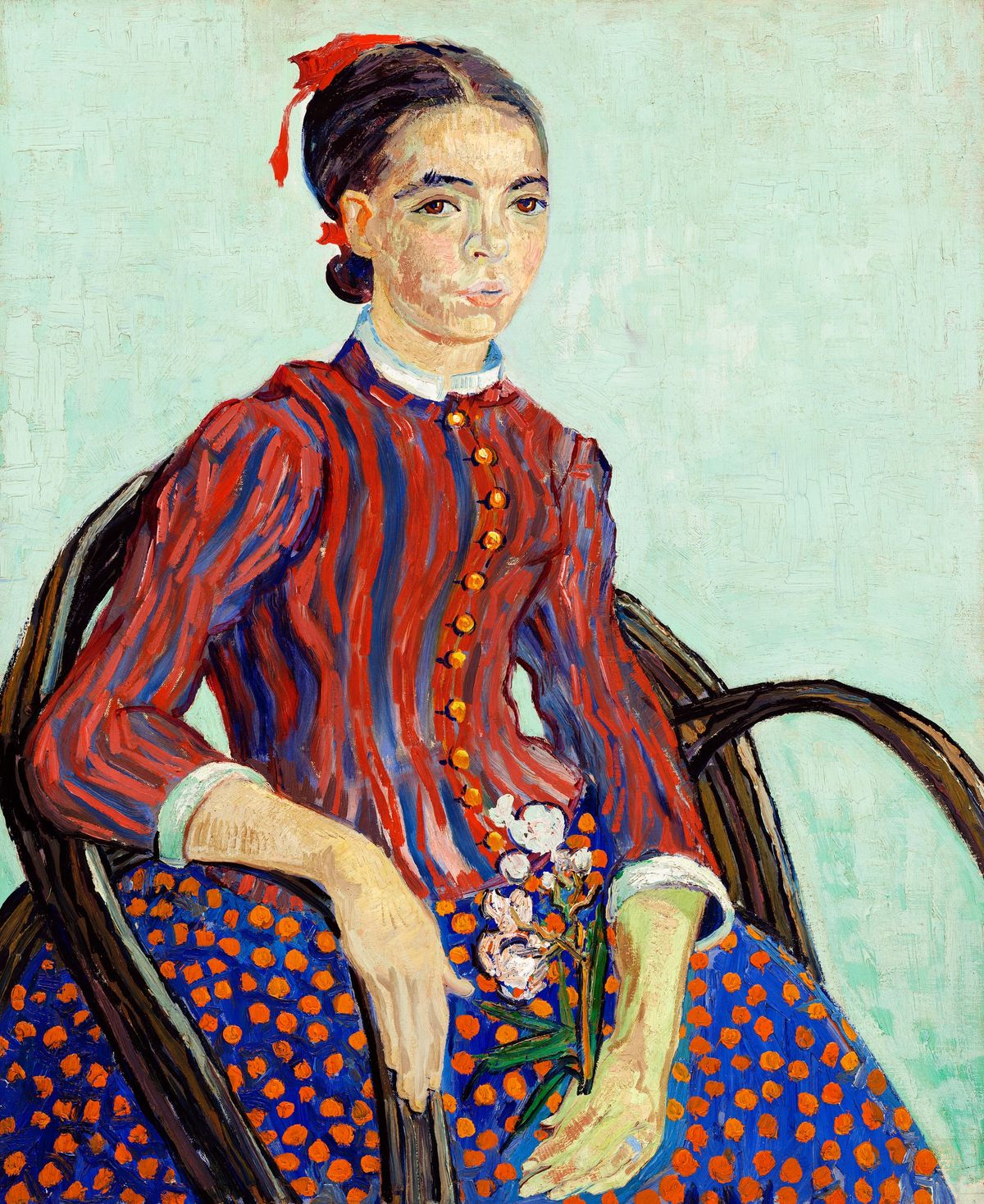
빈센트 반 고흐(Vincent van Gogh)가 남프랑스 아를(Arles)에 머물던 1888년 7월 말에 완성한 대표적인 유화 초상화입니다. 현재 미국 워싱턴 D.C.의 국립미술관(National Gallery of Art, Washington D.C.)에 소장되어 있으며, 작품의 실제 크기는 약 73.3 × 60.3 cm입니다. 캔버스 위에 유채로 제작된 이 작품은 강렬한 보색 대비와 역동적인 붓 터치, 그리고 장식적인 선묘를 결합하여 순수하고 다정한 프로방스 소녀의 모습을 생동감 넘치게 구현해냈습니다.
고흐는 물감을 두껍게 얹어 소녀의 얼굴 윤곽과 옷감의 주름을 입체적으로 조각하듯 표현했습니다. 붉은색과 푸른색 줄무늬가 교차하는 상의, 그리고 푸른 바탕에 주황색 물방울무늬가 돋보이는 풍성한 치마의 패턴은 화면 전반에 눈부신 보색 대비와 시각적 리듬감을 불어넣습니다. 부드러운 민트빛과 연둣빛이 감도는 맑은 배경 속에서 인물의 윤곽선을 굵고 유기적인 곡선으로 둘러싸 대상의 조형적 존재감을 극대화했습니다.
작품의 제목인 '라 무스메(La Mousmé)'는 프랑스 작가 피에르 로티(Pierre Loti)의 베스트셀러 소설 『국화 부인(Madame Chrysanthème)』에 등장하는 일본어 '무스메(딸, 젊은 처녀)'에서 영감을 얻은 것입니다. 당시 일본 미술(자포니즘)과 동양적 정서에 깊이 심취해 있던 고흐는, 남프랑스 아를을 자신이 꿈꾸던 '남쪽의 일본'으로 여기며 현지의 맑고 소박한 소녀에게서 일본의 젊은 여인이 지닌 단아함과 순수함을 겹쳐 보았습니다.
고흐는 동생 테오에게 보낸 편지에서 "소녀의 초상화 작업을 완성하는 데 일주일 동안 전력을 다했다. 만약 누군가 '무스메'가 무엇인지 묻는다면, 바로 이 그림 속 소녀의 모습이라고 말하고 싶다"며 작품에 대한 각별한 애정과 자부심을 드러냈습니다. 후대 미술사에서는 서양의 전통 초상화 양식에 일본 판화의 평면적 장식미와 대담한 색채 분할을 완벽하게 융합시킨 걸작으로 평가하며, 아를 시절 고흐가 도달한 색채 해방의 정점을 보여주는 중요한 인물화로 꼽고 있습니다.
관람객의 무의식적인 시선은 화면 상단에서 맑고 진솔하게 정면을 응시하고 있는 소녀의 따스한 갈색 눈동자와 단정한 얼굴선에서 자연스럽게 출발합니다. 머리에 묶은 붉은 리본과 투명하게 빛나는 소녀의 풋풋한 표정과 마주하는 순간, 보는 이는 순수한 동심의 온기와 함께 화면 속으로 깊숙이 몰입하게 됩니다.
이어 시선은 상의를 따라 촘촘히 흘러내리는 붉은색과 파란색 줄무늬의 율동적인 선을 타고 내려와, 소녀의 손에 소중하게 쥐어진 한 줄기 흰 올리앤더(협죽도) 꽃가지에 도달합니다. 화사하게 피어난 꽃망울과 꼿꼿한 손가락의 섬세한 묘사에 시선이 머물며, 청춘의 생명력과 봄날 같은 따스한 정서적 교감을 체감하게 됩니다.
이후 시선은 푸른 바탕에 주황빛 도트가 경쾌하게 수놓아진 풍성한 치맛자락과 소녀를 둥글게 감싸고 있는 라탄(등나무) 의자의 유려한 암갈색 곡선 뼈대를 훑은 뒤, 은은하고 평온한 민트빛 배경으로 부드럽게 확장됩니다.
화려한 보색의 파동과 맑은 배경의 조화를 따라 순환한 시선이 다시금 소녀의 평온한 미소로 편안히 회귀할 때, 관람객의 내면에는 복잡한 일상의 번뇌와 피로가 정돈되고, 맑고 순수한 영혼이 건네는 깊은 위로와 함께 흔들리지 않는 심리적 안도감이 가득 차오르게 됩니다.
La Mousmé
Painted by Vincent van Gogh in late July 1888 during his inspired residency in Arles, France, this iconic portrait is preserved in the permanent collection of the National Gallery of Art in Washington, D.C. Executed in oil on canvas measuring approximately 73.3 × 60.3 cm, the work portrays a young Provençal girl through a brilliant fusion of dynamic linear rhythms, complementary color harmonies, and tactile impasto.
Van Gogh applied unmixed paint with confident, sculptural brushwork across the composition. The rhythmic red and blue vertical stripes of the bodice create a striking visual vibration alongside the sweeping blue skirt dotted with vibrant orange spots. Set against a serene, pale mint-green ground, the bold, undulating contours of the girl's silhouette and the curving cane armchair lend the figure a monumental yet tender presence.
The title La Mousmé was directly inspired by Pierre Loti’s popular novel Madame Chrysanthème, which popularized the Japanese word mousmé, meaning a young girl or maiden. Immersed in the aesthetics of Japonisme and viewing Provence as his own spiritual counterpart to Japan, Van Gogh sought to capture the grace, simplicity, and blooming youth of local culture through this Eastern conceptual lens.
In letters to his brother Theo, Van Gogh shared that he poured an entire week of concentrated energy into perfecting this portrait, proudly stating that it encapsulated his vision of a true mousmé. Art historians celebrate the piece as an extraordinary synthesis of traditional European portraiture and Japanese decorative flattening, standing as a pivotal milestone of his Arles period where color was fully liberated to express emotional truth and youthful vitality.
A viewer's subconscious gaze is intuitively anchored first by the earnest, open expression and warm brown eyes of the young girl looking directly out from the canvas. Framed by her neatly gathered hair and the delicate red ribbon, her tranquil gaze invites the observer into an atmosphere of immediate warmth, innocence, and emotional clarity.
The eye is then carried downward along the lively red and blue stripes of her jacket, arriving naturally at the sprig of white oleander blossoms held gently in her rested hand. Lingering upon this delicate floral focal point, the viewer experiences a serene connection to the themes of fleeting youth, blossoming vitality, and natural purity.
From the floral bouquet, the gaze expands through the vibrant polka-dotted contours of her blue skirt and follows the graceful, sweeping arc of the dark cane chair before dissolving into the luminous, calming expanse of the pastel background.
Completing this visual and emotional circulation, the observer feels a profound release of modern tension. The pure, balanced harmonies of the composition leave the viewer enveloped in a lasting sense of inner peace, spiritual elevation, and enduring psychological comfort.
본 리뷰에서 작품을 제외한 컨텐츠의 저작권은 팔렛트제주에 있습니다.
"퍼블릭도메인 고전명화"를 제외한 모든 창작 콘텐츠는 저작권법 제4조 및 제10조에 의거하여 보호됩니다. 무단 도용시 저작권법 제136조(벌칙)에 의거, 당사의 사전 서면 승인 없는 저작권 침해 행위를 금지합니다.