편지 읽는 여인 Woman Reading a Letter
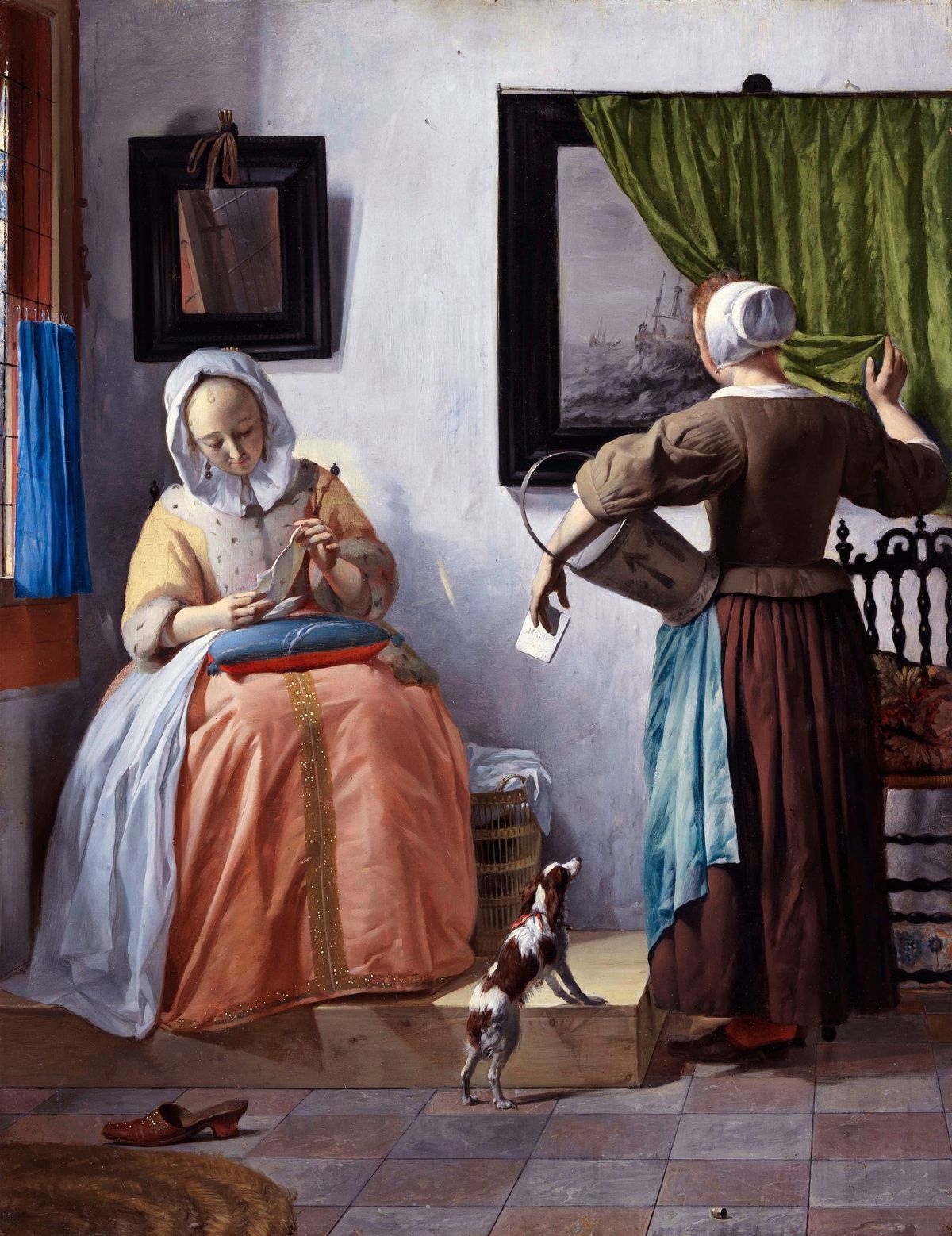
17세기 네덜란드 황금시대의 풍속화 거장 가브리엘 메추(Gabriel Metsu, 1629–1667)가 1664년에서 1666년경 암스테르담 시절에 완성한 유화 편지 읽는 여인(Woman Reading a Letter, 네덜란드어: Brieflezende jonge vrouw)은 52.5 cm × 40.2 cm 크기의 목판 패널에 유채로 그린 대표적인 상류사회 실내 서간 풍속화 최고 걸작입니다. 짝을 이루는 작품인 편지 쓰는 남자와 함께 현재 아일랜드 더블린의 아일랜드 국립미술관(National Gallery of Ireland, Dublin)에 소장되어 있습니다.
바다 그림의 커튼을 걷어 올린 하녀와 화실 바닥에 뒹군 슬리퍼 소동
1660년대 중반 암스테르담의 부유한 시민 사회에서는 먼 바다로 항해를 떠난 연인이나 남편의 무사 귀환을 바라며 편지를 읽는 서간 문화가 큰 유행이었습니다. 당시 메추는 동시대 라이벌이었던 얀 베르메르의 세련된 실내 풍속화를 깊이 의식하며, 편지를 읽는 순간의 떨리는 설렘과 그 이면에 숨겨진 불안한 심리를 한 공간 안에서 완벽하게 조화시키고자 고뇌했습니다. 화가는 화실에 높은 나무 단상을 설치하고, 살구빛 실크 드레스를 차려입은 아내 이사벨라를 모델로 앉힌 뒤 하녀에게 벽에 걸린 폭풍우 치는 바다 풍경화의 녹색 커튼을 걷어 올리게 했습니다.
이 그림을 준비하던 날, 화실에서는 유쾌하면서도 웃음이 절로 나오는 소동이 벌어졌습니다. 편지를 전해준 하녀가 양동이를 팔에 걸친 채 벽에 걸린 그림의 커튼을 조심스럽게 걷어 올리는 포즈를 취하던 중, 커튼 봉이 삐걱거리며 먼지가 풀썩 날렸습니다. 그 순간 의자에 앉아 편지를 펼쳐 읽던 이사벨라가 기침을 하다가 발을 헛디뎌 신고 있던 붉은 비단 슬리퍼 한 짝을 바닥으로 툭 떨어뜨리고 말았습니다.
단상 아래에서 얌전히 기다리던 작은 스패니얼 강아지가 떨어진 슬리퍼를 장난감으로 착각하고 꼬리를 흔들며 멍멍 짖어대자, 화실 안은 한바탕 웃음바다가 되었습니다. 메추는 붓을 멈추고 껄껄 웃으며, 걷어 올린 커튼 뒤의 거친 파도와 벗겨진 슬리퍼, 그리고 강아지의 귀여운 참견이야말로 여인의 흔들리는 마음과 사랑의 진실을 보여줄 최고의 순간임을 직감했습니다. 화가는 노란색 벨벳 재킷의 담비 털 장식, 살구빛 실크 치마의 눈부신 광택, 그리고 거친 파도를 헤치고 나아가는 범선의 웅장한 모습을 정교한 세밀화 기법으로 캔버스에 담아냈습니다. 잦은 병마 속에서도 삶의 낭만과 인간의 깊은 감정을 따뜻한 시선으로 포착하려 했던 메추의 섬세한 예술혼이 이 화려한 화폭 속에 고스란히 살아 숨 쉬고 있습니다.
살구빛 실크 드레스의 여인에서 걷어 올린 바다 그림과 편지 봉투로, 시선의 심리적 여정
그림을 마주하는 순간 관람객의 무의식적 시선은 화면 왼쪽 창가에서 쏟아지는 부드러운 자연광을 받아 밝게 빛나는 여인의 화사한 노란색 겉옷과 풍성한 살구빛 실크 치맛자락으로 가장 먼저 빨려 들어갑니다. 단정하게 쓴 흰 베일 아래로 무릎 위에 놓인 편지를 집중해서 내려다보는 여인의 차분하면서도 설레는 표정은 보는 이에게 깊은 시각적 매혹과 함께 조용한 긴장감을 선사합니다.
이어 시선은 화면 오른쪽에서 등 뒤를 돌린 채 서 있는 하녀의 손으로 이동하여, 그녀가 쥐고 있는 작은 편지 봉투와 벽에 걸린 바다 풍경화의 녹색 커튼으로 옮겨갑니다. 하녀가 커튼을 걷어내며 드러낸 폭풍우 치는 바다와 거친 파도 속 범선을 확인하는 순간, 관람객은 편지를 보낸 남자가 머나먼 항해 길에 올라 있으며 여인이 그의 무사 귀환을 애타게 기다리고 있음을 은유적으로 깨닫게 됩니다.
마지막으로 시선은 하녀를 향해 두 발을 딛고 서서 꼬리를 흔드는 작은 강아지를 지나, 바닥에 아무렇게나 벗겨져 놓인 붉은 슬리퍼와 벽에 걸린 작은 거울, 그리고 격자창의 파란 커튼에 멈춥니다. 고요한 실내의 정적과 그 안에서 피어나는 사랑과 기다림의 애틋한 감정을 마주하며, 관람객은 17세기 네덜란드 상류사회의 품격 있는 낭만과 메추가 건네는 다정하고 섬세한 예술적 위로를 가슴 깊이 마주하게 됩니다.
17세기 네덜란드 서간 풍속화의 최고봉과 알레고리적 완성도, 미술계의 평가
미술계는 편지 읽는 여인을 가브리엘 메추가 얀 베르메르의 명작들에 필적할 만큼 완벽한 공간 구성과 심리적 서사를 이룩하며 네덜란드 장르화의 황금기를 대표하는 불멸의 걸작으로 평가합니다.
벽에 걸린 바다 풍경화라는 그림 속 그림 장치를 통해 사랑의 험난한 여정과 신의를 완벽하게 상징했을 뿐만 아니라, 실크, 모피, 리넨, 목재, 금속 등 다양한 재질의 질감을 극도로 섬세한 명암법으로 완벽하게 분리하여 재현했기 때문입니다. 문학적 감수성과 인간 내면의 진솔한 애정을 가장 우아하고 품격 있는 시각적 언어로 승화시킨 메추의 이 서정적인 화폭은, 오늘날까지도 전 세계 수많은 감상자들에게 깊은 감탄과 잊을 수 없는 시각적 안식을 선사하고 있습니다.
Woman Reading a Letter
Painted around 1664–1666 in Amsterdam by the preeminent Dutch Golden Age master Gabriel Metsu (1629–1667), Woman Reading a Letter (Dutch: Brieflezende jonge vrouw) is an oil on wood panel measuring 52.5 cm × 40.2 cm (20.7 in × 15.8 in), preserved as a celebrated pendant alongside Man Writing a Letter in the permanent collection of the National Gallery of Ireland in Dublin, Ireland.
The Seascape Curtain and the Fallen Slipper Commotion in the Studio
During the mid-1660s in Amsterdam, receiving and reading correspondence from loved ones navigating dangerous trade voyages across distant seas flourished as a deeply romantic motif in high-society culture. Deeply attuned to the domestic interiors of his rival Johannes Vermeer, Gabriel Metsu sought to capture the delicate, private psychological world of a lady absorbed in an intimate letter. Staging a wooden platform in his studio, the master posed his wife Isabella in a shimmering apricot gown, while arranging a domestic maid to draw back a green silk curtain concealing a seascape painting on the whitewashed wall.
A delightfully humorous incident occurred while preparing the sittings for this canvas. As the maid held a metal pail on her arm, reaching upward to slide the curtain across the frame, the wooden rod creaked loudly and released a small puff of dust. Startled by the sound, Isabella coughed unexpectedly, accidentally dislodging her crimson silk slipper from her foot and sending it tumbling off the raised platform.
The studio spaniel immediately leaped toward the fallen shoe, barking merrily and wagging its tail, dissolving the quiet sitting into warm laughter. Metsu paused his brushes and laughed heartily, realizing that the stormy sea uncovered on the wall, the cast-off slipper, and the playful dog provided the perfect allegorical framework for the flutter of romantic anticipation. The master meticulously rendered the yellow morning jacket trimmed in ermine, the fluid radiance of the apricot satin skirt, and the turbulent waves battering the distant vessel. Despite battling chronic physical ailments, Metsu captured the sublime poetry of love and longing, imbuing this panel with profound aesthetic elegance.
Subconscious Trajectory of the Gaze: From Absorbed Maiden to the Unveiled Seascape
The observer's subconscious gaze is immediately magnetized by the left register, drawn to the luminous figure of the young lady seated upon the wooden dais, bathed in cool daylight entering from the window. Her gentle downcast eyes, focused intently upon the open letter, her yellow fur-trimmed jacket, and the radiant folds of her apricot skirt establish an instant focal point of meditative serenity and romantic grace.
The visual path then shifts rightward to the standing maidservant seen from behind, traveling along her arm to the green curtain she pulls aside and the letter envelope clutched in her hand. Taking in the dramatic marine painting depicting a ship tossed upon stormy seas, the viewer directly perceives the allegorical message that the writer is braving perilous waters, transforming the domestic interior into an intimate meditation on fidelity and longing.
Finally, the visual trajectory sweeps past the attentive spaniel resting its front paws upon the wooden platform, descending to the cast-off red slipper on the tiled floor and the small looking glass hanging upon the whitewashed wall. Observing the harmonious balance between delicate chiaroscuro, rich textural contrasts, and nuanced psychological staging, the spectator perceives the timeless nobility of high culture and the enduring spiritual solace Metsu embedded within the home.
The Monument of Dutch Epistolary Realism: Critical Legacy
Art historians revere Woman Reading a Letter as a supreme pinnacle of Metsu’s mature career, standing shoulder to shoulder with the finest epistolary masterworks of Johannes Vermeer and Gerard ter Borch.
By integrating the allegorical device of the stormy marine painting with virtuosic textural descriptions across satin, velvet, fur, linen, and polished wood within a unified lighting scheme, Metsu elevated a domestic moment into an exquisite aesthetic symphony. This captivating cabinet picture stands as an inspiring testament to the master's enduring humanism, celebrating the sacred charm of romantic devotion and the transformative power of living art.
본 컨텐트의 저작권은 팔렛트제주에 있습니다. 허가없는 무단전제를 금지합니다.
Copyright © Palette Jeju. All rights reserved. Unauthorized reproduction or redistribution is strictly prohibited.