푸른 물결이 치는 포도밭 언덕과 평화로운 전원마을, 오베르의 포도밭 풍경 Vineyards with a View of Auvers
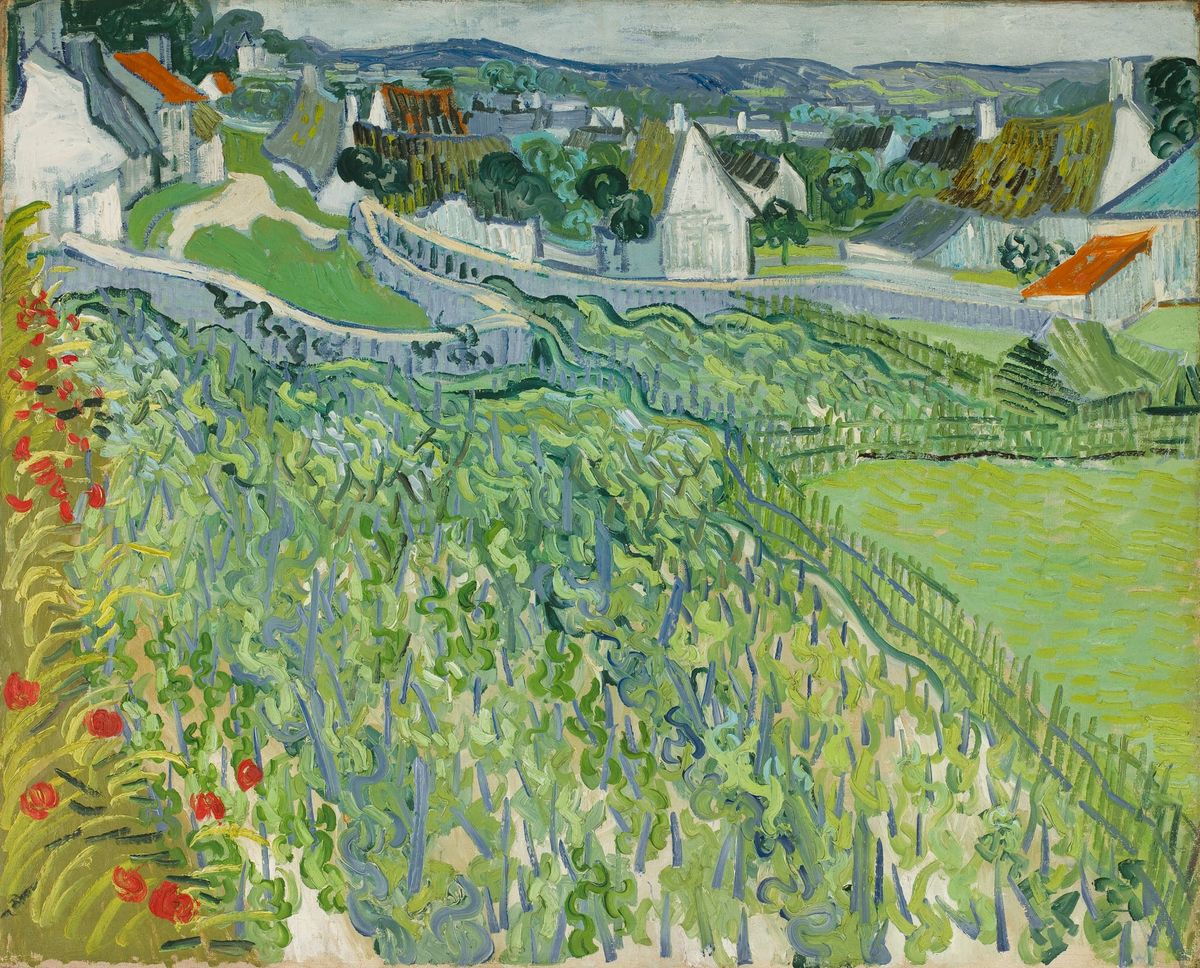
네덜란드 출신의 후기 인상주의 거장 빈센트 반 고흐(Vincent van Gogh, 1853–1890)가 1890년 6월에 프랑스 오베르 쉬르 우아즈에서 완성한 유화 오베르의 포도밭 풍경(Vineyards with a View of Auvers, 프랑스어: Vue d'Auvers avec champs de blé et vignoble)은 64.2 cm × 79.5 cm 크기의 캔버스에 유채로 그린 대표적인 풍경화 걸작입니다. 현재 미국 세인트루이스의 세인트루이스 미술관(Saint Louis Art Museum)에 소장되어 있습니다.
가셰 박사의 잔소리와 밀짚모자를 날려버린 오베르 언덕의 돌풍
1890년 초여름, 남프랑스 생레미 정신병원을 퇴원하여 파리 북쪽의 한적한 시골 마을 오베르 쉬르 우아즈에 도착한 반 고흐는 새로운 환경 속에서 마침내 마음의 평온을 되찾아 가고 있었습니다. 그를 돌보아주던 의사 폴 가셰 박사는 화가에게 너무 무리해서 그림을 그리지 말고 매일 산책이나 즐기라며 잔소리를 늘어놓았습니다. 하지만 붓을 쥐지 않고는 하루도 견딜 수 없었던 반 고흐는 아침 일찍 이젤과 화구를 짊어지고 가셰 박사의 눈을 피해 마을 뒤편 가파른 언덕 위로 몰래 도망쳐 올라갔습니다.
언덕 꼭대기에 오른 화가는 아래로 굽어보이는 마을의 정겨운 지붕들과 눈앞에 파도처럼 넘실거리는 초록빛 포도밭의 싱그러움에 완전히 매료되었습니다. 마침 거센 초여름 바람이 불어와 화가의 낡은 밀짚모자가 언덕 아래 포도밭 고랑 사이로 데굴데굴 굴러떨어지는 소동이 벌어졌습니다. 모자를 주우러 비탈길을 내달리던 반 고흐는 바람에 격렬하게 춤추는 포도나무 덩굴들의 리듬감 넘치는 움직임을 목격하고는, 모자를 줍는 것도 잊은 채 캔버스를 펼치고 미친 듯이 붓을 휘두르기 시작했습니다.
그는 팔레트 위에서 물감을 섞을 틈도 없이 튜브에서 초록색, 청록색, 노란색 물감을 캔버스에 직접 짜 넣으며 손가락과 나이프로 덩굴의 거친 생명력을 문질러 발랐습니다. 지나가던 마을 아이들이 모자도 쓰지 않은 붉은 수염의 낯선 화가가 바람을 맞으며 춤추듯 그림을 그리는 모습을 보고 낄낄거리며 구경하자, 반 고흐는 아이들에게 손을 흔들며 포도밭의 흙 한 줌을 캔버스 모서리에 묻혀 보이며 호탕하게 웃었습니다. 정신적인 불안과 병마 속에서도 자연의 찬란한 생명력을 온몸으로 껴안으며 예술적 행복을 만끽했던 거장의 순수한 열정이 이 푸른 화폭 속에 고스란히 살아 숨 쉬고 있습니다.
붉은 양귀비꽃 덤불에서 굽이치는 담장 너머 흰 가옥들로, 시선의 심리적 여정
그림을 마주하는 순간 관람객의 무의식적 시선은 화면 왼쪽 아래 노란 풀밭 언덕을 따라 점점이 피어난 붉은 양귀비꽃들의 선명한 색채로 가장 먼저 이끌립니다. 푸른 초목들 사이에서 강렬한 생기를 뿜어내는 붉은 꽃송이들의 화사한 자태는 보는 이에게 싱그러운 여름의 활력과 설레는 시각적 즐거움을 선사합니다.
이어 시선은 화면 아래쪽 절반을 가득 채우며 물결치듯 굽이치는 포도나무 밭의 리드미컬한 청록빛 붓 터치를 타고 화면 위쪽으로 이동합니다. 밭고랑을 따라 촘촘하게 꽂힌 푸른 지지대와 바람에 흔들리는 풍성한 잎사귀들의 율동감을 확인하는 순간, 관람객은 초여름의 상쾌한 풀 내음과 들판을 스치는 바람의 촉감을 온몸으로 체감하게 됩니다.
마지막으로 시선은 포도밭 위를 가로지르며 부드러운 곡선을 그리는 푸른빛 돌담길을 지나, 저 멀리 옹기종기 모여 있는 오베르 마을의 하얀 벽과 주황색 기와지붕, 그리고 짙푸른 숲의 능선에 멈춥니다. 대지를 가득 채운 역동적인 식물의 생명력과 평화롭게 안겨 있는 인간 마을의 따뜻한 조화를 마주하며, 관람객은 번잡한 세상의 시름을 씻어내는 전원마을의 아늑한 평화와 반 고흐가 갈망했던 영혼의 안식을 가슴 깊이 마주하게 됩니다.
후기 인상주의 전원 풍경화의 정점과 조형적 율동감, 미술계의 평가
미술계는 오베르의 포도밭 풍경을 반 고흐가 생애 마지막 순간까지 탐구했던 색채의 구조화와 역동적인 필치가 가장 평화롭고 조화롭게 결실을 맺은 대표작으로 평가합니다.
단순한 풍경의 사실적 기록을 넘어서, 유려하게 굽이치는 곡선 구도와 두껍게 쌓아 올린 임파스토 붓 터치, 그리고 초록과 파랑, 노랑과 빨강의 정교한 보색 조화를 통해 자연의 호흡을 하나의 거대한 음악적 리듬으로 승화시켰기 때문입니다. 고통스러운 삶의 끝자락에서도 대자연을 향한 무한한 사랑과 순수한 찬미를 멈추지 않았던 반 고흐의 이 아름다운 화폭은 오늘날까지도 수많은 감상자들에게 깊은 감동과 따스한 위로를 전해주는 불멸의 명작으로 손꼽히고 있습니다.
The Lyrical Rhythms of the Rolling Hills, Vineyards with a View of Auvers
Painted in June 1890 in Auvers-sur-Oise by the preeminent Dutch Post-Impressionist master Vincent van Gogh (1853–1890), Vineyards with a View of Auvers (French: Vue d'Auvers avec champs de blé et vignoble) is an oil on canvas measuring 64.2 cm × 79.5 cm (25.3 in × 31.3 in), preserved in the permanent collection of the Saint Louis Art Museum in Saint Louis, Missouri.
Dr. Gachet's Admonition and the Windblown Straw Hat upon the Ridge
In the early summer of 1890, having departed the asylum in Saint-Rémy-de-Provence to settle in the picturesque northern village of Auvers-sur-Oise, Vincent van Gogh experienced a brief yet prolific period of emotional rejuvenation. His attending homeopathic physician, Dr. Paul Gachet, repeatedly cautioned the artist against overexertion, advising gentle daily strolls rather than frantic painting sessions. However, driven by an insurmountable creative impulse, Van Gogh frequently slipped away at dawn, lugging his heavy easel and paint boxes past Gachet's garden up to the windswept ridges overlooking the valley.
Reaching the crest, the master was mesmerized by the rhythmic sweep of the vineyard terraces undulating toward the thatched cottages below. Suddenly, a gust of summer wind snatched Van Gogh's battered straw hat, sending it tumbling down through the vine stakes. Scrambling down the slope in pursuit, the painter was struck by the animated choreography of the vine leaves whipping in the breeze. Forgetting the lost hat entirely, he set his canvas firmly into the turf and began to work with ferocious joy.
He applied unblended strokes of emerald, cobalt, and chrome yellow directly from the tubes, sculpting the soil and foliage with rapid palette knife gestures. When local village children gathered around to gigglingly watch the bareheaded, red-bearded foreigner paint with dance-like intensity against the wind, Van Gogh laughed heartily and waved his paint-stained fingers in greeting. This radiant landscape stands as an endearing testament to the master's pure devotion to living nature, celebrating a rare moment of joyful vitality amidst personal turmoil.
Subconscious Trajectory of the Gaze: From Scarlet Poppies to the Thatched Village
The observer's subconscious gaze is immediately captivated by the lower-left foreground, drawn to the vibrant cluster of scarlet poppies blooming brightly along the warm yellow slope. The striking chromatic resonance of the red blossoms against the cool greenery establishes an instant sensation of vernal vitality and pastoral joy.
The visual trajectory then surges forward into the expansive vineyard occupying the lower half of the composition, guided by the rhythmic, vertical blue-green dashes representing the vine stakes and foliage. Absorbing the kinetic waves of leaves swaying across the terraces, the viewer directly experiences the physical freshness of the summer breeze and the tactile fertility of the soil.
Finally, the visual path follows the serpentine curve of the pale blue garden wall, ascending toward the sun-drenched white walls, warm terracotta roofs, and gentle rolling hills framing the Auvers horizon. Observing the harmonious integration between the dynamic energy of the agricultural earth and the peaceful domestic shelter of the village, the spectator perceives the timeless tranquility of rural existence and the profound spiritual sanctuary Van Gogh discovered within the French countryside.
The Monument of Post-Impressionist Naturalism: Critical Legacy
Art historians revere Vineyards with a View of Auvers as a consummate achievement of Van Gogh’s final artistic chapter, demonstrating his mastery of expressive color and dynamic structural rhythm.
By harmonizing high-keyed primaries with thick impasto textures and fluid linear arabesques, Van Gogh transformed a quiet rural vista into an animate sensory symphony. This luminous masterpiece endures as an inspiring testament to the artist's enduring creative vigor, celebrating the unconquerable beauty of the earth and the transformative power of art.
본 컨텐트의 저작권은 팔렛트제주에 있습니다. 허가없는 무단전제를 금지합니다.
Copyright © Palette Jeju. All rights reserved. Unauthorized reproduction or redistribution is strictly prohibited.