푸른 호숫가에 내려앉은 따스한 봄볕과 사랑의 세레나데, 어느 봄날 A Spring Day
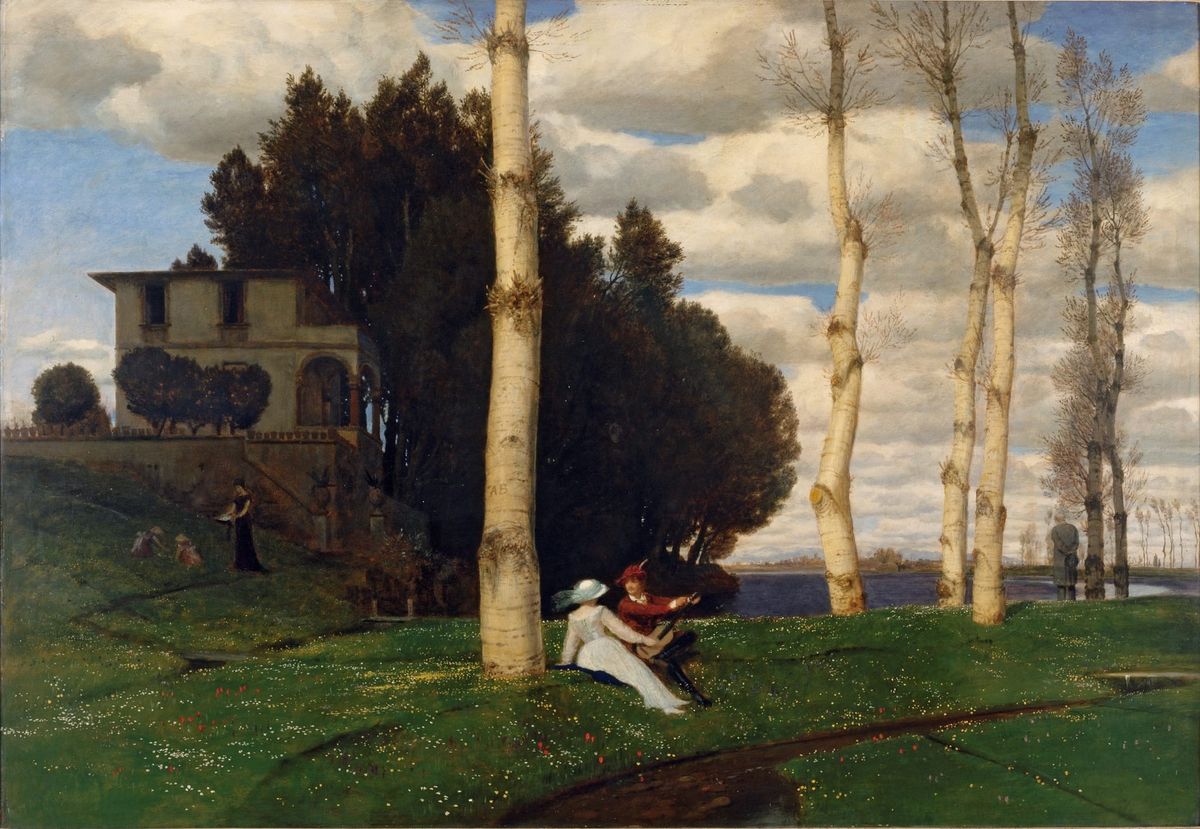
스위스 출신의 상징주의 거장 아놀드 뵈클린(Arnold Böcklin, 1827–1901)이 1883년에 스위스 취리히에서 완성한 유화 어느 봄날(A Spring Day, 독일어: Frühlingstag)은 68.0 cm × 102.0 cm 크기의 나무 패널에 유채로 그린 대표적인 전원 풍경화 걸작입니다. 현재 독일 프랑크푸르트의 슈테델 미술관(Städel Museum, Frankfurt am Main)에 소장되어 있습니다.
취리히 호숫가에서 되찾은 마음의 평온과 르네상스풍 서정
1880년대 초반 뵈클린은 오랜 이탈리아 생활을 잠시 정리하고 스위스 취리히에 정착해 작업에 몰두하고 있었습니다. 당시 독일과 스위스 미술계에서는 인상주의의 빠른 붓 터치와 순간적인 빛의 포착이 새로운 유행으로 떠오르고 있었지만, 뵈클린은 유행에 휩쓸리지 않고 자신만의 확고한 신념을 지켜나갔습니다. 그는 15세기와 16세기 이탈리아 르네상스 회화가 지닌 깊고 단단한 색채, 그리고 시적인 분위기를 현대적인 풍경 속에 되살려내고자 끊임없이 고뇌했습니다.
이 그림은 화가가 취리히 호수 주변의 평화로운 자연을 관찰하며 르네상스 시대의 목가적인 서정을 현대적으로 재해석한 작품입니다. 화면 중앙에는 굵고 곧게 뻗은 은빛 포플러 나무 아래에 단정하게 차려입은 젊은 연인이 다정하게 앉아 있습니다. 붉은 깃털 모자를 쓴 청년은 류트를 타며 사랑의 노래를 건네고 있고, 순백의 드레스를 입은 여인은 수줍은 듯 그의 음악에 귀를 기울입니다. 완만한 풀밭 언덕 위 저택과 잔잔한 호수, 그리고 언덕에서 꽃을 따는 아이들의 모습은 세속의 번잡한 소음에서 벗어나 대자연과 인간이 완전한 평화를 이루는 완벽한 봄날의 순간을 보여줍니다. 유행에 굴복하지 않고 고전의 품격과 서정성을 지켜내려 했던 화가의 뚝심 있는 예술관이 이 온화한 풍경 속에 온전히 녹아 있습니다.
하얀 드레스의 연인에서 호숫가의 노신사로, 시선의 심리적 여정
그림을 마주하는 순간 관람객의 무의식적 시선은 화면 한가운데 우뚝 솟은 거대한 포플러 나무 밑동과, 그 아래 풀밭에 다정하게 앉아 있는 순백의 드레스를 입은 여인과 붉은 상의를 입은 청년의 모습으로 가장 먼저 이끌립니다. 맑은 봄 햇살을 받아 환하게 빛나는 하얀 옷자락과 류트를 연주하는 청년의 다정한 몸짓은 보는 이에게 따뜻한 온기와 달콤한 낭만을 선사합니다.
이어 시선은 화면 왼쪽 완만한 언덕 위에 자리 잡은 고풍스러운 빌라 저택과, 비탈길 풀밭에서 꽃을 꺾으며 평화롭게 놀고 있는 여인과 아이들의 천진난만한 모습으로 이동합니다. 짙푸른 상록수 숲과 붉은 튤립 꽃밭이 어우러진 언덕의 풍경을 확인하는 순간, 관람객은 마치 과거 르네상스 시대의 평온한 별장으로 시간 여행을 떠나온 듯한 편안함을 느낍니다.
마지막으로 시선은 화면 오른쪽으로 길게 늘어선 하얀 자작나무와 포플러 기둥들을 지나, 잔잔한 푸른 호숫가에 우두커니 서서 물결을 바라보는 검은 옷의 노신사 뒷모습에 멈춥니다. 청춘의 사랑을 노래하는 연인들과 세월의 흐름을 묵묵히 관조하는 노인의 대비를 마주하며, 관람객은 찰나처럼 지나가는 봄날의 아름다움과 인생의 계절들이 빚어내는 깊은 여운을 가슴 깊이 체감하게 됩니다.
고전적 서정과 풍경 상징주의의 완벽한 조화, 미술계의 평가
미술계는 어느 봄날을 인상주의의 순간성 대신 르네상스적 구성미와 낭만주의적 서정을 결합하여 영원한 목가적 이상향을 완성한 수작으로 평가합니다.
단순한 야외 풍경을 그리는 데 그치지 않고, 수직으로 솟은 나무들과 수평의 호수, 그리고 인물들의 배치 속에 음악적 리듬감과 철학적 명상을 정교하게 담아냈기 때문입니다. 화려한 기교에 기대지 않고 자연과 인간이 나누는 가장 순수한 교감을 차분한 빛과 색채로 완성해 낸 이 아름다운 화폭은 오늘날까지도 뵈클린의 서정적 풍경화 중에서도 가장 우아하고 품격 있는 걸작으로 손꼽히고 있습니다.
The Vernal Melody by the Serene Lake, A Spring Day
Painted in 1883 in Zurich by the preeminent Swiss Symbolist master Arnold Böcklin (1827–1901), A Spring Day (German: Frühlingstag) is an oil on wood panel measuring 68.0 cm × 102.0 cm (26.8 in × 40.2 in), preserved in the permanent collection of the Städel Museum in Frankfurt am Main, Germany.
Zurich Tranquility, Modern Trends, and the Reinterpretation of Renaissance Arcadia
In the early 1880s, Arnold Böcklin left Italy and established his studio in Zurich, entering a period of deep artistic reflection. While the European art world was increasingly captivated by the fleeting brushwork of French Impressionism, Böcklin deliberately resisted transient trends. He remained committed to the monumental weight, saturated color harmony, and poetic depth of Italian Renaissance masters such as Giorgione and Titian, seeking to reawaken classical pastoral harmony within modern landscape painting.
The composition visualizes an idyllic spring afternoon inspired by the tranquil shores of Lake Zurich. Beneath the towering trunk of a silver poplar, a pair of lovers dressed in Renaissance attire sit upon the flowering turf. The young suitor in a scarlet doublet serenades his companion on the lute, while the maiden in a white gown listens in quiet contemplation. Across the verdant slope, an Italianate villa stands amidst dark trees where children gather early blooms, while the mirror-like lake stretches to the horizon. By resisting the ephemeral nature of contemporary styles, Böcklin created an enduring vision of human harmony rooted in the timeless rhythms of nature.
Subconscious Trajectory of the Gaze: From Pure White Drapery to the Solitary Observer
The observer's subconscious gaze is immediately arrested by the bright, sunlit white gown of the seated maiden resting beneath the massive poplar tree at the center. The luminous purity of her silhouette juxtaposed with the rich scarlet jacket of the lute player generates an immediate sense of lyrical intimacy and pastoral romance.
The visual trajectory then travels upward along the grassy incline on the left, taking in the classical stone architecture of the hillside villa and the figures gathering wildflowers along the slope. Moving past the red tulips scattered across the lush meadow, the viewer experiences a transition from personal romance to a broader, harmonious vision of domestic peace.
Finally, the path of sight sweeps rightward through the colonnade of slender, sun-drenched poplar trunks, coming to rest upon the lone gentleman in dark attire standing at the edge of the lake. Observing the contrast between the passionate springtime melody of the youth and the introspective solitude of the elder by the water, the spectator perceives Böcklin’s philosophical synthesis: a tender meditation on the fleeting seasons of human existence framed by the eternal beauty of the earth.
The Harmony of Classical Idealism and Symbolist Landscape: Critical Legacy
Art historians revere A Spring Day as an exquisite masterpiece that synthesized Northern Romantic nature philosophy with the structured grace of Italian Renaissance pastorals.
By harmonizing vertical botanical forms, open horizontal water, and rich textural contrasts of soil and fabric, Böcklin elevated a seasonal landscape into a poetic space of musical reverie. This evocative work endures as one of the master's most refined landscapes, celebrating the restorative grace of love, art, and the gentle arrival of spring.
본 컨텐트의 저작권은 팔렛트제주에 있습니다. 허가없는 무단전제를 금지합니다.
Copyright © Palette Jeju. All rights reserved. Unauthorized reproduction or redistribution is strictly prohibited.