푸른 하늘과 흰 구름 아래의 들판 - Green Wheat Fields, Auvers
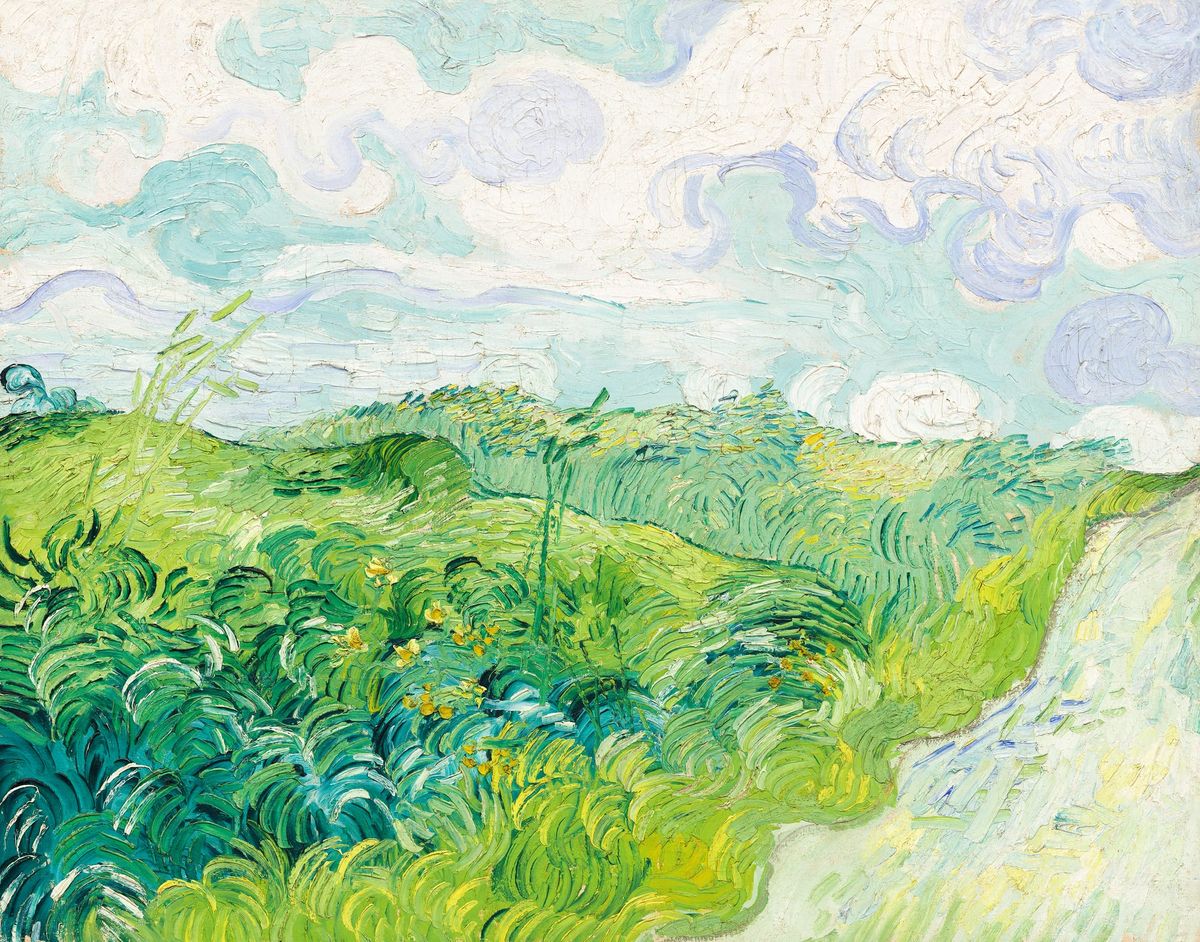
네덜란드의 후기 인상주의 거장 빈센트 반 고흐가 생애 마지막 해인 1890년 6월 프랑스 북부 오베르 쉬르 우아즈(Auvers-sur-Oise)에서 제작한 유화 작품으로, 캔버스에 유채 기법으로 완성되었으며 크기는 세로 72.3cm, 가로 91.4cm입니다. 현재 미국 워싱턴 D.C.에 위치한 국립미술관(National Gallery of Art, Collection of Mr. and Mrs. Paul Mellon)에 영구 소장되어 있습니다. 화면을 가득 채운 역동적인 연두빛과 에메랄드 그린의 율동, 소용돌이치는 푸른 하늘과 흰 구름, 그리고 캔버스 표면에 살아 숨 쉬듯 두텁게 쌓아 올린 임파스토 기법은 반 고흐 후기 풍경화의 절정을 여실히 보여줍니다.
1890년 5월 남프랑스 생레미의 정신병원을 떠나 예술가들의 안식처였던 오베르 쉬르 우아즈에 정착한 반 고흐는 북부 프랑스의 신선하고 청명한 대기에 깊이 매료되었습니다. 그는 드넓게 펼쳐진 푸른 밀밭 사이를 거닐며 불어오는 바람과 대지의 호흡을 온몸으로 느끼며 작업에 몰두했습니다. 당시 동생 테오에게 보낸 편지에서 그는 끝없이 펼쳐진 초록빛 들판의 싱그러움과 맑은 공기가 주는 말할 수 없는 평온함에 대해 벅찬 감동을 전했습니다. 미술사학계와 평단에서는 생애 마지막 순간까지 내면의 고통을 딛고 자연의 순수한 생명력과 우주적 율동을 화폭에 온전히 담아낸 반 고흐의 가장 서정적이고 찬란한 걸작 중 하나로 평가합니다.
작품을 마주하는 관람자의 무의식적인 시선은 화면 하단과 중앙에서 바람을 타고 물결치듯 요동치는 푸른 풀잎들의 리드미컬한 붓자국에 가장 먼저 머뭅니다. 싱그러운 연두색과 짙은 녹색의 생생한 조화는 시각적 피로를 단숨에 씻어내며 마음에 맑은 생기를 불어넣어 줍니다. 이어 시선은 화면 우측을 따라 완만하게 굽이쳐 올라가는 밝은 오솔길의 곡선을 타고 이동하여, 지평선 너머로 시원하게 열린 하늘의 품으로 자연스럽게 나아갑니다.
마지막으로 시선은 부드러운 소용돌이를 그리며 춤추는 푸른 하늘과 흰 구름의 포근한 움직임에 머물게 됩니다. 싱그러운 대지의 생명력에서 출발해 탁 트인 창공의 자유로움으로 귀결되는 이 시각적 여정은 관람자의 뇌파를 안정시키고 깊은 심리적 해방감과 정서적 안도감을 선사합니다. 대지를 스치는 바람의 상쾌한 기운은 보는 이의 무의식 속에 쌓인 긴장을 완화하고, 삶을 긍정하게 만드는 따스한 위로와 내면의 회복 탄력성을 불어넣어 줍니다.
Green Wheat Fields, Auvers - Green Wheat Fields, Auvers
Painted in June 1890 during his final, prolific weeks in Auvers-sur-Oise, France, this masterwork by Dutch Post-Impressionist Vincent van Gogh is an oil on canvas measuring 72.3 by 91.4 centimeters. It is currently preserved in the permanent collection of the National Gallery of Art in Washington, D.C., as part of the Collection of Mr. and Mrs. Paul Mellon. Defined by undulating waves of vibrant chartreuse and emerald greens beneath a swirling sky of pale blue and white clouds, the painting captures the expressive summit of Van Gogh's late landscape oeuvre through a rhythmic, sculptural impasto.
Having departed the asylum in Saint-Rémy in May 1890 to seek recovery in the countryside north of Paris, Van Gogh found profound creative liberation and solace in the vast, open plains of Auvers. In letters to his brother Theo, he spoke movingly of the expansive green wheat fields under stormy or breezy skies, describing how the sheer freshness of the landscape restored a sense of calm and clarity to his spirit. Modern art historians and critics celebrate this work as an extraordinary testament to artistic resilience, where personal distress is dissolved into a luminous, pantheistic celebration of the vital forces animating the earth and sky.
Upon engaging with the canvas, the viewer's subconscious gaze is immediately captivated by the kinetic surge of the windblown grasses across the foreground. This lively choreography of curved brushstrokes disarms mental fatigue, infusing the mind with an immediate sensation of invigorating freshness and vitality. The eye then glides along the sweeping curve of the sunlit country path on the right, effortlessly ascending toward the open horizon.
Finally, the visual journey sweeps upward into the expansive, dynamic swirls of the pale sky, where billowing clouds create a gentle and boundless atmosphere. Moving seamlessly from the grounded energy of the verdant field to the airy freedom of the heavens, this organic rhythm fosters a profound feeling of psychological grounding, emotional catharsis, and serene balance. The refreshing breeze sweeping through the canvas offers the observer an uplifting sanctuary of peace, restoring vitality and inspiring gentle optimism.
본 리뷰에서 작품을 제외한 컨텐츠의 저작권은 팔렛트제주에 있습니다.
"퍼블릭도메인 고전명화"를 제외한 모든 창작 콘텐츠는 저작권법 제4조 및 제10조에 의거하여 보호됩니다. 무단 도용시 저작권법 제136조(벌칙)에 의거, 당사의 사전 서면 승인 없는 저작권 침해 행위를 금지합니다.