푸른 봄하늘 아래 피어나는 원초적 생명의 찬가, 봄의 각성 Awakening of Spring
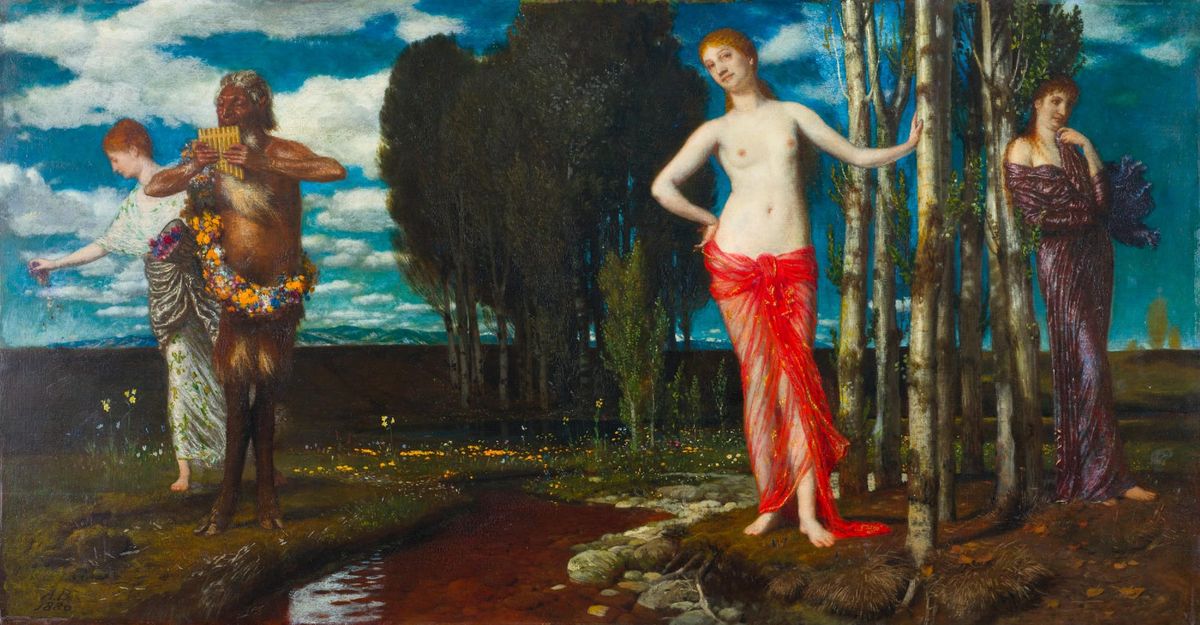
스위스 출신의 상징주의 거장 아놀드 뵈클린(Arnold Böcklin, 1827–1901)이 1880년에 피렌체에서 완성한 유화 봄의 각성(Awakening of Spring, 독일어: Frühlingserwachen)은 66.0 cm × 130.0 cm 크기의 가로형 나무 패널에 유채로 그린 대표작입니다. 현재 스위스 취리히의 쿤스트하우스 취리히(Kunsthaus Zürich)에 소장되어 있습니다.
피렌체 화실에서 맞선 아카데미의 규율과 판 신의 음악
1880년 봄, 피렌체에 머물던 뵈클린은 미술사상 가장 어두운 걸작인 죽음의 섬 첫 번째 버전을 의뢰받아 작업하면서 동시에 이 찬란한 봄의 화폭을 나란히 이젤 위에 올려두었습니다. 당시 유럽 미술계는 자연을 있는 그대로 모사하는 메마른 사실주의와 교훈적인 역사화에 갇혀 있었습니다. 보수적인 비평가들은 뵈클린이 그리는 털북숭이 숲의 신이나 반라의 님프들을 보고 저급한 환상에 불과하다며 차갑게 깎아내렸습니다. 하지만 뵈클린은 화실 안에서 고대 그리스의 신화적 상상력이야말로 박제된 근대 문명을 치유할 유일한 생명의 열쇠라고 굳게 믿었습니다.
화가는 자연의 숨결을 시각화하기 위해 봄을 알리는 고대 신화의 주인공들을 한자리에 불러 모았습니다. 형형색색의 봄꽃 화환을 목에 걸고 판파이프를 부는 목신 판(Pan)의 거친 음악에 맞춰, 숲의 요정은 풀밭 위에 꽃잎을 뿌리고 있습니다. 중앙에서 은빛 자작나무를 잡고 서 있는 눈부신 나체의 님프는 겨우내 얼어붙었던 대지가 다시 깨어나는 생명력 그 자체를 상징하며, 오른쪽 그늘에서 몸을 웅크린 자주색 옷의 여인은 물러가는 겨울의 차가운 잔상을 보여줍니다. 미술 아카데미의 메마른 규칙에 타협하지 않고, 대자연의 원초적인 활력과 소리를 화폭에 담아내고자 했던 화가의 뜨거운 예술적 투쟁이 이 생동감 넘치는 캔버스 안에 고스란히 담겨 있습니다.
붉은 천의 님프에서 피리를 부는 판 신으로, 시선의 심리적 여정
그림을 마주하는 순간 관람객의 무의식적 시선은 화면 중앙 오른쪽에서 자작나무 숲을 등지고 서 있는 님프의 눈부신 피부와 허리에 두른 강렬한 붉은색 비단 천으로 가장 먼저 빨려 들어갑니다. 밝은 햇살을 받아 맑게 빛나는 여인의 당당한 자세와 붉은 천의 선명한 색채는 보는 이에게 답답한 현실을 벗어난 듯한 시각적 해방감을 안겨줍니다.
이어 시선은 화면 왼쪽으로 이동하여, 꽃 목걸이를 두른 채 진지하게 판파이프를 불고 있는 털북숭이 판 신과 그 뒤에서 봄 들판에 꽃잎을 흩뿌리는 여인의 고요한 움직임에 머뭅니다. 푸른 봄하늘과 하얀 뭉게구름 아래로 울려 퍼지는 원초적인 피리 소리를 확인하는 순간, 관람객은 대자연이 품은 태고의 음악과 계절의 변화를 공감각적으로 경험합니다.
마지막으로 시선은 화면 가장 오른쪽에서 겨울의 그늘 속에 조용히 서 있는 자주색 옷의 여인을 지나, 님프들의 발아래로 흐르는 붉은빛 흙탕물 개울과 갓 피어난 노란 들꽃들에 멈춥니다. 겨울의 쓸쓸함을 뒤로하고 푸른 들판과 맑은 하늘로 번져가는 생명의 온기를 확인하며, 관람객은 계절의 순환 속에서 피어나는 원초적 생명의 경이로움과 벅찬 기쁨을 가슴 깊이 마주하게 됩니다.
신화적 상징주의와 생명주의 회화의 정점, 미술계의 평가
미술계는 봄의 각성을 죽음의 섬과 함께 뵈클린의 예술 세계를 지탱하는 가장 눈부신 대척점이자 상징주의 풍경화의 수작으로 평가합니다.
단순한 풍경 묘사를 넘어서, 인물들의 역동적인 상징성과 빛과 색채의 극적인 대비를 통해 보이지 않는 자연의 소리와 생명력을 하나의 완벽한 시각적 하모니로 완성했기 때문입니다. 메마른 학구적 규칙을 거부하고 신화적 활력으로 자연의 정령을 되살려낸 뵈클린의 이 독창적인 화폭은 훗날 아르누보와 상징주의 미술가들에게 지대한 영향을 미치며 시대를 뛰어넘는 명작으로 사랑받고 있습니다.
The Primordial Song of Vernal Light, Awakening of Spring
Painted in 1880 in Florence by the preeminent Swiss Symbolist master Arnold Böcklin (1827–1901), Awakening of Spring (German: Frühlingserwachen) is an oil on wood panel measuring 66.0 cm × 130.0 cm (26.0 in × 51.2 in), preserved in the permanent collection of the Kunsthaus Zürich in Zurich, Switzerland.
The Counterpoint to the Isle of the Dead and the Defense of Mythic Truth
In the spring of 1880, while executing the foundational canvas of his celebrated Isle of the Dead, Arnold Böcklin maintained this radiant celebration of vernal resurrection on a neighboring easel. Contemporary art institutions across Europe remained deeply entrenched in austere academic realism and moralizing historical genres. Conservative critics frequently dismissed Böcklin’s rustic deities and mythological figures as bizarre fabrications unworthy of serious painting. Yet within his Florentine studio, Böcklin was convinced that the untamed vitality of ancient myth offered the only genuine antidote to modern cultural sterility.
Rather than copying botanical topography, Böcklin personified the cyclical breathing of the earth. Bedecked in a vibrant garland of freshly gathered wild blossoms, the woodland god Pan plays his syrinx to arouse the dormant meadow, accompanied by a nymph scattering petals upon the waking earth. At the center, a luminous nude maiden draped in brilliant vermilion silk leans against a stand of silver birches, embodying the fertile resurgence of nature. To the far right, a contemplative figure cloaked in deep violet retreats into the residual chill of winter. Resisting the narrow decorum of academic dogma, Böcklin transformed the panel into a triumphant visual manifesto of primal life forces.
Subconscious Trajectory of the Gaze: From Vermilion Drapery to the Piping Faun
The observer's subconscious gaze is immediately magnetized by the central-right quadrant, arrested by the radiant nude torso of the nymph and the brilliant crimson silk cascading from her hips. Leaning serenely against the slender birch trunks with her head bathed in sunlight, her luminous form delivers an immediate sensation of visual clarity and physical liberation.
The visual path then travels leftward across the landscape to the dark, muscular silhouette of Pan playing his reed pipes, framed by the hand of the attendant maiden strewing petals across the turf. Encountering the deep turquoise expanse and billowing cumulus clouds behind the mythological piper, the viewer directly experiences the acoustic resonance of ancient pastoral music rolling across the reviving meadow.
Finally, the trajectory sweeps toward the far right to take in the introspective figure shrouded in violet drapery, before descending to the reddish-brown stream trickling past yellow wildflowers in the foreground. Observing the delicate contrast between the departing shadow of winter and the vibrant explosion of spring, the spectator perceives the harmonious rhythm of natural rebirth and the unconquerable vitality of the living earth.
The Pinnacle of Mythological Vitalism: Critical Legacy
Art historians revere Awakening of Spring as an essential masterpiece that stands as the radiant counterpart to Böcklin’s darker meditations on mortality.
By synthesizing classical pagan allegory with saturated Mediterranean luminosity, rich textural clarity, and sensory immediacy, Böcklin expanded the boundaries of late 19th-century landscape art. This magnificent panel endures as an inspiring testament to the master's artistic independence, celebrating the sacred vitality of the natural cosmos with profound poetic resonance.
본 컨텐트의 저작권은 팔렛트제주에 있습니다. 허가없는 무단전제를 금지합니다.
Copyright © Palette Jeju. All rights reserved. Unauthorized reproduction or redistribution is strictly prohibited.