푸른 바다 괴물의 똬리와 말을 탄 기사의 구원, 루지에로와 안젤리카 Ruggiero und Angelica
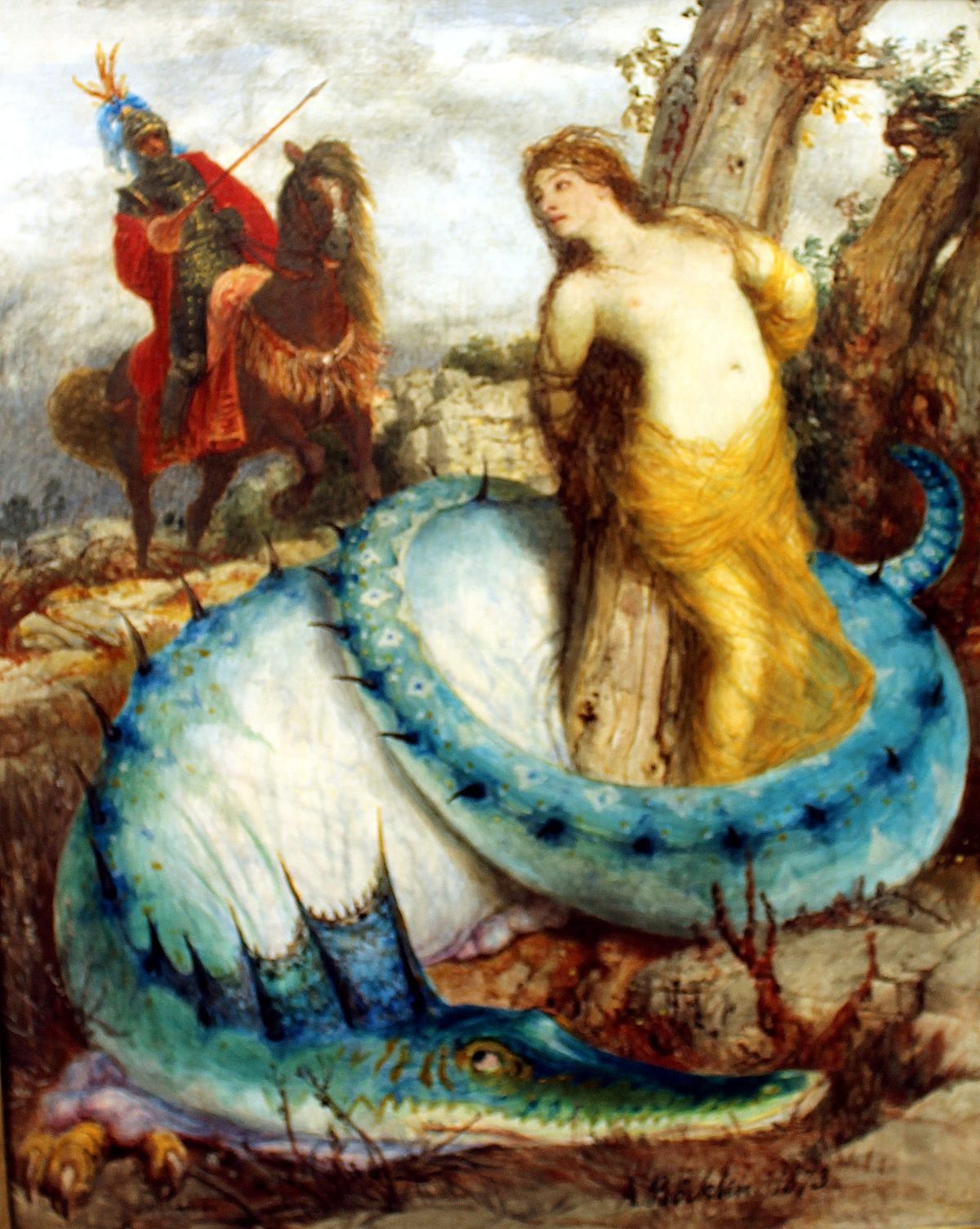
스위스 출신의 상징주의 거장 아놀드 뵈클린(Arnold Böcklin, 1827–1901)이 1873년에 독일 뮌헨에서 완성한 유화 루지에로와 안젤리카(Ruggiero and Angelica, 독일어: Ruggiero und Angelica)는 46.0 cm × 37.0 cm 크기의 나무 패널에 유채와 템페라로 그린 대표적인 기사도 문학 명작입니다. 현재 독일 베를린의 구 국립미술관(Alte Nationalgalerie, Berlin)에 소장되어 있습니다.
화실 통나무에 묶인 모델과 악어 박제를 뜯어보던 괴짜 화가의 집념
1870년대 초반 뵈클린은 이탈리아 르네상스 시인 아리오스토의 서사시 광란의 오를란도에 나오는 유명한 구출 장면을 그리며 자신만의 기발한 화실 실험에 푹 빠져 있었습니다. 당시 고전주의 화가들은 괴물에게 바쳐진 공주를 그릴 때 항상 조각상처럼 꼿꼿하고 우아하게만 그렸습니다. 하지만 뵈클린은 진짜 공포에 질려 바위에 묶인 여인의 절박한 표정을 담아내기 위해, 화실 한가운데에 무거운 통나무 기둥을 세우고 모델의 양손을 뒤로 묶어 몇 시간 동안이나 세워두었습니다. 지친 모델이 도대체 저 기사는 언제 와서 나를 구해주는 거냐며 짜증을 내자, 뵈클린은 저 언덕 위에서 기사가 말을 타고 달려오고 있으니 조금만 더 버티라며 껄껄 웃었습니다.
더욱 흥미로운 일화는 여인을 휘감고 있는 푸른 바다 괴물(오르카)의 탄생 비화입니다. 뵈클린은 전설 속 괴물을 뻔한 용의 모습으로 그리는 것을 시시하게 여겼습니다. 그는 동네 박제상과 수족관을 뒤져 말린 악어 껍질과 도마뱀 가죽, 그리고 커다란 바다 물고기 지느러미를 화실로 잔뜩 가져왔습니다. 악어 주둥이에 뾰족한 가시 지느러미를 붙이고 비단뱀의 비늘 무늬를 조합해 푸른빛의 기괴한 괴물을 직접 조립하듯 창조해 냈습니다. 완성작을 본 비평가들이 거대한 도마뱀에 페인트를 칠해놓은 것 같다며 깎아내리자, 뵈클린은 신화 속 괴물은 박제된 석고상이 아니라 늪지대에서 막 기어 나온 파충류처럼 번들거리고 섬뜩해야 진짜라고 당당하게 맞받아쳤습니다. 낡은 고전의 틀을 깨고 생생한 긴장감과 유쾌한 상상력을 불어넣으려 했던 화가의 고집스러운 장인정신이 이 화폭에 생생히 녹아 있습니다.
눈부신 안젤리카의 나체에서 도사린 푸른 괴물의 눈동자로, 시선의 심리적 여정
그림을 마주하는 순간 관람객의 무의식적 시선은 화면 오른쪽 고목 기둥에 묶여 있는 안젤리카의 눈부신 흰 피부와 허리에 두른 황금빛 비단 천으로 가장 먼저 빨려 들어갑니다. 두 팔이 뒤로 묶인 채 고개를 돌려 다가오는 기사를 바라보는 여인의 가녀린 자세와 긴장된 눈빛은 보는 이에게 깊은 연민과 구원을 향한 간절함을 안겨줍니다.
이어 시선은 여인의 하반신을 거대한 원형으로 옥죄고 있는 에메랄드빛 바다 괴물의 푸른 똬리와, 화면 아래쪽에 엎드려 번뜩이는 노란 눈동자로 이동합니다. 악어를 닮은 주둥이와 등지느러미에 돋아난 날카로운 검은 가시들을 확인하는 순간, 관람객은 언제라도 여인을 집어삼킬 듯 턱밑까지 다가온 맹수의 위협에 숨을 들이켜게 됩니다.
마지막으로 시선은 화면 왼쪽 위 언덕길을 타고 붉은 망토를 휘날리며 창을 꼬나쥐고 달려오는 기사 루지에로와 그가 탄 갈색 군마의 역동적인 모습에 멈춥니다. 투구의 화려한 깃털을 펄럭이며 괴물을 향해 돌진하는 기사의 용맹한 등장을 마주하며, 관람객은 숨 막히는 긴장감 끝에 찾아오는 통쾌한 안도감과 신화적 영웅담이 선사하는 짜릿한 카타르시스를 가슴 깊이 마주하게 됩니다.
기사도 낭만주의와 상징적 환상의 완벽한 결합, 미술계의 평가
미술계는 루지에로와 안젤리카를 19세기 후기 낭만주의와 상징주의 회화가 고전 기사도 문학의 한 장면을 가장 극적인 박진감과 독창적인 환상성으로 시각화한 수작으로 평가합니다.
선명한 원색의 대비, 파충류의 질감을 살린 독창적인 괴물의 조형미, 그리고 절체절명의 순간을 포착한 대각선 구도를 완벽하게 조화시켰기 때문입니다. 문학적 텍스트를 단순한 설명에 그치지 않고 살아 숨 쉬는 감각의 드라마로 탈바꿈시킨 뵈클린의 이 눈부신 캔버스는, 오늘날까지도 그의 풍부한 상상력과 탁월한 색채 감각을 대표하는 명작으로 손꼽히고 있습니다.
The Primeval Peril and the Knightly Deliverance, Ruggiero and Angelica
Painted in 1873 in Munich by the preeminent Swiss Symbolist master Arnold Böcklin (1827–1901), Ruggiero and Angelica (German: Ruggiero und Angelica) is an oil and tempera on wood panel measuring 46.0 cm × 37.0 cm (18.1 in × 14.6 in), preserved in the permanent collection of the Alte Nationalgalerie in Berlin, Germany.
The Model Bound to the Post and the Taxidermy Beast of Munich
During the early 1870s in Munich, Arnold Böcklin immersed himself in Ludovico Ariosto’s Renaissance epic Orlando Furioso, determined to reinvent its famous rescue scene through dynamic studio experimentation. Academic painters traditionally depicted the chained maiden as a placid, decorative marble statue awaiting rescue with polite resignation. Böcklin rejected this sterile decorum. To capture genuine physical exhaustion and psychological panic, he erected a heavy wooden post in his atelier, binding the model’s hands firmly behind her back for grueling hours. When the shivering model complained and asked when the knight would finally arrive to untie her, Böcklin laughed boisterously, urging her to hold on as the hero was already galloping over the hill on his steed.
Equally colorful was the genesis of the aquatic beast, the Orca, coiled around the prisoner. Disdaining generic fairy-tale dragons, Böcklin frequented local taxidermists and naturalists, gathering dried crocodile skins, lizard hides, and spiny marine fish fins into his studio. He combined the elongated snout of a reptile with jagged dorsal fins and spotted serpentine coils, assembling an entirely novel marine terror. When contemporary critics mocked the creature as an absurd painted lizard, Böcklin retorted that authentic mythical monsters should possess the glistening, menacing reality of ancient swamp reptiles rather than hollow classical polish. This unwavering dedication to visceral observation and imaginative wit permeates every brushstroke of the panel.
Subconscious Trajectory of the Gaze: From Bound Captive to the Coiling Beast
The observer's subconscious gaze is immediately seized by the radiant, pale contours of Angelica’s bare torso tied to the weathered tree trunk on the right. Her arched posture, flowing auburn tresses, and anxious upward glance toward the approaching rescuer establish an instant atmosphere of dramatic suspense and vulnerability.
The visual path then shifts downward, following the luminous folds of the golden-yellow silk draped about her hips to the turquoise and azure coils of the sea monster encircling her legs. Encountering the beast's low-slung, reptilian snout, sharp dorsal spines, and predatory yellow eye resting in the foreground dirt, the viewer experiences a visceral shudder at the imminent physical danger menacing the heroine.
Finally, the visual trajectory sweeps toward the upper-left crest, arriving at the valiant figure of the knight Ruggiero charging upon his warhorse with leveled lance and billowing crimson cloak. Observing the dynamic diagonal thrust of the armored champion descending to strike down the coiling terror, the spectator perceives the triumphant resolution of the chivalric quest and the eternal victory of courage over primeval chaos.
The Monument of Chivalric Fantasy: Critical Legacy
Art historians celebrate Ruggiero and Angelica as a dazzling cabinet picture that united 19th-century Romantic literature with the vibrant pictorial language of European Symbolism.
By contrasting saturated jewel tones of blue, scarlet, and gold against rugged earth and stone, and translating mythological narrative into an immediate sensory drama, Böcklin demonstrated his unmatched narrative genius. This captivating masterwork endures as an inspiring testament to the painter's boundless imaginative power, celebrating the enduring heroism of classical romance and the vivid wonders of the mythic imagination.
본 컨텐트의 저작권은 팔렛트제주에 있습니다. 허가없는 무단전제를 금지합니다.
Copyright © Palette Jeju. All rights reserved. Unauthorized reproduction or redistribution is strictly prohibited.