퐁투아즈의 공장 - The Factory at Pontoise (L'Usine à Pontoise)
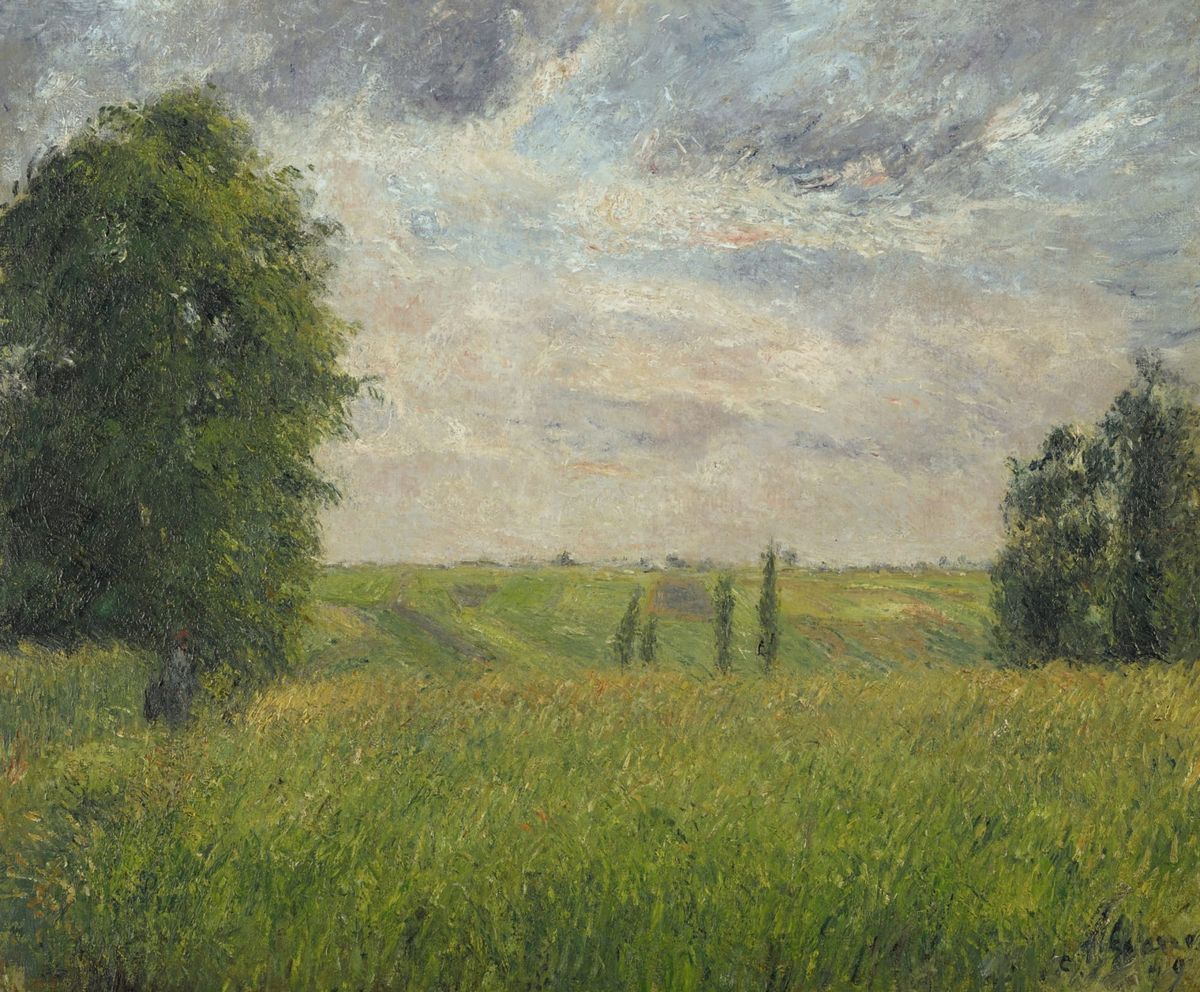
카미유 피사로(Camille Pissarro)가 1873년에 완성한 캔버스 유화 작품입니다. 실제 크기는 약 45.7 x 54.6 cm이며, 현재 미국 매사추세츠주 스프링필드에 위치한 미셸 앤 도널드 드 아무르 미술관(Michele and Donald D'Amour Museum of Fine Arts)에 소장되어 있습니다. 화면 우측 하단에는 화가의 서명과 제작 연도인 '1873 C. Pissarro'가 또렷하게 새겨져 있습니다.
피사로는 은은한 햇살이 비치는 우아즈강(Oise) 수면의 유려한 물결과 공장 굴뚝에서 피어오르는 회백색 연기의 질감을 특유의 촉각적인 분할 붓터치로 포착했습니다. 전면 강둑의 풀밭과 덤불에 얹힌 다채로운 색채 입자들, 그리고 붉은 기와지붕과 공장 건물의 단단한 형태감은 부드러운 유화 물감의 마티에르와 어우러져 근대 산업 문명과 자연이 평화롭게 조화를 이루는 독창적인 풍경을 자아냅니다.
이 작품의 무대가 된 퐁투아즈(Pontoise)는 19세기 후반 급격한 산업화의 물결 속에서 전통적인 전원 풍경과 근대식 공장이 공존하기 시작하던 공간이었습니다. 당시 대다수의 전통 풍경화가들은 공장의 굴뚝과 연기를 '자연을 해치는 흉물'로 여겨 화폭에서 철저히 배제하곤 했습니다.
그러나 피사로는 당대 현실을 회피하지 않고 있는 그대로의 시대를 정직하게 기록하고자 했습니다. 흥미롭게도 1873년은 피사로와 그의 동료들이 이듬해 역사적인 '제1회 인상주의 전시회'를 결성하기 위해 치열하게 예술적 의기투합을 하던 시기였습니다. 젊은 폴 세잔은 피사로의 퐁투아즈 작업실을 수시로 찾아와 곁에서 함께 이젤을 펼치며 대지의 구조적 형태를 다지는 법을 배웠습니다.
피사로는 맑은 강물과 울창한 나무들 사이에 우뚝 솟은 공장 굴뚝을 차갑거나 위협적으로 그리지 않았습니다. 굴뚝에서 뿜어져 나오는 연기는 하늘의 뭉게구름과 자연스럽게 섞여 들고, 강물 위에 비친 굴뚝의 그림자는 잔잔한 물결 속에서 부드럽게 흔들립니다. 가난 속에서도 묵묵히 시대를 응시하며 인간의 노동과 자연의 품이 빚어내는 새로운 공존의 가능성을 따뜻하게 예찬했던 대가의 열린 시선이 캔버스 전체에 흐르고 있습니다.
미술사적으로 이 작품은 인상주의가 근대 산업화라는 시대적 현실을 어떻게 서정적인 회화 언어로 수용했는지를 보여주는 기념비적인 선구작으로 평가받습니다. 모네가 아르장퇴유의 철교와 기차를 통해 속도감을 그렸다면, 피사로는 강변의 고즈넉한 대기 속에 공장의 존재를 자연의 일부처럼 단단하게 정초 시켰습니다.
평단과 후대의 비평가들은 기계 문명의 상징인 공장을 거부감 없이 온화한 자연의 빛 속에 품어 안은 피사로의 깊은 휴머니즘과 탁월한 조형적 균형 감각에 아낌없는 찬사를 보내고 있습니다.
관람자의 무의식적인 시선은 화면 하단에서 잔잔하게 일렁이며 하늘빛과 수풀의 그림자를 투명하게 담아내는 우아즈강의 맑은 수면에서 편안하게 출발합니다.
이어 시선은 강물 위에 길게 드리워진 굴뚝의 그림자를 타고 자연스럽게 수직 상승하여, 화면 중앙의 붉은 지붕 공장 건물과 하늘을 향해 곧게 솟은 높은 굴뚝의 실루엣으로 이동합니다.
이 유려하고 안정적인 상향 시선의 흐름은 복잡한 일상과 도심의 피로에 갇혀 있던 관람객의 뇌파를 순식간에 차분한 알파파 상태로 이끌며, 탁 트인 강변에 서 있는 듯한 깊은 심리적 안도감과 내면의 평온을 선사합니다.
마지막으로 굴뚝 끝에서 피어올라 은은한 햇살을 머금은 하늘의 부드러운 구름과 융합되는 연기의 결을 지나, 우측 강변의 짙푸른 녹음을 돌아 다시 반짝이는 강물로 순환하는 시선의 흐름은, 번잡한 생각을 내려놓고 고요한 강바람을 깊게 들이마시는 듯한 깊은 이완과 온전한 정서적 정화를 안겨줍니다.
The Factory at Pontoise - The Factory at Pontoise (L'Usine à Pontoise)
Painted in 1873 by Camille Pissarro, this oil on canvas measures approximately 45.7 by 54.6 centimeters and is housed in the collection of the Michele and Donald D'Amour Museum of Fine Arts in Springfield, Massachusetts. The artist's signature and date, '1873 C. Pissarro', are inscribed distinctly in the lower right corner.
Employing a tactile and structured network of divided brushstrokes, Pissarro masterfully captures the soft daylight playing across the gently rippling waters of the Oise River and the plumes of smoke drifting into the overcast sky. The rich impasto of wildflowers and shrubs across the left bank, alongside the solid geometry of the terracotta roofs and factory buildings, evokes a unique harmony between rural serenity and modern industry with remarkable sensory intimacy.
During the late nineteenth century, Pontoise stood at the crossroads of agrarian tradition and rapid industrial modernization. While academic landscape painters actively avoided smokestacks as intrusions upon natural beauty, Pissarro embraced the changing physical world with honest curiosity and social realism.
The year 1873 was particularly pivotal, as Pissarro and his close peers were laying the groundwork for the historic First Impressionist Exhibition of 1874. During this time, a young Paul Cézanne frequently joined Pissarro along the riverbanks of Pontoise, learning to build structural permanence upon the canvas under the master's generous guidance.
Pissarro chose not to depict the factory as a menacing symbol of mechanization; instead, the smokestack's grey vapors dissolve softly into the passing clouds, and its vertical reflection trembles gently within the river's current. Enduring poverty while remaining deeply attuned to his era, Pissarro discovered a peaceful reconciliation between human industry and the enduring beauty of the earth.
Art historians recognize this canvas as an essential early milestone of Impressionist modernity, illustrating how industrial progress could be integrated into pastoral poetry. While Claude Monet celebrated the rapid energy of locomotives and iron bridges, Pissarro anchored the presence of the factory within the quiet, organic rhythm of the riverbank.
Modern critics celebrate the work for its democratic warmth and tectonic balance, honoring Pissarro's lifelong ability to discover timeless solace, gentle peace, and universal dignity across the evolving landscapes of nineteenth-century France.
The viewer's subconscious gaze is first welcomed by the clear, shimmering surface of the river in the foreground, mirroring the sky and shoreline reflections.
The eye then glides naturally along the elongated watery reflection of the chimney, ascending toward the factory complex with its warm terracotta rooflines and the tall, commanding smokestack rising into the air.
This grounding vertical movement immediately dissolves psychological confinement, replacing urban fatigue with an intuitive feeling of emotional stability, spaciousness, and restorative calm.
As the visual path circulates through the soft plumes of smoke melting into the breezy sky before returning past the lush riverside trees to the cooling water below, the observer experiences a soothing sensory escape, enveloped in the lasting serenity and quiet grandeur of a peaceful afternoon along the Oise.
본 리뷰에서 작품을 제외한 컨텐츠의 저작권은 팔렛트제주에 있습니다.
"퍼블릭도메인 고전명화"를 제외한 모든 창작 콘텐츠는 저작권법 제4조 및 제10조에 의거하여 보호됩니다. 무단 도용시 저작권법 제136조(벌칙)에 의거, 당사의 사전 서면 승인 없는 저작권 침해 행위를 금지합니다.