포도 수확 The Wine Harvest
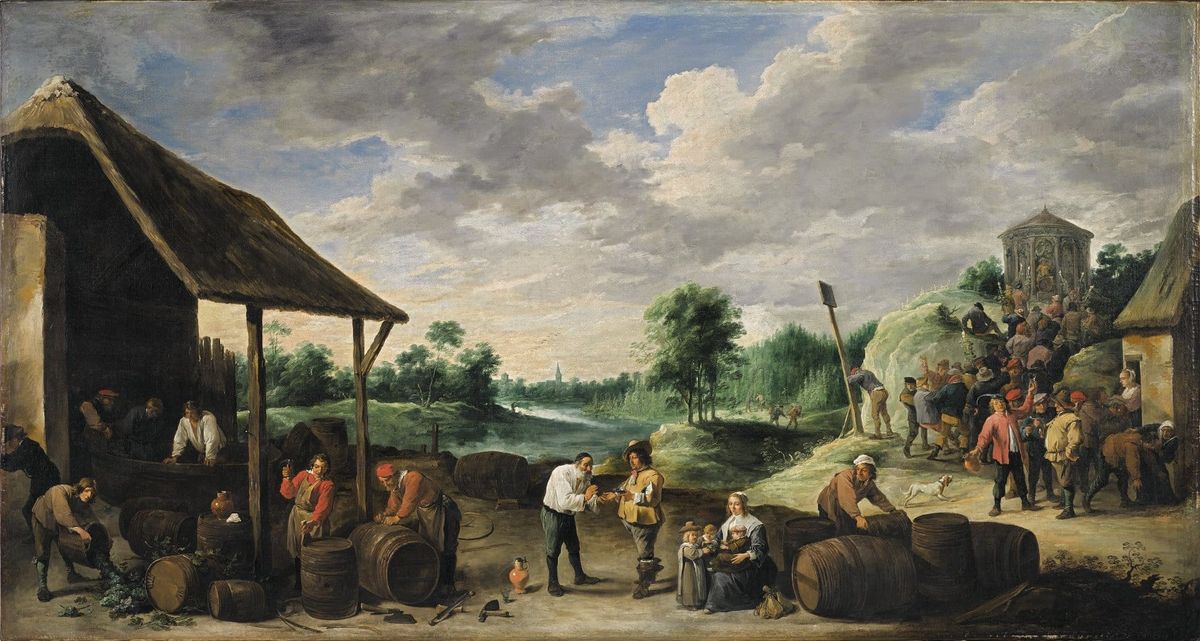
17세기 플랑드르 바로크 풍속화 및 대형 풍경화의 거장 소 다비드 테니어르스(David Teniers le Jeune, 1610–1690)가 1640년대 중반 안트베르펜 전성기 시절에 완성한 기념비적 대형 유화 포도 수확(The Wine Harvest, 네덜란드어: De wijnoogst, 소장 이력 등록 규격)은 142.4 cm × 264.1 cm 크기의 웅장한 가로형 캔버스에 유채로 그린 대표적인 북유럽 풍속 회화 최고 걸작입니다.
18세기 후반(1770년대) 멜버른 자작(Viscount Melbourne) 가문의 소장품으로 편입된 이후 브로켓 홀(Brocket Hall)과 펀시거 하우스(Panshanger House)를 거쳐 영국의 유서 깊은 개인 컬렉션 및 가스(Gage) 자작 가문의 상속 소장품으로 보존되어 오다가, 소더비 경매를 통해 전 세계 미술계의 주목을 받으며 명작의 가치를 이어가고 있습니다.
포도주 양조의 땀방울과 바커스의 축제를 향한 화가의 고뇌
1640년대 중반 안트베르펜에서 활약하던 테니어르스는, 포도 수확과 포도주 양조라는 거대한 농촌의 세시풍속을 단순한 노동의 기록을 넘어 상류층 와인 상인의 의뢰를 담은 기념비적인 대형 인물 풍경화로 어떻게 승화시킬지 깊이 고뇌했습니다.
화가는 거대한 헛간 아래에서 포도를 밟아 짜내는 일꾼들과 통을 손질하는 장인들, 그리고 중앙에서 와인 상인 부부와 거래를 트는 감독관의 모습을 어떻게 맑고 투명한 은빛 대기(Silvery manner) 속에 조화롭게 녹여낼지 치열하게 번민했습니다.
세계적인 테니어르스 연구 권위자인 마르그레트 클링게(Margret Klinge)의 학술 도록 및 소더비 스페셜 아카이브 기록에 따르면, 이 작품은 화면 중앙의 와인 상인 가족 초상과 오른쪽 언덕 위 로마의 술의 신 바커스(Bacchus) 신전을 향해 잔을 들어 올리는 축제 군중의 모습이 결합된 독보적인 구성의 최고 걸작으로 분석됩니다.
화가는 드넓은 포도밭과 강줄기가 내려다보이는 야외 마당에서, 포도 수확의 결실을 기뻐하며 분주히 일하고 축제를 즐기는 사람들의 생생한 순간을 화폭에 담았습니다.
화면 왼쪽 전면의 헛간 아래에서는 건장한 일꾼들이 거대한 나무 통 안에서 포도를 발로 밟아 즙을 짜내고 있으며, 그 옆에서는 통 협동 장인(Cooper)들이 나무 통을 분주히 손질하고 있습니다.
화면 중앙에서는 붉은 조끼의 현장 감독이 와인 상인에게 새로운 빈티지의 술을 잔에 따라 보이며 거래를 제안하고 있고, 상인의 아내는 돈주머니를 든 채 곁을 지키고 있으며, 화면 오른쪽 언덕 위 바커스 신전 앞에서는 사람들이 모여 축배를 들고 있습니다.
화면 전체를 거대하게 감싸 안는 눈부신 은빛 구름과 유유히 흐르는 강물, 그리고 화면 오른쪽 하단에서 유리잔을 들어 올리는 화가 자신의 자화상적 인물은 노동의 환희와 자연의 은총을 손에 잡힐 듯 생생하게 웅변합니다.
포도를 밟는 일꾼들에서 와인 상인 부부와 언덕 위 바커스 신전으로, 시선의 심리적 여정
그림을 마주하는 순간 관람객의 무의식적 시선은 화면 왼쪽 전면 헛간 그늘 속에서 커다란 통에 들어가 구슬땀을 흘리며 포도를 밟는 일꾼들의 역동적인 동세로 가장 먼저 빨려 들어갑니다.
결실을 얻기 위해 몸을 아끼지 않고 땀 흘리는 노동자들의 진지한 몸짓은 보는 이에게 깊한 시각적 현장감과 함께 수확의 묵직한 무게감을 선사합니다.
이어 시선은 화면 한가운데로 이동하여 새로운 포도주 맛을 보여주는 감독과 이를 진지하게 맛보는 와인 상인의 부유한 차림새, 그리고 그 옆에서 아기가 안긴 품을 돌보는 어머니와 아이들의 평화로운 일상으로 이동합니다.
노동의 현장에서 상업적 거래와 가족의 따스한 일상으로 시선이 부드럽게 전개되는 순간, 관람객은 알싸한 포도 향과 웅성거리는 장터의 활기가 가득한 17세기 플랑드르 풍경 속으로 온몸이 빨려 들어가게 됩니다.
마지막으로 시선은 화면 오른쪽 언덕 비탈길을 따라 바커스 신전의 제단으로 향하는 축제 무리와 잔을 높이 치켜든 군중의 흥겨운 자태를 거쳐, 하늘 높이 펼쳐진 장엄한 뭉게구름과 대기 원근법으로 아스라이 멀어지는 원경의 강줄기에 멈춥니다.
전면 노동의 치열함과 후면 축제의 환희가 빚어내는 완벽한 파노라마적 균형을 마주하며, 관람객은 자연의 섭리와 인간의 수고가 빚어낸 찬란한 생명의 찬가를 가슴 깊이 마주하게 됩니다.
17세기 플랑드르 대형 풍속화의 정점과 조형미, 미술계의 평가
미술계와 학술 도록은 포도 수확을 테니어르스가 역대 작가 통틀어 시장에 나온 가장 크고 위대한 규모의 대형 캔버스 회화로 평가하며, 정교한 인물 군상 묘사와 거대한 대자연의 대기감을 가장 완벽한 조화로 융합해 낸 최고봉 마스터피스로 극찬합니다.
단순한 전원 풍경을 넘어 상류층의 품격 있는 초상 성격과 노동의 현장을 웅장한 가로형 파노라마 구도 속에 완벽하게 담아냈을 뿐만 아니라, 묵직한 나무 통의 결, 포도알의 투명한 질감, 비단 옷의 부드러운 광택, 가을 하늘을 뒤덮은 은빛 구름의 습도까지 극도로 섬세한 북유럽 사실주의 유화 기법으로 완벽하게 구현했기 때문입니다.
인간의 수고와 대지의 풍요로움을 가장 격조 높은 시각 서사시로 승화시킨 테니어르스의 이 걸작 화폭은, 오늘날까지도 전 세계 수많은 감상자들에게 깊은 감탄과 잊을 수 없는 시각적 황홀감을 전해주는 불멸의 명작으로 손꼽히고 있습니다.
The Wine Harvest
Painted in the mid-1640s at the height of his career in Antwerp by the master of Flemish Baroque genre and landscape painting David Teniers the Younger (1610–1690), The Wine Harvest (Dutch: De wijnoogst) is a monumental horizontal genre masterpiece in oil on canvas measuring 142.4 cm × 264.1 cm (56 in × 104 in).
Preserved through an unbroken lineage in prominent English private collections since being acquired by the Viscounts Melbourne in the 1770s, it remained a treasured heirloom at Brocket Hall and Panshanger House before entering the open art market via Sotheby's.
Viticultural Labor, Bacchic Festivity, and the Wine Merchant’s Commission
During the mid-1640s in Antwerp, David Teniers the Younger elevated the traditional theme of the grape harvest into a grand, multi-figure narrative canvas that united large-scale rustic labor with an unprecedented aristocratic portrait commission.
Moving beyond small-scale cabinet panels, the master meditated deeply on how to orchestrate a bustling rural panorama featuring grape-treaders, coopers, wine merchants, and celebrating villagers beneath his signature silvery atmospheric light.
According to scholarship by leading David Teniers expert Margret Klinge and Sotheby's curatorial records, this magnificent painting is unique in the artist's oeuvre for its dual role as a detailed depiction of the wine-making process and a specialized portrait of a prominent wine merchant and his family interacting with foremen in the center.
Teniers staged the sprawling panoramic composition across an expansive vineyard estate overlooking a winding river valley.
In the left foreground beneath the thatch of a large open-sided barn, burly laborers tread grapes within a massive wooden vat, while coopers busy themselves repairing barrels with specialized tools scattered across the ground.
In the center, a foreman proffers a saucer of the new vintage to a well-dressed wine merchant while his wife guards their money bags, and on the right hillside, a joyous throng of villagers ascends toward a stone Bacchic temple to celebrate the harvest.
Framed by towering cumulus clouds, tranquil waters, and a self-portrait-like figure raising a glass on the right, the composition celebrates the joyous fruits of human industry and the divine bounty of nature.
Subconscious Trajectory of the Gaze: From the Grape Treaders to the Bacchic Temple
The observer's subconscious gaze is immediately magnetized by the left foreground, drawn to the vigorous physical exertions of the laborers treading grapes within the shadowy depths of the wooden press.
Their straining muscles, focused movements, and the rustic density of the winemaking equipment establish an instant focal point of physical energy, earthy realism, and narrative weight.
The visual path then shifts toward the sunlit center, following the transaction between the wine merchant and the estate foreman, before resting upon the tranquil vignette of a mother nursing her child nearby.
Taking in the smooth transition from grueling manual labor to refined commercial exchange and domestic calm, the viewer directly experiences the rich social tapestry and sensory vibrancy of a 17th-century autumn estate.
Finally, the visual trajectory sweeps upward along the right-hand slope toward the stone temple of Bacchus where revellers raise their cups, before lifting toward the expansive, cloud-filled sky above the distant horizon.
Observing the harmonious equilibrium between foreground agrarian toil, wide panoramic breadth, and precise Netherlandish draftsmanship, the spectator perceives the timeless nobility of harvest labor and the profound aesthetic brilliance Teniers embedded within the canvas.
The Monument of Flemish Panoramic Genre: Critical Legacy
Art historians and specialist catalogues revere The Wine Harvest as the largest and finest masterpiece by David Teniers the Younger ever to appear on the public art market, representing the absolute apex of his narrative and compositional powers.
By orchestrating delicate textural contrasts between rustic timber vats, translucent grapes, shimmering silk garments, glistening glassware, and moisture-laden autumn clouds within a unified horizontal space, Teniers transformed an agricultural season into an exquisite aesthetic treatise on joy, commerce, and human community.
This magnificent historical canvas endures as an inspiring testament to the master's creative fortitude, celebrating the quiet poetry of everyday existence and the transformative grace of living art.
본 컨텐트의 저작권은 팔렛트제주에 있습니다. 허가없는 무단전제를 금지합니다.
Copyright © Palette Jeju. All rights reserved. Unauthorized reproduction or redistribution is strictly prohibited.