피레네의 가축들 - Weaning the Calves (La Séparation des veaux / 피레네의 송아지 젖떼기)
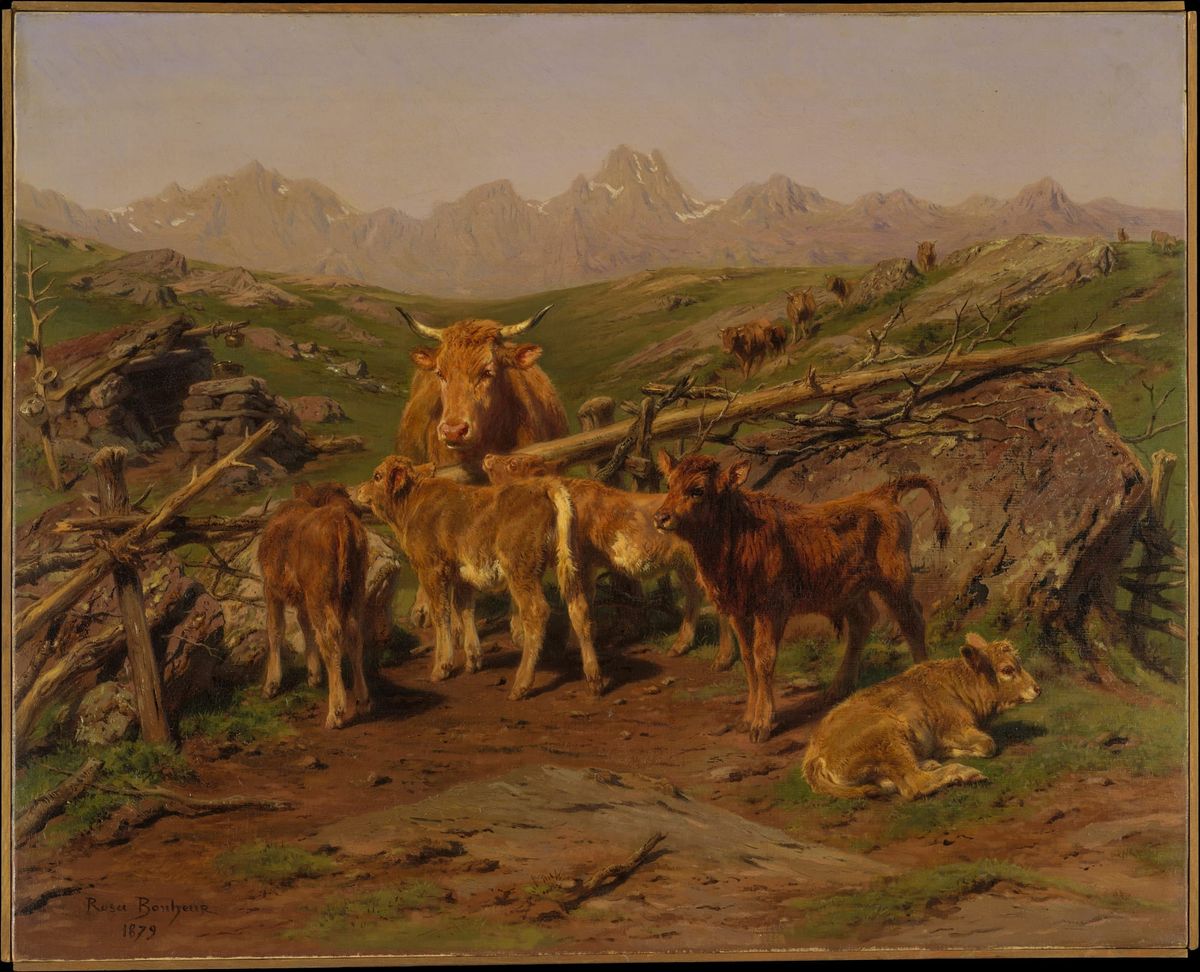
1879년 19세기 프랑스 사실주의 및 동물 회화의 위대한 거장 로자 보뇌르(Rosa Bonheur)가 제작한 유화 작품 《피레네의 가축들》은 피레네 산맥의 웅장한 자연과 어미 소 및 송아지들의 모성적 교감을 정교한 빛과 필치로 포착해 낸 회화사의 명작으로, 현재 뉴욕 메트로폴리탄 미술관(The Metropolitan Museum of Art)에 원본 유화가 소장되어 있으며 실제 크기는 약 65.4 × 81.3 cm의 깊이 있고 웅장한 수작입니다.
이 화면은 웅장한 피레네 산봉우리들을 배경으로, 소나무 울타리 뒤편에서 어미 소가 안타까운 시선으로 바라보는 가운데 전경 들판에서 젖을 떼기 위해 분리된 어린 송아지들의 다채롭고 정숙한 순간을 정교한 유화 기법으로 포착해 낸 명작입니다. 화가는 화면 중앙 울타리 너머로 우뚝 서 있는 어미 소의 따스한 눈빛과, 그 앞에 모여 서 있거나 바닥에 살머시 웅크리고 있는 붉은빛 송아지들의 포근한 털 질감, 그리고 아득한 산맥 지평선 위로 내리쬐는 자연광의 세밀한 명암 대조를 정밀하게 부각시켰습니다.
작품 속에는 1850년 피레네 산맥을 여행한 이후 남프랑스 고원 지대의 풍경과 축산 동물의 생태에 매료되었던 로자 보뇌르의 정교한 사실주의 미학 비하인드 스토리가 흐릅니다. 보뇌르는 단순히 시골 풍경을 장식적으로 그리는데 그치지 않고, 젖을 떼는 과정에서 생기는 동물의 정서적 유대감과 애틋한 모성, 그리고 대자연의 일부로서 가축들이 지닌 존엄성을 화폭에 정직하게 담아냈습니다. 목재 울타리의 거친 나무껍질 질감과 송아지들의 세밀한 털결, 그리고 멀리 보이는 피레네의 설산 봉우리 표현은 당대 사실주의 회화가 도달한 높은 수준의 조형적 완성도를 생생하게 증명합니다. 좌측 하단의 'Rosa Bonheur 1879' 서명과 연도는 거장의 정점 시절 손길을 정직하게 기록하고 있습니다.
후대 평단과 관객들은 이 유화를 19세기 근대 동물 회화가 도달한 극상의 사실성과 자연주의적 정서의 결정체로 평가합니다. 붉은 황토빛 송아지 털과 웅장한 연보랏빛 산맥, 그리고 푸른 들판이 이루는 조화로운 색채 스펙트럼은 관객에게 시대를 초월한 서정적 감동과 깊은 평온함을 선사합니다.
이 그림을 마주하는 관람객의 무의식적 시선은 가장 명쾌한 빛을 받아 부각되는 화면 중앙, 울타리 너머에서 송아지들을 고요히 바라보는 어미 소의 온화한 두상과 깊은 눈망울로 가장 먼저 끌려갑니다. 자애로움과 경계심을 동시에 품은 동물의 표정은 관람객의 마음에 묵직한 시각적 중심과 정숙한 평온함을 안겨줍니다.
이어 시선은 어미 소 앞에 모여 있는 어린 송아지들의 귀여운 자태를 따라 내려와, 우측 전경에서 오른쪽을 향해 서 있는 송아지의 단단한 몸체 윤곽과 바닥에 아늑하게 엎드려 휴식을 취하는 송아지의 정갈한 포즈, 그리고 좌측의 고풍스러운 석조 및 목재 울타리 구조로 자연스럽게 이동합니다. 섬세한 유화 물감층이 만들어낸 빛의 반사와 털의 사실적인 질감은 화면 전체에 든든한 조형적 안정감과 품격을 더해줍니다.
마지막으로 시선은 인물들 뒤편으로 웅장하게 펼쳐진 피레네 산맥의 우뚝 솟은 봉우리들과 은은한 하늘 여백, 그리고 좌측 하단에 정교하게 새겨진 'Rosa Bonheur 1879' 서명 속으로 낙하하여 정착합니다. 이러한 무의식적 시선의 흐름은 대지의 순수한 생명력과 자연의 숭고함이 교차하는 고요하고 아늑한 성소로 감상자를 자연스럽게 인도하며, 마음에 닿는 차분하고 정갈한 여운을 오래도록 남깁니다.
In 1879, Rosa Bonheur, one of the most celebrated Realist masters of Western art history, created the evocative pastoral canvas titled "Weaning the Calves" (La Séparation des veaux). Preserved in the Metropolitan Museum of Art in New York, this original oil-on-canvas measures approximately 65.4 × 81.3 cm. This artwork finely captures the emotional bond between livestock, the tactile warmth of sunlit coats, and the majestic backdrop of the Pyrenees mountains through an extraordinary, unmatched mastery of Realist naturalism.
The painting visually manifests a mother cow standing behind a rustic timber barrier, watching over a cluster of young reddish-brown calves gathered in the foreground pasture during the weaning process beneath a hazy mountain sky. Historical context highlights Bonheur's deep attachment to the Pyrenean landscape following her travels through southern France. Rather than treating livestock as mere agricultural subjects, Bonheur recorded the authentic emotional weight of separation, the soft texture of calf fleece, the weathered grain of the wooden fence, and the jagged, snow-dusted alpine peaks framing the horizon with scientific precision and painterly warmth.
Art historians and critics continuously extol this canvas as a supreme triumph of 19th-century French animal painting, celebrating Bonheur's ability to combine anatomical accuracy with rich, atmospheric light. The striking contrast between the warm tawny hides of the cattle, the rustic timber structures, the verdant mountain slopes, and the soft purple-grey mountain range creates an enduring atmosphere of quiet sanctity and emotional permanence.
The moment an observer encounters this artwork, their gaze is subconsciously drawn straight to the sharply illuminated head and gentle, watchful eyes of the mother cow standing behind the wooden barrier at the center. Her calm, protective posture immediately diffuses tension, instilling a comforting sense of warmth and quiet composure.
Next, the eye glides smoothly down along the rustic fence toward the group of calves standing in the foreground, tracing the alert form of the standing calf on the right and the reclining calf resting peacefully upon the grass at the lower right. The rich, tactile definition of the layered oil glazes endows the cattle with profound physical weight and structural clarity.
Finally, the viewer's gaze drifts past the distant herd grazing along the upper ridge toward the towering Pyrenean peaks in the background before coming to rest upon the signature "Rosa Bonheur 1879" inscribed at the lower left corner. This natural visual journey guides the spectator into a state of quiet, reverent reflection, leaving a lasting impression of nature, craftsmanship, and timeless peace.
본 리뷰에서 작품을 제외한 컨텐츠의 저작권은 팔렛트제주에 있습니다.
"퍼블릭도메인 고전명화"를 제외한 모든 창작 콘텐츠는 저작권법 제4조 및 제10조에 의거하여 보호됩니다. 무단 도용시 저작권법 제136조(벌칙)에 의거, 당사의 사전 서면 승인 없는 저작권 침해 행위를 금지합니다.