프로방스의 농가 - Farmhouse in Provence
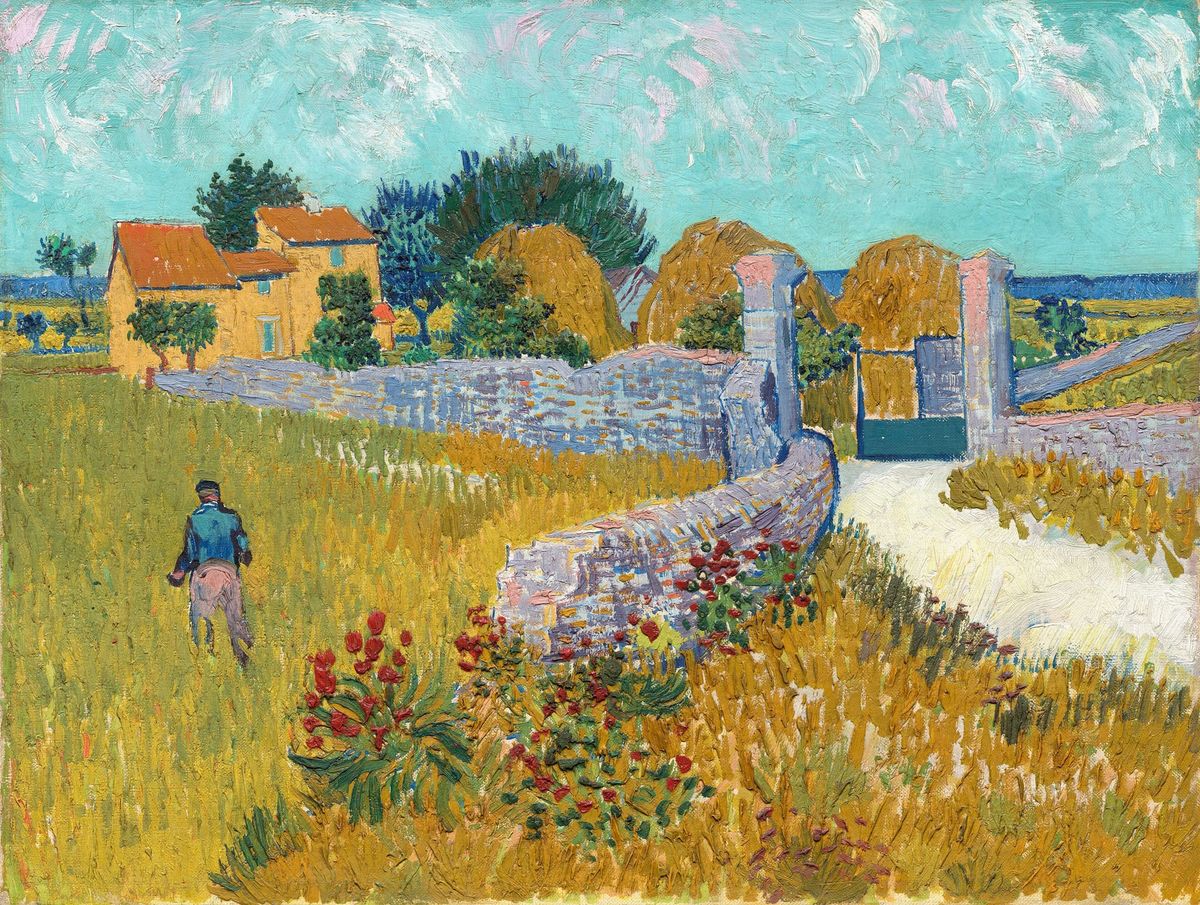
네덜란드 후기 인상주의 거장 빈센트 반 고흐가 1888년 5월 프랑스 남부 아를(Arles)에서 제작한 유화 작품으로, 캔버스에 유채 기법으로 완성되었으며 크기는 세로 46.1cm, 가로 60.9cm입니다. 현재 미국 워싱턴 D.C.에 위치한 국립미술관(National Gallery of Art, Ailsa Mellon Bruce Collection)에 영구 소장되어 있습니다. 화면을 눈부시게 밝히는 황금빛 밀밭과 선명한 터키석 빛깔의 하늘, 그리고 두텁고 짧게 끊어 칠한 임파스토 기법은 반 고흐가 남프랑스의 강렬한 햇살 아래서 색채의 순수한 힘을 극한으로 끌어올리던 아를 시기 황금기의 정수를 여실히 보여줍니다.
1888년 봄, 번잡한 파리를 떠나 남프랑스 아를에 도착한 반 고흐는 프로방스의 맑고 투명한 빛과 원색의 강렬함에 완전히 매료되어 있었습니다. 당시 그는 동생 테오에게 보낸 편지에서 보라색과 노란색, 파란색과 주황색 같은 보색 대비의 조화를 실험하며 자연이 내뿜는 찬란한 빛을 화폭에 온전히 담아내고자 하는 벅찬 희열을 고백했습니다. 미술사학계와 평단에서는 이 작품을 반 고흐가 전통적인 원근법의 틀을 넘어선 대담한 공간 구성과 색채의 보색 대비를 통해 자연의 원초적인 생명력을 시각적 음악처럼 조화롭게 구현한 걸작으로 평가합니다. 시골 농가의 고즈넉함과 작열하는 태양의 에너지를 동시에 담아낸 아를 시기의 대표적인 풍경화로 손꼽힙니다.
작품을 마주하는 관람자의 무의식적인 시선은 전면에 흐드러지게 피어난 붉은 들꽃과 황금빛으로 물든 수확기의 밭에 가장 먼저 머뭅니다. 따뜻하고 경쾌한 노란색과 붉은색의 조화는 시각적 피로를 단숨에 씻어내며 마음에 풍요로운 생기를 불어넣어 줍니다. 이어 시선은 밭을 묵묵히 걸어가는 농부의 실루엣을 지나, 화면을 부드러운 곡선으로 가로지르는 돌담과 푸른 대문을 따라 자연스럽게 이동합니다.
마지막으로 시선은 돌담 너머 자리 잡은 아늑한 노란 농가와 거대한 건초더미, 그리고 상단의 청량한 푸른 하늘로 확장됩니다. 대지의 따스한 온기에서 출발해 탁 트인 푸른 하늘의 청량감으로 귀결되는 이 시각적 여정은 관람자의 뇌파를 안정시키고 깊은 심리적 해방감과 정서적 안도감을 선사합니다. 남프랑스의 눈부신 햇살이 전하는 긍정적인 에너지는 보는 이의 무의식 속에 쌓인 긴장을 완화하고, 삶에 대한 은은한 감사와 마음의 평온을 회복하게 만듭니다.
Farmhouse in Provence - Farmhouse in Provence
Painted in May 1888 during his luminous stay in Arles, France, this masterwork by Dutch Post-Impressionist Vincent van Gogh is an oil on canvas measuring 46.1 by 60.9 centimeters. It is currently preserved in the permanent collection of the National Gallery of Art in Washington, D.C., as part of the Ailsa Mellon Bruce Collection. Defined by radiant golden fields, vibrant turquoise skies, and a rhythmic, textured impasto, the painting captures the pinnacle of Van Gogh's Arles period, where pure color and dynamic brushwork converge to express the intense brilliance of the southern sun.
Arriving in Arles in the spring of 1888 to escape the gray chill of Paris, Van Gogh found profound creative liberation in the saturated light and dramatic contrasts of Provence. In letters to his brother Theo, he enthusiastically described his experiments with complementary color harmonies, placing yellows against violets and blues against oranges to evoke the vibrant pulse of nature. Modern art historians and critics celebrate this composition for its innovative spatial arrangement and chromatic balance, which elevates a rustic rural motif into a sublime visual harmony. The work stands as a quintessential celebration of earthly abundance and rural tranquility rendered through Van Gogh's deeply personal modern vision.
Upon engaging with the canvas, the viewer's subconscious gaze is immediately captivated by the vibrant red wildflowers and the undulating golden wheat across the foreground. This warm and invigorating color harmony disarms mental fatigue, instantly imparting a sense of renewal and uplifting warmth. The eye then glides past the solitary figure of the farmer toward the curving stone wall, which gracefully leads toward the open gateway and the country path.
Finally, the visual journey sweeps past the sheltering yellow farmhouse and sunlit haystacks into the vast, crystalline expanse of the turquoise sky. Moving seamlessly from the grounded warmth of the harvest to the airy clarity of the heavens, this organic rhythm instills a profound feeling of psychological grounding, emotional catharsis, and serene equilibrium. The radiant warmth of the Provençal light offers viewers an uplifting sanctuary of peace, restoring vitality and inspiring gentle optimism.
본 리뷰에서 작품을 제외한 컨텐츠의 저작권은 팔렛트제주에 있습니다.
"퍼블릭도메인 고전명화"를 제외한 모든 창작 콘텐츠는 저작권법 제4조 및 제10조에 의거하여 보호됩니다. 무단 도용시 저작권법 제136조(벌칙)에 의거, 당사의 사전 서면 승인 없는 저작권 침해 행위를 금지합니다.