플로라의 제국 세부화 L'Empire de Flore détail
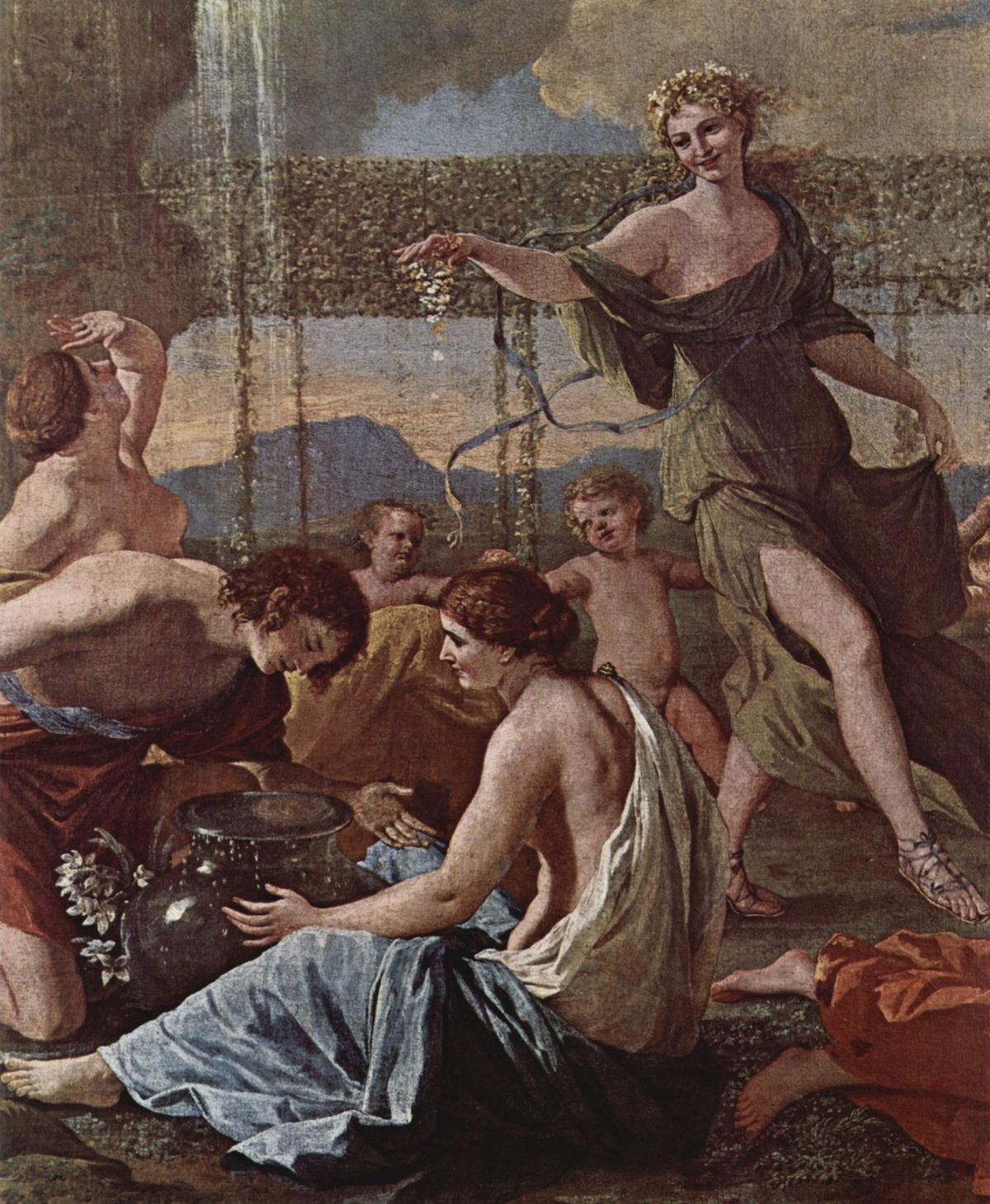
17세기 프랑스 고전주의 회화의 시조이자 서양 미술사 불멸의 거장 니콜라 푸생(Nicolas Poussin, 1594–1665)이 1631년 로마에서 완성한 신화 대작 플로라의 제국(The Empire of Flora, 또는 The Realm of Flora, 프랑스어: L'Empire de Flore, 독일어: Das Reich der Flora, 소장품 번호: Gal.-Nr. 719)은 전체 원작 크기가 131.0 cm × 181.0 cm에 달하는 웅장한 캔버스에 유채로 그린 대표적인 고전 신화화 최고 걸작입니다.
본 작품은 원작 전체 화면 중 춤추는 봄의 여신 플로라와 물에 비친 자신을 바라보는 나르키소스, 그리고 그를 애타게 바라보는 숲의 요정 에코가 어우러진 핵심 영역을 가깝게 포착한 세부화(細部畫, 부분 확대 그림)입니다.
원작은 현재 독일 드레스덴의 드레스덴 국립미술관 옛 거장 회화관(Gemäldegalerie Alte Meister, Dresden)에 소장되어 있습니다.
오비디우스의 변신 이야기와 죽음 너머 피어나는 꽃을 향한 화가의 고뇌
1630년경 로마에서 극심한 생활고와 질병의 고통을 이겨낸 푸생은, 시칠리아의 명망 높은 귀족이자 예술 애호가였던 파브리치오 발구아르네라(Fabrizio Valguarnera)의 주문을 받아 고대 로마 시인 오비디우스의 변신 이야기를 바탕으로 한 대작에 착수했습니다.
당시 푸생은 비극적인 죽음과 상실의 고통 속에서도 자연의 순환을 통해 새로운 생명으로 다시 피어나는 고대 신화의 영원한 생명력을 회화로 어떻게 시각화할지 치열하게 번민했습니다.
화가는 꽃의 여신 플로라가 주관하는 마법의 정원에서 죽음을 맞이한 비극적 영웅과 요정들이 아름다운 꽃으로 환생하는 축제의 순간을 화폭에 담았습니다.
화면 오른쪽 위에는 화사한 꽃관을 쓰고 올리브색 드레스를 펄럭이며 우아하게 춤추는 여신 플로라가 오른손으로 흰 꽃송이를 허공에 흩뿌리고 있습니다.
그 아래쪽에는 숲의 요정 에코가 바닥에 앉아 자신의 사랑을 거절한 미청년 나르키소스를 안타까운 눈빛으로 응시하고 있습니다.
물항아리에 담긴 물에 비친 자신의 얼굴에 도취되어 서서히 수선화로 변해가는 나르키소스의 붉은 겉옷과, 그 곁에서 맑은 샘물을 향해 손을 뻗는 에코의 애절한 몸짓은 사랑의 비극조차 영원한 꽃의 향기로 정화하는 고전 신화의 숭고한 섭리를 손에 잡힐 듯 생생하게 웅변합니다.
춤추는 플로라의 손끝에서 물을 바라보는 나르키소스와 에코의 눈빛으로, 시선의 심리적 여정
그림을 마주하는 순간 관람객의 무의식적 시선은 화면 오른쪽 위에서 봄 햇살을 받아 눈부시게 빛나는 꽃의 여신 플로라의 화사한 미소와 허공을 향해 부드럽게 뻗은 오른손으로 가장 먼저 빨려 들어갑니다.
바람에 흩날리는 올리브색 옷자락 사이로 드러난 건강한 다리와 여신의 손끝에서 흩날리는 하얀 꽃잎들은 보는 이에게 깊은 시각적 생명력과 함께 긴 겨울을 지나 봄을 맞이하는 영혼의 설렘을 선사합니다.
이어 시선은 여신의 손끝에서 떨어지는 꽃잎을 따라 화면 중앙 아래로 이동하여, 짙은 파란색 천을 두르고 등을 보인 채 앉아 있는 요정 에코의 매끄러운 어깨와 애절한 옆얼굴로 옮겨갑니다.
에코의 시선을 따라 항아리에 담긴 물을 홀린 듯 내려다보는 미소년 나르키소스의 젖혀진 고개와 그 곁에 피어난 순백의 수선화를 확인하는 순간, 관람객은 자기애와 짝사랑의 비극이 꽃으로 승화되는 신화 속 마법의 정원 한복판 속으로 온몸이 빨려 들어가게 됩니다.
마지막으로 시선은 화면 뒤편에서 손을 잡고 둥글게 춤을 추는 천진난만한 아기 천사들의 장난기 어린 몸짓을 지나, 저 멀리 푸른 산맥의 능선과 황금빛으로 물든 아침 하늘에 멈춥니다.
춤추는 인물의 곡선과 앉아 있는 인물들의 조각 같은 배치가 빚어내는 완벽한 고전적 조화를 마주하며, 관람객은 슬픔을 초월하여 자연의 아름다움으로 거듭나는 영원한 재생의 신비와 거장 푸생이 건네는 묵직한 지적 감동을 가슴 깊이 마주하게 됩니다.
17세기 프랑스 고전주의 신화 우의화의 정점과 조형미, 미술계의 평가
미술계는 드레스덴 미술관의 플로라의 제국 중 이 세부화를 푸생이 청년 시절 티치아노의 황홀한 베네치아풍 색채와 라파엘로의 완벽한 군상 조형미를 최고조로 융합해 낸 대표적인 걸작 영역으로 평가합니다.
여러 개의 독립된 비극 신화를 꽃이라는 하나의 통일된 주제 아래 완벽한 기하학적 균형으로 직조해 냈을 뿐만 아니라, 부드러운 살결의 촉각적 물질감, 바람에 흩날리는 옷감의 가벼움, 물항아리와 수선화의 디테일을 극도로 섬세한 명암법으로 완벽하게 구현했기 때문입니다.
인간의 유한한 운명을 눈부신 자연의 찬가로 승화시킨 푸생의 이 걸작 화폭은, 오늘날까지도 전 세계 수많은 감상자들에게 깊은 감탄과 잊을 수 없는 시각적 전율을 전해주는 불멸의 명작으로 손꼽히고 있습니다.
Detail of Flora, Echo, and Narcissus from The Empire of Flora
Painted in 1631 in Rome by the founder of French classicism and immortal master Nicolas Poussin (1594–1665), Detail of Flora, Echo, and Narcissus from The Empire of Flora (also titled The Realm of Flora, French: L'Empire de Flore détail, German: Das Reich der Flora, Inventory No. Gal.-Nr. 719) represents the radiant central narrative core of the monumental mythological masterpiece measuring 131.0 cm × 181.0 cm (51.6 in × 71.3 in).
This close-up detail painting captures the principal dancing and mourning figures from the masterwork, preserved in the distinguished permanent collection of the Gemäldegalerie Alte Meister in Dresden, Germany.
Ovid's Metamorphoses, Valguarnera's Commission, and the Cycle of Rebirth
Commissioned in Rome by the Sicilian nobleman and connoisseur Fabrizio Valguarnera, this monumental mythological composition drew inspiration from the classical poetry of Ovid's Fasti and Metamorphoses.
Having recently endured severe personal illness and financial distress, Poussin reflected deeply upon the ancient poetic concept that physical death and unrequited passion are transfigured through natural metamorphosis into eternal floral beauty.
The composition captures the magical garden of Flora, the goddess of flowers and spring, where mythological figures who perished tragically are reborn from the earth as blossoms.
In the upper-right register, the smiling goddess Flora dances with buoyant grace, crowned with blossoms and scattering white petals from her outstretched hand.
Below her, the mountain nymph Echo reclines upon the grass draped in ultramarine, gazing with tragic longing at the vain youth Narcissus.
Mesmerized by his own reflection in the bronze water urn, Narcissus leans forward as white narcissus flowers sprout beside him, transforming unfulfilled mortal longing into a timeless allegory of natural renewal and eternal harmony.
Subconscious Trajectory of the Gaze: From Dancing Flora to Narcissus and Echo
The observer's subconscious gaze is immediately magnetized by the upper-right register, drawn to the radiant, dancing figure of Flora crowned with fragrant blossoms.
Her classical smile, windblown olive-green drapery, and the delicate gesture of her right hand scattering white petals create an instant focal point of kinetic vitality, divine joy, and vernal celebration.
The visual path then follows the falling shower of blossoms downward to the bare back and classical profile of the nymph Echo seated in the foreground.
Following Echo’s yearning gaze across to Narcissus crouching over the water urn in his terracotta tunic, the viewer directly experiences the bittersweet psychological tension between fatal vanity and unrequited love.
Finally, the visual trajectory sweeps past the playful, dancing putti in the middle distance toward the trellis of the garden and the serene blue mountains framed against the morning sky.
Observing the harmonious equilibrium between rhythmic bodily movements, rich Venetian colorism, and classical relief draftsmanship, the spectator perceives the timeless nobility of nature and the profound aesthetic solace Poussin embedded within the canvas.
The Monument of French Classical Allegory: Critical Legacy
Art historians revere the Dresden Empire of Flora detail as one of Poussin’s most poetic and harmonious mythological achievements, illustrating his complete mastery of narrative counterpoint and antique form.
By orchestrating delicate textural contrasts between sunlit porcelain skin, flowing silk draperies, cold bronze vessels, and fresh botanical blooms within a unified geometric scheme, Poussin elevated a series of tragic pagan myths into an exquisite aesthetic treatise on cosmic resurrection.
This grand historical canvas endures as an inspiring testament to the master's creative fortitude, celebrating the victory of natural beauty over death and the transformative grace of living art.
본 컨텐트의 저작권은 팔렛트제주에 있습니다. 허가없는 무단전제를 금지합니다.
Copyright © Palette Jeju. All rights reserved. Unauthorized reproduction or redistribution is strictly prohibited.