페르시아의 무녀 The Persian Sibyl
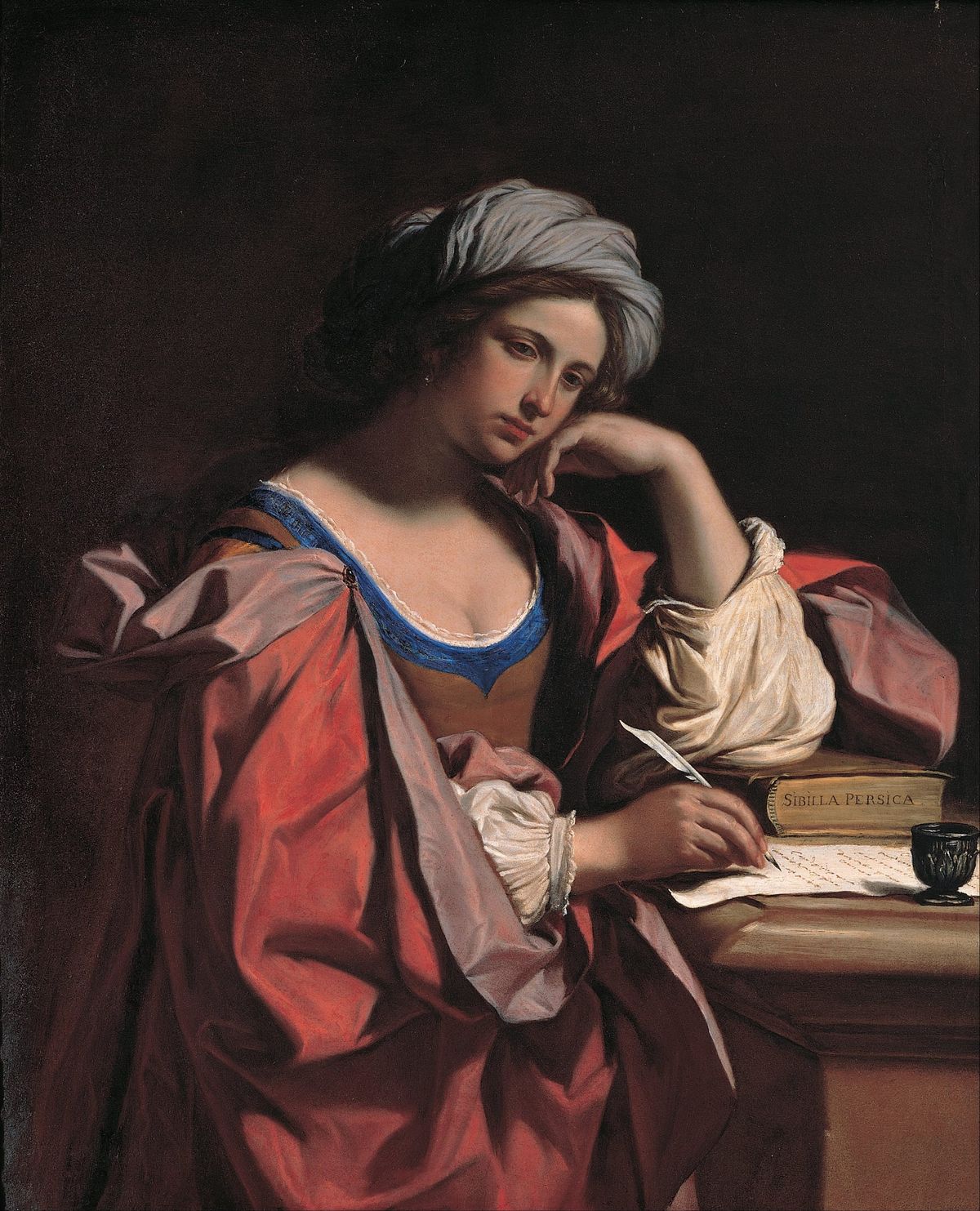
17세기 이탈리아 바로크 회화의 거장 조반니 프란체스코 바르비에리, 널리 귀에르치노(Guercino, 1591–1666)로 불리는 화가가 1647년에 완성한 유화 페르시아의 무녀(The Persian Sibyl, 이탈리아어: Sibilla Persica)는 117.0 cm × 96.0 cm 크기의 캔버스에 유채로 그린 대표적인 후기 고전주의 역사 인물화 걸작입니다. 현재 이탈리아 로마의 카피톨리니 미술관(Musei Capitolini, Rome)에 소장되어 있습니다.
턱을 괸 깊은 명상과 양피지 위에 튄 잉크 방울 소동
1640년대 후반 볼로냐에서 최고의 명성을 떨치던 귀에르치노는 고대 페르시아에서 활동하며 그리스도의 탄생과 세상의 구원을 예언했다고 전해지는 페르시아의 무녀를 화폭에 담아내고자 깊은 고민에 빠졌습니다. 화가는 단순히 신탁을 받아 적는 기록자의 모습을 넘어, 신이 내려준 거룩하고 무거운 계시 앞에서 깊은 사색과 슬픔에 잠긴 지혜로운 여성의 성스러운 내면을 구현하고 싶었습니다. 화가는 화실에 원목 탁자를 놓고 두꺼운 가죽 장정의 책과 잉크병을 배치한 뒤, 회색빛 터번과 붉은 장미빛 드레스를 우아하게 차려입은 모델에게 깃펜을 쥐여주고 턱을 괴는 포즈를 부탁했습니다.
이 그림을 준비하던 날, 화실에서는 뭉클하면서도 웃음이 절로 나오는 소동이 벌어졌습니다. 모델이 한 손으로 턱을 괴고 다른 손으로는 깃펜을 쥔 채 양피지 위를 응시하며 깊은 명상에 잠겨 있는 포즈를 취하고 있던 중이었습니다. 깃펜 끝에 잉크를 듬뿍 묻힌 채 너무 오래 생각에 잠겨 있다가, 그만 펜촉 끝에서 무거운 잉크 한 방울이 툭 떨어져 하얀 양피지 시험지에 동그란 얼룩을 남기고 말았습니다.
소품용 종이를 버렸다고 생각한 모델이 당황하여 턱을 괸 채 눈을 크게 떴고, 이를 본 화실 조수가 깜짝 놀라 새 종이를 들고 달려왔습니다. 그 모습을 지켜보던 귀에르치노는 호탕하게 웃음을 터뜨리며 조수를 말렸습니다. 화가는 계시를 기록하다 멈칫하며 깊은 상념에 빠지는 순간이야말로 예언자의 인간적인 고뇌를 보여주는 가장 진실한 찰나라며 감탄했습니다. 귀에르치노는 머리를 감싼 은회색 터번의 유려한 주름, 장미빛 비단 옷과 푸른색 깃 장식의 화려한 색채 대비, 그리고 책 표지에 새겨진 페르시아의 무녀라는 선명한 라틴어 금박 글씨까지 놀라운 정밀함으로 화폭에 담아냈습니다. 사시라는 신체적 약점을 딛고 장엄한 고전주의 양식과 서정적인 명암법을 완벽하게 완성해 낸 거장의 원숙한 예술혼이 이 정적인 화폭 속에 고스란히 살아 숨 쉬고 있습니다.
사색에 잠긴 그윽한 눈매에서 깃펜을 쥔 손과 펼쳐진 양피지로, 시선의 심리적 여정
그림을 마주하는 순간 관람객의 무의식적 시선은 화면 상단 짙은 흑갈색 어둠 속에서 은은한 자연광을 받아 환하게 빛나는 무녀의 단아한 이마와 턱을 괴고 있는 우아한 왼손으로 가장 먼저 빨려 들어갑니다. 손가락 끝으로 뺨을 살포시 받친 채 신의 신비로운 뜻을 헤아리며 먼 곳을 응시하는 무녀의 차분하고도 지적인 눈빛은 보는 이에게 깊은 시각적 매혹과 함께 조용한 지적 긴장감을 선사합니다.
이어 시선은 여인의 어깨를 감싸며 흘러내리는 풍성한 장미빛 실크 드레스와 가슴골을 수놓은 선명한 코발트 블루빛 테두리 장식, 그리고 순백의 풍성한 린넨 소매로 이동합니다. 어깨선의 부드러운 곡선과 고급스러운 옷감의 매끄러운 광택을 확인하는 순간, 관람객은 고대 신화와 지혜가 어우러진 우아한 고전미의 세계로 온몸이 빨려 들어가게 됩니다.
마지막으로 시선은 무녀가 오른손에 쥐고 있는 하얀 깃펜과 양피지에 적힌 빽빽한 글귀를 지나, 팔꿈치를 받치고 있는 두꺼운 책 표지의 라틴어 글씨와 까만 잉크병에 멈춥니다. 서늘한 실내의 고요함과 인류의 미래를 기록하는 거룩한 예언의 무게를 마주하며, 관람객은 시대를 초월한 지혜의 숭고한 가치와 귀에르치노가 건네는 다정하고 묵직한 영혼의 위로를 가슴 깊이 마주하게 됩니다.
17세기 볼로냐 고전주의 무녀화의 정점과 조형적 완성도, 미술계의 평가
미술계는 페르시아의 무녀를 귀에르치노가 도메니키노와 귀도 레니의 단정한 고전미를 계승하면서도 자신만의 독창적인 색채 감각과 깊이 있는 명암법을 완벽하게 융합한 대표적인 후기 걸작으로 평가합니다.
장미빛 드레스, 은회색 터번, 린넨 소매의 섬세한 질감, 그리고 양피지와 깃펜의 사실적인 묘사를 절제된 빛의 조율로 완벽하게 조화시켰을 뿐만 아니라, 인물의 내면적 지혜와 신비로운 영감을 품격 높은 시각 언어로 승화시켰기 때문입니다. 어둠 속에서 거룩한 예언의 빛을 길어 올린 귀에르치노의 이 서정적인 화폭은, 오늘날까지도 전 세계 수많은 감상자들에게 깊은 감탄과 잊을 수 없는 시각적 안식을 전해주는 불멸의 명작으로 손꼽히고 있습니다.
The Persian Sibyl
Painted in 1647 in Bologna by the preeminent Italian Baroque master Giovanni Francesco Barbieri, universally celebrated as Guercino (1591–1666), The Persian Sibyl (Italian: Sibilla Persica) is an oil on canvas measuring 117.0 cm × 96.0 cm (46.1 in × 37.8 in), preserved in the distinguished permanent collection of the Musei Capitolini in Rome, Italy.
The Pensive Hand and the Dripping Inkdrop Commotion in the Studio
During the late 1640s in Bologna, Guercino dedicated his mature creative energies to an esteemed cycle of classical and eastern prophetesses, focusing upon the Persian Sibyl who was revered in antiquity for foretelling the coming of Christ and the moral destiny of the nations. Guercino sought to transcend static decorative depictions, aiming instead to capture the profound psychological solitude of an inspired prophetess pausing in deep thought as she transcribes divine revelation. The master arranged a scholar's desk with a leather-bound folio, pewter inkwell, and open parchment in his atelier, dressing his model in a plush silver-grey turban, a luminous rose-coral silk gown with blue trim, and billowy linen sleeves while placing a quill in her right hand.
A delightfully memorable incident occurred while preparing the sitting for this composition. As the model rested her chin upon the fingers of her left hand and gazed pensively into the middle distance with her quill hovering over the manuscript, she remained motionless in deep concentration for so long that a heavy bead of dark ink formed at the nib and dripped onto the white trial paper with a quiet blot.
Startled by the unexpected blemish on the prop paper, the model's eyes widened in mild alarm while maintaining her pensive posture, prompting a studio assistant to rush forward with a fresh sheet. Guercino laughed heartily from behind his easel and waved the assistant aside, declaring that this exact suspended moment of hesitation between inspiration and transcription captured the living truth of prophetic labor. The master worked with extraordinary speed and precision, recording the sculptural twists of the fabric turban, the soft sheen of rose-colored silk against ultramarine edging, the delicate folds of the white sleeves, and the gilded Latin inscription on the closed book spine. Channeling his lifelong mastery of balanced chiaroscuro, Guercino transformed this classical allegory into an enduring visual hymn of divine wisdom.
Subconscious Trajectory of the Gaze: From Pensive Brow to the Inscribed Manuscript
The observer's subconscious gaze is immediately magnetized by the upper-central register, drawn to the luminous, porcelain skin of the Sibyl's face and thoughtful brow framed by a voluminous silver-grey turban against the enveloping dark background. Her soft downward glance, parted lips, and left hand delicately supporting her cheek establish an instant focal point of intellectual depth, sacred inspiration, and serene melancholy.
The visual path then descends along the crisp white chemise framed by a vibrant lapis-lazuli neckline, sweeping across the generous folds of her rose-colored silk mantle and the radiant fabric of her billowy sleeve. Taking in the tactile contrast between the plush textiles and the soft shadows enveloping her form, the viewer directly experiences the quiet intimacy of scholarly contemplation and the solemnity of divine revelation.
Finally, the visual trajectory sweeps toward the lower right, resting upon the goose quill poised in her right hand above the inscribed parchment, before moving across the leather-bound book inscribed with her name and the small dark inkwell on the stone table. Observing the harmonious equilibrium between classical monumentality, warm directional light, and psychological nuance, the spectator perceives the timeless nobility of sacred wisdom and the profound aesthetic solace Guercino embedded within the monumental canvas.
The Monument of Bolognese Classical Idealism: Critical Legacy
Art historians revere The Persian Sibyl as a consummate masterpiece of Guercino’s mature career, demonstrating his flawless synthesis of the classical balance of Guido Reni with his own signature atmospheric chiaroscuro.
By orchestrating delicate textural contrasts between woven turbans, shimmering silks, porous paper, aged leather, and fine quill feathers within a unified lighting scheme, Guercino elevated an ancient prophetic persona into an exquisite aesthetic meditation. This magnificent historical canvas endures as an inspiring testament to the master's enduring creative genius, celebrating the poetic power of sacred learning and the transformative grace of living art.
본 컨텐트의 저작권은 팔렛트제주에 있습니다. 허가없는 무단전제를 금지합니다.
Copyright © Palette Jeju. All rights reserved. Unauthorized reproduction or redistribution is strictly prohibited.