페이룰레 협곡 The Ravine (Les Peiroulets)
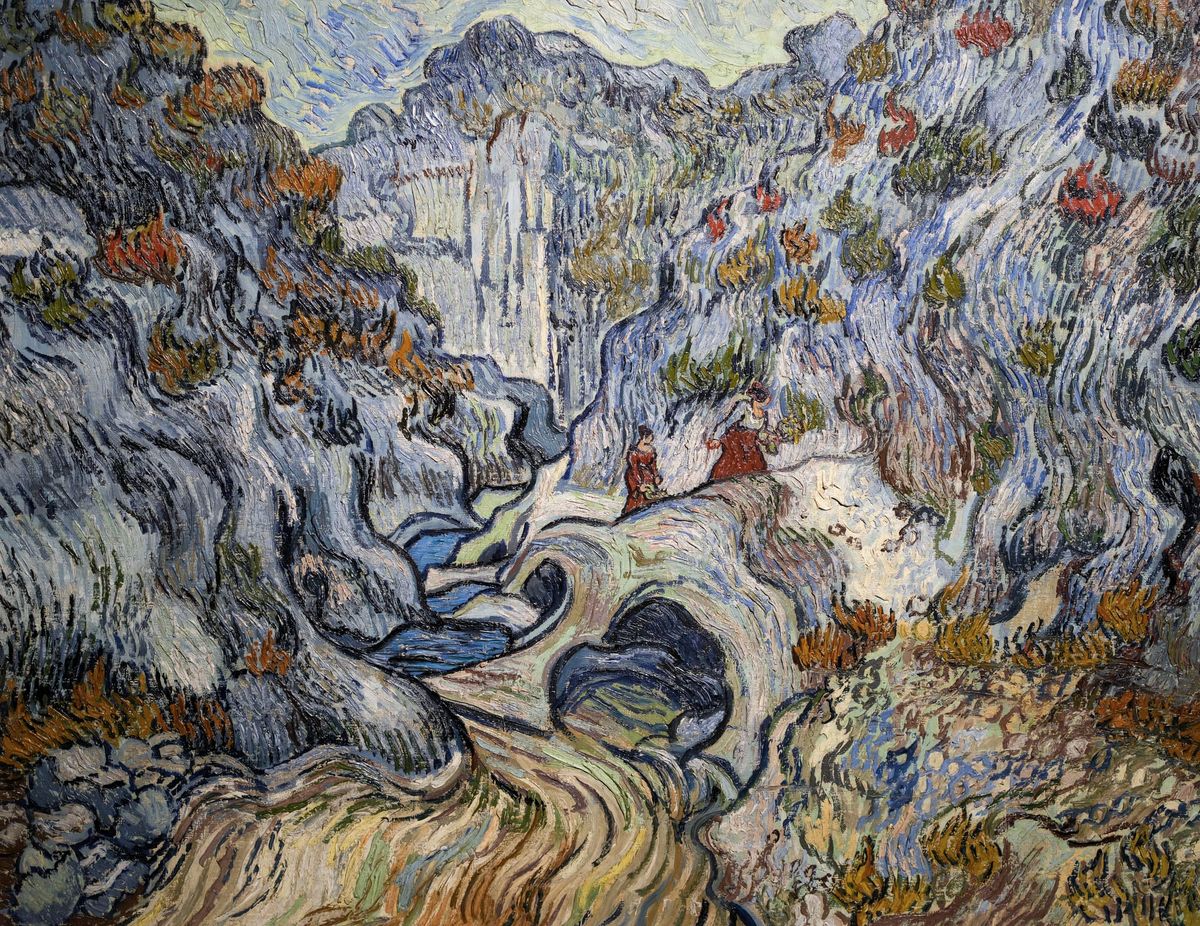
이 작품은 네덜란드의 후기 인상주의 거장 빈센트 반 고흐가 1889년 10월 프랑스 생레미드프로방스의 생폴 요양원 체류 시기에 제작한 유화입니다. 공식 소장품 등록번호는 F564이며 (존 홀스커 분류 기준 JH 1805), 캔버스 위에 유채로 그려진 실제 실측 규격은 73 x 93 cm입니다. 현재 이 작품은 네덜란드 오테를로에 위치한 크륄러뮐러 미술관에 공식적으로 소장되어 있으며, 요양원 인근의 거칠고 야생적인 자연 협곡을 담아낸 후기 대표작으로 전 세계 관람객들을 만나고 있습니다.
작가의 고뇌와 창작 비하인드
생-폴-드-모솔 요양원에 머물며 정신적 고통 속에서도 자연을 향한 치열한 창작욕을 불태웠던 반 고흐는, 병원 인근의 페이룰레 협곡에 깊은 매력을 느껴 이 험준하고 고립된 지형을 화폭에 담는 데 몰두했습니다. 당시 그는 불어오는 강한 미스트랄 바람 속에서 이젤이 쓰러지지 않도록 큰 돌로 단단히 고정해 가며 작업에 매달렸으며, 척박한 바위산과 거친 대지의 역동적인 기운을 굵고 힘찬 붓터치로 포착하고자 했습니다.
작품 전경에는 구불구불하게 흘러내리는 흙길과 바위 틈새를 따라 뻗어 나가는 물줄기의 역동적인 결이 화면 아래를 가득 채우고 있습니다. 중경에는 양옆으로 거대하게 솟아오른 험준한 회색빛 바위 절벽과 그 사이를 아슬아슬하게 지나며 걷고 있는 두 명의 작은 인물 실루엣이 소박한 대조를 이루며 깊은 공간감을 형성합니다.
배경으로는 화면 위쪽으로 첩첩이 겹쳐진 산등성이와 옅은 하늘빛 대기가 어우러져, 거친 협곡 속에서 느껴지는 서늘하고도 웅장한 자연의 정취를 고스란히 전해줍니다.
무의식 속 시선 및 심리 흐름
관람객의 시선은 가장 먼저 화면 아래에서 구불거리며 흐르는 길과 굽이치는 대지의 거친 붓질로 향하며, 야생의 자연이 뿜어내는 날것 그대로의 생동감과 마주하게 됩니다. 이어지는 시선은 협곡 중앙의 바위 길을 따라 걷고 있는 두 인물의 중경으로 이동하여, 거대한 대자연의 압도적인 규모 앞에 선 인간의 고독하고도 미약한 존재를 체감하게 됩니다.
시선이 다시 양옆으로 첩첩이 쌓인 회색빛 절벽과 위쪽의 차분한 하늘 배경으로 확장될 때, 관람객은 고립과 불안 속에서도 자연의 율동을 통해 구원을 갈구했던 작가의 치열한 내면세계에 온전히 동화됩니다. 이 일련의 시선 이동은 단순한 풍경의 감상을 넘어, 거친 대지의 심장부로 파고들며 영혼의 안식을 찾고자 했던 거장의 묵직한 심리적 여정을 선사합니다.
미술계의 평가 및 조형미
미술사학계와 평단은 본 작품을 고흐가 생레미 시기에 이룩한 풍경화의 위대한 성취 중 하나로 평가하며, 험난한 지형을 역동적인 선과 강렬한 필치로 승화시킨 수작으로 인정합니다. 캔버스 위에 거칠고 두껍게 얹어진 임파스토 기법은 바위 산의 단단한 질감, 메마른 덤불, 그리고 협곡의 굴곡을 손에 잡힐 듯 생생하게 살아나게 완성했습니다.
화면 전반을 지배하는 회색빛 바위와 차분한 푸른빛, 그리고 군데군데 섞인 붉은빛의 조화는 시각적인 긴장감과 뛰어난 조형적 균형을 동시에 선사합니다. 자연의 거친 숨결을 자신만의 독창적인 감각으로 영원토록 빚어낸 이 작품은, 시대를 초월해 관람객의 마음에 깊은 울림을 전하는 불멸의 예술적 가치를 지닙니다.
The Ravine (Les Peiroulets)
Executed in October 1889 during his confinement at the Saint-Paul-de-Mausole asylum in Saint-Rémy-de-Provence, France, this oil painting is a powerful and rugged masterpiece by the Dutch Post-Impressionist master Vincent van Gogh. Officially cataloged under inventory number F564 (JH 1805) and measuring 73 x 93 cm on canvas, the work is housed in the permanent collection of the Kröller-Müller Museum in Otterlo, Netherlands.
The Artist's Turmoil and Creative Background
During his difficult months at the asylum, Van Gogh found a compelling and dramatic subject in the wild, desolate landscape of the nearby Peiroulets ravine, using its tormented topography to channel his intense creative energy. Battling against the fierce regional winds known as the mistral, he famously wedged his easel between large stones in the rocky terrain to paint outdoors, striving to capture the raw, untamed forces of nature through sweeping, energetic brushstrokes.
The foreground is dominated by the swirling, rhythmic lines of the earthy path and the rocky clefts through which a small stream winds its way down the slope. In the middle ground, towering gray rock faces rise monumentally on either side of the gorge, framing two small figures walking along a narrow path who provide a poignant sense of human scale.
The background recedes into jagged, overlapping ridges beneath a pale, atmospheric sky, enveloping the entire gorge in a cool, melancholic mountain air.
Psychological Flow and the Unconscious Gaze
The viewer's gaze is initially drawn to the swirling, textured brushwork of the path and earth in the foreground, establishing an immediate visceral connection to the rough, tactile environment. The eye then migrates upward along the rocky corridor toward the small, distant figures in the middle ground, grounding the monumental landscape in a quiet, contemplative narrative.
As the gaze expands outward into the enclosing gray cliffs and the upper horizon, the observer is enveloped in a profound sense of isolation and cosmic scale that reflects the artist's solitary state of mind. This deliberate visual progression moves the viewer from a sharp physical encounter with wild terrain into an expansive, meditative contemplation of nature's formidable power.
Critical Acclaim and Formal Analysis
Art historians and critics widely celebrate this painting as a crowning achievement of Van Gogh's Saint-Rémy period, recognizing it as a brilliant triumph of expressionistic landscape painting that translates geological turmoil into visual rhythm. The vigorous application of paint through a heavy impasto technique imparts a tangible, sculptural reality to the weathered rock formations, the scrub vegetation, and the carved earth.
The sophisticated orchestration of cool grays, earthy browns, and muted blues generates a dynamic chromatic harmony charged with emotional gravity. Transmuting a wild ravine into an immortal vision of natural drama, this masterpiece endures as an essential testament to Van Gogh's visionary genius.
본 컨텐트의 저작권은 팔렛트제주에 있습니다. 허가없는 무단전제를 금지합니다.
Copyright © Palette Jeju. All rights reserved. Unauthorized reproduction or redistribution is strictly prohibited.