파리 왕립 청각장애인 학교의 공개 수업 - Class at the Institution Royale des Sourds-Muets de Paris
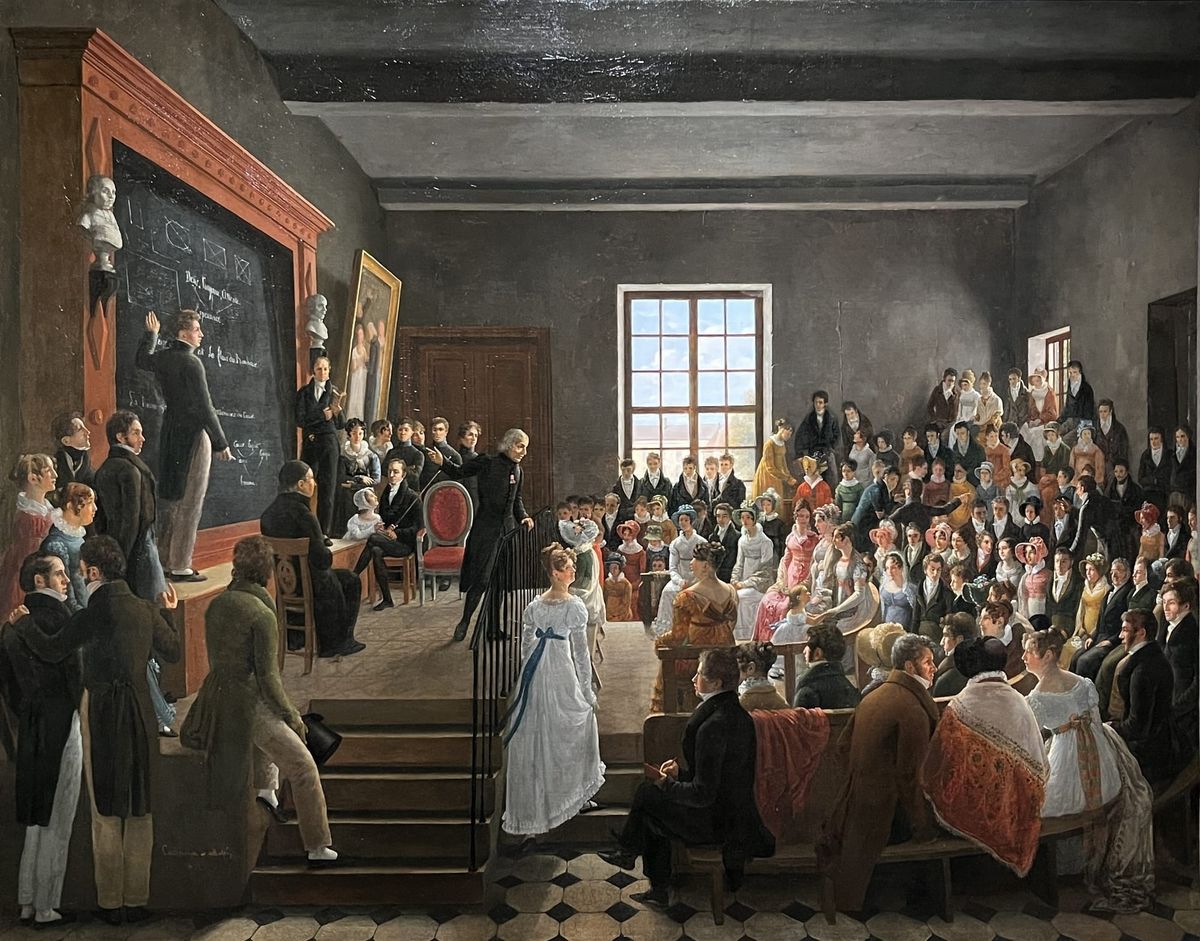
1816년경 프랑스 신고전주의 회화의 거장 마티외 코슈로(Mathieu Cochereau)가 구상하고 그의 사후 1822년 샤를 오귀스트 마세(Charles-Auguste Massé)가 완성한 유화 작품 《파리 왕립 청각장애인 학교의 공개 수업》은 19세기 초 프랑스 교육사와 사회사, 그리고 아카데믹 회화의 정교함이 결합된 미술사의 불멸의 마스터피스로, 현재 프랑스 샤르트르 미술관(Musée Beaux-Arts de Chartres)에 원본 유화가 소장되어 있으며 실제 크기는 약 130 × 163 cm의 웅장한 대형 역사 화폭입니다.
이 화면은 파리 왕립 청각장애인 학교(Institution Royale des Sourds-Muets)의 강당에서 교사 수카르(Sicard) 신부와 그의 제자이자 청각장애인 교관이었던 장 마시외(Jean Massieu) 및 로랑 클레르(Laurent Clerc)가 수많은 시민과 귀족 참관객들 앞에서 수어와 문자를 활용한 혁신적 공개 수업을 진행하는 거룩하고 정숙한 순간을 정교한 유화 기법으로 포착해 낸 명작입니다. 화가는 화면 좌측 대형 칠판 앞에 서서 글씨를 쓰며 수어를 선보이는 교관의 당당한 자태와, 계단 위에서 이를 설명하는 사제 및 열의에 차 이를 지켜보는 대규모 청중, 그리고 중앙 창문 너머로 흘러드는 투명한 햇살의 세밀한 명암 대조를 정밀하게 부각시켰습니다.
작품 속에는 장애를 극복하고 언어와 지성을 나누는 인류애적 계몽주의 교육 현장의 비하인드 스토리가 흐릅니다. 에페(Épée) 신부의 뜻을 이어 청각장애인 교육의 기틀을 확립한 시카르 신부의 사목적 열정과, 세상과 소통하는 법을 배운 학생들의 진지한 눈빛은 당시 유럽 전역에 깊은 울림을 주었습니다. 대형 칠판에 적힌 철학적 기호들과 정교하게 그려진 실내 기둥, 그리고 관객석을 메운 다양한 계층 인물들의 세련된 복식 묘사는 19세기 초 프랑스 사회의 지적 열망과 아카데믹 역사화의 숭고한 완성도를 생생하게 증명합니다.
후대 평단과 관객들은 이 대형 화폭을 마티외 코슈로의 지적 탐구심과 마세의 정교한 필치가 결합하여 이루어낸 역사적 기록화의 최고봉으로 평가합니다. 웅장한 강당의 건축적 실내 구조와 바닥의 격자 타일 패턴, 어두운 실내 음영 속에서 오롯이 피어나는 밝은 의복의 색채 스펙트럼은 관객에게 시대를 초월한 정숙한 감동과 깊은 평온함을 안겨줍니다.
이 그림을 마주하는 관람객의 무의식적 시선은 가장 화사한 빛이 집중되는 화면 좌측, 대형 칠판 위에 손을 얹고 강연을 펼치는 교관의 당당한 인상과 칠판의 명확한 문자 윤곽으로 가장 먼저 끌려갑니다. 지식과 소통의 기적을 시증하는 인물의 정숙한 포즈는 관람객의 마음에 묵직한 시각적 중심과 정숙한 평온함을 안겨줍니다.
이어 시선은 단상 위에 서서 청중을 향해 손짓하는 시카르 신부의 검은 사제복과 그 뒤편에 놓인 붉은 의자, 그리고 계단 아래에 정갈하게 서 있는 하얀 드레스 여인의 드레이프 주름을 지나, 우측 계단식 관람석을 빽빽하게 채운 청중들의 다채로운 모자와 의복 주름선으로 자연스럽게 이동합니다. 섬세한 유화 물감층이 만들어낸 빛의 반사와 목재 가구, 실내 구조의 사실적인 질감은 화면 전체에 든든한 조형적 안정감과 품격을 더해줍니다.
마지막으로 시선은 화면 중앙 높다란 격자창 너머에서 들어오는 유연한 빛의 줄기와, 바닥 타일의 세밀한 기하학적 패턴, 그리고 상단 천장 들보의 묵직한 음영 여백 속으로 낙하하여 정착합니다. 이러한 무의식적 시선의 흐름은 학구적인 열정과 인간에 대한 깊은 사랑이 교차하는 거룩하고 고요한 성소로 감상자를 자연스럽게 인도하며, 마음에 닿는 차분하고 정갈한 여운을 오래도록 남깁니다.
In c. 1816–1822, commenced by the brilliant French painter Mathieu Cochereau and completed after his early death by Charles-Auguste Massé, the monumental interior scene titled "Class at the Institution Royale des Sourds-Muets de Paris" was brought to life. Preserved in the Musée des Beaux-Arts de Dijon and the Musée de Chartres in France, this original oil-on-canvas measures approximately 130 × 163 cm. This artwork finely captures the intellectual triumph and compassionate pedagogy of the Royal Institution for the Deaf-Mute in Paris through an extraordinary, unmatched mastery of Neoclassical interior group portraiture and light management.
The painting visually manifests a public demonstration lesson led by the famous Abbé Roch-Ambroise Cucurron Sicard alongside his pioneering deaf instructors, Jean Massieu and Laurent Clerc, before a crowded amphitheater of prominent Parisian citizens, scholars, and noblewomen. Historical context highlights the profound Enlightenment values embedded within the composition; by demonstrating that deaf individuals could master complex grammar, philosophy, and sign language, the institution revolutionized special education in Europe. Cochereau and Massé painstakingly recorded the handwritten philosophical diagrams upon the massive blackboard on the left, the architectural timber beams, and the distinct fashions of the Restoration era, transforming a classroom presentation into a monumental testament to human intellect and dignity.
Art historians and critics continuously extol this canvas as a supreme triumph of 19th-century French institutional painting, celebrating the artists' ability to handle complex multi-figure spatial organization, wooden textures, and soft ambient light coming through the central window. The striking contrast between the dark coats of the scholars, the luminous white gowns of the seated ladies in the foreground, and the sunlit classroom setting creates an enduring atmosphere of quiet sanctity and emotional permanence.
The moment an observer encounters this artwork, their gaze is subconsciously drawn straight to the sharply illuminated figure of the instructor standing at the blackboard on the raised platform at the left. His confident, articulate posture immediately diffuses tension, instilling a comforting sense of focus and quiet composure.
Next, the eye glides smoothly along the raised podium toward Abbé Sicard gesturing to the crowd, before tracing down the wooden stairs to the standing woman in a white gown with a blue sash. The rich, tactile definition of the multi-tiered seating filled with attentive spectators endows the composition with profound physical weight and structural clarity.
Finally, the viewer's gaze drifts up toward the large multi-pane window in the center background bringing natural daylight into the hall before coming to rest upon the shadowed perimeter of the ceiling framing the room. This natural visual journey guides the spectator into a state of quiet, reverent reflection, leaving a lasting impression of knowledge, humanity, and timeless peace.
본 리뷰에서 작품을 제외한 컨텐츠의 저작권은 팔렛트제주에 있습니다.
"퍼블릭도메인 고전명화"를 제외한 모든 창작 콘텐츠는 저작권법 제4조 및 제10조에 의거하여 보호됩니다. 무단 도용시 저작권법 제136조(벌칙)에 의거, 당사의 사전 서면 승인 없는 저작권 침해 행위를 금지합니다.