판과 시링크스 Pan et Syrinx
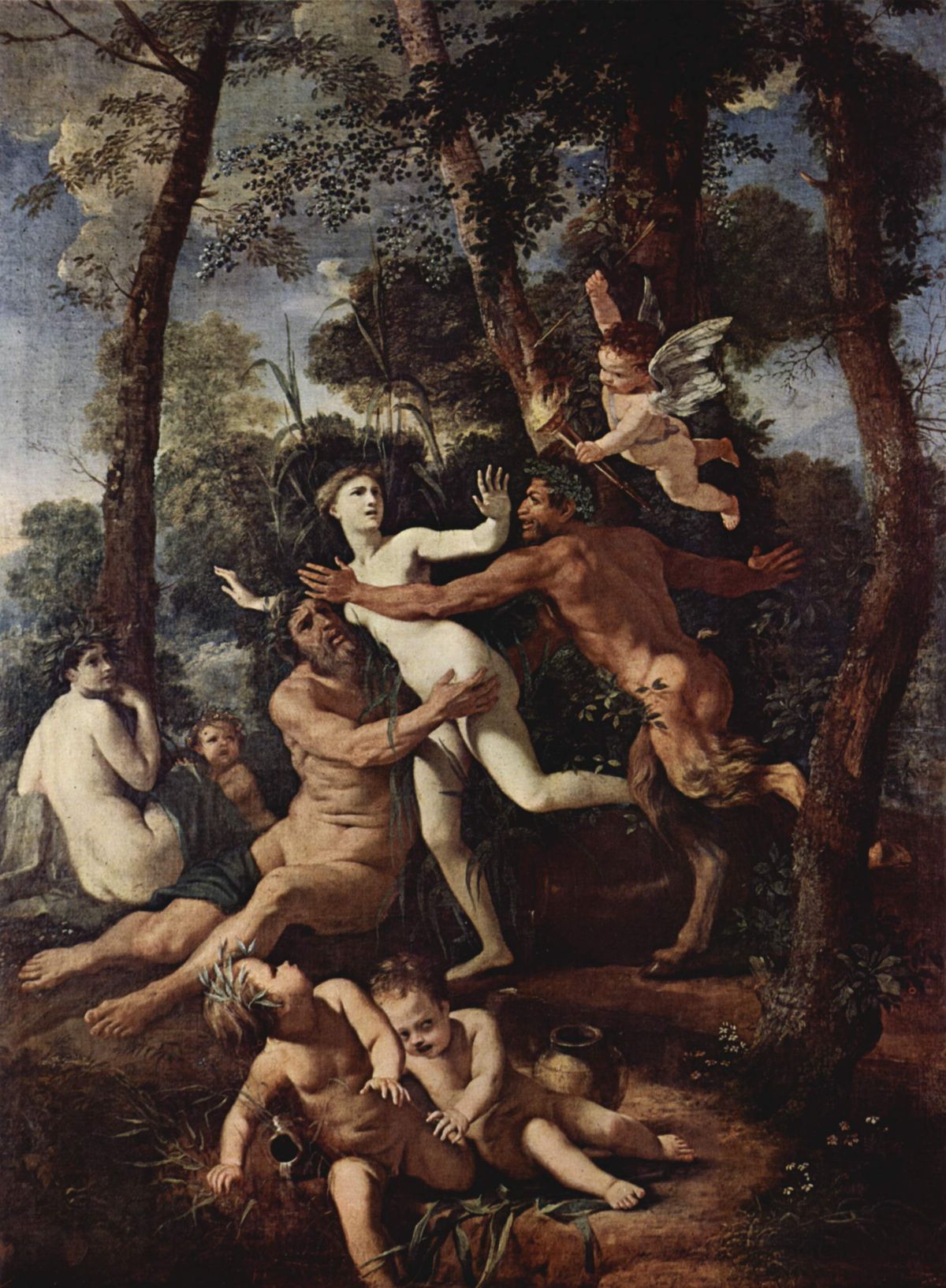
17세기 프랑스 고전주의 회화의 시조이자 서양 미술사 불멸의 거장 니콜라 푸생(Nicolas Poussin, 1594–1665)이 1637년에서 1638년경 로마에서 완성한 신화 유화 판과 시링크스(Pan and Syrinx, 프랑스어: Pan et Syrinx, 독일어: Pan und Syrinx, 소장품 번호: Gal.-Nr. 718)는 106.5 cm × 82.0 cm 크기의 세로형 캔버스에 유채로 그린 대표적인 고전 신화화 최고 걸작입니다.
현재 독일 드레스덴의 드레스덴 국립미술관 옛 거장 회화관(Gemäldegalerie Alte Meister, Dresden)에 소장되어 있습니다.
오비디우스의 변신 이야기와 갈대로 변한 요정의 순결을 향한 화가의 고뇌
1630년대 후반 로마에서 고전주의의 확고한 양식을 완성해가던 푸생은, 고대 로마 시인 오비디우스의 변신 이야기에 등장하는 격정적인 추격 일화를 화폭에 담았습니다.
당시 푸생은 맹목적인 욕망에 이끌리는 본능과 순결을 지키려는 영혼의 절박한 저항이 부딪히는 순간을 어떻게 추하지 않고 고결한 조형미로 승화시킬지 깊이 번민했습니다.
숲과 들판의 반인반수 신 판(Pan)은 아름다운 요정 시링크스(Syrinx)를 보고 첫눈에 반해 그녀를 쫓기 시작했습니다. 겁에 질린 시링크스는 강의 신이자 아버지인 라돈의 강가까지 달아나 자신을 갈대로 변하게 해달라고 애원했습니다.
판이 막 그녀를 붙잡으려 손을 뻗은 바로 그 찰나, 요정의 몸은 물가의 가느다란 갈대로 변해버렸습니다. 손에 잡힌 것이 갈대뿐임을 알고 탄식하던 판은 그 갈대를 꺾어 아름다운 소리를 내는 팬파이프(시링크스 피리)를 만들었습니다.
화가는 강의 신 품에 안겨 막 갈대로 변신하기 직전의 가장 긴박한 순간을 포착했습니다.
화면 중앙에는 백옥 같은 나체의 시링크스가 질겁하며 손을 내젓고 있고, 염소의 다리를 한 판은 붉은 근육질 몸을 앞으로 뻗으며 달려듭니다.
머리 위에서 횃불과 화살을 든 큐피드가 날아오르고, 화면 아래쪽에서는 옹기종기 모여 앉은 아기 천사들과 물병을 든 강의 요정들이 이 환상적인 신화의 비극을 손에 잡힐 듯 생생하게 웅변합니다.
달아나는 시링크스의 백옥 같은 나체에서 덮쳐오는 판의 손길과 횃불 든 큐피드로, 시선의 심리적 여정
그림을 마주하는 순간 관람객의 무의식적 시선은 화면 중앙 짙은 녹음 속에서 천상의 빛을 받아 눈부시게 하얗게 빛나는 요정 시링크스의 매끄러운 나체와 겁에 질린 옆얼굴로 가장 먼저 빨려 들어갑니다.
강의 신의 품으로 뛰어들며 판을 향해 필사적으로 손바닥을 내미는 요정의 가냘픈 자태는 보는 이에게 깊은 시각적 연민과 함께 긴박한 서스펜스를 선사합니다.
이어 시선은 시링크스를 낚아채려는 반인반수 신 판의 억센 두 팔과 근육질 가슴을 따라 화면 오른쪽으로 이동합니다.
머리에 담쟁이 관을 쓰고 음흉한 미소를 지으며 몸을 날리는 판의 털 난 염소 다리와 역동적인 도약 동작을 확인하는 순간, 관람객은 거친 숨소리가 숲속을 가르는 추격전의 한복판 속으로 온몸이 빨려 들어가게 됩니다.
마지막으로 시선은 공중에서 사랑의 횃불과 화살을 겨누고 있는 날개 달린 아기 천사를 지나, 시링크스를 부드럽게 감싸 안는 수염 난 강의 신과 화면 아래쪽에서 물병 곁에 누워 관람객을 응시하는 귀여운 푸토들에 멈춥니다.
수직으로 솟아오른 숲의 나무들과 인물들의 팽팽한 대각선 동세가 빚어내는 완벽한 고전적 조화를 마주하며, 관람객은 욕망과 순결이 교차하는 영원한 신화의 비밀과 거장 푸생이 건네는 묵직한 지적 감동을 가슴 깊이 마주하게 됩니다.
17세기 프랑스 고전주의 신화 서사화의 정점과 조형미, 미술계의 평가
미술계는 드레스덴 미술관의 판과 시링크스를 푸생이 베네치아풍의 관능적인 색채 감각과 고대 그리스 대리석 조각의 이상적인 비례미를 최고조로 결합해 낸 대표적인 걸작으로 평가합니다.
단순한 추격 장면을 넘어 인물들의 시선과 몸짓을 정교한 삼각형 대각선 구도 속에 완벽하게 조직했을 뿐만 아니라, 우윳빛 피부의 부드러움, 염소 털의 거친 질감, 축축한 강변 갈대밭의 디테일을 극도로 섬세한 명암법으로 완벽하게 구현했기 때문입니다.
자연의 거친 본능을 숭고한 예술적 조형 질서로 완성해 낸 푸생의 이 걸작 화폭은, 오늘날까지도 전 세계 수많은 감상자들에게 깊은 감탄과 잊을 수 없는 시각적 전율을 전해주는 불멸의 명작으로 손꼽히고 있습니다.
Pan and Syrinx
Painted between 1637 and 1638 in Rome by the founder of French classicism and immortal master Nicolas Poussin (1594–1665), Pan and Syrinx (French: Pan et Syrinx, German: Pan und Syrinx, Inventory No. Gal.-Nr. 718) is a mythological oil on canvas measuring 106.5 cm × 82.0 cm (41.9 in × 32.3 in).
It is preserved in the distinguished permanent collection of the Gemäldegalerie Alte Meister in Dresden, Germany.
Ovid's Metamorphoses, the River Ladon, and the Invention of the Syrinx Flute
During the late 1630s in Rome, as Nicolas Poussin refined his disciplined classical philosophy, he engaged deeply with the lyrical fables of Ovid’s Metamorphoses.
Poussin reflected on the universal collision between primal, unchecked desire and the soul's desperate plea for chastity, seeking to resolve this psychological tension within an ordered aesthetic framework.
The narrative depicts the woodland god Pan pursuing the chaste nymph Syrinx through the Arcadian forest.
Fleeing in terror to the banks of the river Ladon, Syrinx begged her river-god father to transform her into marsh reeds to protect her virginity.
At the exact threshold of capture, her mortal form melted into aquatic reeds. Pan, clutching only rustling stems, fashioned the resonant panpipes (syrinx) from the transformed reeds to preserve her breath in music.
Poussin captured the supreme moment of dynamic suspense: the pale, statuesque Syrinx turns back with an outstretched palm of refusal as she falls into the arms of the bearded river god, while Pan lunges forward on cloven hooves with arms extended in lustful pursuit.
Above them, a winged cupid brandishes a blazing torch and love arrows, transforming a violent chase into a sublime mythological tableau of natural metamorphosis.
Subconscious Trajectory of the Gaze: From Fleeing Syrinx to the Lunging God Pan
The observer's subconscious gaze is immediately magnetized by the central register, drawn to the radiant, porcelain skin and graceful classical contrapposto of Syrinx.
Her fearful, backward-glancing profile, pale body silhouetted against the dark woodland grove, and outstretched hand establish an instant focal point of physical beauty, vulnerable distress, and dramatic urgency.
The visual path then follows the forceful horizontal thrust of Pan’s muscular, sun-bronzed arms reaching across the composition from the right.
Taking in the ivy-crowned satyr’s open-mouthed grimace, coarse goat legs, and surging forward leap, the viewer directly experiences the kinetic frenzy and raw instinct of the mythical pursuit.
Finally, the visual trajectory ascends to the airborne cherub carrying the torch of passion above, before descending to the seated, muscular river god Ladon and the charming putti resting beside the terracotta water urn in the foreground.
Observing the harmonious equilibrium between dramatic diagonal vectors, Titianesque tonal richness, and sculptural draftsmanship, the spectator perceives the timeless nobility of mythological poetry and the profound aesthetic solace Poussin embedded within the monumental canvas.
The Monument of French Classical Mythological Painting: Critical Legacy
Art historians revere the Dresden Pan and Syrinx as a quintessential masterpiece of Poussin’s mature Roman period, illustrating his complete mastery of dynamic counterpoint and antique form.
By orchestrating delicate textural contrasts between sunlit marble flesh, coarse satyr fleece, translucent water foliage, and ancient bark within a unified vertical scheme, Poussin elevated an ancient pagan myth into an exquisite aesthetic treatise on desire and sublimation.
This grand historical canvas endures as an inspiring testament to the master's creative fortitude, celebrating the victory of art over mortal strife and the transformative grace of living art.
본 컨텐트의 저작권은 팔렛트제주에 있습니다. 허가없는 무단전제를 금지합니다.
Copyright © Palette Jeju. All rights reserved. Unauthorized reproduction or redistribution is strictly prohibited.