오필리아의 첫 번째 광기 The First Madness of Ophelia
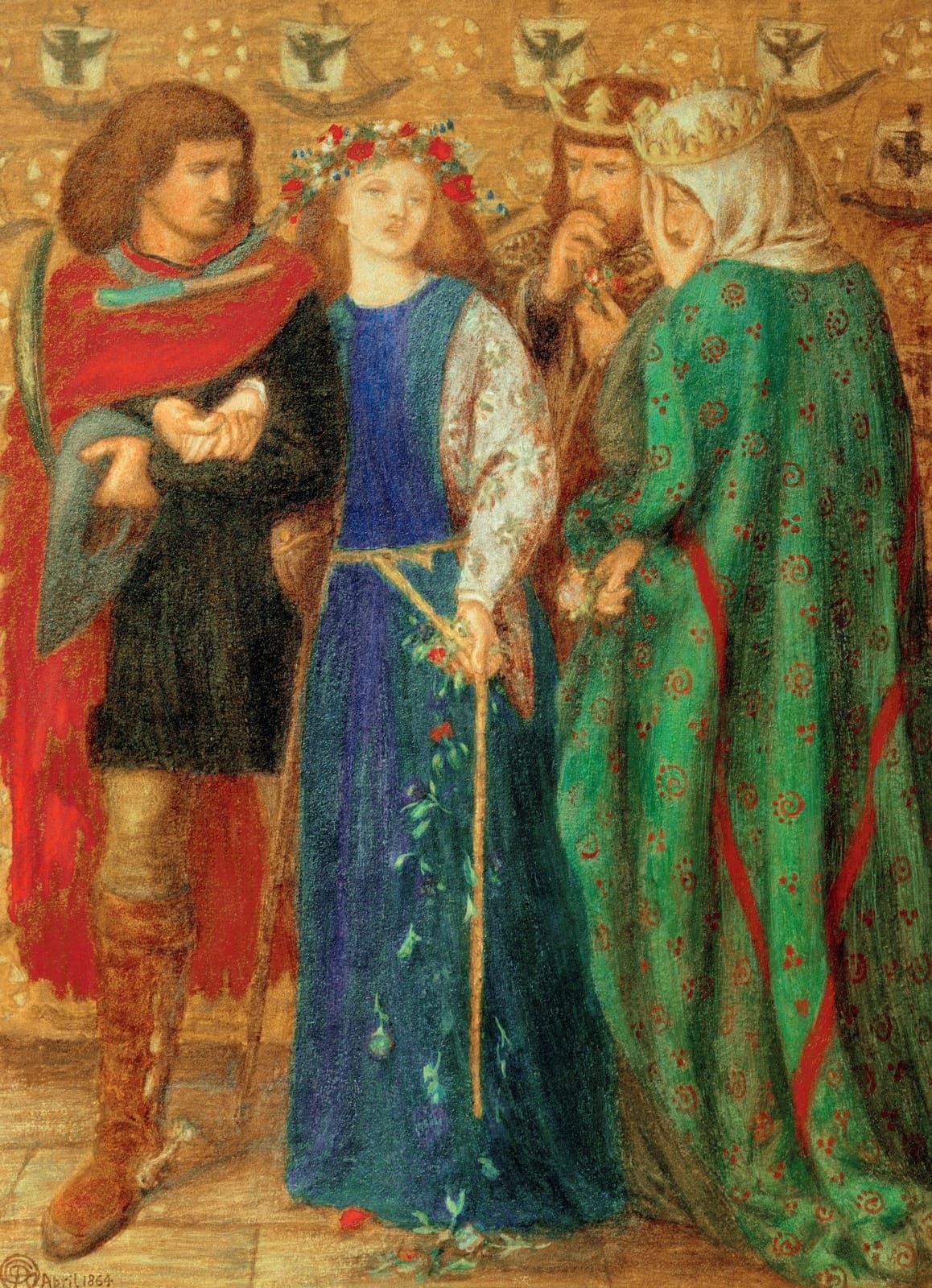
19세기 영국 라파엘로 전파의 거장 단테 가브리엘 로세티(Dante Gabriel Rossetti, 1828–1882)가 1864년 4월에 완성한 기념비적 상징주의 수채화 오필리아의 첫 번째 광기(The First Madness of Ophelia, 공식 소장품 등록번호: 3.55/7, 전작 도록 번호: Surtees 169)는 높이 39.3 cm, 너비 29.2 cm(약 15.5 x 11.5 인치) 크기의 종이 위에 수채로 그린 대표적인 중기 회화 최고 걸작이다.
월터 던롭(Walter Dunlop)과 윌리엄 그레이엄(William Graham) 및 찰스 E. 리스(Charles E. Lees) 가문의 유서 높은 소장 이력을 거쳐, 현재는 영국 올덤의 세계적인 올덤 미술관 및 박물관(Gallery Oldham)에 영구 소장되어 보존되어 오고 있다.
작가의 고뇌/비하인드
1864년 봄 런던에서 활동하던 단테 가브리엘 로세티는, 윌리엄 셰익스피어의 희곡 햄릿에 등장하는 비극적 인물 오필리아가 아버지의 죽음과 연인의 배신 속에서 광기에 사로잡히는 순간을 화폭에 담고자 깊은 몰두에 빠졌다.
화가는 단순한 연극적 묘사를 넘어, 생전에 자신의 가장 소중한 뮤즈였으나 비극적으로 세상을 떠난 엘리자베스 시달(Elizabeth Siddal)의 얼굴을 투영하여, 상실의 아픔과 붕괴하는 정신 세계를 치밀하게 재현하고자 치열하게 번민했다.
올덤 미술관의 공식 소장 도록 및 버지니아 서티즈의 전작 도록 학술 기록에 따르면, 이 작품은 오필리아가 햄릿에게 받은 편지와 패물을 돌려주며 정신이 무너져 내리는 초기 비극적 국면을 시각화한 역작이며, 화면 왼쪽의 햄릿과 오른쪽의 클로디우스 국왕 및 거트루드 왕비, 그리고 중앙에서 화관을 쓴 채 멍한 눈빛을 짓는 오필리아의 모습은 사랑의 파국과 왕실의 위선을 상징하는 도상학적 핵심 장치로 분석된다.
화가는 중세 궁정의 실내 공간과 벽면에 새겨진 항해하는 배의 문양을 배경으로, 광기에 휩싸인 오필리아의 숭고한 순간을 화폭에 담았다.
화면 중앙에는 붉은빛이 감도는 풍성한 머리칼에 화려한 꽃과 잎으로 만든 화관을 쓴 오필리아가 푸른색 드레스를 입은 채 허공을 응시하고 있으며, 그녀의 창백하고 멍한 표정과 굳게 다문 입술이 깊은 비극성을 자아낸다.
몸에는 푸른색 비단 의복을 입고 두 손으로 나뭇가지와 꺾인 꽃들을 쥐고 있으며, 화면 왼쪽에는 칼을 든 햄릿이 괴로워하고 오른쪽에는 왕과 왕비가 슬픔에 잠겨 손으로 얼굴을 감싸 쥔 동작이 정교하게 묘사되어 있다.
화면 배경의 앤틱한 벽면 장식과 바닥에 떨어진 꽃잎들은 화가가 추구했던 낭만주의적 연극성의 대기감을 손에 잡힐 듯 생생하게 웅변한다.
무의식 속 시선 및 심리 흐름
그림을 마주하는 순간 관람객의 무의식적 시선은 화면 중앙에서 모든 현실을 놓아버린 듯 초점 없는 눈빛으로 허공을 바라보는 오필리아의 창백한 얼굴과 그녀가 쥐고 있는 꽃무늬 나뭇가지의 섬세한 수채화 묘사로 가장 먼저 빨려 들어간다.
사랑의 상실 앞에서 완전히 무너져 내린 인물의 처연한 표정은 보는 이에게 강렬한 시각적 몰입감과 함께 묵직한 연민의 감정을 선사한다.
이어 시선은 그녀의 좌우로 이동하여, 화면 왼쪽에 서서 어두운 표정으로 고개를 돌린 햄릿의 갈등 어린 모습과 화면 오른쪽에서 슬픔에 겨워 얼굴을 가린 거트루드 왕비의 붉고 초록빛이 감도는 화려한 의상 텍스처로 자연스럽게 건너간다.
궁정 내부를 감싸는 비극의 서사와 긴장된 공기를 체감하는 순간, 관람객은 19세기 낭만주의적 연극 환상의 성소 속으로 온몸이 빨려 들어가게 된다.
마지막으로 시선은 화면 배경 상단에 반복되는 돛단배 문양의 부조 장식을 거쳐, 화면 전체를 짓누르는 묵직하고 고풍스러운 실내의 대기감으로 멈춘다.
전면 인물들의 복합적인 심리적 갈등과 후면 상징적 배경의 조화를 마주하며, 관람객은 셰익스피어의 비극을 최고의 회화적 언어로 승화시킨 거장 로세티의 압도적인 조형 의지를 가슴 깊이 마주하게 된다.
미술계의 평가 및 조형미
미술계와 올덤 미술관 공식 도록은 이 작품을 로세티가 1860년대 전반에 이뤄낸 가장 극적이고 문학적 깊이가 남다른 대표적인 수채화 마스터피스로 평가한다.
단순한 극본 일러스트를 넘어 19세기 중반 라파엘로 전파가 지닌 극도의 장식적 세밀함과 수채 매체의 풍부한 색채감을 가장 완벽한 종이 기법으로 융합해 냈기 때문이다.
인간의 영원한 광기와 비극적 사랑의 서사를 가장 격조 높은 시각 예술로 승화시킨 로세티의 이 소중한 화폭은, 오늘날까지도 전 세계 수많은 감상자들에게 깊은 감탄과 잊을 수 없는 시각적 전율을 전해주는 불멸의 명작으로 손꼽히고 있다.
The First Madness of Ophelia
Painted in April 1864 by the master of the Pre-Raphaelite Brotherhood Dante Gabriel Rossetti (1828–1882), The First Madness of Ophelia (Accession No. 3.55/7, Catalogue Raisonné No. 169) is a monumental symbolist masterpiece executed in watercolour on paper, measuring 39.3 cm × 29.2 cm (15.5 in × 11.5 in).
Preserved through esteemed provenance including Walter Dunlop, William Graham, and Charles E. Lees, it is housed today in the celebrated permanent collection of Gallery Oldham in Oldham, United Kingdom.
Historic Context & Arcadian/Genre Depth
During 1864 in London, Dante Gabriel Rossetti drew profound inspiration from William Shakespeare’s tragedy Hamlet, seeking to capture the poignant moment when Ophelia descends into madness following the tragic loss of her father and the betrayal of her lover.
Moving beyond conventional theatrical narrative, the master meditated deeply on how to portray the fragile heroine's psychological breakdown, utilizing the spectral features of his late wife and primary muse, Elizabeth Siddal, to embody Ophelia's profound grief.
According to curatorial records from Gallery Oldham and Virginia Surtees's catalogue raisonné, this exquisite watercolour incorporates rich symbolic elements such as the floral wreath crowning her hair, the blue gown she wears, the troubled figure of Hamlet to the left, and King Claudius and Queen Gertrude mourning to the right, serving as powerful iconographic emblems of betrayal, royal hypocrisy, and mental collapse.
Rossetti staged the heavy-hearted composition against a medieval interior wall decorated with repeating motifs of sailing ships.
In the center, Ophelia is depicted standing with a dazed, melancholic expression, her hair adorned with bright red and blue blossoms while she clutches a slender branch laden with leaves.
She is draped in a vibrant blue gown with patterned sleeves, her hands delicately holding the floral stems amidst the tense royal figures.
In the background, the distressed figures of Hamlet, Claudius, and Gertrude complete a solemn visual allegory of doom, familial decay, and tragic isolation.
Subconscious Trajectory of the Gaze
The observer's subconscious gaze is immediately magnetized by the central register, drawn to Ophelia's pale, vacant expression, her floral crown, and her delicate hands clutching the rustic branch.
Her profound vulnerability and striking visage establish an instant focal point of psychological intensity, raw realism, and dramatic narrative weight.
The visual path then shifts outward toward the surrounding figures, taking in Hamlet's troubled profile on the left and Queen Gertrude's richly patterned green cloak and weeping gesture on the right.
Taking in the rich textural contrasts between the soft fabrics, decorative wall panels, and warm flesh tones, the viewer directly experiences the claustrophobic, tense atmosphere of the royal court.
Finally, the visual trajectory moves toward the upper background frieze of sailing ships, before absorbing the expansive atmospheric shadows framing the scene.
Observing the harmonious equilibrium between literary symbolism, figural emotion, and precise Pre-Raphaelite draftsmanship, the spectator perceives the timeless poetry of human despair and the profound aesthetic brilliance Rossetti embedded within the sheet.
Critical Legacy
Art historians revere Gallery Oldham's The First Madness of Ophelia as a supreme milestone in Rossetti’s mid-career oeuvre, illustrating his consummate ability to unite complex literary tragedy with breathtaking watercolour mastery on paper.
By orchestrating delicate textural contrasts between rich garments, decorative backgrounds, soft flesh tones, and shifting tonal density within a unified vertical format, Rossetti transformed a Shakespearean drama into an exquisite aesthetic treatise on love, memory, and psychological ruin.
This magnificent historical sheet endures as an inspiring testament to the master's creative fortitude, celebrating the quiet poetry of human endurance and the transformative grace of living art.
본 컨텐트의 저작권은 팔렛트제주에 있습니다. 허가없는 무단전제를 금지합니다.
Copyright © Palette Jeju. All rights reserved. Unauthorized reproduction or redistribution is strictly prohibited.