오크통에 기댄 노인의 푸근한 미소와 은빛 잔, 술 마시는 늙은이 The Old Drinker
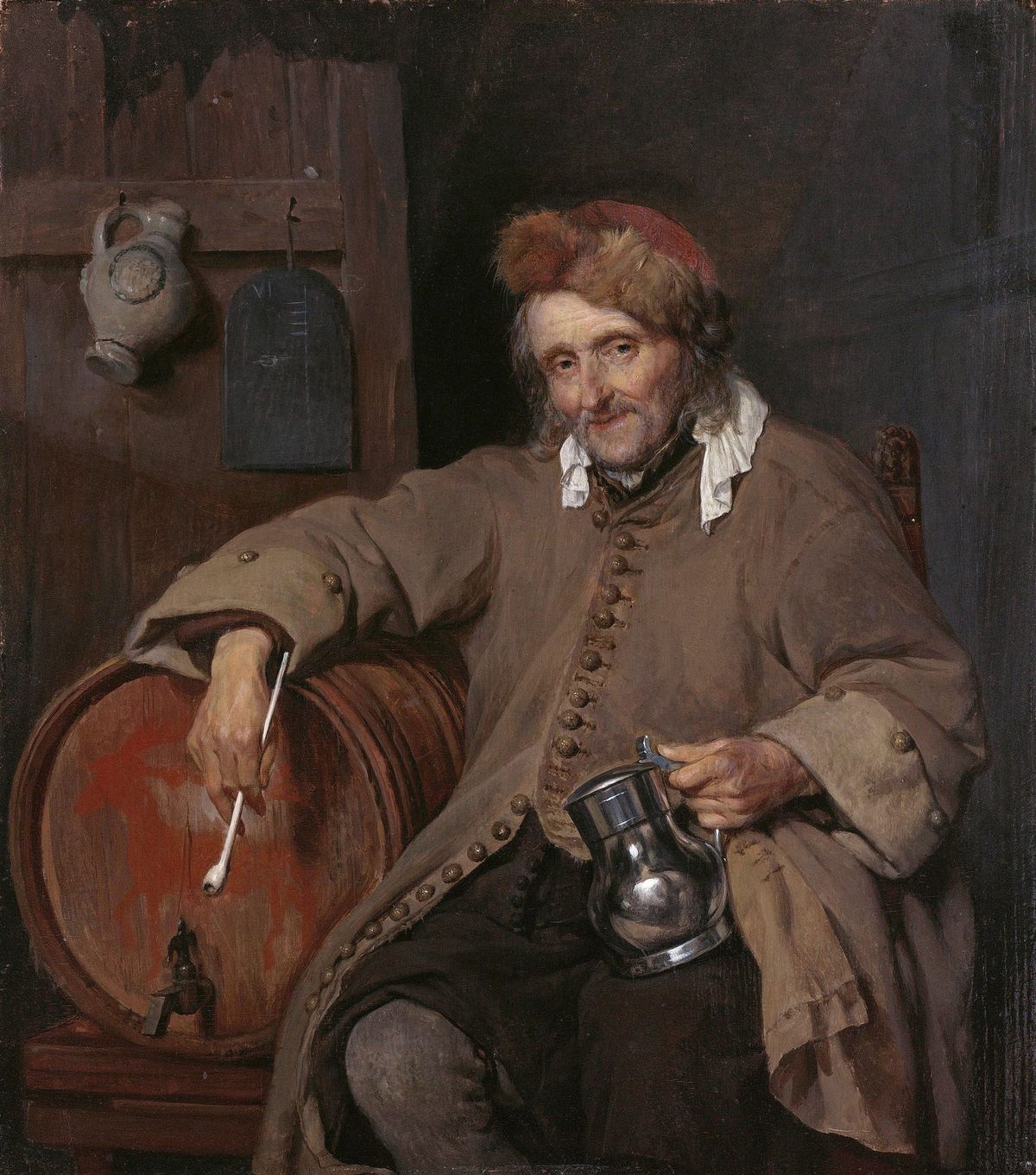
17세기 네덜란드 황금시대의 풍속화 거장 가브리엘 메추(Gabriel Metsu, 1629–1667)가 1650년대 후반에서 1660년대 초반 사이에 완성한 유화 술 마시는 늙은이(The Old Drinker, 프랑스어: Le Vieux Buveur)는 35.0 cm × 29.0 cm 크기의 패널에 유채로 그린 대표적인 선술집 인물 풍속화 걸작입니다. 현재 네덜란드 암스테르담의 국립미술관(Rijksmuseum, Amsterdam)에 소장되어 있습니다.
동네 선술집 단골 할아버지와 맥주잔을 채워주며 나눈 화실의 대화
1650년대 후반 암스테르담 골목길의 한 선술집을 자주 찾던 가브리엘 메추는 구석 자리에서 늘 낡은 털모자를 쓴 채 맥주 한 잔과 긴 담뱃대로 하루의 피로를 달래던 한 노인을 눈여겨보았습니다. 당시 화가는 귀족들의 굳어 있는 공식 초상화 작업에 지쳐 있었기에, 인생의 온갖 풍파를 겪어낸 노인의 깊게 패인 주름과 짓궂으면서도 따스한 눈빛에 강하게 이끌렸습니다. 메추는 노인에게 다가가 시원한 맥주 한 통과 따뜻한 식사를 대접하겠다고 제안하며 화실로 초대했습니다.
화실에서 그림을 그리던 날, 메추는 선술집의 현장감을 살리기 위해 실제 맥주 오크통과 도자기 단지를 가져다 놓고 노인을 앉혔습니다. 포즈를 취하던 노인이 목이 마르다며 슬그머니 주석잔의 뚜껑을 열고 맥주를 들이켜려 하자, 메추는 붓을 들고 화들짝 놀라며 지금 그 잔을 다 비우면 얼굴이 너무 빨개져서 그림을 못 그리니 조금만 참아달라고 소리쳤습니다. 노인은 껄껄 웃으며 맥주를 마시지 않고 쳐다만 보는 것은 세상에서 가장 가혹한 고문이라며 너스레를 떨었고, 두 사람은 그림을 그리는 내내 농담을 주고받으며 화실을 웃음바다로 만들었습니다.
화가는 노인의 손에 들린 긴 흰색 점토 파이프와 반짝이는 은빛 주석 맥주잔, 그리고 붉은 사슴이 그려진 오크통의 묵직한 나무 질감을 정성스럽게 캔버스에 담았습니다. 잦은 병치레와 치열한 미술 시장의 경쟁 속에서 외로움을 느끼던 젊은 화가에게, 산전수전을 다 겪은 노인의 주름진 미소와 소박한 유머는 삶의 짐을 덜어주는 가장 푸근하고 다정한 위로였습니다.
온화하게 미소 짓는 눈가에서 반짝이는 은빛 주석잔으로, 시선의 심리적 여정
그림을 마주하는 순간 관람객의 무의식적 시선은 화면 상단에서 부드러운 빛을 받아 화사하게 드러난 노인의 주름진 이마와 붉은 털모자, 그리고 장난기 어린 따스한 눈빛으로 가장 먼저 빨려 들어갑니다. 하얀 깃을 세운 옷 위로 드러난 털털한 미소와 지그시 바라보는 정겨운 시선은 보는 이에게 깊은 안도감과 친근한 인간미를 선사합니다.
이어 시선은 노인이 가슴 앞에 소중하게 받쳐 들고 있는 묵직한 은빛 주석 맥주잔으로 이동합니다. 주변의 빛을 투명하게 반사하며 매끄럽게 번뜩이는 주석잔의 금속성 광택과, 이를 단단히 쥐고 있는 노인의 굳은살 박인 손가락을 확인하는 순간, 관람객은 시원한 맥주 한 모금이 주는 소박한 기쁨과 선술집의 훈훈한 온기를 온몸으로 체감하게 됩니다.
마지막으로 시선은 노인이 팔꿈치를 편안하게 기대고 있는 커다란 갈색 맥주 오크통과 붉은 동물 그림을 지나, 오른손에 비스듬히 쥐고 있는 긴 하얀 점토 파이프, 그리고 벽에 걸린 외상 장부 흑판에 멈춥니다. 오랜 세월의 정취가 묻어나는 선술집의 고즈넉한 정적과 그 안에서 여유를 즐기는 평범한 인간의 순박한 행복을 마주하며, 관람객은 거창한 성공 뒤편에 자리한 소박한 일상의 소중함과 메추가 건네는 따스한 생의 위로를 가슴 깊이 마주하게 됩니다.
17세기 네덜란드 서민 초상화의 정점과 조형적 완성도, 미술계의 평가
미술계는 술 마시는 늙은이를 가브리엘 메추가 프란스 할스와 렘브란트의 영향을 조화롭게 흡수하여 서민의 생생한 개성과 물질적 질감을 가장 완벽하게 구현한 대표작으로 평가합니다.
털모자의 복슬복슬한 감촉, 거친 모직 코트의 주름, 차가운 주석잔의 광택, 그리고 나무 오크통의 결을 완벽하게 대비시킨 독보적인 질감 묘사뿐만 아니라, 인물의 살아 숨 쉬는 심리 상태를 뛰어난 명암법으로 포착했기 때문입니다. 격식을 차린 귀족적 허세를 벗어던지고 평범한 소시민들의 삶 속에 깃든 진솔한 온기를 노래했던 메추의 이 서정적인 화폭은, 오늘날까지도 수많은 감상자들에게 깊은 미소와 잊을 수 없는 시각적 감동을 전해주는 불멸의 명작으로 손꼽히고 있습니다.
The Resonant Mirth of the Village Tavern, The Old Drinker
Painted around 1658–1660 in Amsterdam by the preeminent Dutch Golden Age master Gabriel Metsu (1629–1667), The Old Drinker (French: Le Vieux Buveur) is an oil on panel measuring 35.0 cm × 29.0 cm (13.8 in × 11.4 in), preserved in the permanent collection of the Rijksmuseum in Amsterdam, Netherlands.
The Regular Patron of the Alehouse and the Beer Stein Sitting
During the late 1650s in Amsterdam, Gabriel Metsu frequently sought inspiration in local taverns, observing common citizens unwinding from their daily labor. Weary of executing stiff, formulaic commissions for elite patrons, the master was captivated by an elderly tavern regular who spent his evenings wearing a weathered fur-trimmed cap, nursing a single pewter flagon of ale with a long clay pipe. Enchanted by the deep wrinkles etched across the man's smiling face and his warm, self-effacing demeanor, Metsu invited the patron to his studio, offering hearty meals and casks of fresh ale in exchange for modeling sessions.
A delightfully humorous incident occurred while preparing the composition in the studio. To establish an authentic tavern setting, Metsu arranged an actual wooden beer cask and a hanging slate tally board beside the sitter. As the session progressed, the thirsty model slyly attempted to lift the pewter lid to finish the ale, prompting Metsu to shout with a laugh, pleading with him to stop before his nose turned too red for painting. The old man chuckled heartily, declaring that staring at full beer without drinking was the ultimate trial of patience, filling the studio with warm banter and laughter throughout the sitting.
The master meticulously recorded the refined gloss of the polished pewter flagon, the slender form of the white Gouda pipe, and the rough timber of the ale barrel marked with the emblem of a red stag. Battling recurrent illness and the pressures of the Amsterdam art market, Metsu found within the old man’s unpretentious mirth a comforting sanctuary, preserving the quiet nobility of ordinary human life across every square inch of the oak panel.
Subconscious Trajectory of the Gaze: From Wrinkled Visage to the Polished Pewter
The observer's subconscious gaze is immediately seized by the upper register, drawn to the luminous, weathered contours of the old man's smiling face beneath his fur-trimmed bonnet. The gentle crinkles around his eyes, his relaxed smile, and the soft white linen collar establish an instant atmosphere of warm hospitality and approachable domestic charm.
The visual path then descends along the sturdy brown wool coat, arriving at the heavy pewter flagon clutched securely in his left hand. Absorbing the brilliant metallic reflections gleaming across the curved flagon and the weathered realism of his knobby fingers, the viewer directly experiences the physical weight of the vessel and the sensory pleasure of a cool tavern drink.
Finally, the visual trajectory sweeps past the massive wooden barrel bearing the red animal insignia, taking in the long white clay pipe resting delicately in his right hand, before resting upon the small slate board and stoneware jug hanging in the shadowed background. Observing the harmonious balance between the rustic interior textures, the warm amber light, and the serene humor of the solitary drinker, the spectator perceives the timeless nobility of everyday life and the enduring spiritual solace Metsu embedded within the home.
The Monument of Dutch Character Genre: Critical Legacy
Art historians revere The Old Drinker as a supreme pinnacle of Metsu’s character studies, reflecting the dynamic portrait traditions of Frans Hals combined with the refined textural precision of the Leiden school.
By harmonizing the tactile differences between soft fur, coarse cloth, weathered oak, and reflective metal with nuanced psychological warmth, Metsu elevated a humble tavern figure into a universal visual poem. This captivating cabinet picture endures as an inspiring testament to the master's enduring humanism, celebrating the quiet sanctity of ordinary existence and the transformative power of living art.
본 컨텐트의 저작권은 팔렛트제주에 있습니다. 허가없는 무단전제를 금지합니다.
Copyright © Palette Jeju. All rights reserved. Unauthorized reproduction or redistribution is strictly prohibited.