오두막 A Cottage
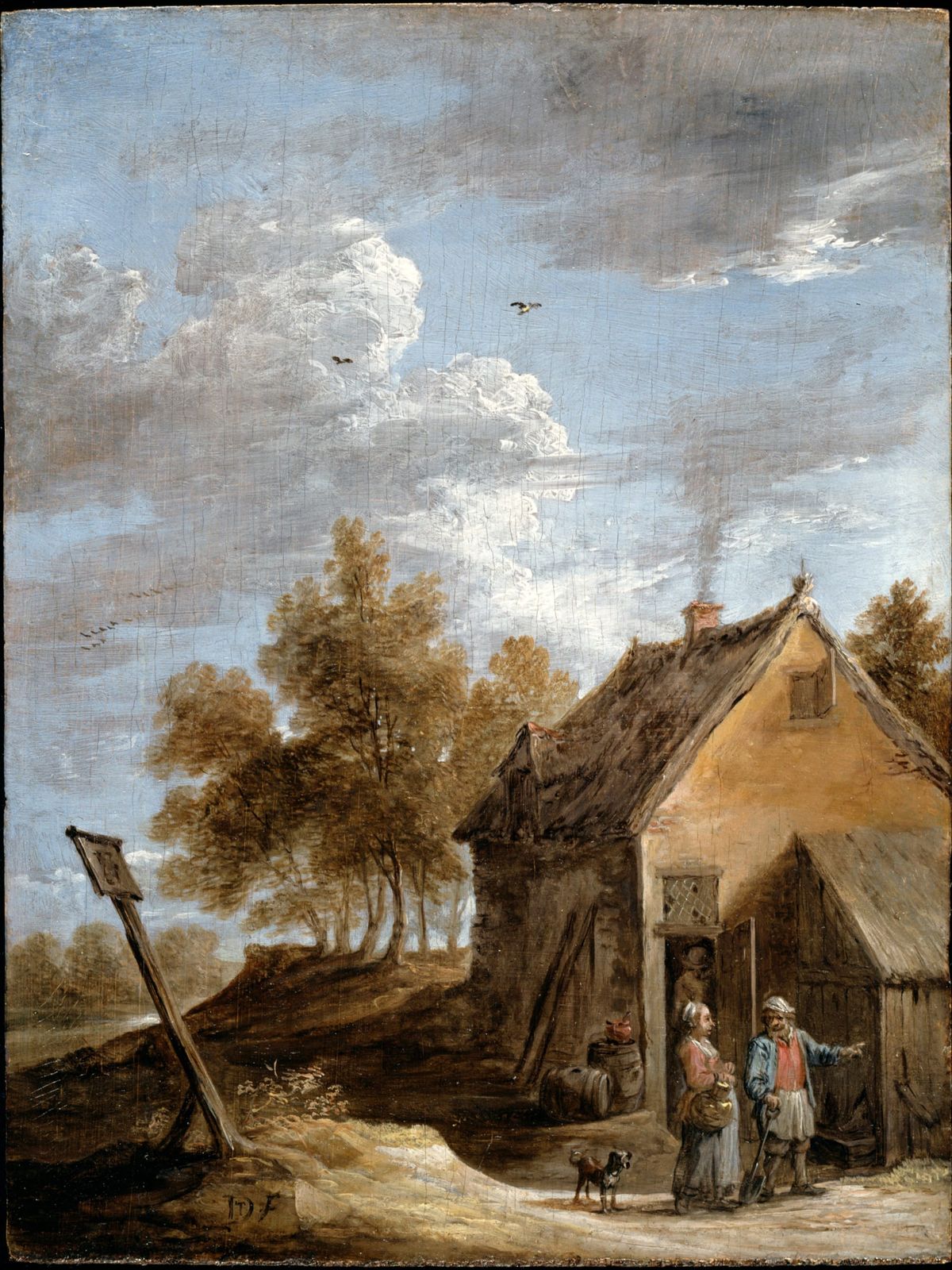
17세기 플랑드르 바로크 풍속화 및 서정적 전원 풍경화의 거장 소 다비드 테니어르스(David Teniers le Jeune, 1610–1690)가 1640년대 중반 안트베르펜 전성기 시절에 완성한 기념비적 소형 캐비닛 풍경 유화 오두막(A Cottage, 또는 시골 농가와 담소를 나누는 농민들, 공식 소장품 등록번호: DPG52)은 22.0 cm × 16.6 cm 크기의 아담한 세로형 오크 패널(목판)에 유채로 그린 대표적인 북유럽 전원 풍경화 최고 걸작입니다.
1811년 피터 프랜시스 부르주아 경(Sir Peter Francis Bourgeois)의 역사적인 유증을 통해 영국 최초의 공공 미술관으로 편입되었으며, 현재 영국 런던의 유서 깊은 덜위치 픽처 갤러리(Dulwich Picture Gallery, London)에 영구 소장되어 보존되어 오고 있습니다.
피터르 브뤼헐의 대지 찬가와 짝을 이룬 풍경화 연작을 향한 화가의 고뇌
1640년대 플랑드르 화단을 이끌던 삼십 대의 테니어르스는, 시골 서민들이 살아가는 가장 소박하고 진솔한 삶의 터전인 초가 오두막을 통해 자연과 인간의 평화로운 조화를 화폭에 구현하고자 깊이 몰두했습니다.
덜위치 픽처 갤러리의 공식 소장 도록에 따르면, 이 작품은 또 다른 걸작인 오두막 근처의 길(A Road near a Cottage, 소장품 번호: DPG49)과 함께 동일한 규격의 오크 목판 위에 완벽한 한 쌍(Pendant Pair)으로 구상되어 제작된 연작입니다.
화가는 궁정의 인위적인 화려함 대신 햇볕에 그을린 흙벽과 낡은 짚풀 지붕, 비바람을 견뎌낸 나무 덧문을 통해 가난하지만 평온하게 살아가는 농민들의 일상을 어떻게 특유의 맑고 투명한 은빛 대기(Silvery manner)와 부드러운 햇살 속에 담아낼지 치열하게 번민했습니다.
화가는 완만한 언덕길 모퉁이에 자리 잡은 낡은 초가집 앞에서, 가벼운 노동을 마치고 문간에 서서 정답게 이야기를 나누는 농부 부부와 그 곁을 지키는 반려견의 평화로운 순간을 화폭에 담았습니다.
화면 오른쪽 아래 오두막 문 앞에는 흰 두건과 붉은 조끼, 긴 치마를 입고 물주전자를 든 아내와, 붉은 안감이 덧대어진 푸른 겉옷을 입고 삽을 짚은 채 손짓하며 말을 건네는 남편이 정겹게 마주 서 있습니다.
오두막 열린 문틈 그늘 속에는 집 안에서 바깥을 내다보는 또 다른 가족의 실루엣이 희미하게 드러나며, 부부의 발치 앞에서는 점박이 강아지 한 마리가 꼬리를 세우고 길 위를 바라보고 있습니다.
오두막 벽에 기대어 놓인 나무 사다리와 맥주통, 그리고 화면 왼쪽 완만한 언덕 위로 길게 솟아 있는 낡은 도로 표지판과 높푸른 가을 하늘을 가득 채운 은빛 뭉게구름은, 소박한 일상 속에 깃든 평화와 노동의 숭고함을 손에 잡힐 듯 생생하게 웅변합니다.
문간의 다정한 부부에서 푸른 가을 하늘과 은빛 뭉게구름으로, 시선의 심리적 여정
그림을 마주하는 순간 관람객의 무의식적 시선은 화면 오른쪽 아래에서 밝은 햇살을 받아 화사하게 드러나는 농부 부부의 붉은 조끼와 흰 두건, 그리고 남편이 짚고 있는 삽 자루의 반짝임으로 가장 먼저 빨려 들어갑니다.
가벼운 손짓을 섞어가며 아내에게 말을 건네는 남편의 온화한 옆얼굴과 물주전자를 든 채 경청하는 아내의 다소곳한 자태는 보는 이에게 깊은 시각적 안정감과 함께 시골 가정의 포근한 온기를 선사합니다.
이어 시선은 부부의 곁에서 호기심 어린 눈빛으로 서 있는 점박이 강아지와 오두막 벽에 놓인 묵직한 나무통들을 지나, 화면 왼쪽 완만한 언덕길 위에 비스듬히 세워진 낡은 나무 이정표로 이동합니다.
한적한 시골길의 고즈넉한 정취를 확인하는 순간, 관람객은 맑은 가을바람과 풀 내음이 번져오는 17세기 플랑드르 시골 마을 어귀 한복판 속으로 온몸이 빨려 들어가게 됩니다.
마지막으로 시선은 언덕 능선을 따라 서 있는 부드러운 갈색 활엽수림을 지나, 오두막 굴뚝에서 피어오르는 가느다란 회색 연기와 하늘 높이 날아오르는 두 마리의 새, 그리고 푸른 창공을 웅장하게 채운 은빛 뭉게구름에 멈춥니다.
전면 인물들의 정겨운 대화와 후면의 드넓은 대기 공간이 빚어내는 완벽한 공간적 조화를 마주하며, 관람객은 소박한 삶의 터전에서 피어나는 영혼의 안식과 거장 테니어르스가 건네는 묵직한 자연주의적 감동을 가슴 깊이 마주하게 됩니다.
17세기 플랑드르 캐비닛 풍경화의 정점과 조형미, 미술계의 평가
미술계와 덜위치 픽처 갤러리 공식 도록은 오두막을 테니어르스가 손바닥만 한 작은 오크 목판 위에 광활한 공간감과 정교한 인물 묘사를 완벽한 균형으로 융합해 낸 대표적인 최고봉 마스터피스로 평가합니다.
단순한 전원 풍경을 넘어 건축물의 자연스러운 노후화와 인물들의 소박한 온정을 완벽한 대각선 구도 속에 배치했을 뿐만 아니라, 볏짚 지붕의 까슬까슬한 질감, 흙벽의 따뜻한 황토색 색조, 하늘을 가르는 맑은 대기의 습도와 햇살의 입자를 극도로 섬세한 북유럽 사실주의 유화 기법으로 완벽하게 구현했기 때문입니다.
작고 평범한 농가 오두막을 가장 품격 높은 시각 서정시로 승화시킨 테니어르스의 이 걸작 화폭은, 오늘날까지도 전 세계 수많은 감상자들에게 깊은 감탄과 잊을 수 없는 시각적 평온을 전해주는 불멸의 명작으로 손꼽히고 있습니다.
A Cottage
Painted in the mid-1640s in Antwerp by the master of Flemish Baroque genre and atmospheric landscape painting David Teniers the Younger (1610–1690), A Cottage (also titled Peasants Conversing before a Thatched Cottage, Accession No. DPG52) is an intimate cabinet landscape masterpiece in oil on oak panel measuring 22.0 cm × 16.6 cm (8.7 in × 6.5 in).
Bequeathed in 1811 by Sir Peter Francis Bourgeois as part of the founding collection of England's first public art museum, it is preserved today in the distinguished permanent collection of the Dulwich Picture Gallery in London, United Kingdom.
The Bruegelian Heritage, Pendant Landscape Harmony, and Peasant Domesticity
During the mid-1640s in Antwerp, David Teniers the Younger explored the tranquil harmony of rural existence, celebrating the simple homesteads of the Flemish peasantry as quiet sanctuaries of natural grace.
According to academic records in the Dulwich Picture Gallery collection catalogue, this pristine oak panel was conceived and executed as an exact pendant pair alongside A Road near a Cottage (DPG49), exemplifying Teniers's ability to orchestrate complementary landscape perspectives across small-scale supports.
Moving beyond courtly artifice, the master meditated deeply on how to render the weathered textures of sunlit stucco walls, rough straw thatch, and rustic timber boarding, harmonizing the humble rhythms of daily toil beneath an expansive sky bathed in his celebrated silvery atmospheric light.
Teniers staged the serene vignette beside a thatched country cottage situated at the bend of a rolling dirt road.
In the lower-right foreground before the doorway, a peasant husband in a blue coat with red facings leans casually upon his spade as he gestures in conversation with his wife, who wears a crisp white linen cap, a red bodice, and holds a stoneware flagon.
Within the shadowed interior of the open doorway, the quiet profile of a third household member is subtly visible, while a lively terrier stands alert at their feet beside resting wooden casks and a leaning ladder.
To the left, a tall wooden road signpost rises along the bank, framed against a grove of trees, rising chimney smoke, and radiant cumulus clouds drifting across the blue sky, celebrating the timeless dignity of honest labor and the quiet grace of rural life.
Subconscious Trajectory of the Gaze: From the Doorstep Conversation to the Expansive Skies
The observer's subconscious gaze is immediately magnetized by the lower-right foreground, drawn to the luminous daylight striking the woman’s white linen cap, the husband’s vibrant red cuffs, and the metallic edge of his resting spade.
Their relaxed posture, natural hand gestures, and companionable domestic intimacy establish an instant focal point of physical charm, emotional warmth, and narrative stillness.
The visual path then shifts across the sunlit ground, moving past the attentive terrier and the weathered wooden casks toward the tall, inclined wooden post along the embankment to the left.
Taking in the tranquil countryside path and the soft earth tones, the viewer directly experiences the authentic, breeze-filled atmosphere of a 17th-century Flemish afternoon.
Finally, the visual trajectory ascends along the thatched roof and the slender plume of chimney smoke, rising toward the birds in flight and the luminous expanse of billowing white cumulus clouds across the pale blue heavens.
Observing the harmonious equilibrium between foreground domestic warmth, vertical architectural massing, and precise Netherlandish draftsmanship, the spectator perceives the timeless nobility of simple living and the profound aesthetic brilliance Teniers embedded within the panel.
The Monument of Flemish Cabinet Landscape: Critical Legacy
Art historians revere the Dulwich Cottage as an exceptional achievement in Teniers’s oeuvre, illustrating his consummate ability to unite atmospheric landscape painting with intimate genre portraiture on a small scale.
By orchestrating delicate textural contrasts between weathered thatch eaves, chalky plaster walls, porous wooden casks, soft dog fur, and radiant moisture-filled clouds within a unified perspectival space, Teniers transformed a humble cottage into an exquisite aesthetic treatise on peace and nature's harmony.
This precious historical panel endures as an inspiring testament to the master's creative fortitude, celebrating the quiet poetry of everyday existence and the transformative grace of living art.
본 컨텐트의 저작권은 팔렛트제주에 있습니다. 허가없는 무단전제를 금지합니다.
Copyright © Palette Jeju. All rights reserved. Unauthorized reproduction or redistribution is strictly prohibited.