오병이어의 기적 Miracle of the Loaves and Fishes
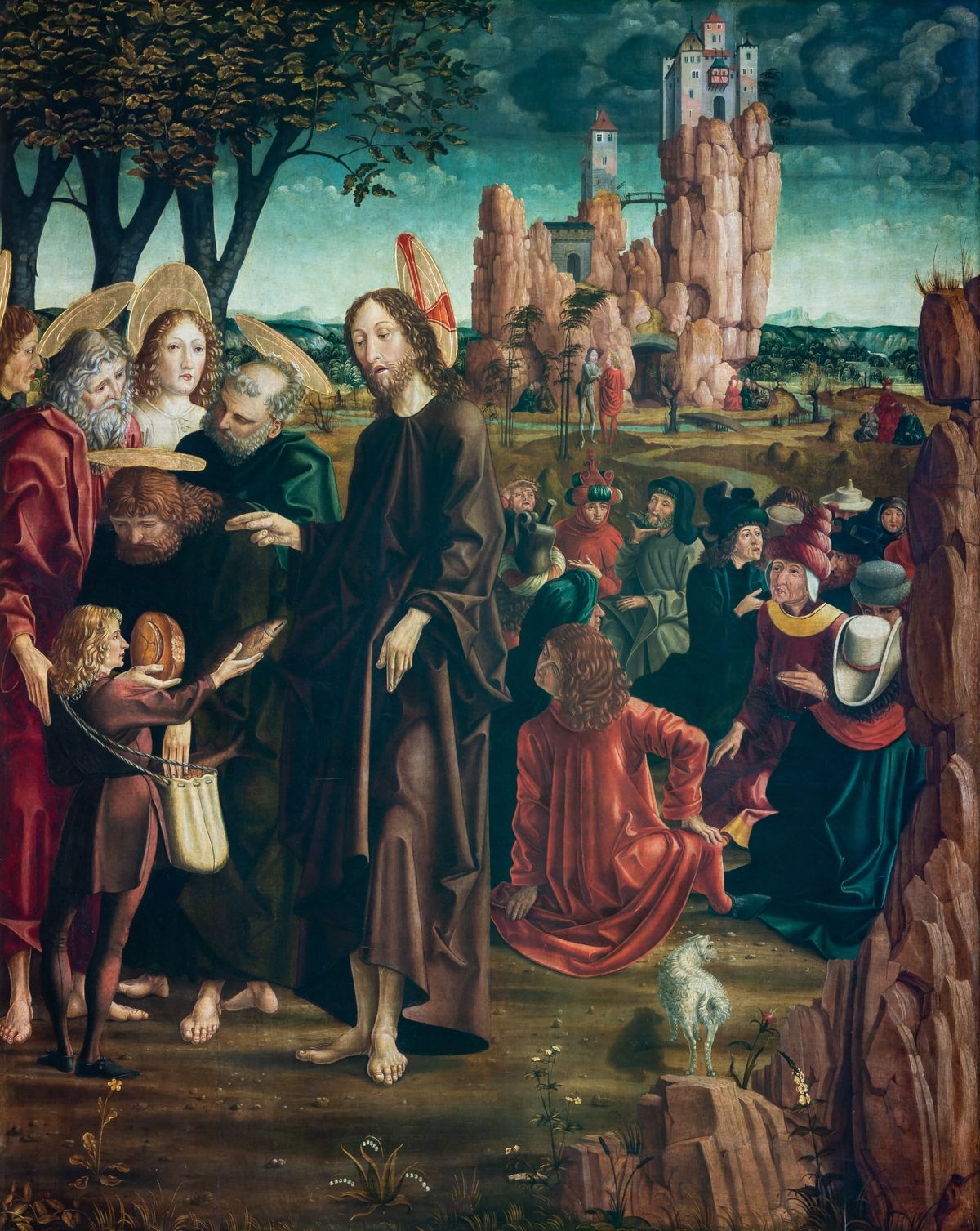
1471년부터 1481년 사이에 오스트리아의 거장 미하엘 파허(Michael Pacher)가 제작한 이 작품은, 성 볼프강 제단화의 연작 중 하나로 굶주린 군중의 허기진 현실과 이를 채워주는 기적의 장엄한 순간을 투영합니다.
오스트리아 세인트 볼프강의 순례 성당(Pilgrimage Church, St. Wolfgang)에 소장된 이 작품의 공식 소장품 등록번호는 성 볼프강 제단화 패널이며, 실제 작품의 실측 규격은 높이 215 cm, 너비 165 cm의 목판 유채 및 템페라 패널입니다.
작가의 고뇌/비하인드
작품의 전면 중앙에는 갈색 옷을 입고 엄숙한 표정으로 선 예수 그리스도가 등장하며, 그의 손길 아래 어린아이와 제자들이 빵과 물고기를 건네받으며 나눔의 기적을 준비하고 있습니다.
화면 우측에는 화려한 모자와 복장을 한 군중들이 삼삼오오 모여 앉아 이 놀라운 광경을 놀라움과 의심이 섞인 눈빛으로 지켜보고 있습니다.
특히 중경에는 드넓은 대지와 나무들이 입체적인 공간감을 형성하고 있으며, 원경의 바위산 위에 세워진 웅장한 성곽은 기적이 일어나는 공간의 역사적 무게감을 묵묵히 대변합니다.
무의식 속 시선 및 심리 흐름
관람객의 시선은 가장 먼저 화면 중앙에서 중심을 잡고 선 예수 그리스도의 진중한 눈빛과 묵직한 옷자락으로 자연스럽게 꽂힙니다.
이어 시선은 그의 손끝을 따라 작은 소년이 빵과 물고기를 내어미는 전면의 따뜻한 손길로 부드럽게 이동합니다.
마지막으로 시선은 화면 우측에서 이 광경을 지켜보는 군중의 다양한 표정과 배경의 거대한 암산으로 확장되며, 배고픔과 결핍의 고통 속에서 피어오르는 구원의 기적 앞에 깊은 심리적 울림을 느끼게 됩니다.
미술계의 평가 및 조형미
미술사학계는 이 작품을 15세기 후반 티롤 고딕 미술의 정점이자, 북유럽의 세밀한 사실주의와 이탈리아 르네상스의 원근법적 공간 구도가 가장 조화롭게 결합한 최고 걸작 중 하나로 평가합니다.
목판 위에 겹겹이 쌓아 올린 템페라와 유채는 인물의 의복 주름과 자연물의 질감을 경이로울 정도로 생생하게 살아나게 만듭니다.
인간의 결핍을 채우는 거룩한 나눔의 순간을 예술의 경지로 승화시킨 이 작품은, 영원토록 미술사에서 묵직한 감동을 주는 가치를 지니고 있습니다.
영문 번역본 구성
Miracle of the Loaves and Fishes
Created between 1471 and 1481 by the Tyrolean master Michael Pacher as part of the St. Wolfgang Altarpiece, this work reflects the harsh reality of hunger among the destitute masses and the solemn moment of a miraculous bounty that satisfies their needs.
Housed in the Pilgrimage Church in St. Wolfgang, Austria, this piece is an integral panel of the St. Wolfgang Altarpiece, and the actual physical dimensions of the oil and tempera wood panel measure 215 cm in height and 165 cm in width.
The Artist's Struggle and Behind-the-Scenes
In the immediate foreground at the center, Jesus Christ stands in a brown robe with a solemn expression, while nearby children and disciples receive bread and fish to prepare for the miracle of sharing.
On the right side of the composition, crowds clad in ornate hats and garments gather together, observing this astounding phenomenon with a mix of astonishment and skepticism.
In the middle ground, rolling terrain and trees establish a rigorous spatial depth, while the majestic fortress perched atop rocky cliffs in the distance quietly conveys the historical gravity of the setting where the miracle unfolds.
Subconscious Gaze and Psychological Flow
The viewer's gaze is initially drawn directly to the commanding presence and steady gaze of Jesus Christ anchored at the center of the composition.
The eye then shifts downward along the directional line of his hand toward the young boy offering the loaves and fish in the foreground.
Finally, the gaze drifts toward the observing crowds on the right and into the distant mountainous background, evoking a profound psychological resonance before the miraculous provision that alleviates human suffering and scarcity.
Art World Evaluation and Formal Beauty
Art historians evaluate this work as a crowning achievement of late fifteenth-century Tyrolean Gothic art, successfully fusing the precise realism of the north with the perspective-driven spatial geometry of the Italian Renaissance.
The layered application of tempera and oil on wood brings the rich folds of the garments and the tactile textures of nature to breathtaking life.
Elevating the sacred moment of divine sustenance and communal sharing to the pinnacle of visual mastery, this creation retains an enduring and profound value in art history.
본 컨텐트의 저작권은 팔렛트제주에 있습니다. 허가없는 무단전제를 금지합니다.
Copyright © Palette Jeju. All rights reserved. Unauthorized reproduction or redistribution is strictly prohibited.