오베르의 농가 - Cottages at Auvers (Houses in Auvers)
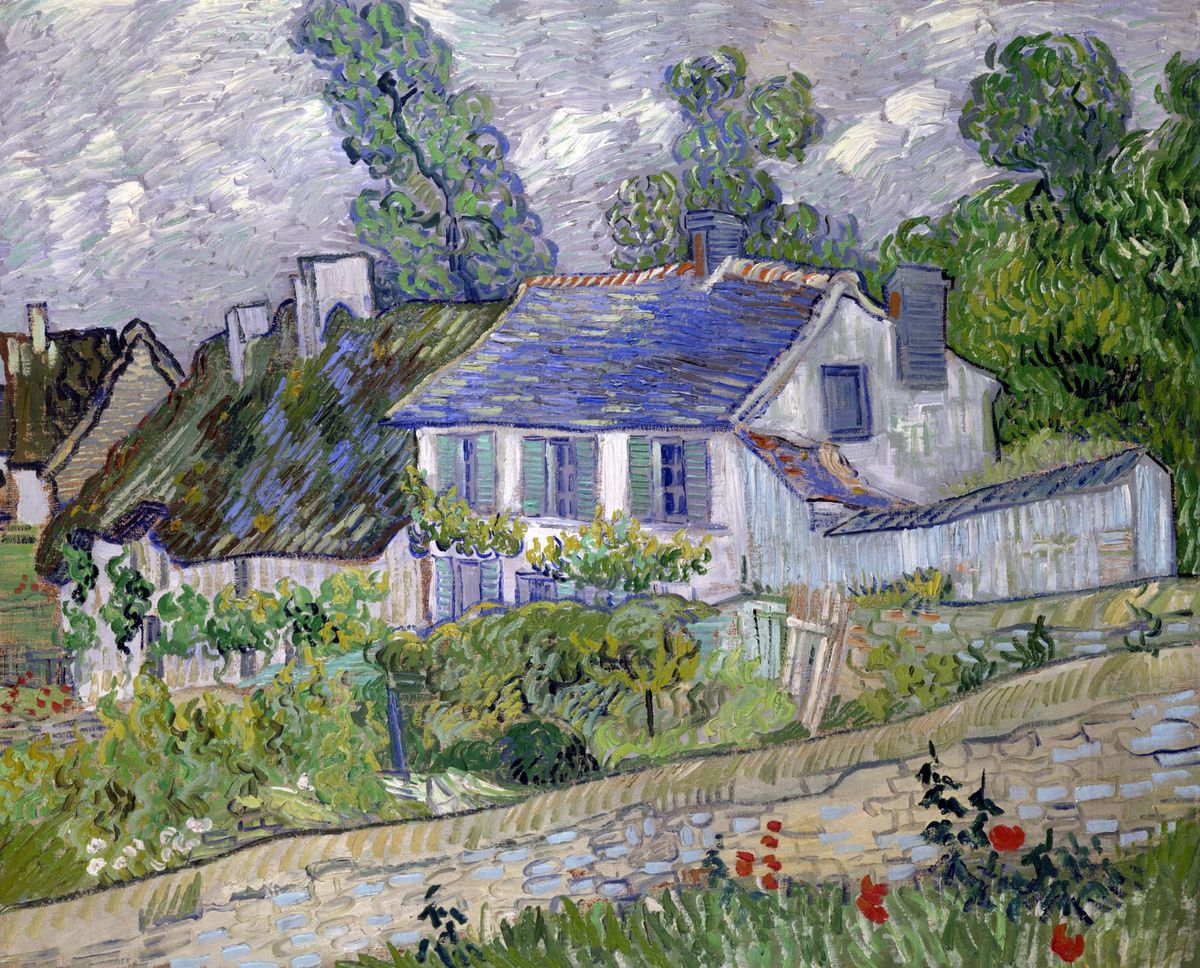
빈센트 반 고흐(Vincent van Gogh, 1853–1890)가 생애 마지막 해인 1890년 5월 말에서 6월 초 사이에 프랑스 파리 근교 오베르 쉬르 우아즈(Auvers-sur-Oise)에서 완성한 '오베르의 농가(Cottages at Auvers)'는 캔버스에 유채(Oil on canvas)로 제작된 풍경화입니다. 작품의 실제 규격은 세로 60.8cm, 가로 73.3cm이며, 현재 미국 보스턴 미술관(Museum of Fine Arts, Boston)에 영구 소장되어 있습니다.
고흐는 이 작품에서 형태의 경계를 짓는 유려하고 굵은 윤곽선과 함께 캔버스 결을 따라 물감을 조각하듯 밀어 넣는 특유의 임파스토(Impasto) 기법을 거침없이 구사했습니다. 푸른빛과 은회색이 감도는 하늘의 소용돌이치는 붓질, 짙은 코발트 블루와 암갈색 짚으로 덮인 초가지붕, 에메랄드 그린과 올리브 톤으로 뒤엉킨 정원의 수풀, 그리고 돌담길을 따라 붉은 보석처럼 피어난 양귀비꽃의 생생한 색채 대비는 정적인 시골 마을에 살아 숨 쉬는 유기적 생명력을 불어넣습니다.
이 그림에는 반 고흐가 생의 마지막 은신처였던 오베르에 도착해 느꼈던 안도감과 지독한 창작의 열정이 얽힌 가슴 뭉클한 인간적 에피소드가 담겨 있습니다. 1890년 5월 20일, 고흐는 남프랑스 생레미 정신병원의 답답한 격리 생활을 끝내고 테오가 마련해 준 오베르의 라부 여인숙(Auberge Ravoux)에 짐을 풀었습니다. 남부의 뜨거운 태양과 발작의 공포에 지쳐 있던 그에게 북부 일드프랑스의 온화한 바람과 고요한 초가집 풍경은 마치 어린 시절 뛰놀던 고향 네덜란드의 품으로 돌아온 듯한 포근한 감동을 주었습니다.
고흐는 여인숙에 도착하자마자 짐도 제대로 풀지 않은 채 이젤과 물감 상자를 챙겨 들고 마을 언덕길로 뛰어나갔습니다. 동생 테오에게 보낸 첫 편지에서 그는 "오베르는 정말이지 말로 다 표현할 수 없을 만큼 아름답다. 낡은 초가지붕들이 옛 추억처럼 남아 있는 이곳은 내게 완벽한 안식처다"라며 어린아이처럼 환호했습니다. 당시 마을 주민들은 아침부터 저녁까지 낡은 밀짚모자를 쓰고 캔버스 앞에 붙어 서서 땀을 흘리며 물감을 마구 짓이기던 붉은 수염의 낯선 화가를 기이하게 바라보았지만, 고흐는 하루에 한두 점씩 대작을 쏟아내며 자신의 남은 생명력을 모조리 캔버스에 쏟아부었습니다.
특히 돌담 앞 풀밭에 점점이 박힌 붉은 양귀비꽃은 당시 고흐가 화구 상자 속에 마지막으로 남아 있던 귀한 주홍빛 안료를 아낌없이 털어 넣으며 찍어낸 희망의 흔적이었습니다. 불과 두 달 뒤 비극적인 파국이 찾아올 것을 예감하지 못한 채, 고흐는 햇살을 머금은 소박한 시골집의 정경 속에서 평생 그토록 갈구했던 평범한 가정의 온기와 안식을 화폭 속에 영원히 박제해 두려 했습니다.
후대의 미술사학자들과 비평가들은 이 작품을 반 고흐 말기 오베르 시대를 대표하는 조형적 완성도의 정점이자, 자연과 건축물이 하나의 맥박으로 공명하는 20세기 표현주의의 걸작으로 평가합니다. 캔버스를 짓누르던 어두운 비극성 대신, 북부 시골마을의 소박한 전통과 자연의 숨결을 따스하고 유려한 리듬으로 복원해 낸 이 그림은 반 고흐가 죽음의 문턱 앞에서도 예술을 향한 순수한 사랑과 삶에 대한 경외를 결코 놓지 않았음을 웅변합니다.
관람자의 시선은 가장 먼저 화면 전면 하단에서 비스듬히 흐르는 밝은 돌담길과 그 틈새로 강렬하게 피어난 붉은 양귀비꽃의 율동감에 머뭅니다. 이어 담장 너머 푸른 잎사귀로 우거진 풍성한 정원의 수풀을 지나 단아하게 자리 잡은 흰 벽의 농가와 푸른 지붕의 조화로운 형태감으로 올라간 뒤, 지붕 뒤편으로 웅장하게 솟아오른 포플러 나무와 소용돌이치듯 굽이치는 하늘의 은빛 구름을 따라 화면 전체로 유려하게 순환합니다.
심리적으로 관람자는 대지를 감싸 안은 싱그러운 녹색의 편안함과 맑은 하늘의 푸른빛, 그리고 따스한 돌담길이 자아내는 평화로운 조화 속에서 복잡한 마음이 차분히 가라앉는 깊은 정서적 이완을 경험하게 됩니다. 소박하고 따뜻한 시골집이 전하는 포근한 안정감은 현대인의 내면에 쌓인 긴장과 불안을 부드럽게 씻어내며, 지친 영혼에 고향의 품과 같은 깊은 평온과 따뜻한 위로의 에너지를 가득 채워줍니다.
Cottages at Auvers (Houses in Auvers)
Painted by Vincent van Gogh (1853–1890) in Auvers-sur-Oise between late May and early June 1890, Cottages at Auvers is an oil on canvas landscape measuring 60.8 cm in height and 73.3 cm in width. This masterwork is permanently preserved in the renowned collection of the Museum of Fine Arts, Boston, United States.
Van Gogh structured the composition with fluid, dynamic outlines and his signature heavy impasto, lending the rural architecture and surrounding flora a vibrant sculptural relief. The swirling gray-blue brushwork of the atmospheric sky, the deep cobalt and earthy thatch of the rooftops, the dense emerald greenery of the garden, and the brilliant scarlet accents of wild poppies along the stone retaining wall collectively transform the quiet countryside into a rhythmic tapestry of living energy.
The canvas holds an intimate history of emotional relief and relentless artistic momentum. On May 20, 1890, Van Gogh arrived in Auvers-sur-Oise after concluding his painful confinement at the asylum in Saint-Rémy. Checking into the modest Auberge Ravoux, he felt an immediate rush of nostalgia; the gentle northern landscape and mossy thatched roofs reminded him profoundly of his childhood home in the Netherlands, offering a much-needed sanctuary for his fragile mental state.
Without pausing to rest, Van Gogh grabbed his easel and brushes, eager to paint the village lanes before the morning light shifted. In his first letter from Auvers to his brother Theo, he wrote ecstatically: "Auvers is profoundly beautiful, it is real country, characteristic and picturesque." The local residents watched with curiosity as the eccentric, red-bearded painter stood along the roadside for hours in his battered straw hat, applying thick strokes with breathtaking speed. Unaware of the tragic fate that awaited him just two months later, Van Gogh poured his remaining vital energy into capturing the peaceful domestic warmth he had longed for his entire life.
The vibrant red poppies blooming in the foreground were painted using the precious remains of his scarlet pigments, serving as radiant visual sparks of renewed hope. To Van Gogh, these modest homes nestled among the trees represented an ideal harmony between humanity and nature, untainted by the frantic pressures of modern industrial city life.
Modern art historians and scholars celebrate this painting as a triumphant pinnacle of Van Gogh's late Auvers period and a foundational milestone of Expressionism. By synthesizing architectural mass with organic, undulating rhythms, Van Gogh transcended mere landscape documentation, creating an enduring hymn to pastoral peace, human belonging, and natural beauty.
A viewer’s gaze instinctively settles upon the textured cobblestone path and the brilliant splashes of red poppies in the lower foreground. The eyes then journey upward through the lush, emerald garden toward the whitewashed walls, green shutters, and deep blue-thatched roofs of the cottages, before ascending past the towering green trees to circulate through the dynamic, undulating currents of the silver-clouded sky.
Psychologically, the harmonic balance between soothing verdant greens, comforting earthen stone, and serene atmospheric blues induces an immediate sensation of emotional safety and grounded peace. The tender intimacy of the rural dwelling dispels inner turmoil and mental exhaustion, enveloping the observer in an enduring atmosphere of nostalgic comfort, restorative tranquility, and quiet optimism.
본 리뷰에서 작품을 제외한 컨텐츠의 저작권은 팔렛트제주에 있습니다.
"퍼블릭도메인 고전명화"를 제외한 모든 창작 콘텐츠는 저작권법 제4조 및 제10조에 의거하여 보호됩니다. 무단 도용시 저작권법 제136조(벌칙)에 의거, 당사의 사전 서면 승인 없는 저작권 침해 행위를 금지합니다.