오베르의 계단이 있는 풍경과 다섯 인물 - Village Street and Steps in Auvers with Figures
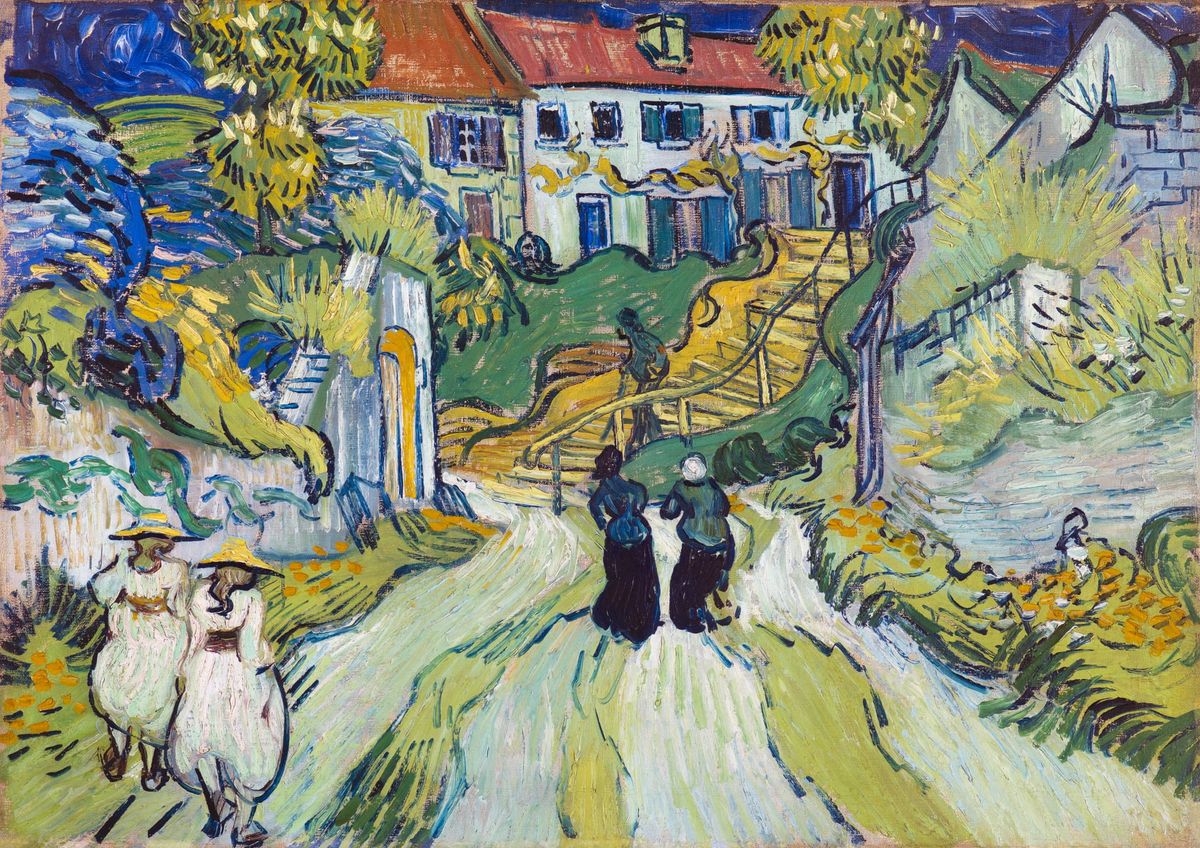
빈센트 반 고흐(Vincent van Gogh, 1853~1890)가 생의 마지막 해인 1890년 5월 말에서 6월 초 사이에 완성한 캔버스 유화(Oil on canvas) 작품입니다. 작품의 실제 규격은 49.8 x 70.1 cm이며, 미국 세인트루이스 미술관(Saint Louis Art Museum)에 소장되어 있습니다. 생레미 요양원을 떠나 파리 근교의 오베르 쉬르 우아즈에 도착한 직후 완성된 이 그림은 두꺼운 물감 덩어리를 거침없이 얹어낸 임파스토 기법과 역동적으로 굽이치는 리드미컬한 윤곽선이 절정을 이룬 후기 인상주의의 대표작입니다.
1890년 5월 남프랑스의 고립된 생활을 끝내고 오베르에 도착했을 때 고흐는 새로운 환경에 아이처럼 들떠 있었습니다. 예술을 사랑하던 내과의사 폴 가셰 박사의 보살핌을 받으며 라부 여인숙 2층의 비좁은 방에 짐을 푼 그는, 오베르가 지닌 소박하고 오래된 시골 정취에 순식간에 매료되었습니다. 그는 동생 테오에게 오베르의 초가지붕과 골목길이 말로 다 표현할 수 없을 만큼 아름답다며 신나게 편지를 보냈고, 매일 아침 해가 뜨기도 전에 캔버스와 이젤을 짊어지고 마을 구석구석을 누볐습니다.
이 그림을 그릴 당시 고흐는 마을의 좁고 가파른 언덕길에 이젤을 펼쳤습니다. 밀짚모자를 쓰고 밝은 드레스를 입은 동네 소녀들과 어두운 작업복을 입고 언덕을 오르내리는 여인들은 지나갈 때마다 물감 범벅이 된 채 땀을 뻘뻘 흘리는 붉은 머리의 화가를 호기심 가득한 눈으로 쳐다보았습니다. 고흐는 마을 사람들의 분주한 일상과 계단을 오르는 주민들의 모습을 화폭에 생생히 담기 위해 주민들이 지나갈 때마다 손짓으로 인사를 건네며 번개 같은 속도로 붓을 휘둘렀습니다. 심지어 마을 아이들이 신기한 듯 다가와 물감 냄새를 맡고 참견을 해도 고흐는 화를 내기는커녕 오히려 빙그레 웃으며 그들의 자유로운 움직임을 캔버스 한편에 리듬감 넘치게 담아냈습니다.
후대 미술사학자들은 이 작품을 고흐가 비극적인 죽음을 맞이하기 직전, 마지막으로 불태웠던 찬란한 생의 에너지와 예술적 성숙미가 완벽하게 응축된 명작으로 평가합니다. 캔버스를 가득 채운 구불구불한 붓터치와 대담한 원근감의 왜곡은 눈앞의 풍경을 살아 숨 쉬는 유기체처럼 느껴지게 만듭니다. 밝은 노란색과 짙은 코발트블루, 풀잎의 싱그러운 연두색이 이루는 활기찬 색채 조화는 고흐가 느꼈던 순수한 창작의 기쁨을 고스란히 증명합니다.
작품을 마주하는 관람객의 시선은 왼쪽 하단의 밀짚모자를 쓴 두 여인의 경쾌한 뒷모습에서 자연스럽게 출발합니다. 이어 화면 중앙의 완만한 흙길을 따라 올라가 검은 옷을 입은 여인들과 지팡이를 짚고 계단을 오르는 인물에 도달하게 되며, 마침내 노란 나무들이 감싸 안은 하얀 벽돌집과 파란 하늘로 시선이 시원하게 확장됩니다. 이러한 리드미컬하고 따뜻한 시선 이동은 감상자의 무의식 속에 쌓인 피로와 긴장을 부드럽게 이완시키며, 평화로운 시골 마을의 온기와 더불어 삶에 대한 긍정적인 활력과 편안한 안도감을 채워줍니다.
Village Street and Steps in Auvers with Figures
Painted between late May and early June 1890 by Vincent van Gogh (1853–1890), this magnificent oil on canvas measures 49.8 by 70.1 centimeters and is housed in the Saint Louis Art Museum in Missouri, United States. Created shortly after his arrival in Auvers-sur-Oise during the final months of his life, this masterpiece showcases Van Gogh's expressive mastery, combining thick impasto layers with undulating, rhythmic contours that turn a quaint village street into a dynamic visual symphony.
Upon leaving the asylum at Saint-Rémy in May 1890, Vincent was immediately invigorated by the rustic charm of Auvers. Under the gentle medical watch of Dr. Paul Gachet, he rented a tiny attic room at the Auberge Ravoux and explored the village with boundless enthusiasm. He wrote fondly to his brother Theo that the old cottages and mossy thatched roofs were breathtakingly picturesque, setting out each morning at dawn with his easel strapped across his back.
Setting up his easel right at the corner of the sloping street, Vincent painted with incredible fervor. Local girls wearing wide-brimmed straw hats and women climbing the wooden steps couldn't help but stare at the eccentric red-haired artist covered in colorful paint splatters. Whenever neighborhood children gathered around in curiosity to watch him work, Vincent warmly welcomed their presence, rapidly capturing the everyday rhythm of the village people as they walked past.
Art historians celebrate this painting as a brilliant testament to Vincent's creative vitality just before his untimely death. Rather than depicting a static topographical scene, Van Gogh rendered the rooftops, trees, and winding terrain as a pulsating, living entity. The radiant interplay of luminous yellows, fresh greens, and rich cobalt blues reflects a profound moment of artistic freedom and joy.
The viewer's gaze naturally enters at the lower left with the two strollers in bright dresses, drifting effortlessly up the winding path past the figures ascending the steps, and arriving at the welcoming white houses beneath the expressive sky. This gentle, rolling movement of sight melts away subconscious anxiety, replacing daily stress with a reassuring sense of warmth, grounded tranquility, and emotional renewal.
본 리뷰에서 작품을 제외한 컨텐츠의 저작권은 팔렛트제주에 있습니다.
"퍼블릭도메인 고전명화"를 제외한 모든 창작 콘텐츠는 저작권법 제4조 및 제10조에 의거하여 보호됩니다. 무단 도용시 저작권법 제136조(벌칙)에 의거, 당사의 사전 서면 승인 없는 저작권 침해 행위를 금지합니다.