눈 속에서 밭을 가는 여인들 - Peasant Women Digging in the Snow
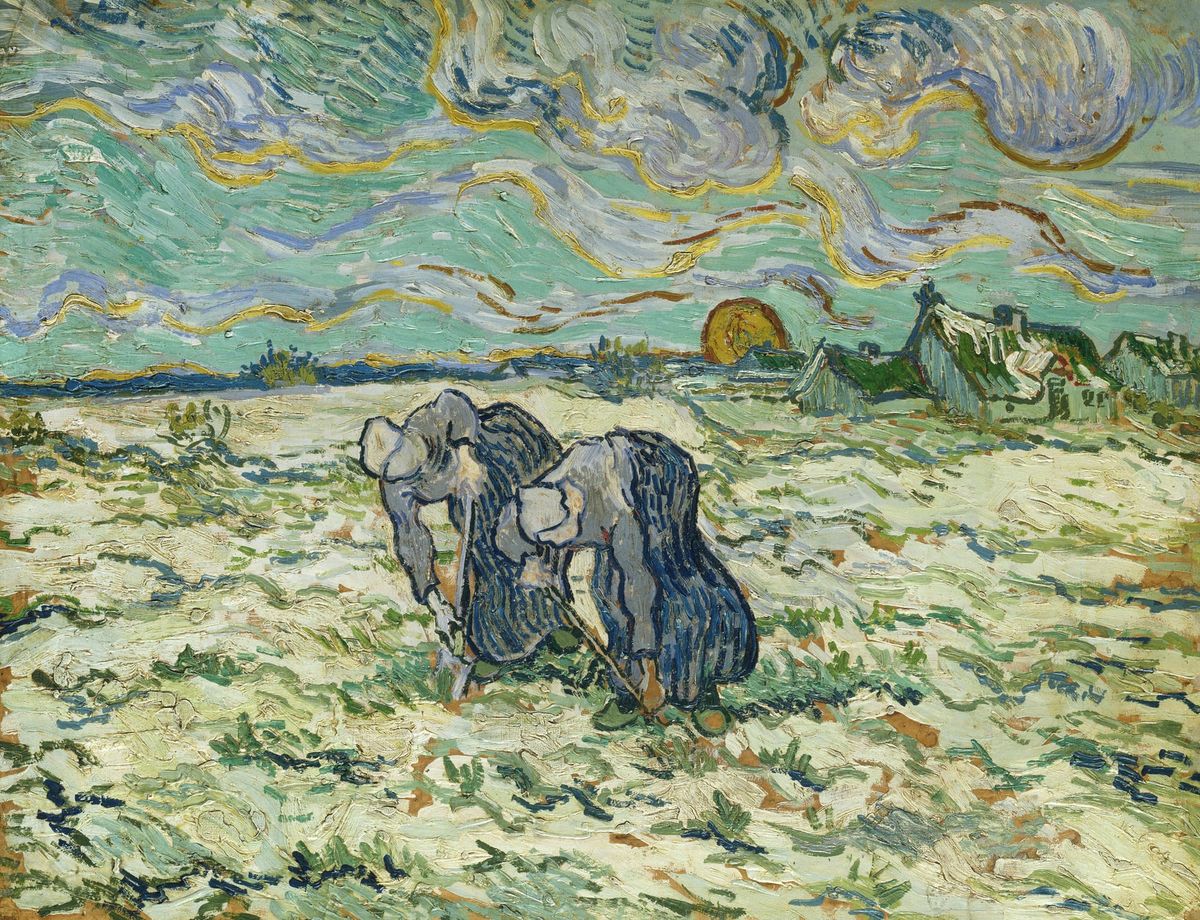
빈센트 반 고흐(Vincent van Gogh)가 1890년 3월에서 4월경 프랑스 생레미의 생폴 드 모졸 요양원에서 완성한 유화 작품입니다. 현재 독일 뷔르츠부르크의 퓌르스텐바우 박물관(Museum für Franken) 등에 연구 및 소장되어 있으며, 작품의 실제 크기는 약 50.0 × 64.0 cm입니다. 캔버스 위에 유채로 제작된 이 작품은 매서운 겨울 추위 속에서도 얼어붙은 눈 덮인 밭을 일구는 여인들의 모습을 소용돌이치는 임파스토(Impasto) 기법과 유기적인 필선으로 담아냈습니다.
고흐는 물감을 두껍게 얹어 눈 덮인 지표면의 거친 질감과 얼음장 같은 대지의 무게감을 조각하듯 표현했습니다. 굽이치는 하늘의 회청색 구름과 황금빛으로 타오르는 태양의 형상, 그리고 짙은 남색 옷을 입은 채 허리를 굽힌 여인들의 실루엣은 화면 전반에 걸쳐 차가운 냉기와 따스한 온기의 극적인 대비를 형성합니다. 거칠게 물결치는 붓자국의 리듬은 척박한 겨울 풍경 속에서도 끈질기게 요동치는 자연과 인간의 생명력을 촉각적으로 전달합니다.
생레미 요양원에 머무는 동안 건강 문제와 고립감 속에서 고뇌하던 고흐는, 자신이 깊이 존경하던 장-프랑수아 밀레의 목판화 연작 『사계』 중 겨울 풍경을 자신만의 화풍으로 재해석하는 작업에 몰두했습니다. 그는 단순히 과거의 거장을 모방하는 데 그치지 않고, 자신의 고향 네덜란드 브라반트 시절 농민들에 대한 아련한 향수와 생레미 특유의 격정적인 붓질을 결합하여 새로운 예술적 생명을 불어넣었습니다.
혹독한 추위와 폭설 속에서도 묵묵히 흙을 파헤쳐 생명을 준비하는 여인들의 모습은, 고통스러운 투병 생활 속에서도 결코 붓을 놓지 않았던 고흐 자신의 불굴의 창작 의지를 상징합니다. 미술사에서는 고흐가 후기 인상주의의 색채와 표현주의적 필치를 통해 밀레의 농민화를 실존적 차원의 숭고한 인간 찬가로 끌어올린 걸작으로 높이 평가합니다.
관람객의 무의식적인 시선은 화면 중앙에 묵직하게 허리를 깊이 굽힌 채 눈 덮인 땅에 삽을 꽂고 있는 두 여인의 다부진 체구에서 자연스럽게 출발합니다. 차가운 눈밭과 대비되는 짙은 푸른빛 옷자락의 굵은 붓질을 따라 시선이 머무는 순간, 혹독한 계절을 정면으로 버텨내는 인간의 강인한 노동과 묵직한 침묵 속으로 단숨에 몰입하게 됩니다.
이어 시선은 여인들의 손에 쥐어진 삽자루와 얼어붙은 흙을 파헤치는 손끝의 긴장감을 거쳐, 사방으로 거칠게 물결치는 눈밭의 희고 푸른 붓자국을 타고 화면 뒤편으로 이동합니다. 저 멀리 지평선 부근에 눈을 얹은 채 조용히 서 있는 소박한 초가집들과 그 뒤로 낮게 떠오른 황금빛 태양의 온기를 마주할 때, 혹한 속에서도 꺼지지 않는 삶의 희망과 정서적 온기를 느끼게 됩니다.
이후 시선은 하늘 가득 소용돌이치듯 굽이치며 웅장한 율동감을 만들어내는 거대한 회백색 구름의 물결을 따라 상단으로 시원하게 확장된 뒤, 다시금 단단하게 대지를 딛고 선 여인들의 실루엣으로 편안히 내려앉습니다.
대지와 하늘이 뿜어내는 생동하는 생명력의 순환을 감상한 시선이 안착할 때, 관람객의 내면에는 일상의 번뇌와 피로가 씻겨 나가고, 모진 시련 속에서도 묵묵히 내일을 준비하는 인간의 숭고한 인내가 건네는 깊은 위로와 함께 흔들리지 않는 심리적 안도감이 가득 차오르게 됩니다.
Peasant Women Digging in the Snow
Painted by Vincent van Gogh around March to April 1890 during his stay at the Saint-Paul-de-Mausole asylum in Saint-Rémy-de-Provence, France, this profound work is preserved in museum collections, measuring approximately 50.0 × 64.0 cm in oil on canvas. The composition portrays rural women laboring in a frozen, snow-covered field, executed with Van Gogh’s mature, undulating impasto and rhythmic contours.
Van Gogh applied thick, dynamic strokes of unmixed pigment to sculpt the icy terrain, conveying the palpable weight and texture of the frozen earth. The dramatic interplay between the swirling, slate-blue clouds, the glowing orb of the winter sun, and the deep indigo garments of the bending figures creates a striking tension between cold isolation and inner warmth. These vigorous linear rhythms breathe continuous organic vitality into an otherwise stark winter landscape.
While enduring severe illness and isolation at the asylum, Van Gogh found deep solace in reinterpreting the works of Jean-François Millet, particularly the graphic series The Four Seasons. Rather than producing mere copies, he fused his fond memories of Dutch peasant life with the intense chromatic and structural dynamism of his late Provençal style, transforming the historical source into an intimate personal statement.
The image of peasant women persistently breaking through the frozen crust of snow reflects not only the resilience of rural life but also Van Gogh’s own unyielding determination to create art despite immense psychological adversity. Art historians celebrate this composition as a triumphant synthesis of Post-Impressionist technique and humanistic empathy, elevating ordinary agrarian labor into a monument of spiritual fortitude.
A viewer's subconscious gaze is intuitively anchored first by the solid, bending silhouettes of the two peasant women working diligently in the center foreground. Lingering upon the textured blue brushstrokes of their winter garments against the pale snow, the observer is immediately drawn into an atmosphere of quiet concentration, stoic endurance, and raw authenticity.
The gaze then traces the downward momentum of the spades cutting into the frozen soil, wandering across the rhythmic waves of white and olive-green strokes across the field toward the background horizon. Encountering the modest thatched cottages nestled in the snow and the warm golden disc of the low sun, the eye absorbs an immediate feeling of domestic sanctuary and persistent hope.
From this reassuring vantage point, the gaze ascends into the swirling, expressive clouds rolling across the pale sky, experiencing a dynamic sense of atmospheric movement before descending smoothly back to the grounded figures anchored in the earth.
Completing this visual and emotional circulation, the observer feels a profound release from daily tension, comforted by the timeless resilience of human labor and enveloped in a deep, enduring sense of psychological grounding and inner peace.
본 리뷰에서 작품을 제외한 컨텐츠의 저작권은 팔렛트제주에 있습니다.
"퍼블릭도메인 고전명화"를 제외한 모든 창작 콘텐츠는 저작권법 제4조 및 제10조에 의거하여 보호됩니다. 무단 도용시 저작권법 제136조(벌칙)에 의거, 당사의 사전 서면 승인 없는 저작권 침해 행위를 금지합니다.