노란 집 The Yellow House
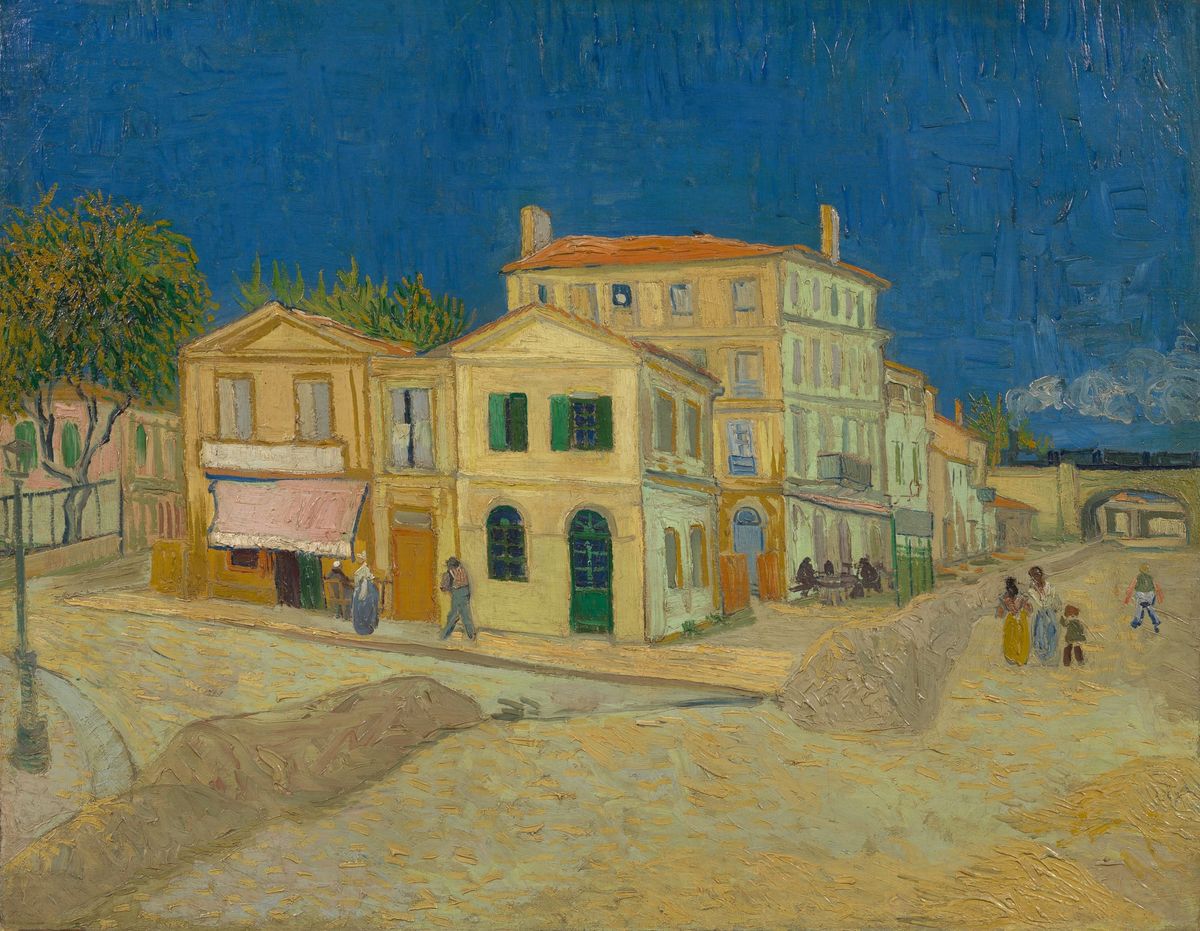
빈센트 반 고흐(Vincent van Gogh, 1853–1890)는 1888년 5월 프랑스 남부 프로방스알프코트다쥐르 지방 부슈뒤론주에 위치한 유서 깊은 도시 아를의 라마르틴 광장에 건물의 방 여러 칸을 임대하여 머물렀으며, 자신이 거주하던 집과 주변 거리의 풍경을 화폭에 담아냈습니다.
이 작품은 1888년 9월에 제작된 유채화로, 야콥 바르트 드 라 파이유의 전작 도록 기준 공식 등록번호는 F464이며 실제 작품의 실측 규격은 72.0 × 91.5 cm입니다.
현재 네덜란드 암스테르담에 위치한 반 고흐 미술관에서 소장하고 있습니다.
작가의 고뇌와 비하인드
작품을 제작할 당시 프랑스 남부 아를의 들녘에는 작렬하는 태양 아래 숨이 턱 막히는 무더위와 지역 특유의 건조한 바람이 거칠게 불어오고 있었고, 화가 자신은 동료 예술가들과 함께 이 노란 집에서 이상적인 창작 공동체를 만들겠다는 부푼 꿈을 품고 치열하게 일상을 지탱하고 있었습니다.
하지만 비좁은 여관 생활을 청산하고 마침내 자신만의 공간을 얻어 폴 고갱을 불러들이며 야심 차게 시작했던 그들의 공동 생활은 예술적 견해 차이와 성격 갈등으로 인해 결국 몽땅 뒤틀리고 파국으로 치달으며 그의 모든 계획은 완전히 무산되고 말았습니다.
모든 것이 수포로 돌아가기 전, 햇살 아래 눈부시게 빛나는 노란 건물의 순수한 생명력을 동생 테오에게 편지로 전하며 거대한 희망을 품었던 이 시절의 풍경은 아이러니하게도 그가 겪어야 할 가장 쓰라린 비극의 서막을 품고 있습니다.
화면 전면에는 흙빛과 모래빛이 감도는 광장 앞의 거친 도로와 자갈길의 질감이 두터운 붓질로 생생하게 표현되어 있습니다.
중경에는 눈이 시릴 정도로 강렬한 노란색 외벽과 초록색 창문이 선명한 대비를 이루는 노란 집 건물이 자리 잡고 있으며, 건물 앞을 오가는 행인들의 모습과 왼쪽에 우뚝 솟은 가로수의 푸른 잎사귀가 평화로운 거리의 정취를 더해줍니다.
원경의 배경에는 짙푸른 밤하늘을 연상시키는 강렬한 파란색 하늘이 화면 전체를 묵직하게 짓누르며, 저 멀리 철도 다리 위로 하얀 연기를 뿜으며 달리는 기차의 실루엣이 남프랑스 변두리의 생동감 넘치는 대기감을 완성합니다.
무의식 속 시선 및 심리 흐름
관람객의 시선은 가장 먼저 화면 중앙을 환하게 밝히는 노란 집의 강렬한 색감과 초록색 창문의 선명한 대비에 닿으며 겉보기엔 따스한 활기를 느끼게 됩니다.
이어지는 시선은 건물 앞 길가를 거닐거나 자리에 앉아 있는 사람들의 소소한 동작을 거쳐, 왼쪽의 푸른 가로수와 오른쪽 멀리 철도 위를 달리는 기차의 하얀 연기로 자연스럽게 이동합니다.
마지막으로 화면 상단을 거대하게 채운 짙고 깊은 파란색 하늘의 대기감 속으로 시선이 넓게 퍼져나가며, 찬란한 태양 아래 평화로운 공동체를 꿈꾸었으나 결국 모든 계획이 무산되고 만 화가의 애달픈 열정과 마음속 깊은 곳의 고요한 울림을 체감하게 됩니다.
미술계의 평가와 조형미
미술사학계에서는 이 작품을 두고 고흐가 프랑스 남부 아를 시기에 일상의 공간을 자신만의 대담한 보색 대비와 역동적인 붓질을 통해 단순한 기록을 넘어선 상징적인 안식처로 승화시킨 최고 수작 중 하나로 평가합니다.
화면을 지배하는 태양빛의 노란색과 짙은 푸른 하늘의 색채 충돌은 시각적 에너지를 극대화합니다.
눈에 보이는 거리 풍경의 재현을 넘어, 화가가 꿈꾸었던 예술가들의 따뜻한 연대가 끝내 좌절로 끝맺음하기 직전의 순수한 희망과 영원한 평온의 가치를 캔버스 위에 강렬한 생명의 호흡으로 아로새긴 위대한 미술사적 성취입니다.
The Yellow House
Vincent van Gogh captured the vibrant streetscape of Arles, located in the Bouches-du-Rhône department of the Provence-Alpes-Côte d'Azur region in southern France, after renting rooms in a building on Place Lamartine in September 1888.
Created in September 1888, this oil on canvas is cataloged as F464 in J.B. de la Faille's catalogue raisonné and measures 72.0 × 91.5 cm.
The painting is currently housed in the Van Gogh Museum in Amsterdam.
During the period of its creation, an intense, blazing southern heat radiated across the dusty squares of Arles, while Van Gogh labored under a heavy mix of visionary optimism and profound loneliness, desperately hoping to transform this yellow house into an ideal communal sanctuary for fellow artists.
Although he entered this dwelling harboring grand dreams of building an artistic colony with kindred spirits, his idealistic plans ultimately unraveled completely, as intense personality clashes and volatile artistic disputes with Paul Guan led the collaborative venture to a bitter and tragic collapse.
Before everything dissolved into ruin, he poured his desperate yearning for companionship and stability into painting the sun-drenched facade of his residence, writing enthusiastically to his brother Theo about the brilliant colors of the southern light while standing on the precipice of profound heartbreak.
The foreground is anchored by textured earthen paths and the sandy surface of the public square rendered in thick, expressive impasto brushwork.
In the middle ground, the striking yellow building with its vivid green window shutters commands immediate attention, flanked by passing pedestrians and a leafy green tree on the left that impart a sense of lively community.
In the distant background, a deep, vibrant blue sky presses down over the horizon, while a train crosses a distant railway bridge trailing white smoke, establishing a dynamic and atmospheric sense of place.
The viewer's gaze is initially drawn toward the blinding yellow walls and contrasting green shutters of the central house, capturing an immediate sense of warmth and habitation.
The perspective then follows the figures walking along the street toward the right, before drifting upward to the leafy tree and the distant railway viaduct where a train steams across the landscape.
Finally, the eye ascends into the overwhelming, deep blue expanse of the upper sky, allowing the observer to experience a tranquil psychological transition from earthly observation to an intense, visionary emotional resonance infused with the artist's unfulfilled dreams.
Art historians regard this canvas as a defining masterpiece of Van Gogh's Arles period, where bold complementary color contrasts and emotional brushwork elevate a simple street scene into a powerful symbol of sanctuary.
The striking interplay between the brilliant yellow architecture and the deep blue firmament generates an unmatched optical vibration and psychological depth.
It stands as an enduring artistic monument that immortalizes the artist's short-lived dream of fellowship and his profound communion with the sun-drenched earth right before his world collapsed.
본 컨텐트의 저작권은 팔렛트제주에 있습니다. 허가없는 무단전제를 금지합니다.
Copyright © Palette Jeju. All rights reserved. Unauthorized reproduction or redistribution is strictly prohibited.