노란 불빛 아래 피어나는 따스한 온기와 별빛의 야상곡, 밤의 카페 테라스 Café Terrace at Night
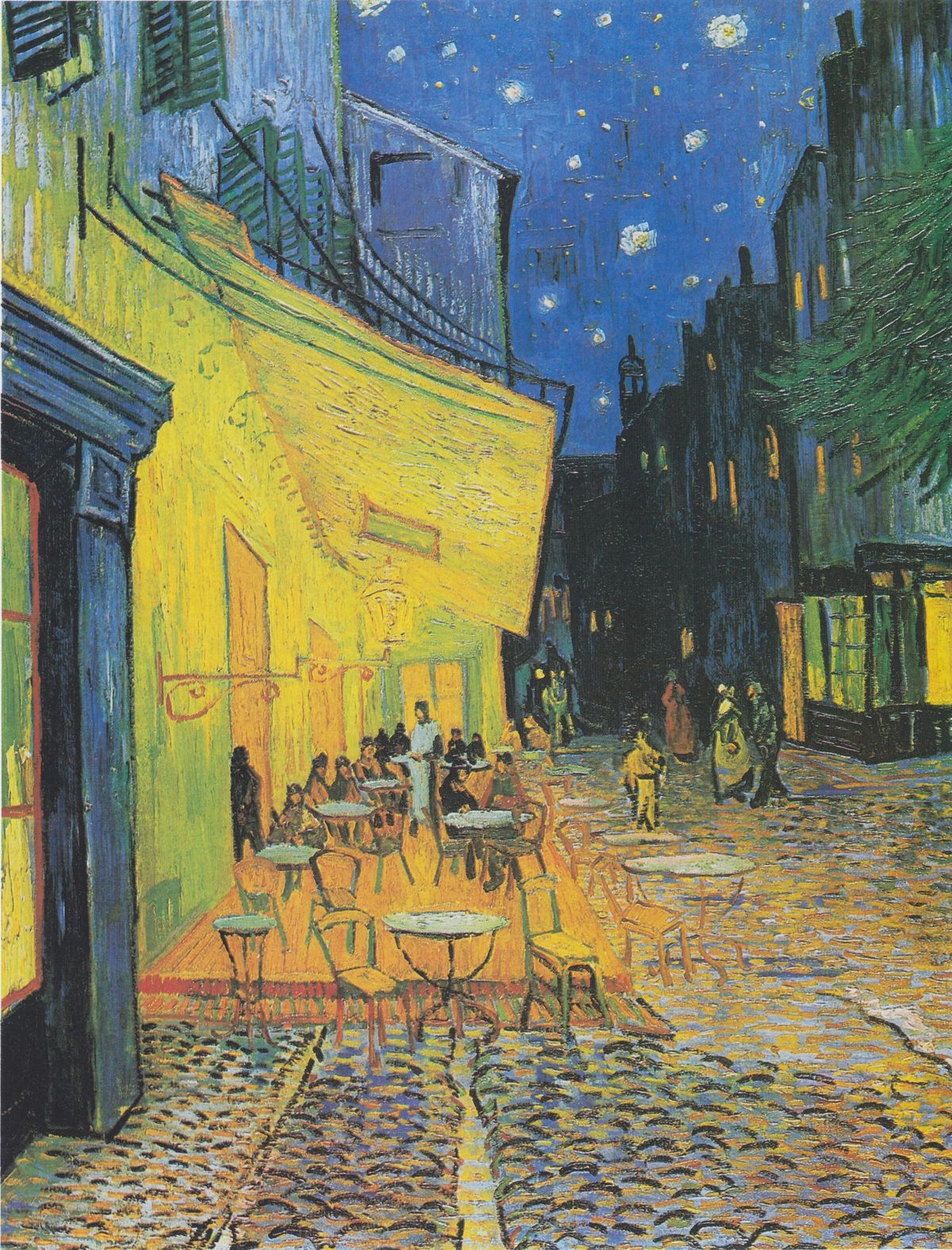
후기 인상주의 거장 빈센트 반 고흐(Vincent van Gogh, 1853–1890)가 1888년 9월 중순 프랑스 남부 아를(Arles)의 포럼 광장에서 완성한 유화 밤의 카페 테라스(Café Terrace at Night, 또는 포럼 광장의 카페 테라스)는 81.0 cm × 65.5 cm 크기의 캔버스에 유채로 그린 대표작입니다. 현재 네덜란드 오테를로의 크뢸러 뮐러 미술관(Kröller-Müller Museum)에 영구 소장되어 있습니다.
어둠을 검은색 없이 그려낸 대담한 실험과 여동생에게 털어놓은 밤의 매혹
1888년 초가을, 반 고흐는 아를 시내 중심가의 포럼 광장에 밤마다 이젤을 펼치고 섰습니다. 그는 가스등 불빛이 환하게 비추는 야외 카페와 그 위로 펼쳐진 푸른 밤하늘의 강렬한 색채 대비에 완전히 매료되어 있었습니다. 당시 화가들은 밤 풍경을 그릴 때 스케치만 야외에서 하고 색칠은 낮에 작업실로 돌아와 진행하는 것이 보통이었지만, 고흐는 현장의 살아있는 공기와 빛을 그대로 담아내기 위해 칠흑 같은 어둠 속에서 직접 물감을 칠해 나갔습니다.
이 그림에는 반 고흐의 특별한 조형적 자부심이 담겨 있습니다. 그는 검은색을 단 한 방울도 쓰지 않고 오직 짙은 파란색과 보라색, 그리고 눈부신 노란색과 초록색의 대비만으로 눈부신 밤의 정경을 완성했습니다. 여동생 빌(Wilhemina)에게 보낸 편지에서 그는 "어두운 밤을 그리는 일에 푹 빠져 있다. 검은색을 전혀 쓰지 않고 오직 아름다운 파란색과 보라색, 초록색만으로 밤을 표현했다. 밤은 낮보다 훨씬 더 풍성하고 다채로운 색채를 품고 있다"고 열정적으로 고백했습니다. 현대 미술 연구자들은 화면 중앙에 긴 옷을 입고 서 있는 웨이터와 그 주변에 둘러앉은 열두 명의 손님 배치를 두고, 화가가 최후의 만찬 구도를 은유적으로 녹여내어 세속적인 카페 공간을 성스러운 영적 안식처로 승화시켰다는 흥미로운 해석을 제시하기도 합니다.
무의식 속 시선의 공간 유영과 포근한 심리적 안식처
그림을 마주하는 순간 관람객의 무의식적 시선은 화폭 좌측에서 커다란 차양을 드리우며 쏟아져 나오는 카페 테라스의 눈부신 노란 가스등 불빛으로 가장 먼저 이끌립니다. 따스하고 강렬한 레몬 옐로 톤의 조명은 보는 이의 마음에 밤의 차가움을 단숨에 녹여주는 아늑한 보호감과 친근한 온기를 불어넣습니다.
이어 시선은 테라스 바닥에 오밀조밀 놓인 둥근 테이블과 의자들을 지나, 그곳에 모여 앉아 두런두런 대화를 나누는 사람들의 다정한 모습과 하얀 옷을 입은 웨이터의 실루엣으로 이동합니다.
그 후 시선은 카페 불빛을 받아 보랏빛과 황금빛으로 반짝이는 자갈길을 따라 오른쪽 골목 깊숙한 어둠으로 흘러 들어갔다가, 화면 상단에 별꽃처럼 하얗게 부서지는 코발트 블루 밤하늘로 시원하게 상승합니다. 지상의 따뜻한 노란빛과 하늘의 깊고 맑은 푸른빛이 자아내는 완벽한 보색 대비 속에서, 감상자는 마음속 깊은 고독을 잊고 포근한 등불 아래 머무는 듯한 깊은 정서적 위안을 얻게 됩니다.
밤 풍경화의 혁명과 현대 색채학의 이정표, 미술계의 평가
미술계는 밤의 카페 테라스를 반 고흐가 자신의 트레이드마크인 '별이 빛나는 밤' 연작을 본격적으로 시작한 첫 번째 기념비적 걸작으로 평가합니다.
전통적인 명암법에 의존하지 않고 색채 자체의 온도 차이와 붓질의 율동감만으로 밤의 대기와 공간감을 표현해 낸 기법은 당대 미술계에 커다란 충격을 안겨주었습니다. 차가운 어둠 속에서도 인간적인 온기와 영혼의 빛을 잃지 않았던 반 고흐의 따뜻한 시선이 응축된 이 작품은, 훗날 20세기 표현주의와 야수파 화가들에게 밤을 해석하는 완전히 새로운 시각적 언어를 열어준 불멸의 명작으로 칭송받고 있습니다.
A Luminous Haven Beneath the Constellations, Café Terrace at Night
Painted in mid-September 1888 during his inspired Arles period by Vincent van Gogh (1853–1890), Café Terrace at Night (also known as The Cafe Terrace on the Place du Forum) is an oil on canvas measuring 81.0 cm × 65.5 cm (31.9 in × 25.8 in), preserved in the permanent collection of the Kröller-Müller Museum in Otterlo, Netherlands.
Painting Without Black: Nocturnal Passion on the Place du Forum
In the early autumn of 1888, Van Gogh set up his easel outdoors on the bustling Place du Forum under the open night sky. While conventional academic practice dictated making preparatory pencil sketches at night and applying colors by daylight in the studio, Vincent chose to apply saturated oil pigments directly on the spot, braving the evening wind to capture the living atmosphere of the illuminated terrace.
The canvas represents a bold chromatic triumph. Van Gogh famously completed this nocturnal scene without using a single brushstroke of black, relying exclusively on radiant yellows, deep violets, rich greens, and pure blues. Writing enthusiastically to his sister Wil, Vincent confessed that painting the night directly fascinated him beyond measure, remarking that the nocturnal world possessed a vibrancy far richer and more alive than the day. Modern art historians also note an intriguing symbolic reading: the lone waiter standing amid twelve seated patrons subtly echoes the sacred composition of the Last Supper, transforming an ordinary village café into an enduring sanctuary of fellowship and spiritual refuge.
Psychological Trajectory of the Gaze and Subconscious Solace
The observer's subconscious gaze is immediately welcomed by the radiant canopy of sulfur yellow and warm amber glowing on the left. This incandescent flood of gaslight awakens an instinctive feeling of domestic shelter, dispelling the cold uncertainty of the surrounding night.
Visual perception then wanders through the intimate arrangement of café tables and chairs, observing the quiet figures conversing in fellowship and the grounded presence of the central server.
From this warm circle, the gaze travels across the rhythmic cobblestones bathed in reflected lilac and ochre tones, drifting toward the shadowy shopfronts on the right before surging upward into the deep cobalt vault of the heavens. The luminous stars, depicted as delicate white and sulfur blossoms against the deep blue sky, provide a magnificent cosmic balance to the terrestrial lanterns below. Navigating this harmonious dialogue between golden warmth and cool serenity, the viewer subconsciously internalizes an enduring sense of emotional restoration, companionship, and poetic calm.
The Emancipation of Nocturnal Color: Critical Legacy
Art historians celebrate Café Terrace at Night as the foundational masterpiece of Van Gogh’s iconic nocturnal cycle, inaugurating the visionary style that culminated in The Starry Night.
By replacing conventional atmospheric shadows with vibrating complementary color relationships and energetic paint application, Vincent fundamentally transformed how modern painters approached the nocturnal world. Standing as a timeless monument to human warmth within the vast expanse of the cosmos, this masterwork endures as one of the most beloved and influential achievements in the history of Western art.
본 컨텐트의 저작권은 팔렛트제주에 있습니다. 허가없는 무단전제를 금지합니다.
Copyright © Palette Jeju. All rights reserved. Unauthorized reproduction or redistribution is strictly prohibited.