노화가의 식당 벽에 박제된 시간의 광기, 자식을 삼키는 사투르누스 Saturn Devouring His Son
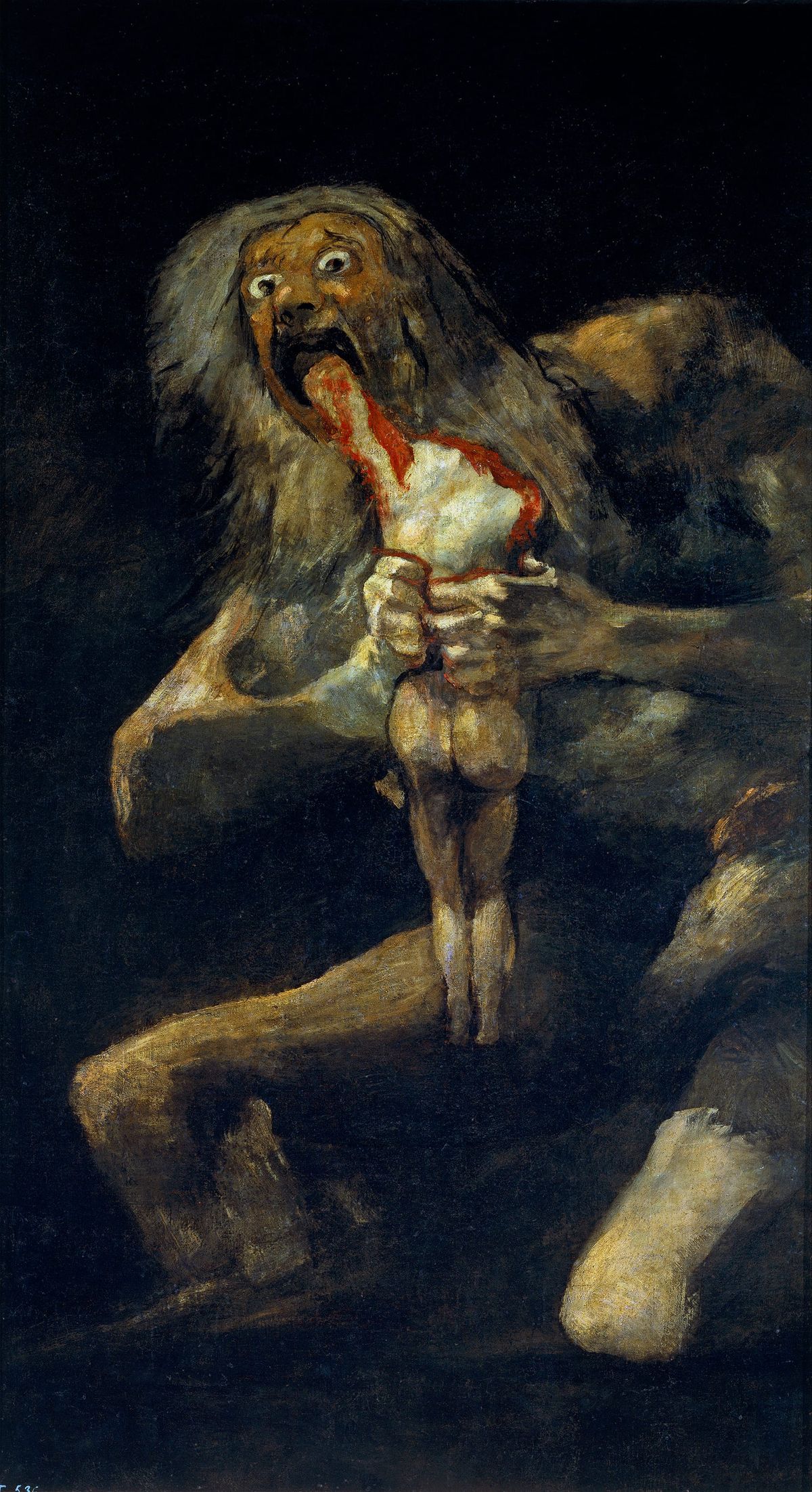
스페인 낭만주의의 거장이자 근대 회화의 선구자 프란시스코 고야(Francisco Goya, 1746–1828)가 1819년에서 1823년 사이에 완성한 벽화 자식을 삼키는 사투르누스(Saturn Devouring His Son)는 원래 벽에 유채로 그려졌다가 1874년 캔버스로 옮겨진 143.5 cm × 81.4 cm 크기의 대표작입니다. 현재 스페인 마드리드의 프라도 미술관(Museo del Prado, Madrid)에 소장되어 있습니다.
귀머거리의 집 식당 벽에서 태어난 검은 그림들의 비밀
70대 중반에 접어든 고야는 중병으로 청력을 완전히 잃고 정치적 혼란과 나폴레옹 전쟁의 참상을 겪은 뒤 깊은 환멸을 느꼈습니다. 그는 마드리드 외곽 만사나레스 강변의 작은 2층 시골집으로 은둔했으며, 사람들은 그 집을 귀머거리의 집(Quinta del Sordo)이라 불렀습니다. 고야는 왕실 화가로서의 명예와 주문 제작이라는 틀을 완전히 벗어던지고, 그 누구에게도 보여주지 않을 목적으로 집 1층 식당 벽면에 직접 끔찍하고 기괴한 그림들을 그리기 시작했습니다. 이것이 미술사에서 가장 어둡고 처절한 걸작군으로 꼽히는 검은 그림 연작(Black Paintings)입니다.
이 그림은 그리스 신화 속 크로노스(로마 신화의 사투르누스)의 비극을 모티브로 삼았습니다. 사투르누스는 자신의 자식 중 하나가 자신을 왕좌에서 몰아낼 것이라는 예언을 두려워한 나머지, 태어난 아기들을 차례로 집어삼킨 잔혹한 신입니다. 하지만 고야는 신화 속 신을 위엄 있는 지배자로 그리지 않고, 뼈마디가 앙상하게 드러난 늙고 추악한 괴물로 묘사했습니다. 이미 머리와 한쪽 팔이 뜯겨 나가 피를 철철 흘리는 자식의 몸뚱이는 신생아가 아닌 성인의 체구로 묘사되어 있으며, 이는 권력을 잃지 않으려 젊은 세대를 희생시키는 지배층의 탐욕과 전쟁의 야만성을 날카롭게 은유합니다.
광기에 번뜩이는 눈동자와 붉은 피, 시선의 심리적 여정
그림을 마주하는 순간 관람객의 무의식적 시선은 칠흑 같은 어둠 속에서 하얗게 부릅뜬 사투르누스의 두 눈동자로 가장 먼저 빨려 들어갑니다. 두려움과 광기, 그리고 스스로 멈출 수 없는 탐욕에 사로잡힌 채 허공을 응시하는 그 섬뜩한 눈빛은 보는 이의 숨을 턱 막히게 합니다.
이어 시선은 거인이 움켜쥐고 있는 처참한 희생자의 몸뚱이로 내려앉습니다. 뼈마디가 굵은 거친 손가락이 자식의 살점을 파고들고, 이미 뜯겨 나간 목과 팔에서 흘러내린 선혈의 강렬한 붉은빛을 확인하는 순간 감상자는 거대한 시각적 공포와 불쾌감을 마주하게 됩니다.
마지막으로 시선은 기괴하게 꺾인 거인의 무릎과 뼈만 앙상한 등골의 거친 붓 자국으로 확장됩니다. 화려한 궁정 화가로 군림했던 노인이 생의 마지막 순간, 자신이 삼켜지는 시간의 무게와 죽음의 공포를 밥을 먹는 식당 벽에 적나라하게 쏟아부었음을 이해하면서 관람객은 한 인간이 마주한 극한의 실존적 절망을 뼈저리게 실감하게 됩니다.
인간 내면의 심연을 개척한 근대 표현주의의 서막, 미술계의 평가
미술계는 자식을 삼키는 사투르누스를 서양 미술사에서 인간의 무의식과 광기를 시각화한 가장 급진적이고 파격적인 선구작으로 평가합니다.
원근법과 고전적 비례를 완전히 해체하고 거칠고 빠른 붓 터치와 제한된 어둠의 색채만으로 감정의 극단을 표현했기 때문입니다. 아무런 주문자 없이 오직 자신의 내면적 고통과 악몽을 기록한 고야의 검은 그림들은 훗날 20세기 표현주의와 실존주의 예술의 문을 활짝 열어젖힌 불멸의 기념비로 평가받고 있습니다.
The Cannibalistic Terror of Time, Saturn Devouring His Son
Painted between 1819 and 1823 by the Spanish Romantic master Francisco Goya (1746–1828), Saturn Devouring His Son is a mural transfer to canvas measuring 143.5 cm × 81.4 cm (56.5 in × 32.0 in), preserved in the permanent collection of the Museo del Prado in Madrid, Spain.
The Haunting Dining Room Murals of the Deaf Man's Villa
In his mid-seventies, completely deafened by severe illness and traumatized by the horrors of the Peninsular War, Francisco Goya retreated from the royal court into self-imposed exile at the Quinta del Sordo (The Deaf Man's Villa) outside Madrid. Free from public commissions and the conservative gaze of the academy, Goya transformed the private walls of his country estate into a sanctuary of existential darkness, painting directly onto the plaster of his ground-floor dining room. This monumental cycle became known to history as the Black Paintings (Pinturas Negras).
The composition reinterprets the classical myth of Saturn (the Greek Titan Cronus), who, terrorized by a prophecy that one of his offspring would overthrow him, consumed his children at birth. Rejecting neoclassical restraint, Goya depicts Saturn not as a majestic deity, but as a ravaged, skeletal titan driven by insatiable paranoia. The mutilated, headless figure dripping with crimson gore possesses the mature physique of an adult rather than an infant, serving as a bitter political allegory for authoritarian regimes devouring their own youth to maintain autocratic power.
Subconscious Trajectory of the Gaze and the Bulging Eyes of Madness
The observer's subconscious gaze is immediately locked onto the bulging, manic eyes of Saturn piercing the surrounding void. Devoid of triumph, those dilated orbs register a harrowing mixture of terror, insanity, and animalistic frenzy that evokes immediate visceral tension.
The trajectory of sight then plunges down to the mangled, bleeding torso clutched tightly within the titan’s claw-like hands. Observing the brutal pressure of the white knuckles digging into flesh and the raw streaks of blood dripping down the canvas, the viewer confronts an overwhelming sensory shock of violence and primal disgust.
Finally, the visual movement sweeps across the creature’s contorted legs and the violent, impasto brushwork defining the hunched back. Realizing that the aged court master surrounded himself with this horrific vision in the very room where he took his daily meals, the viewer grasps the profound psychological torment, fear of encroaching death, and historical disillusionment that consumed Goya's final years.
The Birth of Modern Expressionism: Critical Legacy
Art historians recognize Saturn Devouring His Son as one of the most radical and psychologically penetrating achievements in the history of Western painting.
By prioritizing raw emotional turbulence over decorative beauty and narrative decorum, Goya anticipated modern Expressionism and Surrealism by nearly a century. This chilling interior landscape remains an indelible testament to the fragility of human reason and the inexorable cruelty of time.
본 컨텐트의 저작권은 팔렛트제주에 있습니다. 허가없는 무단전제를 금지합니다.
Copyright © Palette Jeju. All rights reserved. Unauthorized reproduction or redistribution is strictly prohibited.