노동과 근면 (Labor and Diligentia)
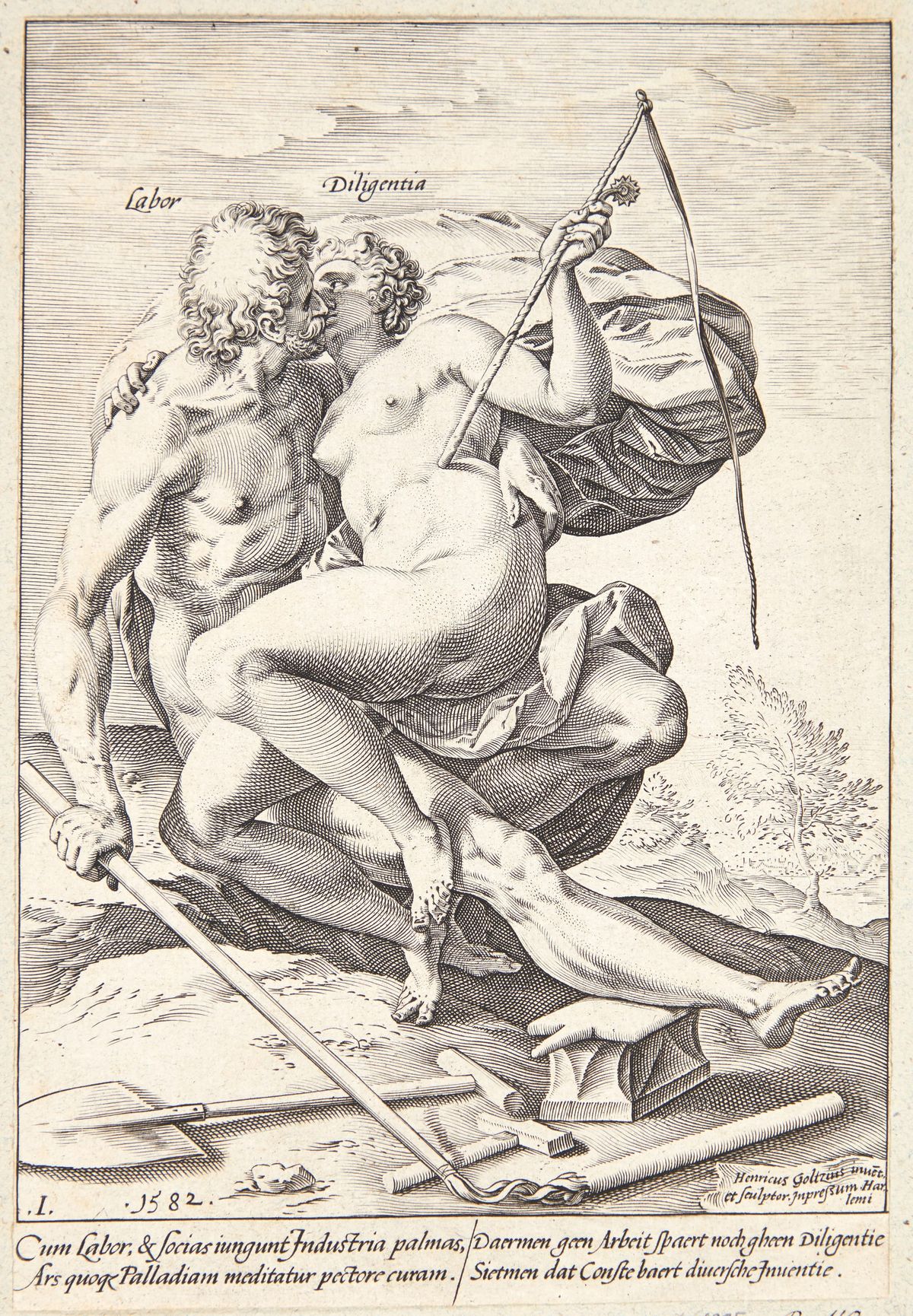
1582년 16세기 네덜란드 마니에리스무스를 대표하는 거장 판화가 헨드릭 골치우스(Hendrick Goltzius)가 제작한 판화 작품 《노동과 근면》은 에칭과 판화 칼(Engraving) 기법을 결합하여 완성한 알레고리(상징화) 판화의 수작으로, 현재 암스테르담 국립미술관(Rijksmuseum) 및 유럽 주요 기관에 원본 판화가 소장되어 있으며 실제 크기는 약 20.8 × 14.2 cm입니다.
이 화면은 '노동(Labor)'을 상징하는 근육질의 남성과 '근면(Diligentia)'을 상징하는 여인이 서로를 껴안고 입을 맞추는 밀접한 상징적 연출을 골치우스 특유의 역동적인 조각 선으로 포착해 낸 걸작입니다. 작가는 근육과 인체의 팽팽한 볼륨감, 인물들의 두상 위에 각인된 명칭(Labor, Diligentia), 그리고 여인의 손에 들린 채찍과 발치에 흩어져 있는 삽, 망치, 직조 도구 등 노동의 필수 도구들을 정교하고 역동적인 해칭 기법으로 재현해 냈습니다.
작품 속에는 16세기 북유럽 인문주의 예술이 강조했던 '근면과 노력이 예술 및 모든 성취의 근본'이라는 도덕적 알레고리의 비하인드 스토리가 담겨 있습니다. 당대 네덜란드에서는 성실한 노동과 끊임없는 노력이 결합할 때 비로소 학문과 예술(Ars)이 결실을 맺는다는 신념이 강했습니다. 골치우스는 이러한 관념적 가치를 남녀 인물의 열정적인 입맞춤과 포옹이라는 미학적 구도로 시각화하여, 노동이 지닌 숭고함과 역동적인 에너지에 선명한 예술적 생명력을 부여했습니다.
후대 평단과 관객들은 이 판화를 골치우스 초기 동판화가 지닌 판화 기술의 극치이자 인체 해부학적 미학이 돋보이는 명작으로 평가합니다. 인체의 요동치는 근육 표현과 역동적인 선의 흐름, 그리고 화면 하단의 라틴어·네덜란드어 교훈 시구는 관객에게 시대를 초월한 지적 유희와 묵직한 조형적 감동을 선사합니다.
이 그림을 마주하는 관람객의 무의식적 시선은 화면 상단 중앙, 서로를 향해 밀착한 채 입을 맞추는 '노동'과 '근면' 두 인물의 입술과 서로를 포옹하는 역동적인 팔 상체 윤곽으로 가장 먼저 끌려갑니다. 열정적으로 교감하는 인물들의 포즈는 관람객의 마음에 묵직한 시각적 몰입과 강렬한 정서적 활력을 전해줍니다.
이어 시선은 여인의 오른손이 들어 올린 채찍의 기다란 줄기를 따라 내려와, 화면 하단 바닥에 사실적으로 놓여 있는 삽, 망치, 자, 그리고 모형 받침대 등 갖가지 노동 도구들의 선명한 윤곽으로 부각되어 이동합니다. 도구들이 이루는 안정적인 가로축 구도는 화면 전체에 균형감과 물리적 무게감을 부여합니다.
마지막으로 시선은 하단 여백에 정갈한 판화체로 새겨진 작가 서명, 제작 연도(1582), 그리고 라틴어 경구 문구 속으로 낙하하여 정착합니다. 이러한 무의식적 시선의 흐름은 16세기 네덜란드 인문주의가 품은 성실함과 예술적 창조의 세계로 감상자를 자연스럽게 인도하며, 마음에 닿는 차분하고 단정한 여운을 오래도록 남깁니다.
In 1582, Hendrick Goltzius, one of the premier masters of Dutch Mannerism, created the allegorical engraving titled "Labor and Diligentia" (Labor and Diligence). Preserved in distinguished global collections such as the Rijksmuseum in Amsterdam, this original print measures approximately 20.8 × 14.2 cm. This artwork finely captures the harmonious union of human effort and perseverance through a dynamic, highly sculptured matrix of engraved lines.
The print visually presents a muscular male figure embodying Labor embracing and kissing a female figure representing Diligentia. Historical context highlights the Northern Humanist ideal that artistic mastery and civic virtue stem directly from hard work coupled with steadfast diligence. Goltzius rendered the figures with heroic anatomical proportion, surrounding them with the emblems of honest toil—a shovel, hammer, measure, and whip—to elevate everyday labor into a noble, sacred ideal.
Art historians and critics continuously extol this sheet for its technical virtuosic line work and dramatic Mannerist styling, celebrating Goltzius's ability to turn abstract moral concepts into a visceral, passionate human dialogue. The striking contrast between the swelling contours of the figures and the meticulously detailed tools below creates an enduring atmosphere of vital energy and moral clarity.
The moment an observer encounters this artwork, their gaze is subconsciously drawn straight to the central kiss and interlocking embrace of the two allegorical figures. Their passionate, close alignment immediately diffuses tension, instilling a comforting sense of unity and dynamic emotional strength.
Next, the eye glides smoothly down along the whip held high in the air, descending toward the collection of craftsman's tools spread across the foreground. The tactile, dimensional rendering of the shovel, wooden mallet, and ruler lends physical realism and structural stability to the base of the composition.
Finally, the viewer's gaze drifts toward the Latin and Dutch inscriptions along the lower margin before coming to rest upon the surrounding spatial field. This natural visual journey guides the spectator into a state of quiet appreciation, leaving a lasting impression of virtue, craftsmanship, and timeless harmony.
본 리뷰에서 작품을 제외한 컨텐츠의 저작권은 팔렛트제주에 있습니다.
"퍼블릭도메인 고전명화"를 제외한 모든 창작 콘텐츠는 저작권법 제4조 및 제10조에 의거하여 보호됩니다. 무단 도용시 저작권법 제136조(벌칙)에 의거, 당사의 사전 서면 승인 없는 저작권 침해 행위를 금지합니다.