넵투누스의 승리 세부화 Le Triomphe de Neptune détail
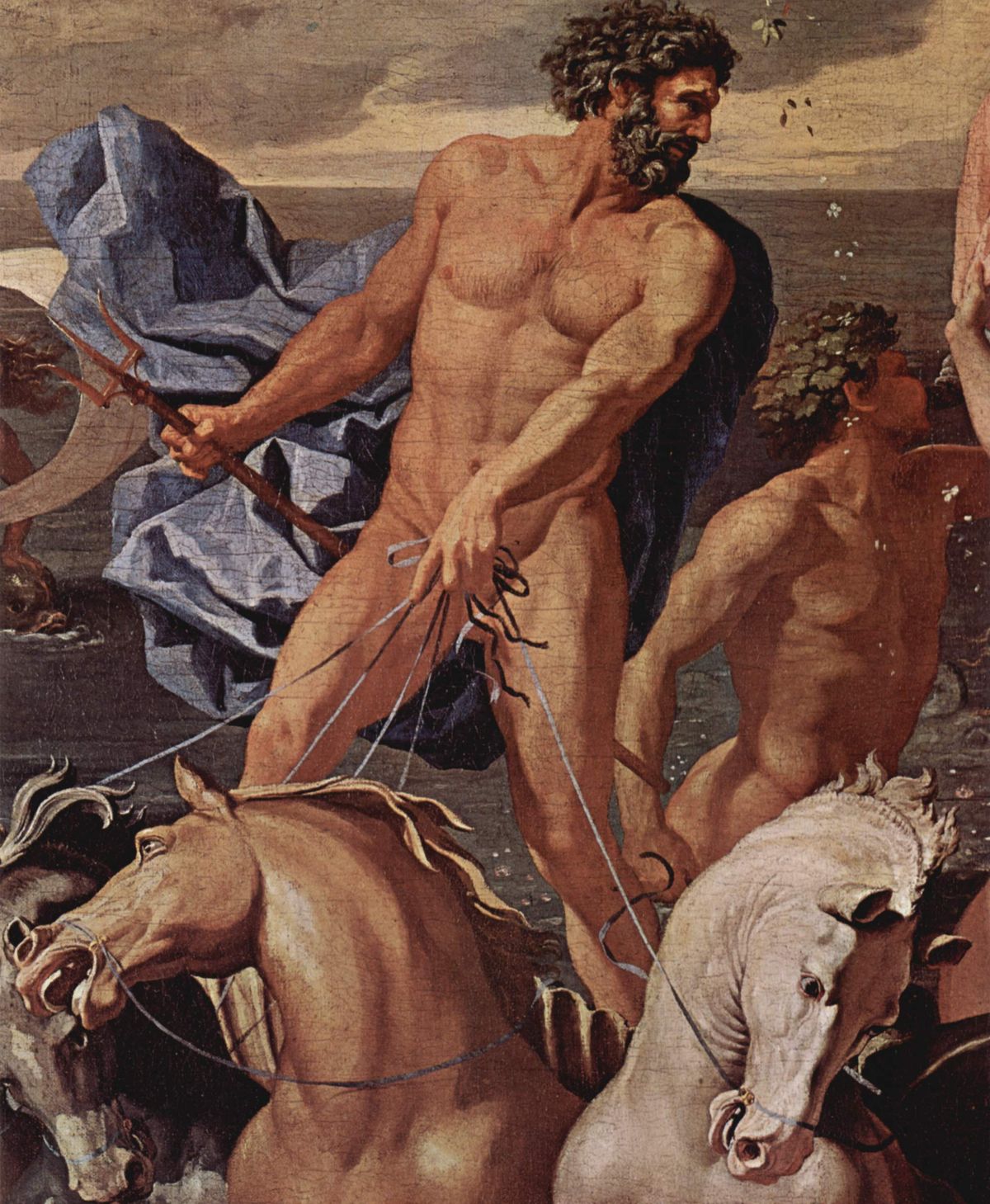
17세기 프랑스 고전주의 회화의 거장 니콜라 푸생(Nicolas Poussin, 1594–1665)이 1635년에서 1636년경 프랑스의 실권자 리슐리외 추기경의 주문을 받아 완성한 신화 대작 넵투누스의 승리(The Triumph of Neptune, 또는 바다에서 태어난 비너스의 탄생, 프랑스어: Le Triomphe de Neptune ou La Naissance de Vénus, 소장품 번호: 1932.98)는 전체 원작 크기가 97.2 cm × 108.0 cm에 달하는 웅장한 캔버스에 유채로 그린 대표적인 해양 신화화 걸작의 핵심 세부입니다.
원작은 현재 미국 필라델피아 미술관(Philadelphia Museum of Art, Philadelphia)에 소장되어 있습니다.
리슐리외 추기경의 해양 패권 야망과 고대 신화의 조화를 향한 화가의 고뇌
1630년대 중반 프랑스의 최고 권력자였던 아르망 장 뒤 플레시 드 리슐리외 추기경은 프랑스 해군을 재건하고 해양 패권을 확장하려는 국가적 야망을 품고 있었습니다.
리슐리외 추기경은 자신의 권력과 바다의 지배력을 상징하기 위해, 로마에서 명성을 떨치고 있던 푸생에게 바다의 신 넵투누스(포세이돈)와 바다에서 탄생한 미의 여신 베누스(비너스)의 영광스러운 승리를 담은 신화 대작을 의뢰했습니다.
당시 푸생은 라파엘로의 완벽한 기하학적 균형감과 고대 로마 조각의 엄격함을 신봉하고 있었지만, 동시에 티치아노가 보여준 베네치아풍의 관능적인 색채와 역동적인 에너지를 회화 안에 어떻게 녹여낼지 깊이 번민했습니다.
화가는 거친 파도를 가르며 질주하는 바다의 신 넵투누스의 위풍당당한 모습을 화폭의 중심에 세웠습니다.
강인한 근육질의 나체를 드러낸 넵투누스는 한 손에 삼지창을 쥐고 다른 손으로는 거품을 뿜는 바다 전차의 고삐를 능숙하게 쥐며 바다를 호령하고 있습니다.
바다 생물의 지느러미를 단 백마와 갈색 말들이 거친 숨을 몰아쉬며 물살을 가르고, 그 곁에서는 머리에 월계관을 쓴 바다의 정령 트리톤이 힘차게 물장구를 치며 신의 행차를 호위합니다.
바람에 휘날리는 푸른 망토와 눈부신 태양 아래 번뜩이는 신의 구릿빛 육체는, 자연의 거친 힘을 통제하는 이성적인 질서와 고대 신화의 거룩한 생명력을 손에 잡힐 듯 생생하게 웅변합니다.
삼지창을 쥔 바다의 신에서 질주하는 바다 백마와 푸른 물결로, 시선의 심리적 여정
그림을 마주하는 순간 관람객의 무의식적 시선은 화면 상단 중앙에서 천상의 햇살을 받아 조각처럼 탄탄하게 빛나는 넵투누스의 건장한 구릿빛 상체와 굳건한 옆얼굴로 가장 먼저 빨려 들어갑니다.
바다의 거센 바람을 맞으며 헝클어진 검은 곱슬머리와 턱수염, 그리고 흔들림 없는 눈빛으로 정면을 응시하는 바다 신의 당당한 위엄은 보는 이에게 깊은 시각적 압도감과 함께 대자연을 지배하는 절대적인 권위를 선사합니다.
이어 시선은 넵투누스의 오른손에 쥐어진 날카로운 놋쇠 삼지창과 그의 등 뒤에서 돛처럼 펄럭이는 짙은 파란색 겉옷의 주름을 지나, 전차를 이끄는 고삐를 단단히 틀어쥔 왼손의 역동적인 손가락으로 이동합니다.
고삐가 연결된 화면 아래쪽으로 시선이 닿는 순간, 콧김을 뿜으며 눈을 부릅뜨고 물살을 박차고 오르는 백마와 갈색 말들의 생생한 근육질 머리를 확인하며, 관람객은 거센 파도 소리와 물보라가 사방으로 튀는 신화 속 바다 행렬 한복판 속으로 온몸이 빨려 들어가게 됩니다.
마지막으로 시선은 넵투누스의 뒤편에서 초록 잎사귀 관을 머리에 쓰고 힘차게 헤엄치는 바다의 정령의 매끄러운 어깨를 지나, 화면 상단 지평선 너머로 잔잔하게 펼쳐진 황금빛 구름과 서늘한 바다 수평선에 멈춥니다.
물살을 가르는 역동적인 대각선 운동감과 인물들의 조각 같은 비례가 만들어내는 완벽한 고전적 조화를 마주하며, 관람객은 혼돈을 잠재우는 거룩한 질서의 위대한 가치와 전성기 푸생이 건네는 묵직한 지적 감동을 가슴 깊이 마주하게 됩니다.
17세기 프랑스 고전주의 해양 신화화의 정점과 조형미, 미술계의 평가
미술계는 필라델피아 미술관의 넵투누스의 승리를 푸생이 로마 체류 중기 라파엘로의 갈라테아의 승리가 보여준 이상적인 구도와 베네치아 르네상스의 황홀한 색채를 완벽하게 집대성한 불멸의 명작으로 평가합니다.
단순한 신화적 환상을 넘어 해부학적으로 완벽한 인체 비례를 고대 그리스 대리석 조각처럼 입체감 있게 조형했을 뿐만 아니라, 휘날리는 푸른 천의 물질감, 말의 갈기와 물보라의 촉각적 질감을 극도로 섬세한 명암법으로 완벽하게 구현했기 때문입니다.
자연의 거친 원초적 에너지와 고전주의의 엄격한 기하학적 균형을 가장 품격 높은 시각 교향곡으로 승화시킨 푸생의 이 걸작 화폭은, 오늘날까지도 전 세계 수많은 감상자들에게 깊은 감탄과 잊을 수 없는 시각적 전율을 전해주는 걸작으로 손꼽히고 있습니다.
Detail of Neptune from The Triumph of Neptune
Painted between 1635 and 1636 in Rome by the founder of French classicism and immortal master Nicolas Poussin (1594–1665), Detail of Neptune from The Triumph of Neptune (also titled The Birth of Venus, French: Le Triomphe de Neptune ou La Naissance de Vénus, Accession No. 1932.98) represents the triumphant central protagonist of the monumental mythological canvas measuring 97.2 cm × 108.0 cm (38.3 in × 42.5 in).
The monumental original canvas is preserved in the distinguished permanent collection of the Philadelphia Museum of Art in Philadelphia, United States.
Cardinal Richelieu's Naval Ambitions, Raphael's Legacy, and Antique Mastery
During the mid-1630s, Cardinal Armand Jean du Plessis de Richelieu, First Minister of France and Grand Master of Navigation, sought to rebuild the French naval fleet and establish maritime dominance across the Atlantic and Mediterranean.
To visually celebrate France's burgeoning maritime authority, the cardinal commissioned Poussin to execute a lavish mythological allegory celebrating Neptune, the ruler of the seas, and Venus Marina emerging from the foam.
Poussin embraced the commission by engaging in a profound dialogue between the sculptural purity of antique Roman reliefs, the compositional harmony of Raphael’s Triumph of Galatea, and the warm, sensual colorism of Titian.
The master placed the commanding figure of Neptune at the physical and symbolic apex of the composition.
Standing naked with athletic classical anatomy upon his shell chariot, the god of the sea clutches his iron trident in his right hand while effortlessly controlling the reins of his plunging sea horses with his left.
Beside the rearing hippocamps frothing at the bit, a muscular marine triton crowned with laurel glides through the churning waves, heralding the sovereign divine progress.
Neptune's billowing ultramarine mantle and sunlit bronze skin celebrate the triumph of rational order over the chaotic forces of the aquatic deep.
Subconscious Trajectory of the Gaze: From Sunlit God to the Plunging Sea Horses
The observer's subconscious gaze is immediately magnetized by the central-upper register, drawn to the radiant, sunlit muscular torso and weathered classical profile of Neptune standing upright amidst the sea breeze.
His windblown dark curls, trimmed beard, and concentrated, downward gaze establish an instant focal point of physical majesty, sovereign dominion, and classical balance.
The visual path then follows the diagonal thrust of the iron trident across the billowing azure mantle toward his extended left hand grasping the tangled reins.
Descending along the tension of the ropes to the lower register, the viewer confronts the rearing heads of the white and bay sea stallions foaming in the surf, directly experiencing the auditory roar of crashing waves, splashing sea spray, and kinetic charge of the mythical marine procession.
Finally, the visual trajectory sweeps past the laurel-crowned triton swimming dynamically on the right, before resting upon the tranquil, golden horizon where calm waters meet the sky.
Observing the harmonious equilibrium between dynamic diagonal momentum, sculptural draftsmanship, and ideological clarity, the spectator perceives the timeless nobility of mythological harmony and the profound aesthetic solace Poussin embedded within the canvas.
The Monument of French Classical Mythological Painting: Critical Legacy
Art historians revere the Philadelphia Triumph of Neptune as one of Poussin’s most joyous and formally complete mythological achievements, illustrating his seamless fusion of monumental relief staging and vibrant Venetian color.
By orchestrating delicate textural contrasts between sunlit marble flesh, heavy azure silk, glistening equine hides, and frothing sea foam within a unified geometric scheme, Poussin elevated an ancient pagan myth into an exquisite aesthetic treatise on balance and vitality.
This grand historical canvas endures as an inspiring testament to the master's creative fortitude, celebrating the triumph of harmony over disorder and the transformative grace of living art.
본 컨텐트의 저작권은 팔렛트제주에 있습니다. 허가없는 무단전제를 금지합니다.
Copyright © Palette Jeju. All rights reserved. Unauthorized reproduction or redistribution is strictly prohibited.