나사로의 부활 The Raising of Lazarus
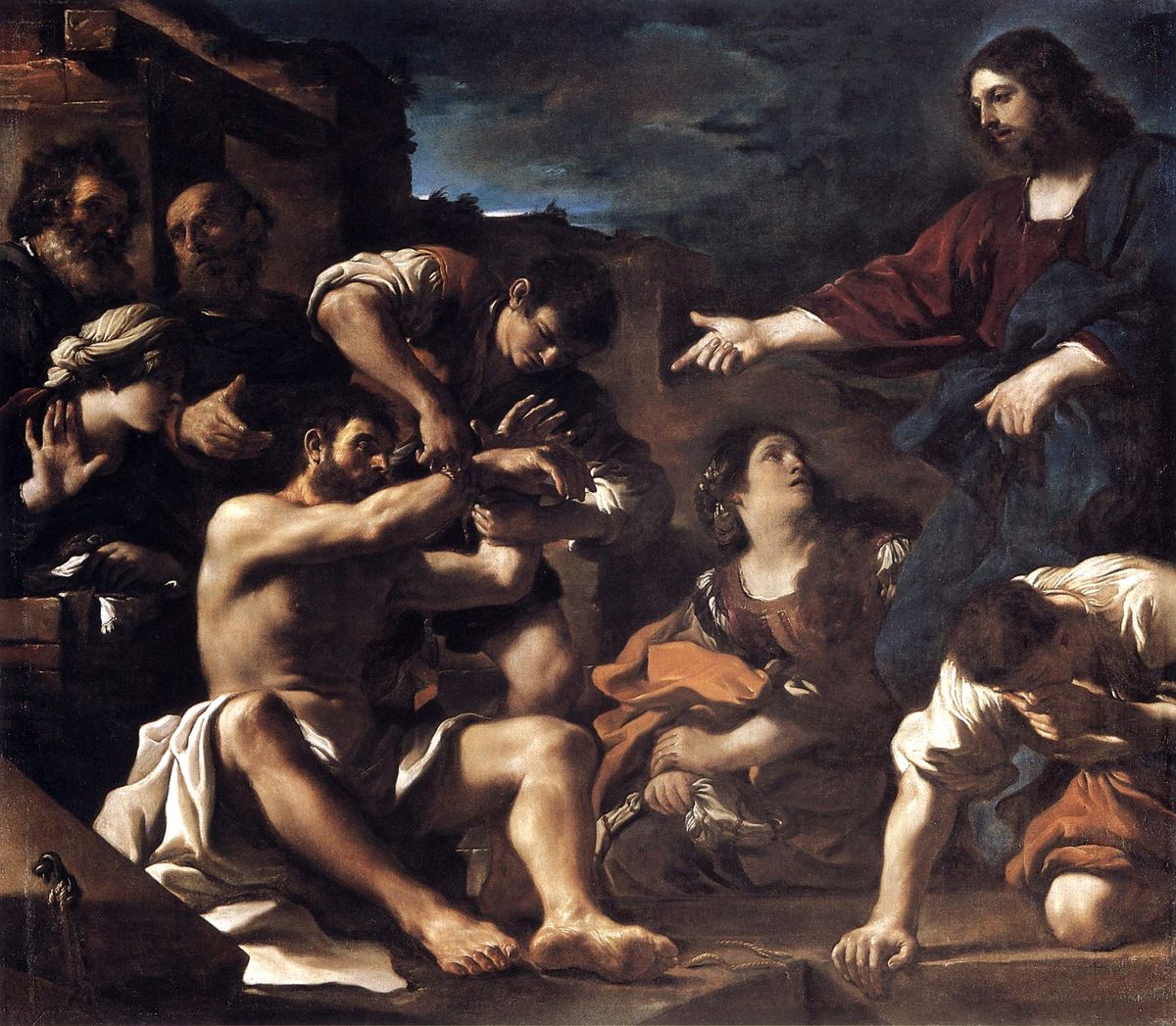
17세기 이탈리아 바로크 회화의 거장 조반니 프란체스코 바르비에리, 널리 귀에르치노(Guercino, 1591–1666)로 불리는 화가가 1619년에 완성한 대작 유화 나사로의 부활(The Raising of Lazarus, 이탈리아어: La resurrezione di Lazzaro)은 199.0 cm × 233.0 cm 크기의 웅장한 캔버스에 유채로 그린 대표적인 신약성경 기적화 최고 걸작입니다. 현재 프랑스 파리의 루브르 박물관(Musée du Louvre, Paris)에 소장되어 있습니다.
루도비코 카라치의 찬사와 젊은 거장이 마주한 생사의 기적
1619년 당시 20대 후반이던 귀에르치노는 볼로냐의 대주교이자 훗날 교황 그레고리오 15세로 선출되는 알레산드로 루도비시(Alessandro Ludovisi) 추기경으로부터 예수 그리스도가 죽은 지 나흘 된 나사로를 무덤에서 다시 살려내는 기적을 그려달라는 대형 주문을 받았습니다. 당시 볼로냐 미술계의 위대한 원로였던 루도비코 카라치(Ludovico Carracci)는 젊은 귀에르치노의 폭발적인 재능을 일찍이 알아보고 화실을 찾아와 찬사를 아끼지 않았으며, 이에 고무된 귀에르치노는 카라바조의 강렬한 테네브리즘 명암법과 볼로냐 화파 특유의 생동감 넘치는 감정 묘사를 완벽하게 융합하고자 밤낮으로 고뇌했습니다.
화가는 단순히 초자연적인 마법을 보여주는 것이 아니라, 칠흑 같은 죽음의 세계에서 막 생명의 숨을 들이켜는 인간의 떨림과 이를 지켜보는 사람들의 복합적인 심리를 화폭에 담고자 했습니다. 무덤 돌바닥에 걸터앉아 굳은 몸을 일으키는 나사로는 여전히 창백한 시신의 빛깔을 띠고 있으나, 청년들이 손목의 붕대를 풀어주는 순간 기적처럼 생명의 온기를 되찾고 있습니다. 화면 오른쪽에서 위엄 있게 손을 뻗어 생명을 명하시는 예수 그리스도의 고요한 옆얼굴과, 무릎을 꿇고 눈물어린 눈으로 주님을 올려다보는 여동생 마르다, 그리고 무덤의 썩는 냄새 때문에 코와 입을 옷자락으로 틀어막고 있는 청년의 사실적인 몸짓은 성경의 기적을 눈앞에서 직접 목격하는 듯한 압도적인 현장감을 완성합니다.
명령하시는 그리스도의 손길에서 깨어나는 나사로와 코를 막은 청년으로, 시선의 심리적 여정
그림을 마주하는 순간 관람객의 무의식적 시선은 화면 오른쪽 어둠을 뚫고 솟아오른 예수 그리스도의 밝게 빛나는 옆얼굴과 왼쪽을 향해 단호하게 뻗은 오른손 검지손가락으로 가장 먼저 빨려 들어갑니다. 죽음을 꾸짖고 생명을 불러일으키는 주님의 권위 있는 손짓과 차분하고도 자애로운 눈빛은 보는 이에게 깊은 시각적 전율과 함께 숭고한 영적 경외감을 선사합니다.
이어 시선은 그리스도의 손끝을 따라 화면 왼쪽 아래로 이동하여, 돌무덤 위에 털썩 주저앉아 붕대를 풀고 있는 나사로의 탄탄하면서도 창백한 상체 근육과 멍하니 허공을 응시하는 눈동자로 옮겨갑니다. 죽음의 깊은 잠에서 깨어나 굳은 관절을 움직이며 손목을 내미는 나사로의 생생한 육체를 확인하는 순간, 관람객은 삶과 죽음의 경계가 무너지는 경이로운 기적의 한복판 속으로 온몸이 빨려 들어가게 됩니다.
마지막으로 시선은 나사로의 손목 붕대를 풀어주는 건장한 청년들의 손놀림을 지나, 화면 중앙에서 감격에 차 그리스도를 우러러보는 마르다의 애절한 얼굴과 오른쪽 아래에서 무덤의 악취를 피해 옷자락으로 코를 감싸 쥔 청년의 웅크린 몸짓에 멈춥니다. 칠흑 같은 동굴의 어둠과 먹구름 낀 하늘을 가르는 거룩한 생명의 빛을 마주하며, 관람객은 절망을 이겨내는 부활의 위대한 희망과 젊은 귀에르치노가 건네는 묵직한 조형적 감동을 가슴 깊이 마주하게 됩니다.
17세기 볼로냐 바로크 종교화의 정점과 극적 사실주의, 미술계의 평가
미술계는 나사로의 부활을 귀에르치노가 청년 시절 카라바조의 사실주의적 테네브리즘과 루도비코 카라치의 서정적 역동성을 가장 대담하고 완벽하게 결합하여 완성한 초기 최고의 기념비적 명작으로 평가합니다.
어두운 배경 속에서 인물들의 근육과 뼈대, 거친 무덤 석판과 린넨 붕대의 촉각적 질감을 극도로 섬세한 명암 대비로 완벽하게 구현했을 뿐만 아니라, 냄새를 막는 인간의 본능적인 반응까지 가감 없이 포착하여 종교적 기적을 살아 숨 쉬는 역사적 현실로 승화시켰기 때문입니다. 죽음을 생명으로 바꾼 성스러운 순간을 장엄한 시각 언어로 빚어낸 귀에르치노의 이 역동적인 화폭은, 오늘날까지도 전 세계 수많은 감상자들에게 깊은 울림과 잊을 수 없는 시각적 전율을 전해주는 불멸의 명작으로 손꼽히고 있습니다.
The Raising of Lazarus
Painted in 1619 in Cento by the preeminent Italian Baroque master Giovanni Francesco Barbieri, universally celebrated as Guercino (1591–1666), The Raising of Lazarus (Italian: La resurrezione di Lazzaro) is a monumental oil on canvas measuring 199.0 cm × 233.0 cm (78.3 in × 91.7 in), preserved in the distinguished permanent collection of the Musée du Louvre in Paris, France.
Cardinal Ludovisi's Commission, Ludovico Carracci's Praise, and the Dramatic Miracle
Executed in 1619 when Guercino was in his late twenties, this monumental canvas was commissioned by Cardinal Alessandro Ludovisi, the Archbishop of Bologna who was shortly thereafter elected to the papacy as Pope Gregory XV. The master of the Bolognese Academy, Ludovico Carracci, openly expressed his admiration for Guercino’s dynamic brushwork and raw naturalism during this fertile phase. Inspired by this recognition, the young painter sought to synthesize the dramatic chiaroscuro of Caravaggio with the deep psychological energy of the Bolognese school.
Rather than portraying the resurrection as a static theological emblem, Guercino staged the visceral human reality of the Gospel narrative from John 11. Jesus Christ stands in the right register, clothed in deep crimson and ultramarine, commanding the deceased Lazarus to come forth from the tomb with an authoritative outstretched arm. Lazarus sits upon the open sepulcher ledge, his muscular yet pallid body emerging from the shroud as assistants untie the linen bands from his wrists. Surrounding this central awakening, the emotional responses range from the ecstatic gratitude of Martha kneeling at Christ’s feet to the visceral shock of the bystanders, including a youth in the foreground who covers his nose with his sleeve against the odor of decay.
Subconscious Trajectory of the Gaze: From Sovereign Gesture to the Awakening Flesh
The observer's subconscious gaze is immediately magnetized by the upper-right register, drawn to the luminous, commanding profile of Jesus Christ standing against the stormy sky. His resolute outstretched right hand and authoritative downward glance establish an instant focal point of divine authority, spiritual summons, and concentrated energy.
The visual path then follows the diagonal trajectory of Christ's gesture across the void toward the lower-left register, arriving at the powerful, pale torso of Lazarus seated upon his opened tomb. Taking in his heavy, shadowed brow, his parted lips drawing his first mortal breath, and his wrists extended to receive freedom from the winding sheets, the viewer directly experiences the physical threshold of resurrection and the dramatic triumph over death.
Finally, the visual trajectory sweeps past the vigorous young men unbinding the burial cloths to Martha kneeling in rapt gratitude, before descending to the foreshortened youth crouching over the open tomb in the right foreground while pressing his cloth to his face. Observing the dynamic harmony between intense tenebristic lighting, tactile anatomical realism, and psychological truth, the spectator perceives the timeless nobility of sacred faith and the profound aesthetic solace Guercino embedded within the monumental canvas.
The Monument of Early Bolognese Dramatic Realism: Critical Legacy
Art historians revere The Raising of Lazarus as a supreme pinnacle of Guercino’s early Cento period, illustrating his synthesis of Caravaggesque naturalism with the expressive emotional vitality of the Carracci tradition.
By orchestrating delicate textural contrasts between sunlit skin, porous stone, coarse burial linen, and heavy woolen mantles within a unified chiaroscuro scheme, Guercino transformed a monumental biblical miracle into an intimate psychological meditation on mortality and divine power. This magnificent historical canvas endures as an inspiring testament to the master's creative genius, celebrating the victory of sacred life and the transformative grace of living art.
본 컨텐트의 저작권은 팔렛트제주에 있습니다. 허가없는 무단전제를 금지합니다.
Copyright © Palette Jeju. All rights reserved. Unauthorized reproduction or redistribution is strictly prohibited.