난로 앞의 성모자 - The Virgin and Child before a Fireplace (The Virgin and Child in an Interior)
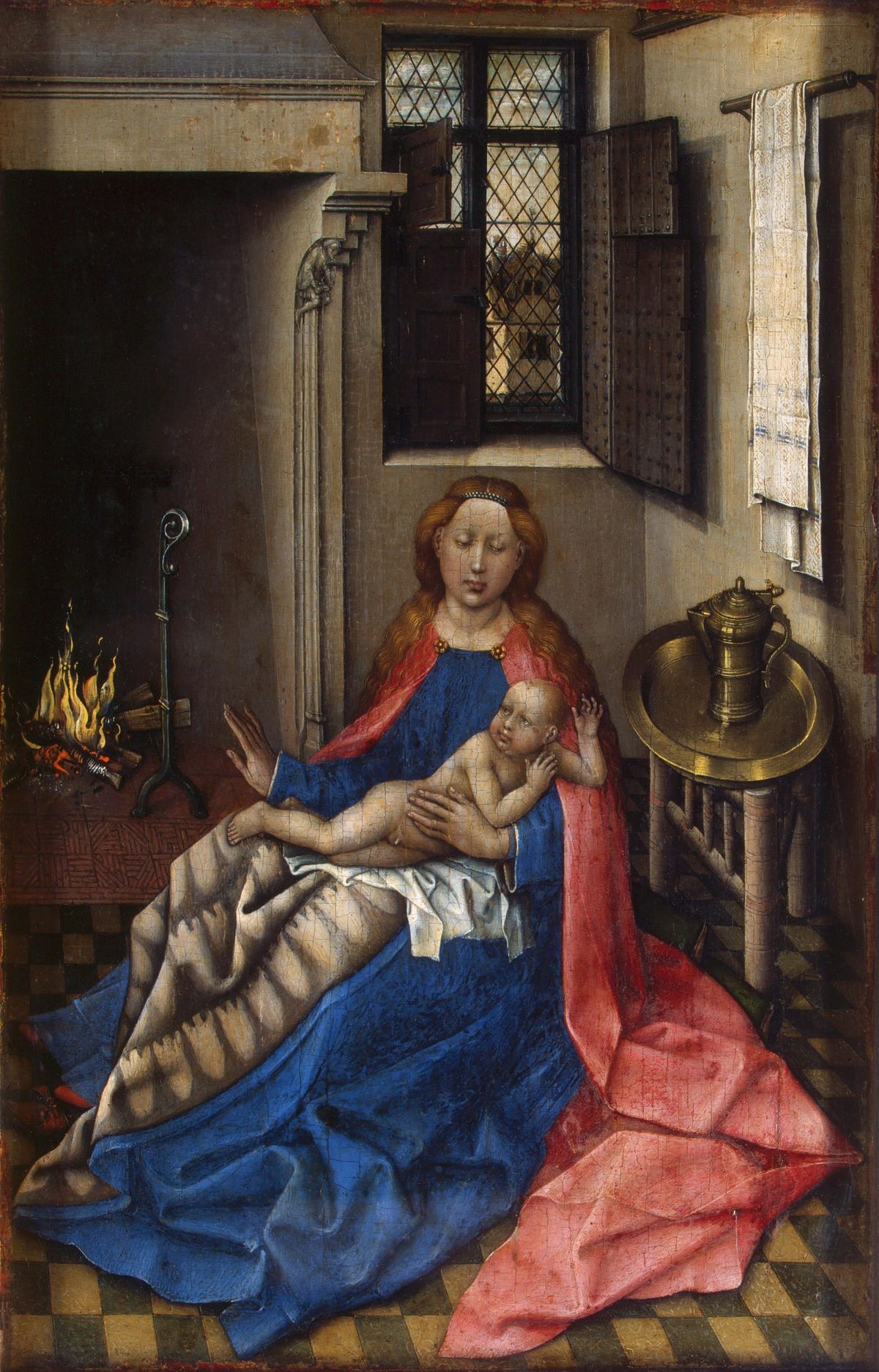
1430–1435년경 15세기 북유럽 르네상스의 선구자 로베르 캉팽(Robert Campin) 및 그의 공방이 제작한 유화 작품 《난로 앞의 성모자》는 플랑드르 종교화의 정교한 일상성과 세밀한 상징주의가 결합된 인류 회화사의 불멸의 마스터피스로, 현재 상트페테르부르크 에르미타주 미술관(State Hermitage Museum, Saint Petersburg)에 원본 유화가 소장되어 있으며 실제 크기는 약 34.3 × 22.8 cm입니다.
이 화면은 화려한 왕좌 대신 정갈한 가정집 실내 바닥에 낮게 앉아(겸손의 성모) 아기 예수를 품에 안고 난롯가 불길에 한 손을 내밀어 온기를 쬐고 있는 성모 마리아의 자애롭고 정숙한 순간을 정교한 플랑드르 유화 기법으로 포착해 낸 명작입니다. 화가는 푸른 드레스 위에 붉은 겉옷을 펼쳐 입은 마리아와, 그녀의 품에서 사색하듯 위를 바라보는 아기 예수, 그리고 좌측 벽난로에서 타오르는 붉은 불꽃과 우측 테이블 위의 금속 물주전자, 벽에 걸린 흰 수건의 섬세한 질감을 입체적으로 부각시켰습니다.
작품 속에는 중세의 신성함을 당대 플랑드르 가정집의 아늑한 일상 공간 속으로 자연스럽게 녹여낸 로베르 캉팽 특유의 혁신적인 상징 기법(숨겨진 상징주의, Disguised Symbolism)의 비하인드 스토리가 흐릅니다. 캉팽은 성모 마리아가 불길에 손을 내밀어 아기 예수를 따뜻하게 데우려는 지극히 인간적인 모성애의 포즈를 보여주는 동시에, 벽난로의 불길을 마리아의 영적 순결과 인류를 향한 사랑, 그리고 지옥의 형벌로부터 구원하는 중보적 상징으로 승화시켰습니다. 우측에 배치된 놋쇠 주전자와 쟁반, 흰 수건은 마리아의 정결함과 동정성을 상징하는 정교한 알레고리이며, 바닥의 섬세한 타일 패턴과 격자창 너머 보이는 북유럽 풍경은 천상의 신성이 지상의 일상 속에 온전히 스며들었음을 생생하게 증명합니다.
후대 평단과 관객들은 이 소형 목판화를 초기 네덜란드 회화(Early Netherlandish painting)가 도달한 극상의 사실주의와 유화 물감 특유의 투명한 질감 표현, 그리고 인류 고유의 모성애와 신성함이 단정하게 조화를 이룬 최고의 명작으로 평가합니다. 웅장한 의복 주름의 조각적 양감과 타오르는 불꽃의 빛 반사, 금속 용기와 수건의 세밀한 질감 묘사는 관객에게 시대를 초월한 정숙한 감동과 깊은 평온함을 안겨줍니다.
이 그림을 마주하는 관람객의 무의식적 시선은 가장 풍성한 빛과 조형적 중심을 이루는 성모 마리아의 온화한 얼굴과, 그녀의 품에 비스듬히 누워 있는 아기 예수의 작고 무구한 몸체로 가장 먼저 끌려갑니다. 자애로운 모성과 정숙한 품위를 품은 인물의 표정은 관람객의 마음에 묵직한 시각적 중심과 정숙한 평온함을 안겨줍니다.
이어 시선은 마리아가 난로를 향해 살며시 뻗은 오른손의 단정한 포즈를 따라 좌측 벽난로 속 타오르는 노란 불꽃으로 이동한 뒤, 우측 테이블 위에 놓인 금속 주전자와 벽에 걸린 흰 수건의 정교한 린넨 질감, 그리고 바닥으로 폭포처럼 떨어지는 붉고 푸른 의복의 거친 주름선으로 자연스럽게 이동합니다. 섬세한 유화 물감층이 만들어낸 빛의 반사와 사물들의 사실적인 질감은 화면 전체에 든든한 조형적 안정감과 품격을 더해줍니다.
마지막으로 시선은 화면 상단 격자창 너머 아득하게 보이는 건축물 윤곽과 바닥 격자 타일의 세밀한 기하학적 패턴 속으로 낙하하여 정착합니다. 이러한 무의식적 시선의 흐름은 천상의 구원과 지상의 아늑한 삶이 어우러지는 거룩하고 고요한 성소로 감상자를 자연스럽게 인도하며, 마음에 닿는 차분하고 정갈한 여운을 오래도록 남깁니다.
In c. 1430–1435, Robert Campin, one of the founding masters of Flemish oil painting and the Northern Renaissance, along with his workshop, created the luminous panel painting titled "The Virgin and Child before a Fireplace" (also known as The Virgin and Child in an Interior). Preserved in the State Hermitage Museum in Saint Petersburg, this original oil-on-panel measures approximately 34.3 × 22.8 cm. This artwork finely captures the intimate, maternal warmth of the Virgin Mary warming her hand by a hearth while cradling the infant Christ through an extraordinary, unmatched mastery of early Netherlandish naturalism and disguised symbolism.
The panel visually manifests the Virgin Mary seated humbly on the floor of a contemporary domestic interior, holding the nude infant Jesus in her lap while extending her right hand toward the flickering flames of a roaring fireplace on the left. Historical context highlights Campin's revolutionary iconographic approach; by placing the Holy Family in a comfortable 15th-century Flemish home rather than an abstract heavenly court, he transformed everyday domestic life into a sacred sanctuary. The fire not only serves the practical purpose of warming the infant but symbolizes divine love and protection, while the brass pitcher, basin, and white towel on the right represent Mary's immaculate purity. Through the painstaking rendering of floor tile patterns, glowing embers, and a detailed window view, Campin bridged sacred narrative with tangible human reality.
Art historians and critics continuously extol this masterwork as a landmark achievement in Flemish art, celebrating the painter's ability to render jewel-like colors, metallic glints, and soft interior illumination with extraordinary oil-glazing techniques. The striking contrast between Mary's voluminous blue dress, her sweeping crimson mantle, the warm glow of the fireplace, and the quiet interior domesticity creates an enduring atmosphere of sacred sanctity and emotional permanence.
The moment an observer encounters this artwork, their gaze is subconsciously drawn straight to the serene, illuminated face of the Virgin Mary and the gentle figure of the infant Christ resting in her arms. Her calm, loving posture immediately diffuses tension, instilling a comforting sense of grace and quiet composure.
Next, the eye glides smoothly along her outstretched right hand toward the brightly burning flames in the hearth on the left, before tracing across to the brass water vessel on the table and the hanging white towel on the right. The rich, tactile definition of the heavy, angular drapery folds spreading across the tiled floor endows the composition with profound physical weight and structural clarity.
Finally, the viewer's gaze drifts up toward the leaded glass window framing a glimpse of the town outside before coming to rest upon the shadowed perimeter of the interior room. This natural visual journey guides the spectator into a state of quiet, reverent reflection, leaving a lasting impression of devotion, warmth, and timeless peace.
본 리뷰에서 작품을 제외한 컨텐츠의 저작권은 팔렛트제주에 있습니다.
"퍼블릭도메인 고전명화"를 제외한 모든 창작 콘텐츠는 저작권법 제4조 및 제10조에 의거하여 보호됩니다. 무단 도용시 저작권법 제136조(벌칙)에 의거, 당사의 사전 서면 승인 없는 저작권 침해 행위를 금지합니다.