남성의 두상 습작 (Grotesque Head / Study of a Man's Head)
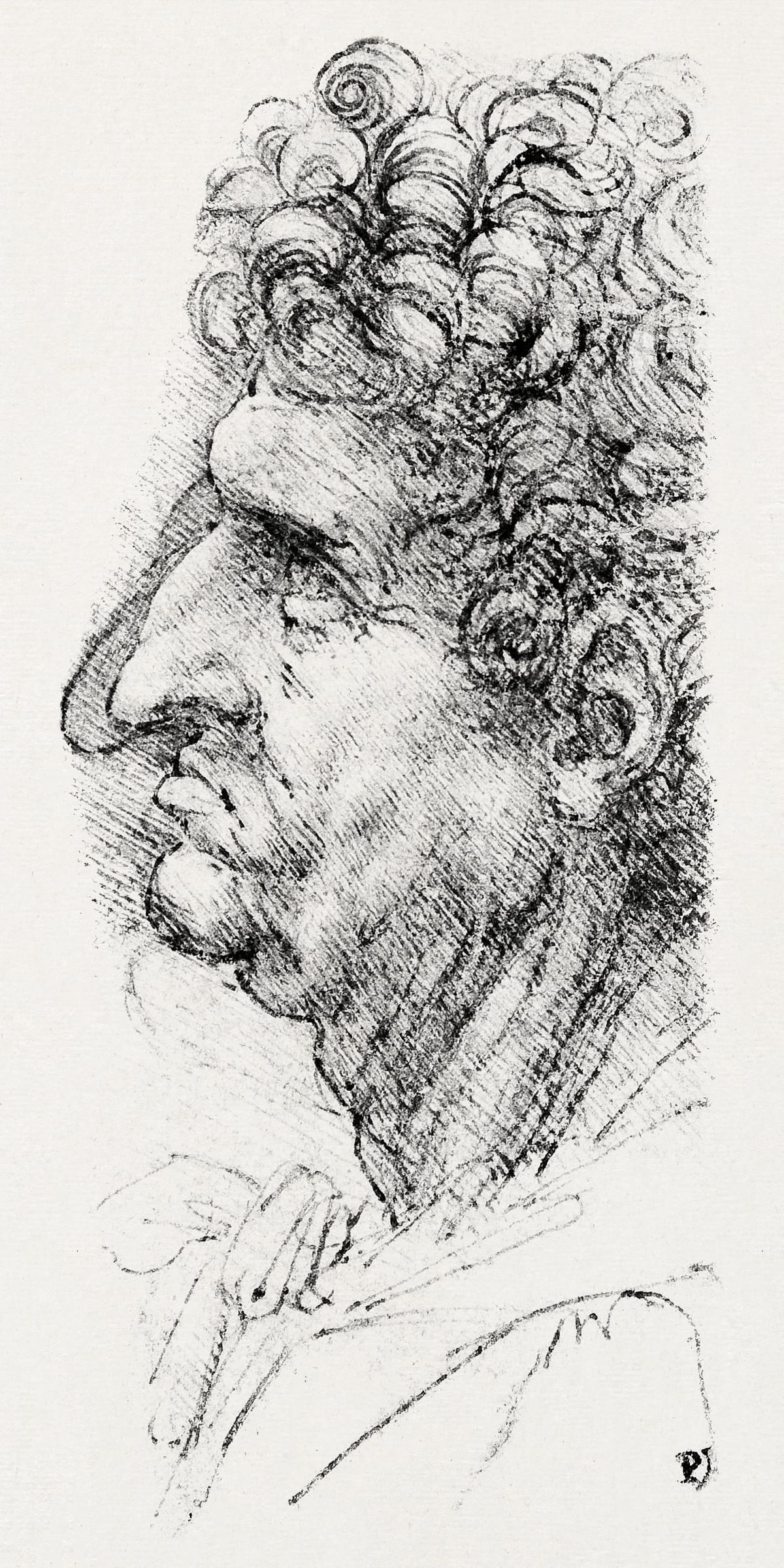
이 작품은 르네상스 시기 천재 거장 레오나르도 다 빈치(Leonardo da Vinci, 1452–1519)가 1500–1505년경 완성한 희귀 소묘 유작 <기괴한 남성의 두상 습작 (Grotesque Head of a Man / Profile of a Grotesque Man)>으로, 실제 규격은 가로 11.5cm, 세로 18.7cm 크기이며 현재 영국 로열 컬렉션(Royal Collection Trust, Windsor Castle)에 소장되어 있습니다. 종이 위에 붉은 크레용과 펜, 잉크를 활용해 강렬한 매사냥꾼 모형이나 신화적 인물을 연상시키는 남성의 측면 얼굴을 정교하게 담아낸 소묘 수작입니다.
미술사학계의 도상학적 분석에 따르면, 다 빈치는 완벽하고 이상적인 미(美)를 탐구하는 동시에 그 반대편에 존재하는 괴기스러움과 노화, 기형적인 얼굴 구조를 정밀하게 분석하여 미학적 대조를 완성했습니다. 과장되게 매부리 모양으로 휜 코와 앞으로 튀어나온 턱, 꽉 다물어진 입술, 그리고 소용돌이치는 강렬한 곱슬머리는 인간의 개성과 내면의 강렬한 욕망을 상징합니다. 레오나르도는 특유의 섬세한 사선 해칭 기법을 사용하여 관자놀이와 뺨, 목주름의 그늘을 입체적으로 표현해 냄으로써 단순한 풍자화를 넘어 인간 생체 구조에 대한 깊은 인문학적 탐구를 완성했습니다.
이 화폭에는 거장의 독특한 예술관과 역사적 평가가 담겨 있습니다. 레오나르도 다 빈치는 평소 밀라노와 피렌체의 거리를 거닐며 특이한 외모나 기이한 인상을 가진 이들을 발견하면 몇 시간씩 따라다니며 그들의 얼굴을 스케치북에 기록하는 습관이 있었습니다. 이러한 관찰 스케치들은 훗날 그의 제자들과 후대 관상학 연구자들에게 막대한 영향을 미쳤으며, 프란체스코 메멜지나 멜치 같은 수제자들에 의해 모사되어 유럽 전역에 인상학(Physiognomy)의 중요성을 알렸습니다. 현대 미술사학자들은 이 드로잉을 이상적 아름다움에만 매몰되지 않고 인간 본연의 다채로운 얼굴을 과학적이고 미학적으로 통찰해 낸 레오나르도 다 빈치표 인물 연구의 정수로 높이 평가합니다.
이 그림을 가만히 바라보고 있으면 보는 이의 무의식 속에서 은은한 수직·수평적 시선 순환 구조가 부드럽게 작동합니다. 가장 먼저 남성의 과장되고 강렬한 매부리코와 굳게 다문 입술라인에 시선이 닿은 뒤, 소용돌이치듯 정교하게 묘사된 정수리의 곱슬머리 윤곽을 따라 위로 올라갑니다. 이후 목덜미의 강렬한 펜선과 옷깃의 부드러운 스케치를 거쳐 다시 강인하게 튀어나온 턱선과 눈빛으로 되돌아오는 유연한 시선 흐름을 완성합니다. 이러한 시각적 순환 유도는 대뇌 인지 영역에서 찰나의 긴장감을 해쇄하고, 거장의 날것 그대로의 필선 속에서 깊은 내면의 평온과 안식을 선사합니다.
This masterpiece, titled Grotesque Head of a Man (also known as Profile of a Grotesque Man), was created around 1500–1505 by Renaissance genius Leonardo da Vinci (1452–1519). Measuring 11.5 cm in width by 18.7 cm in height, this exquisite sheet in pen, ink, and chalk is currently preserved in the Royal Collection Trust at Windsor Castle, United Kingdom. Depicting the exaggerated profile of a man with a hooked nose and swirling curls, the drawing stands as a paramount testament to Leonardo’s fascination with human physiognomy.
Art historical scholarship highlights the profound aesthetic philosophy underpinning Leonardo’s grotesque studies. In his relentless pursuit of ideal human beauty, Leonardo recognized that true aesthetic understanding required an equally rigorous investigation of its opposite—the aged, distorted, and irregular features of nature. The exaggerated aquiline nose, protruding chin, and tightly compressed lips embody fierce inner willpower, while the energetic, spiral hatching along the hair showcases his unmatched command of tactile texture and three-dimensional volume.
Fascinating historical backstories and glowing post-Renaissance evaluations define this remarkable sheet. Contemporary accounts record that Leonardo frequently followed individuals with unique or bizarre facial structures through the streets of Florence and Milan to capture their likenesses in his notebooks. These revolutionary physiognomic studies directly influenced generations of artists and scholars, widely copied by his devoted pupils. Modern art historians revere this drawing as a masterclass in Renaissance observational realism, celebrating its brilliant synthesis of scientific curiosity, expressive draftsmanship, and psychological intensity.
Gazing upon this striking profile gently awakens a subtle subconscious visual rhythm. The viewer’s eye originates at the prominent hooked nose and firm lips, ascends along the swirling contours of his densely curled hair, and glides downward across the sharp hatching of the neck and collar. The gaze then sweeps fluidly along the jawline back to the eyes, completing a soft, circular loop. This harmonious visual movement dissolves inner cognitive tension, inviting the mind into a quiet sanctuary of artistic wonder and serene contemplation.
본 리뷰에서 작품을 제외한 컨텐츠의 저작권은 팔렛트제주에 있습니다.
"퍼블릭도메인 고전명화"를 제외한 모든 창작 콘텐츠는 저작권법 제4조 및 제10조에 의거하여 보호됩니다. 무단 도용시 저작권법 제136조(벌칙)에 의거, 당사의 사전 서면 승인 없는 저작권 침해 행위를 금지합니다.