낮잠(밀레를 따라서) - Noonday Rest (after Millet)
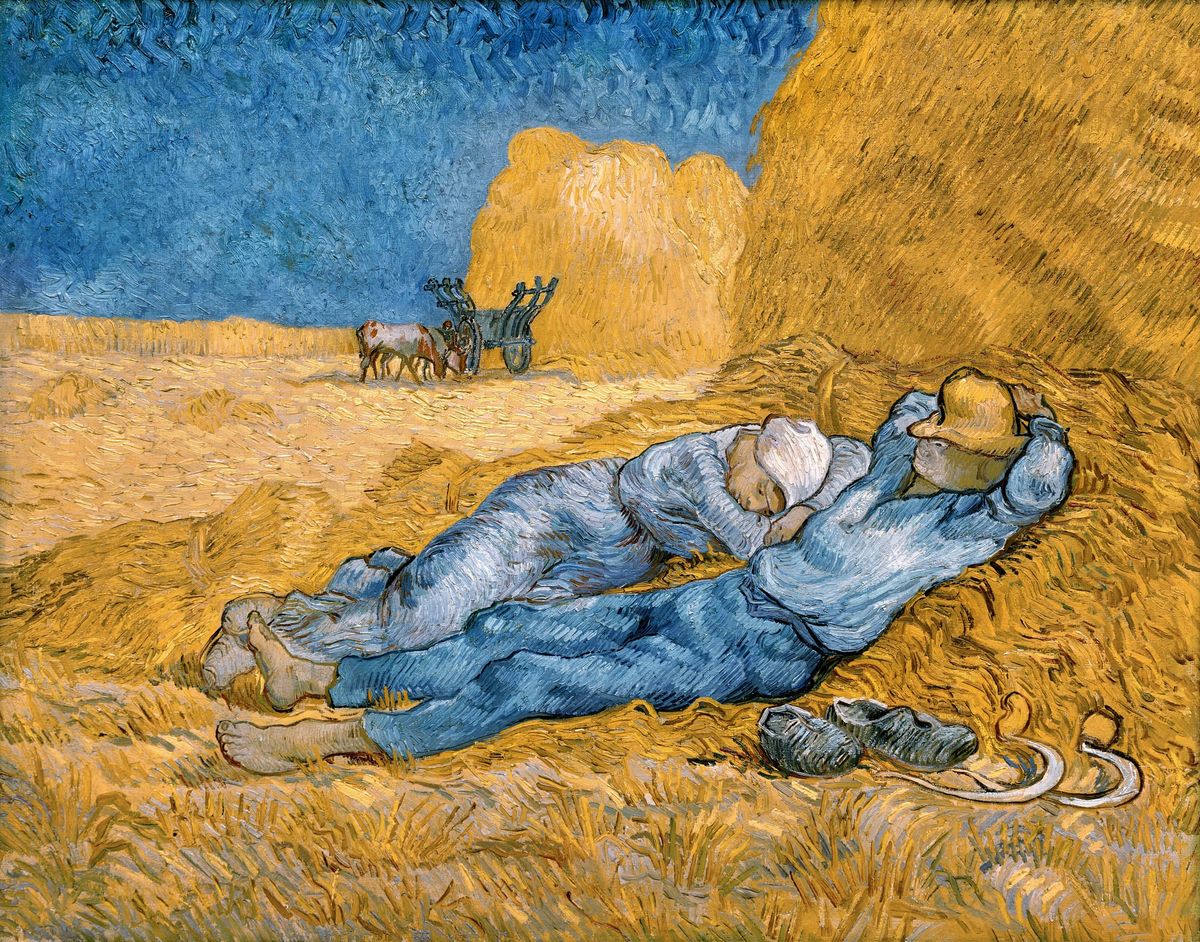
빈센트 반 고흐(Vincent van Gogh, 1853~1890)가 1890년 1월 프랑스 생레미의 생폴 드 모졸 요양원에서 완성한 유화(Oil on canvas) 작품입니다. 작품의 실제 규격은 73 x 91 cm이며, 프랑스 파리의 오르세 미술관(Musée d'Orsay)에 소장되어 있습니다. 이 작품은 고흐가 자신이 평생 영적인 스승으로 존경했던 장 프랑수아 밀레(Jean-François Millet)의 흑백 판화 연작 중 하나를 바탕으로, 두껍고 강렬한 임파스토 붓질과 자신만의 독창적인 보색 대비를 더해 유화로 재창조해낸 후기 인상주의의 대표 걸작입니다.
1889년 말에서 1890년 초 생레미 요양원에 갇혀 있던 고흐는 극심한 정신적 고통과 추위, 그리고 재발하는 발작 때문에 야외로 나가 풍경을 그리기가 불가능한 상태였습니다. 생생한 자연을 관찰할 수 없다는 절망감 속에서 고흐는 동생 테오에게 밀레의 목판화 복제품들을 보내달라고 간절히 부탁했습니다. 흑백 판화들을 받아 든 고흐는 어린아이처럼 기뻐하며 침대 머리맡에 판화를 붙여두고 붓을 들었습니다. 그는 테오에게 편지를 쓰며 원작을 그대로 베끼는 것이 아니라, 마치 피아니스트가 작곡가의 악보를 자신의 감정으로 새롭게 해석하여 연주하듯 빛과 색채의 번역 작업을 하고 있다고 가슴 벅찬 소회를 밝혔습니다.
그림을 그리는 동안 요양원의 간수들과 환자들은 흑백의 작은 그림을 보며 눈이 멀 것 같이 찬란한 노란색과 푸른색의 물감을 캔버스에 짓이기듯 칠해대는 고흐를 이상한 눈으로 바라보았습니다. 특히 고흐는 그림 속 농부 부부의 벗어놓은 나막신과 낫, 그리고 지푸라기에 닿아 있는 맨발의 질감을 표현할 때 밥을 먹는 것도 잊은 채 며칠 밤낮을 캔버스 앞에 쪼그리고 앉아 작업에 매달렸습니다. 고흐는 자신이 가장 사랑했던 농민의 정직한 땀방울과 그 뒤에 찾아오는 꿀 같은 휴식을 표현하면서, 비좁은 병실의 차가운 현실을 잊고 따스한 들판 한가운데 누워있는 듯한 순수한 위안을 얻었습니다.
후대 미술사학자들은 이 작품을 단순한 모작의 차원을 완전히 뛰어넘어, 색채가 결여된 흑백의 판화에 영혼과 생명력을 불어넣은 독창적인 재창조의 정점으로 평가합니다. 밀레의 원작이 지닌 경건하고 소박한 분위기에 고흐 특유의 타오르는 듯한 황금빛 밀짚단과 코발트블루의 강렬한 보색 대비가 더해져, 노동의 숭고함과 자연의 경이로움을 극대화한 명작으로 칭송받고 있습니다.
작품을 마주하는 관람객의 시선은 화면 우측 하단에 가지런히 벗어놓은 나막신과 낫, 그리고 편안하게 뻗은 농부의 맨발에서 시작됩니다. 이어 볏짚에 몸을 파묻고 달콤한 잠에 빠진 부부의 푸른 작업복을 타고 올라가며, 거대한 황금빛 밀짚더미와 저 멀리 평화롭게 쉬고 있는 소와 수레로 시선이 부드럽게 이어집니다. 마지막으로 소용돌이치는 짙푸른 하늘로 확장되는 시선의 흐름은 보는 이의 무의식 속에 쌓여 있던 고단함과 긴장을 사르르 녹여주며, 한낮의 따스한 온기와 함께 깊고 평온한 안식의 감정을 선사합니다.
Noonday Rest (after Millet)
Painted in January 1890 by Vincent van Gogh (1853–1890), this radiant oil on canvas measures 73 by 91 centimeters and is preserved in the prestigious collection of the Musée d'Orsay in Paris, France. Created during his stay at the Saint-Paul-de-Mausole asylum in Saint-Rémy-de-Provence, the artwork is a vibrant reinterpretation of a black-and-white print by his spiritual mentor, Jean-François Millet, brought to life through thick impasto textures and striking complementary colors.
During the cold winter of 1889 to 1890, Vincent was largely confined indoors due to severe health crises and bitter weather, which prevented him from painting en plein air. Deprived of direct contact with nature, he pleaded with his brother Theo to send wood engravings after Millet's rustic scenes. Upon receiving the monochrome prints, Vincent excitedly pinned them to his wall and began what he described as translating the black-and-white lines into a personal symphony of light and color, much like a musician interpreting a composer's score.
The asylum staff and fellow residents often watched with fascination as Vincent stood before the small woodcut, layering thick, luminous strokes of golden ochre and brilliant ultramarine onto his canvas. Vincent became completely absorbed in capturing the tangible details of rural life—the discarded wooden clogs, the resting sickles, and the bare feet of the sleeping laborers. Immersing himself in the honest rest of the peasantry allowed Vincent to temporarily escape the dreary confines of the asylum and find emotional sanctuary in the imagined warmth of a summer harvest.
Art historians revere this piece as an exceptional masterclass in artistic translation, far transcending the concept of a simple copy. By infusing Millet's sober composition with pulsating brushwork and the electric contrast between shimmering golden hay and vibrant blue clothing, Van Gogh elevated the humble scene of agricultural labor into an enduring monument of spiritual peace and human dignity.
The viewer's gaze instinctively enters at the lower right, drawn to the humble clogs, curved sickles, and relaxed feet of the resting laborer. The eyes gently travel along the contours of the sleeping couple, flowing up into the towering golden haystack and outward toward the grazing oxen and cart in the distance. Ascending finally into the expressive blue sky, this harmonious visual passage dissolves subconscious fatigue and stress, enveloping the spectator in deep serenity, restorative warmth, and unconditional tranquility.
본 리뷰에서 작품을 제외한 컨텐츠의 저작권은 팔렛트제주에 있습니다.
"퍼블릭도메인 고전명화"를 제외한 모든 창작 콘텐츠는 저작권법 제4조 및 제10조에 의거하여 보호됩니다. 무단 도용시 저작권법 제136조(벌칙)에 의거, 당사의 사전 서면 승인 없는 저작권 침해 행위를 금지합니다.