무의식의 화원 국화 Garden of the Unconscious Bed of Chrysanthemums
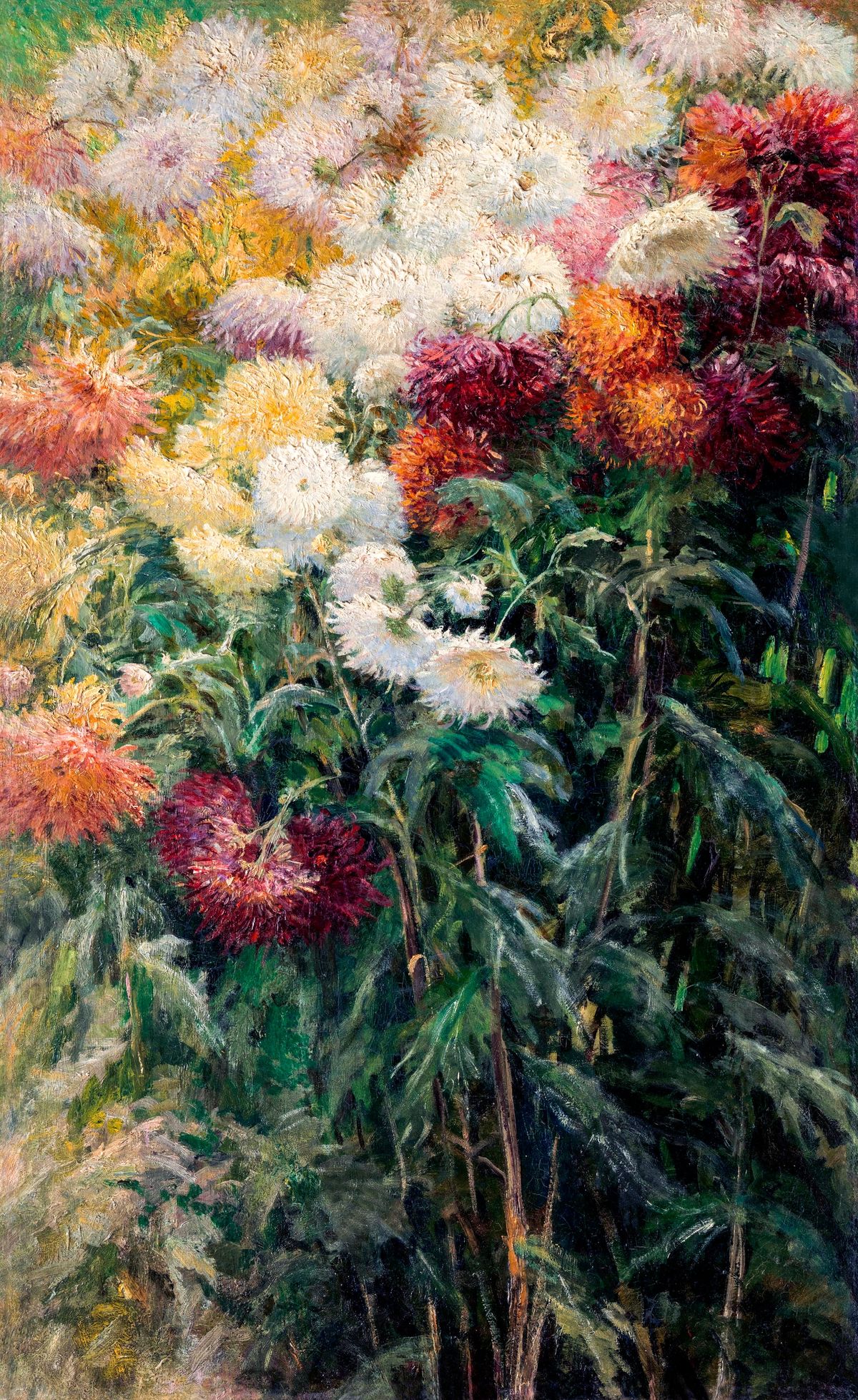
르네상스 이후 미술계를 지배하던 전통적인 공간감과 원근법을 완전히 해체한 이 그림은 인상주의의 거장 클로드 모네가 1897년에 완성한 명작 국화입니다. 세로 130.5cm, 가로 88.9cm의 실제 캔버스 전체를 빈틈없이 채운 꽃과 잎사귀들은 화면 가득 피어난 생명력의 향연을 보여주며 감상자의 시선을 단숨에 사로잡습니다.
그림 앞에 서면 우리의 시선은 가장 먼저 화면 상단에 자리 잡은 눈부신 흰색과 연노랑 국화꽃들에 머물게 됩니다. 빛을 가득 머금은 이 밝은 영역은 우리가 일상에서 스스로 인지하고 통제할 수 있는 맑고 안전한 의식의 상태를 상징합니다.
하지만 이내 시선은 화면 가운데 피어난 무겁고 짙은 붉은빛, 자줏빛 꽃송이들을 거칩니다. 그리고 종국에는 아래쪽의 어둡고 얽힌 짙은 녹색 줄기들로 자연스럽게 미끄러져 내려갑니다.
하늘이나 지평선을 완전히 배제하고 식물로만 빽빽하게 채워진 이 숨 막히는 구도는 외부 세계와의 시각적 연결을 차단합니다. 이는 감상자가 다듬어지지 않은 자신의 깊은 무의식과 온전히 마주하도록 이끄는 탁월한 심리적 장치로 작용합니다.
이토록 생생하고 압도적인 화면이 탄생할 수 있었던 배경에는 원예를 향한 모네의 열정적인 사랑이 숨어 있습니다. 프랑스 지베르니에 정착한 그는 당시 유럽 문화계에 불어닥친 자포니즘의 영향으로 동양의 국화가 가진 이국적인 매력에 깊이 빠졌습니다.
여기서 매우 흥미로운 비하인드 스토리는 그가 단지 그림의 소재를 구하기 위해 가볍게 정원을 가꾼 것이 아니라는 사실입니다. 모네는 국화만을 전담하여 돌보는 전문 정원사를 따로 고용할 만큼 엄청난 자본과 시간을 들여 정원을 디자인했습니다. 캔버스에 물감을 칠하기 전, 살아있는 식물들로 완벽한 색채와 형태의 조화를 먼저 구현해 낸 지베르니의 정원 자체가 모네에게는 이미 영혼이 담긴 거대한 예술 작품이었습니다.
오늘날 미술사학자들은 이 국화 그림을 모네의 예술 세계가 현대로 넘어가는 아주 중대한 전환점으로 평가합니다. 화면 밖으로 무한히 뻗어나갈 듯한 과감한 클로즈업 구도는 당시 보수적인 평론가들에게는 무척 낯설고 어지러운 시도로 여겨졌습니다.
하지만 사물의 객관적인 묘사보다 색채의 진동과 빛의 파동을 통해 대상의 느낌을 포착하려 했던 이 과감한 시도는 결코 헛되지 않았습니다. 훗날 모네의 기념비적인 걸작이자 추상 미술의 문을 연 수련 연작을 탄생시키는 결정적인 계기가 되었기 때문입니다. 이 작품은 현대 미술이 추상으로 나아가는 위대한 서막을 우리에게 보여줍니다.
Garden of the Unconscious Bed of Chrysanthemums
Completely dismantling the traditional sense of space and perspective that had dominated the art world since the Renaissance, this painting is the masterpiece Bed of Chrysanthemums, completed by the Impressionist master Claude Monet in 1897. The flowers and leaves flawlessly filling the entire actual canvas, measuring 130.5 by 88.9 centimeters, present a feast of vitality blooming across the canvas and immediately captivate the viewer's gaze.
Standing before the painting, our eyes first rest on the dazzling white and pale yellow chrysanthemums located at the top of the canvas. This bright area, full of light, symbolizes the clear and safe state of consciousness that we can recognize and control in our daily lives.
However, the gaze soon passes through the heavy, deep red and purple blossoms blooming in the center. Eventually, it glides naturally down to the dark and tangled dark green stems at the bottom.
This breathtaking composition, densely packed with only plants while completely excluding the sky or horizon, blocks any visual connection with the outside world. This acts as an excellent psychological device that leads the viewer to fully face their own untamed, deep unconsciousness.
Behind the creation of such a vivid and overwhelming scene lies Monet's passionate love for gardening. After settling in Giverny, France, he fell deeply into the exotic charm of oriental chrysanthemums under the influence of Japonism, which was sweeping the European cultural scene at the time.
A highly fascinating behind-the-scenes story here is that he did not lightly cultivate the garden merely to find subjects for his paintings. Monet designed the garden with immense capital and time, even hiring a professional gardener exclusively to care for the chrysanthemums. Before applying paint to the canvas, the garden of Giverny, which first realized a perfect harmony of colors and forms with living plants, was already a colossal work of art imbued with Monet's soul.
Today, art historians evaluate this chrysanthemum painting as a highly crucial turning point where Monet's artistic universe transitioned into modernity. The bold close-up composition, which seems to expand infinitely beyond the canvas, was considered a very unfamiliar and disorienting attempt by conservative critics at the time.
However, this bold attempt to capture the feeling of the subject through the vibration of color and waves of light, rather than objective depiction, was never in vain. It later became the decisive catalyst that gave birth to his monumental masterpiece, the Water Lilies series, which opened the door to abstract art. This artwork showcases the grand prelude of modern art moving toward abstraction.
ⓒ 본 리뷰의 저작권은 "팔렛트제주"에 있으며, 무단 전재 및 재배포를 엄격히 금합니다. / Copyright 2026 by Palette Jeju. All rights reserved. Unauthorized reproduction or distribution is strictly prohibited.