물가의 버들 Water Willow
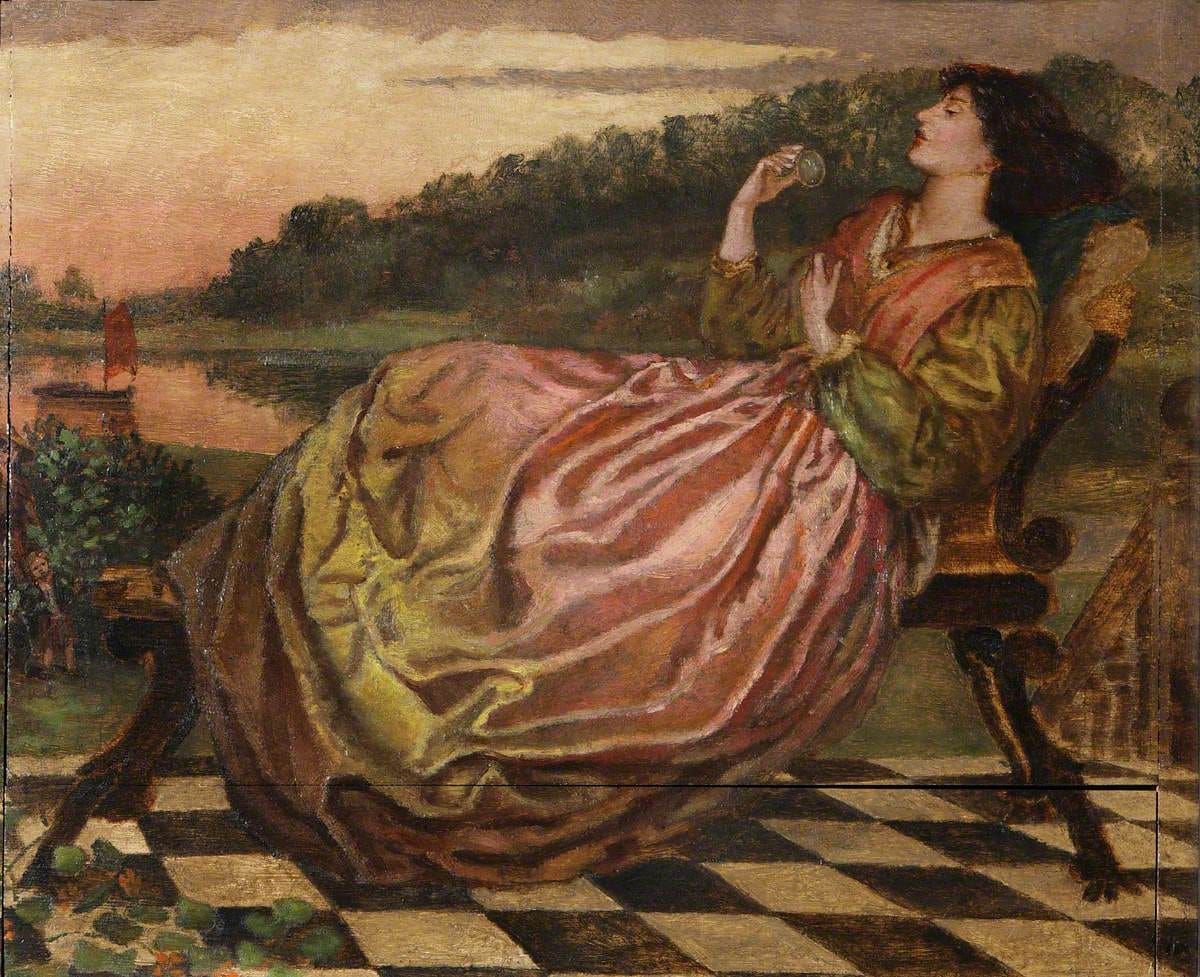
19세기 영국 라파엘로 전파의 거장 단테 가브리엘 로세티(Dante Gabriel Rossetti, 1828–1882)가 1871년에 제작한 상징주의 유화 작품 물가의 버들(Water Willow)은 높이 33 cm, 너비 27 cm 크기의 실크 위 유채로 그린 대표적인 회화 명작입니다.
영국의 저명한 시인이자 로세티의 친구인 시어도어 와츠던튼(Theodore Watts-Dunton)의 소장을 거쳐, 현재는 영국의 국립 신탁(National Trust)이 관리하는 위크윅 매너(Wightwick Manor)에 영구 소장되어 안전하게 보존되어 오고 있습니다.
작가의 고뇌/비하인드
1871년 여름 영국 윔스마이드에서 휴가를 보내던 단테 가브리엘 로세티는, 켐스고트 매너의 평화로운 자연환경 속에서 예술적 영감을 되찾고자 깊은 몰두에 빠졌습니다.
화가는 단순한 풍경 묘사를 넘어, 자신의 영원한 뮤즈이자 연인이었던 제인 모리스(Jane Morris)의 고결하고도 우수에 찬 얼굴을 빌려 강가에 늘어진 버들가지를 배경으로 시적 고독과 평온을 치밀하게 재현하고자 치열하게 번민했습니다.
국립 신탁의 공식 소장 도록 학술 기록에 따르면, 이 작품은 로세티가 켐스고트의 아름다운 풍경을 배경으로 제인 모리스를 모델로 삼아 그린 소형 유화이며, 화면 속 제인이 강변에 앉아 작은 버들가지를 손에 쥐고 있는 모습, 멀리 보이는 강물과 붉은 깃발이 달린 작은 보트, 그리고 수평선 위로 펼쳐진 버드나무 숲의 도상학적 구성을 통해 자연과의 일체감과 쓸쓸한 낭만주의적 정취를 상징하는 핵심 장치로 분석됩니다.
화가는 잔잔한 강물과 버드나무가 우거진 켐스고트의 풍경을 배경으로, 사색에 잠긴 제인의 숭고한 순간을 화폭에 담았습니다.
화면 중앙에는 붉은빛이 감도는 풍성한 머리칼을 뒤로 늘어뜨린 제인 모리스가 초록색과 붉은빛이 감도는 의복을 입은 채 부드러운 눈빛으로 측면을 응시하고 있으며, 그녀의 뚜렷한 콧날과 차분한 입술이 깊은 인상을 자아냅니다.
몸에는 단정한 드레스를 걸치고 두 손으로 작은 버들가지 녹색 잎사귀를 가볍게 쥐고 있는 동작이 정교하게 묘사되어 있습니다.
화면 왼쪽 배경 멀리 흐르는 강물 위로 붉은 깃발을 단 작은 배와 강가의 푸른 수풀은 화가가 추구했던 19세기 전원적인 대기감을 손에 잡힐 듯 생생하게 웅변합니다.
무의식 속 시선 및 심리 흐름
그림을 마주하는 순간 관람객의 무의식적 시선은 화면 중앙에서 묘한 우수와 깊은 사색을 품은 채 측면을 응시하는 제인 모리스의 맑은 눈동자와 부드러운 입술의 섬세한 유화 질감으로 가장 먼저 빨려 들어간다.
세속의 소음이 차단된 강가에서 홀로 평온을 찾는 인물의 고요하고 처연한 표정은 보는 이에게 강렬한 시각적 몰입감과 함께 묵직한 위안을 선사한다.
이어 시선은 그녀의 손끝을 따라 화면 왼쪽에서 작은 버들가지의 여린 잎사귀를 섬세하게 쥐고 있는 손의 텍스처와 몸을 감싸는 우아한 드레스의 주름선으로 자연스럽게 이동한다.
자연의 숨결과 고요한 전원의 공기를 체감하는 순간, 관람객은 19세기 영국의 평화로운 켐스고트 강가 속으로 온몸이 빨려 들어가게 된다.
마지막으로 시선은 화면 왼쪽 멀리 강물 위에 떠 있는 붉은 깃발의 보트를 거쳐, 화면 전체를 싱그럽고 포근하게 감싸 안는 버드나무 숲과 노을빛 하늘의 대기감으로 멈춘다.
전면 인물의 매혹적인 심리적 깊이와 후면 평화로운 전원풍경의 조화를 마주하며, 관람객은 자연과 인간의 조화를 시각 예술로 승화시킨 거장 로세티의 압도적인 조형 의지를 가슴 깊이 마주하게 된다.
미술계의 평가 및 조형미
미술계와 국립 신탁 공식 도록은 이 작품을 로세티가 1870년대 초반 켐스고트 시기 이뤄낸 가장 시적이고 서정적 완성도가 높은 대표적인 소형 유화 마스터피스로 평가한다.
단순한 풍경 초상을 넘어 19세기 후반 라파엘로 전파가 지닌 극도의 섬세한 인물 묘사와 자연에 대한 깊은 애정을 가장 완벽한 실크 유화 기법으로 융합해 냈기 때문이다.
인간의 영원한 안식처와 자연 속의 평화를 가장 격조 높은 시각 예술로 승화시킨 로세티의 이 소중한 화폭은, 오늘날까지도 전 세계 수많은 감상자들에게 깊한 감탄과 잊을 수 없는 시각적 전율을 전해주는 불멸의 명작으로 손꼽히고 있다.
Water Willow
Executed in 1871 by the master of the Pre-Raphaelite Brotherhood Dante Gabriel Rossetti (1828–1882), Water Willow is a monumental symbolist masterpiece in oil on silk measuring 33 cm × 27 cm (13 in × 10 3/4 in).
Preserved through esteemed provenance including Theodore Watts-Dunton, it is housed today in the celebrated permanent collection of Wightwick Manor managed by the National Trust in the United Kingdom.
Historic Context & Arcadian/Genre Depth
During the summer of 1871 while staying at Kelmscott Manor, Dante Gabriel Rossetti drew profound inspiration from the tranquil riverside landscape, seeking to capture the quiet, contemplative mood of Jane Morris framed by the lush willows along the Thames.
Moving beyond conventional portraiture, the master meditated deeply on how to portray the serene harmony between his primary muse and the idyllic rural environment, utilizing delicate oil pigments on silk to achieve atmospheric luminosity.
According to National Trust curatorial records, this exquisite landscape incorporates rich symbolic elements such as the willow sprig held gently in Jane's hand, the winding river in the middle ground, and a small boat bearing a red flag near the distant bank, serving as powerful iconographic emblems of rural retreat, poetic solitude, and romantic escapism.
Rossetti staged the heavy-hearted composition against a calm river backdrop and rolling green banks.
In the center, Jane Morris is depicted in three-quarter profile wearing a rich gown of green and bronze tones, her dark hair framing her expressive face, and her melancholic gaze directed outward toward the water.
She is rendered with warm skin tones, her hands delicately holding a small sprig of willow leaves.
In the background, the distant bucolic river landscape completes a solemn visual allegory of domestic peace and pastoral beauty.
Subconscious Trajectory of the Gaze
The observer's subconscious gaze is immediately magnetized by the central register, drawn to Jane's pale, expressive complexion, her luminous eyes, and her poignant expression as she embodies deep rural tranquility.
Her profound vulnerability and striking visage establish an instant focal point of psychological intensity, raw realism, and dramatic narrative weight.
The visual path then shifts outward along her delicate fingers holding the willow sprig toward the soft folds of her garments.
Taking in the tactile qualities of the rich oil paint on silk, soft flesh tones, and shifting atmospheric light, the viewer directly experiences the opulent, meditative atmosphere of the Kelmscott retreat.
Finally, the visual trajectory moves toward the distant riverboat with its red flag, before absorbing the expansive atmospheric willow groves framing the canvas.
Observing the harmonious equilibrium between landscape symbolism, figural emotion, and precise Pre-Raphaelite draftsmanship, the spectator perceives the timeless poetry of nature and the profound aesthetic brilliance Rossetti embedded within the silk canvas.
Critical Legacy
Art historians revere the National Trust's Water Willow as a supreme milestone in Rossetti’s oeuvre, illustrating his consummate ability to unite intimate portraiture with breathtaking painterly mastery on silk.
By orchestrating delicate textural contrasts between rich garments, natural foliage, soft flesh tones, and shifting tonal density within a unified horizontal format, Rossetti transformed a personal landscape vignette into an exquisite aesthetic treatise on beauty, memory, and pastoral peace.
This magnificent historical canvas endures as an inspiring testament to the master's creative fortitude, celebrating the quiet poetry of human existence and the transformative grace of living art.
본 컨텐트의 저작권은 팔렛트제주에 있습니다. 허가없는 무단전제를 금지합니다.
Copyright © Palette Jeju. All rights reserved. Unauthorized reproduction or redistribution is strictly prohibited.