몽마르뜨의 야외 식당 La Guinguette à Montmartre
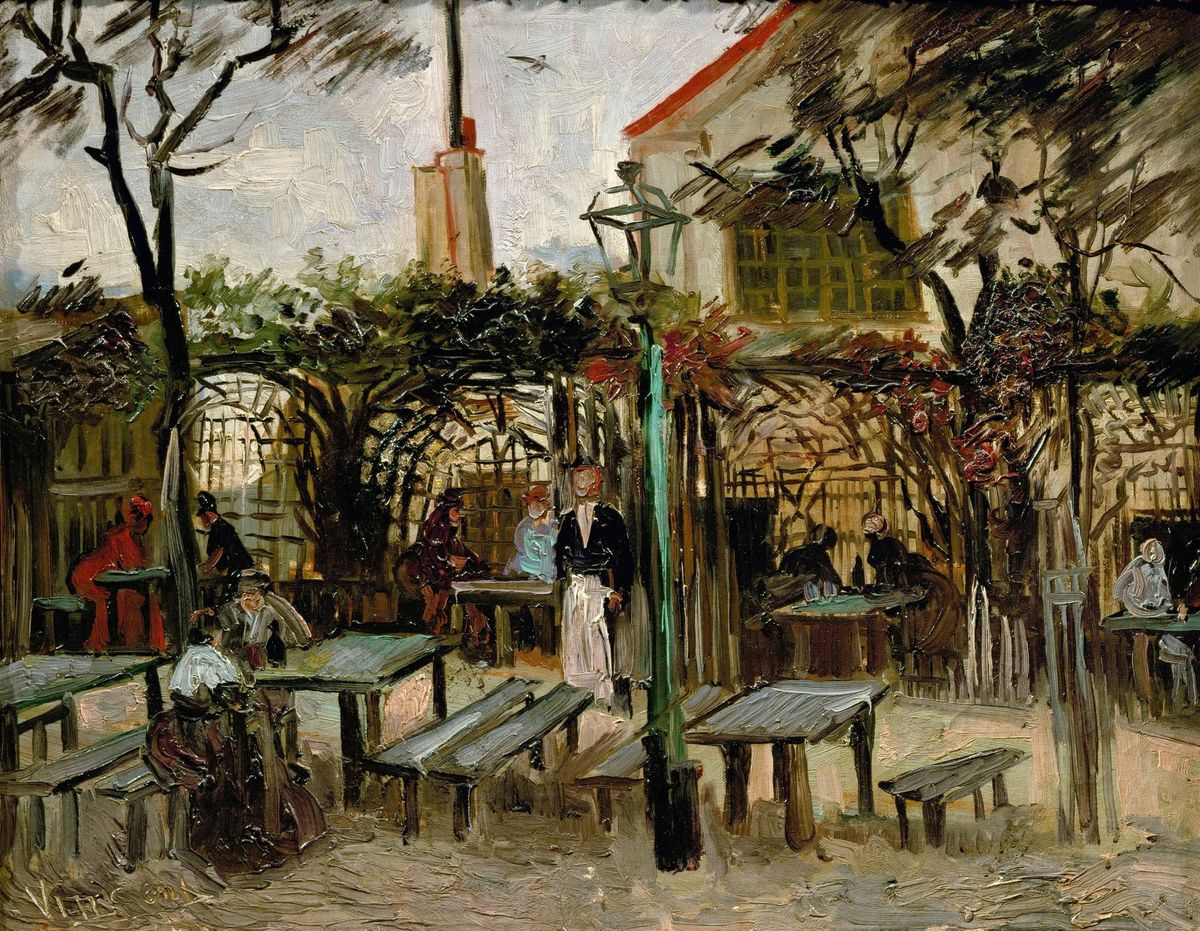
빈센트 반 고흐는 1886년 파리로 이주한 직후 몽마르뜨 언덕의 활기 넘치는 여가 문화와 대중적인 야외 식당 풍경에 매료되어 인상주의적 색채와 거친 붓질을 실험했습니다.
이 작품은 그가 파리에 도착한 해인 1886년 여름에 제작된 유채화로, 야콥 바르트 드 라 파이유의 전작 도록 기준 공식 등록번호는 F236이며 실제 작품의 실측 규격은 49.0 × 65.0 cm입니다.
현재 프랑스 파리에 위치한 오르세 미술관에서 소장하고 있습니다.
작가의 고뇌와 비하인드
파리로 거처를 옮긴 고흐는 네덜란드 시기의 어둡고 무거운 화풍에서 벗어나, 파리 시민들이 즐겨 찾던 몽마르뜨의 야외 주점인 갱게트의 밝은 분위기와 자유로운 공기를 담아내고자 했습니다.
화면 전면에는 묵직한 나무 테이블과 벤치들이 거칠고 두터운 임파스토 기법으로 배치되어 있으며, 그 주변에 자리를 잡은 손님들의 모습이 생동감을 더합니다.
중경에는 덩굴이 우거진 지붕 아래 테이블에 모여 앉아 담소를 나누는 사람들 사이로 흰색 앞치마를 두른 웨이터가 정면을 향해 서서 공간의 중심을 단단히 잡아줍니다.
원경의 배경으로는 붉은 지붕을 인 건물과 앙상하게 뻗은 나무 가지들, 그리고 은은한 빛이 감도는 하늘이 어우러져 도심 속 휴식처의 아늑한 대기감을 완성합니다.
무의식 속 시선 및 심리 흐름
관람객의 시선은 가장 먼저 화면 하단에 묵직하게 자리 잡은 야외 테이블과 왼쪽 아래에 새겨진 작가의 서명에 자연스럽게 닿게 됩니다.
이어지는 시선은 덩굴 지붕 아래로 모여 앉은 손님들의 실루엣을 거쳐, 중앙에서 흰색 앞치마를 입고 서 있는 웨이터의 인물상으로 부드럽게 이동합니다.
마지막으로 배경의 건물들과 얽힌 나무 가지들 사이로 시선이 넓게 퍼져나가며, 파리의 평범한 주말 오후가 안겨주는 소박한 해방감과 도심 속 여유를 차분하게 체감하게 됩니다.
미술계의 평가와 조형미
미술사학계에서는 이 작품을 두고 고흐가 파리 시기 초기에 인상주의의 밝은 색채와 활기찬 현장감을 흡수하면서도 자신만의 역동적인 붓질을 결합해 도심 속 서민의 일상을 탁월하게 포착한 수작으로 평가합니다.
화면 전반을 채우는 갈색과 녹색, 그리고 흰색의 대비는 몽마르뜨의 소박한 야외 식당이 지닌 독특한 온기와 입체감을 극대화합니다.
눈에 보이는 풍경의 단순한 재현을 넘어, 화가가 파리의 새로운 활기 속에서 삶의 생명력을 찾아가던 예술적 전환점의 순간을 캔버스 위에 영원히 아로새긴 위대한 명작입니다.
La Guinguette à Montmartre
Vincent van Gogh embraced the vibrant leisure culture and lively atmosphere of Montmartre after moving to Paris in 1886, experimenting with brighter palettes and expressive brushwork inspired by the urban environment.
Created in the summer of 1886, this oil on canvas is cataloged as F236 in J.B. de la Faille's catalogue raisonné and measures 49.0 × 65.0 cm.
The painting is currently housed in the Musée d'Orsay in Paris, France.
During his early months in Paris, Van Gogh decisively broke away from the dark, somber tones of his Dutch period, turning his attention to popular open-air cafes and weekend gathering spots known as guinguettes.
The foreground is anchored by heavy wooden tables and benches rendered in thick, tactile impasto, establishing a grounded structural base for the composition.
In the middle ground, patrons gather beneath a latticed arbor of overhanging foliage, while a waiter in a white apron stands prominently near the center, connecting the various pockets of social activity.
In the distant background, the architecture of the hillside neighborhood, bare tree branches, and a soft, muted sky complete the cozy, sheltering atmosphere of the outdoor venue.
The viewer's gaze is initially drawn toward the textured wooden tables in the lower foreground and the artist's signature in the corner.
The perspective then follows the figures seated beneath the arbor inward toward the commanding presence of the standing waiter in the middle ground.
Finally, the eye expands into the surrounding trees and background architecture, allowing the observer to experience a tranquil psychological transition from urban observation to a warm sense of leisure.
Art historians regard this canvas as a crucial early milestone of Van Gogh's Paris period, illustrating his successful synthesis of Impressionist luminosity with his own restless, energetic touch.
The striking interplay between earthy tones, deep greens, and highlights of white generates a compelling visual rhythm that captures the unpretentious charm of Parisian working-class life.
It stands as an enduring artistic achievement that immortalizes the artist's joyful rediscovery of color and light amidst the bustling energy of the French capital.
본 컨텐트의 저작권은 팔렛트제주에 있습니다. 허가없는 무단전제를 금지합니다.
Copyright © Palette Jeju. All rights reserved. Unauthorized reproduction or redistribution is strictly prohibited.