몽마르뜨의 블뤼트팽 풍차 Le Moulin de la Galette
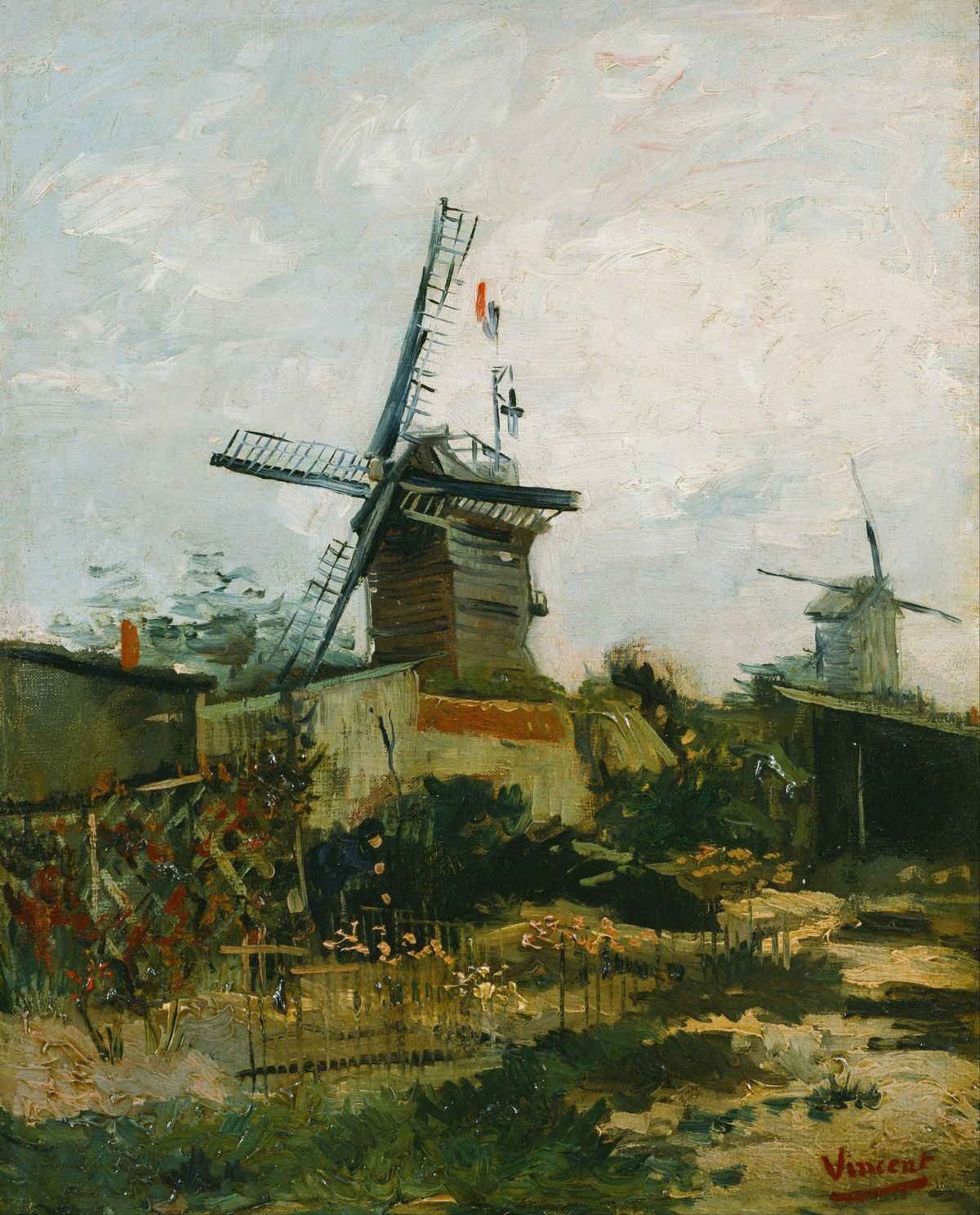
이 작품은 네덜란드의 후기 인상주의 거장 빈센트 반 고흐가 1886년 여름 프랑스 파리의 몽마르뜨 언덕에 머물며 제작한 유화입니다. 공식 소장품 등록번호는 F274이며, 캔버스 위에 유채로 그려진 실제 실측 규격은 46 x 38 cm입니다. 현재 이 작품은 영국 스코틀랜드 글래스고에 위치한 켈빈그로브 미술관 및 박물관에 공식적으로 소장되어 있으며, 1944년 윌리엄 맥인네스의 유증으로 컬렉션에 포함되었습니다.
작가의 고뇌와 창작 비하인드
파리에 도착한 초기 반 고흐는 몽마르뜨 지역의 풍경에 매료되어 도시의 상징이자 서민들의 삶이 녹아 있는 유서 깊은 풍차들을 집중적으로 화폭에 담았습니다. 당시 그는 파격적인 인상주의 색채와 대담한 터치를 연구하며, 전통적인 화풍에서 벗어나 자신만의 독창적인 조형 언어를 구축하기 위해 치열한 실험을 거듭하고 있었습니다.
작품 전경에는 붉은 꽃들과 풀들이 자라난 정원 울타리 사이로 작업복 차림의 인물이 허리를 숙여 밭을 가꾸는 모습이 소박하게 자리 잡고 있습니다. 중경에는 화면 중앙을 가득 채우며 우뚝 솟은 거대한 블뤼트팽 풍차가 목조 구조와 날개를 거칠고 힘찬 붓질로 드러내고 있으며, 그 옆으로 담장과 또 다른 작은 풍차가 평화롭게 어우러져 있습니다.
배경으로는 옅은 구름이 흩날리는 밝고 푸른 하늘이 화면 위쪽을 넓게 채우고 있으며, 전체 화면을 지배하는 밝고 가벼운 색조는 파리에서 마주한 새로운 예술적 희망과 활기를 고스란히 전해줍니다.
무의식 속 시선 및 심리 흐름
관람객의 시선은 가장 먼저 화면 중앙을 사선으로 가르며 웅장하게 솟아오른 거대한 풍차의 목조 날개와 몸체로 향하며, 파리 시기 초기 작품 특유의 역동적인 긴장감을 마주하게 됩니다. 이어지는 시선은 화면 아래쪽의 정원 울타리와 밭에서 일하는 인물의 소박한 중경으로 이동하여, 번화한 대도시 속에서도 서민적 삶의 온기를 놓지 않는 따뜻한 정서에 공감하게 됩니다.
시선이 다시 하늘을 가로지르는 밝은 대기감과 멀리 보이는 풍경의 배경으로 확장될 때, 관람객은 복잡한 내면을 넘어 빛과 자연을 향해 나아갔던 작가의 맑고 개운한 심리적 해방감을 체감하게 됩니다. 이 일련의 시선 이동은 단순한 풍경 묘사를 넘어, 화가가 새로운 미술의 중심지에서 느꼈던 설렘과 예술적 자각의 세계로 깊숙이 빠져들게 만듭니다.
미술계의 평가 및 조형미
미술사학계와 평단은 본 작품을 고흐가 파리 시기에 도달한 과도기적 화풍의 중요한 성과로 평가하며, 네덜란드 시절의 어두운 팔레트에서 벗어나 인상주의의 밝은 빛과 색채를 흡수해 가는 과정을 보여주는 걸작으로 인정합니다. 캔버스 위에 거칠면서도 속도감 있게 얹어진 붓터치는 물감의 물질적 질감을 살려내며, 풍차의 질감과 대기의 흐름을 생생하게 전달합니다.
화면 전반을 지배하는 부드러운 하늘빛과 대지의 녹색 및 갈색조의 조화는 시각적 안정감과 뛰어난 공간감을 동시에 선사합니다. 전통적인 풍경 화법을 자신만의 현대적 시각으로 재해석한 이 작품은, 거장이 후일 위대한 화가로 비상하는 발판이 된 불멸의 예술적 가치를 지닙니다.
Le Moulin de la Galette
Executed in the summer of 1886 during his stay in Montmartre, Paris, this oil painting is a remarkable early work by the Dutch Post-Impressionist master Vincent van Gogh. Officially cataloged under inventory number F274 and measuring 46 x 38 cm on canvas, the work is housed in the permanent collection of the Kelvingrove Art Gallery and Museum in Glasgow, having entered the museum in 1944 through a bequest by William McInnes.
The Artist's Turmoil and Creative Background
Upon his arrival in Paris, Van Gogh was immediately captivated by the picturesque windmills of Montmartre, which served as prominent landmarks and symbols of popular leisure in the bustling capital. Eager to break free from the dark, somber palette of his Dutch period, he immersed himself in studying the vibrant light and broken brushwork of the Impressionists, using these iconic structures to experiment with modern chromatic expression.
The foreground features a rustic garden fence interwoven with blooming red flora, alongside a small figure bent over in labor amidst the greenery. In the middle ground, the monumental Blute-Fin windmill dominates the composition with its weathered wooden structure and angled sails, accompanied by a smaller neighboring mill that anchors the rustic setting.
The background recedes into a pale, luminous sky filled with swift cloud strokes, bathing the entire urban-rural hybrid landscape in a crisp, open-air atmosphere.
Psychological Flow and the Unconscious Gaze
The viewer's gaze is initially drawn to the towering mass and striking diagonal sails of the central windmill, establishing an immediate focal point of architectural and kinetic energy. The eye then migrates downward to the domestic garden and the working figure in the foreground, grounding the picturesque scene in the unpretentious reality of everyday life.
As the gaze expands outward into the expansive, light-filled sky and distant horizon, the observer is enveloped in a refreshing sense of openness that mirrors the artist's burgeoning artistic liberation. This deliberate visual progression moves the viewer from a striking structural encounter into an uplifting contemplation of light and space.
Critical Acclaim and Formal Analysis
Art historians and critics widely celebrate this painting as a crucial stepping stone in Van Gogh's transition toward a fully realized modernist aesthetic during his pivotal Paris years. The brisk, unpolished application of paint introduces a tactile immediacy that brings the rustic textures of the mill and the breezy atmosphere to life.
The harmonious orchestration of cool sky tones against earthy greens and warm highlights generates a balanced visual rhythm. Fusing traditional topographical motifs with an innovative, expressive touch, this masterpiece endures as an essential testament to Van Gogh's rapid artistic evolution.
본 컨텐트의 저작권은 팔렛트제주에 있습니다. 허가없는 무단전제를 금지합니다.
Copyright © Palette Jeju. All rights reserved. Unauthorized reproduction or redistribution is strictly prohibited.