몽마주르의 야생 덤불 위로 불어오는 황혼의 바람, 석양의 일몰 풍경 Sunset at Montmajour
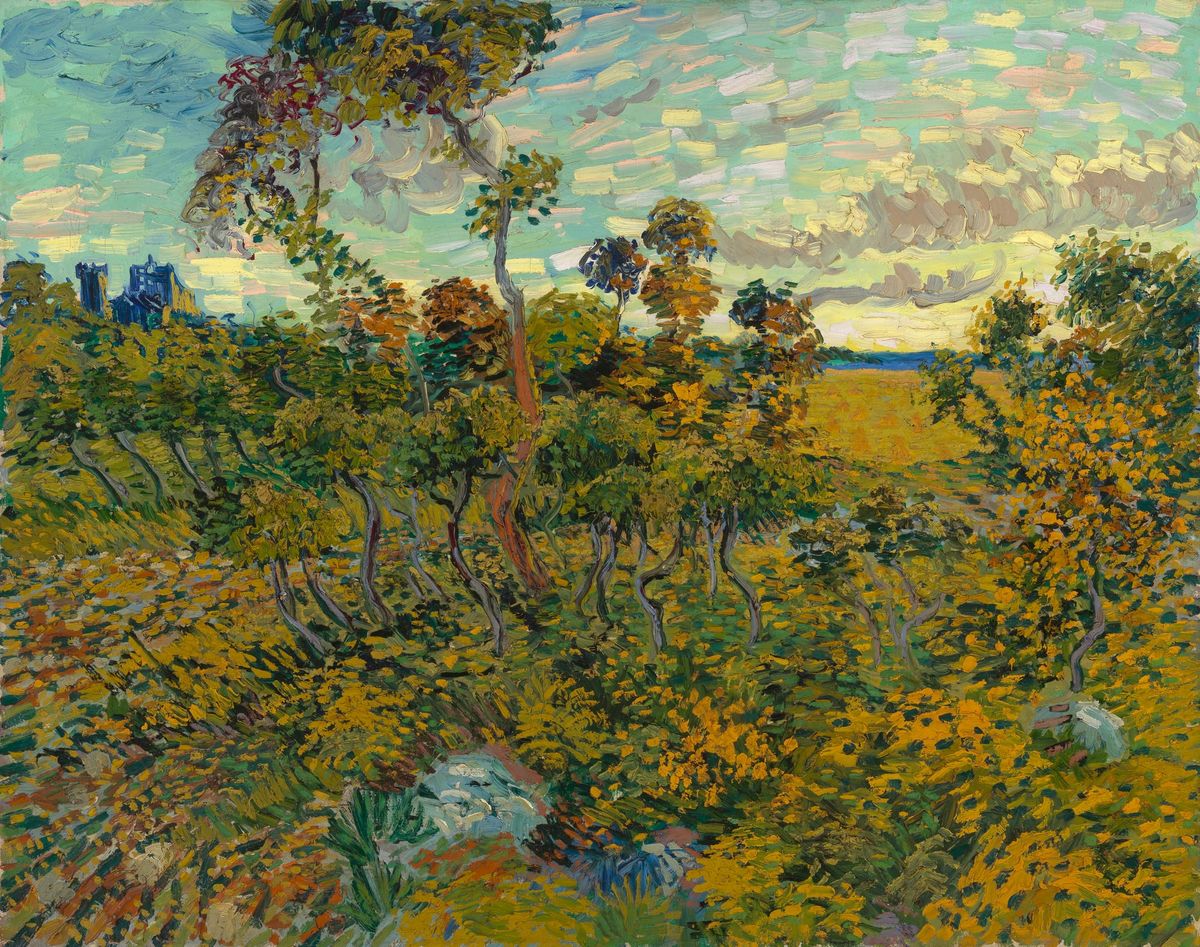
후기 인상주의의 거장 빈센트 반 고흐(Vincent van Gogh, 1853–1890)가 1888년 7월 프랑스 아를(Arles)에서 완성한 유화 석양의 일몰 풍경(Sunset at Montmajour, 또는 몽마주르의 일몰)은 73.3 cm × 92.0 cm 크기의 캔버스에 유채로 그린 대표작으로, 현재 네덜란드 암스테르담의 반 고흐 미술관(Van Gogh Museum)에 영구 소장되어 있습니다.
백 년의 침묵을 깨고 극적으로 부활한 아를 시기의 숨은 걸작
1888년 여름, 남프랑스 아를의 뜨거운 태양 아래에서 작업하던 반 고흐는 시내 북동쪽에 위치한 유서 깊은 베네딕토회 수도원 유적인 몽마주르(Montmajour) 언덕을 거의 매일 오르내렸습니다. 그는 거친 화강암 바위와 가시덤불, 그리고 바람에 뒤틀린 참나무 숲이 광활하게 펼쳐진 이 황량한 고지대에서 자연의 원초적인 야생미에 깊이 매료되었습니다.
이 작품은 미술사에서 가장 극적인 발견 중 하나로 꼽히는 역사적 서사를 품고 있습니다. 반 고흐 사후 테오의 아내 요한나에 의해 노르웨이 수집가에게 팔렸으나, 1908년 프랑스 대사의 오판으로 위작 취급을 받아 다락방에 반세기 이상 방치되었습니다. 그러나 2013년 반 고흐 미술관 연구진이 사용된 안료, 캔버스 직물, 그리고 1888년 7월 고흐가 동생 테오에게 "어제 해 질 무렵 몽마주르의 작은 참나무 덤불 언덕에서 일몰을 그렸다"고 쓴 편지의 완벽한 일치를 입증해 내면서 1928년 이후 85년 만에 발견된 고흐의 진작으로 공식 공인되었습니다.
무의식 속 시선의 공간 유영과 대자연의 호방한 숨결
감상자의 시선은 화폭 하단을 가득 채운 황금빛과 올리브 그린 톤의 거친 야생 덤불과 듬성듬성 박힌 화강암 바위의 질감으로 가장 먼저 이끌립니다. 촘촘하고 리드미컬하게 직조된 풀잎들의 붓 터치는 보는 이의 무의식 속에 남프랑스 여름 대지의 따뜻한 열기와 바스락거리는 촉각적 생동감을 전달합니다.
이어 시선은 화면 중앙에서 바람을 맞으며 굽이치듯 자라난 작은 참나무들의 뒤틀린 줄기를 타고 올라가, 황금빛 햇살이 쏟아지는 지평선의 평야를 스쳐 화면 좌측 상단에 푸른 실루엣으로 서 있는 몽마주르 수도원의 웅장한 폐허에 닿게 됩니다.
그 후 시선은 지평선 너머의 옅은 보랏빛 산맥을 지나, 은은한 청록빛과 연분홍, 금빛 구름 조각들이 모자이크처럼 깔린 황혼의 하늘로 시원하게 확장됩니다. 대지의 다채로운 황토빛과 하늘의 서늘한 청록빛이 이루는 정교한 색채의 조화 속에서, 관람자는 의식하지 못하는 사이 거친 자연이 건네는 호방한 해방감과 해 질 녘의 고요한 사색에 깊이 젖어들게 됩니다.
야생 풍경의 시각적 혁신과 표현주의의 태동, 미술사적 평가
미술계는 석양의 일몰 풍경을 반 고흐가 아를 시기에 이룩한 자연관의 확장과 실험적 필치의 정수를 보여주는 결정적 걸작으로 평가합니다.
원근을 단순화하고 두터운 물감의 층위를 통해 대지의 생명력을 촉각적으로 시각화한 점묘적 터치는 인상주의의 순간 포착을 넘어 대상의 내재적 에너지를 끌어내는 표현주의적 성취를 보여줍니다. 백 년이 넘는 세월의 어둠을 뚫고 찬란한 빛을 되찾은 이 작품은, 고흐가 프로방스의 거친 대지 위에서 포착한 자연의 불멸성과 예술적 숭고함을 증명하는 찬란한 유산으로 빛나고 있습니다.
A Golden Twilight Across the Untamed Scrubland, Sunset at Montmajour
Painted in July 1888 during the radiant heights of his Arles period by Vincent van Gogh (1853–1890), Sunset at Montmajour is an oil on canvas measuring 73.3 cm × 92.0 cm (28.9 in × 36.2 in), preserved in the permanent collection of the Van Gogh Museum in Amsterdam, Netherlands.
The Lost Masterpiece of Arles: An Epic Rediscovery from the Shadows
In the blistering midsummer of 1888, Van Gogh frequently climbed the rocky hill of Montmajour, crowned by the medieval ruins of a Benedictine abbey northeast of Arles. The austere, windswept terrain of stunted oaks, prickly bushes, and gray granite boulders held an immense primal fascination for Vincent, inspiring a feverish campaign of drawings and paintings.
This canvas possesses one of the most remarkable provenance sagas in modern art history. Sold after Vincent's death to a Norwegian collector, the painting was banished to an attic for decades following a misattribution in 1908. In 2013, following a comprehensive multi-year forensic examination by the Van Gogh Museum that matched the pigments, canvas weave, and Vincent's detailed letter to Theo from July 1888 describing his work on the rocky hill at sunset, the work was triumphantly recognized as an authentic masterwork—the first full-size canvas by the artist discovered since 1928.
Psychological Trajectory of the Gaze and Atmospheric Expanse
The observer’s subconscious gaze is immediately welcomed by the dense carpet of yellow gorse, wild thyme, and scattered stones undulating across the foreground. Rendered in thick, mosaic-like dashes of chrome yellow and olive green, this tactile terrain establishes an immediate sensory connection to the sun-warmed earth.
From this shimmering floral mantle, visual perception ascends along the curving, calligraphic trunks of the twisted holm oaks, navigating the vast golden plain of La Crau before discovering the dramatic blue silhouette of the Montmajour Abbey ruins anchored in the upper-left quadrant.
The gaze then glides past the purple horizon to float within the pale turquoise and blush-pink sky, where rhythmic horizontal touches of paint simulate the fading light of dusk. Balancing the warm incandescent resonance of the scrubland with the cool serenity of the evening sky, the viewer subconsciously internalizes an enduring sense of rustic freedom, expansive peace, and contemplative solitude.
Textural Freedom and the Modern Wild: Critical Significance
Art historians revere Sunset at Montmajour as an indispensable milestone linking Van Gogh's Parisian Divisionist experiments with the full-blooded expressive power of his mature Provençal style.
By subordinating traditional atmospheric perspective to directional impasto and dense rhythmic patterning, Vincent elevated a rugged, unglamorous topography into a vibrating theater of light and life. Emerging from a century of obscurity to reclaim its place in the canon, this masterwork stands as an eternal monument to Van Gogh's reverence for the untamed beauty of the natural world.
Copyright © Palette Jeju. All rights reserved. Unauthorized reproduction or redistribution is strictly prohibited.
본 컨텐트의 저작권은 팔렛트제주에 있습니다. 허가없는 무단전제를 금지합니다.