모나리자 (Mona Lisa / La Gioconda)
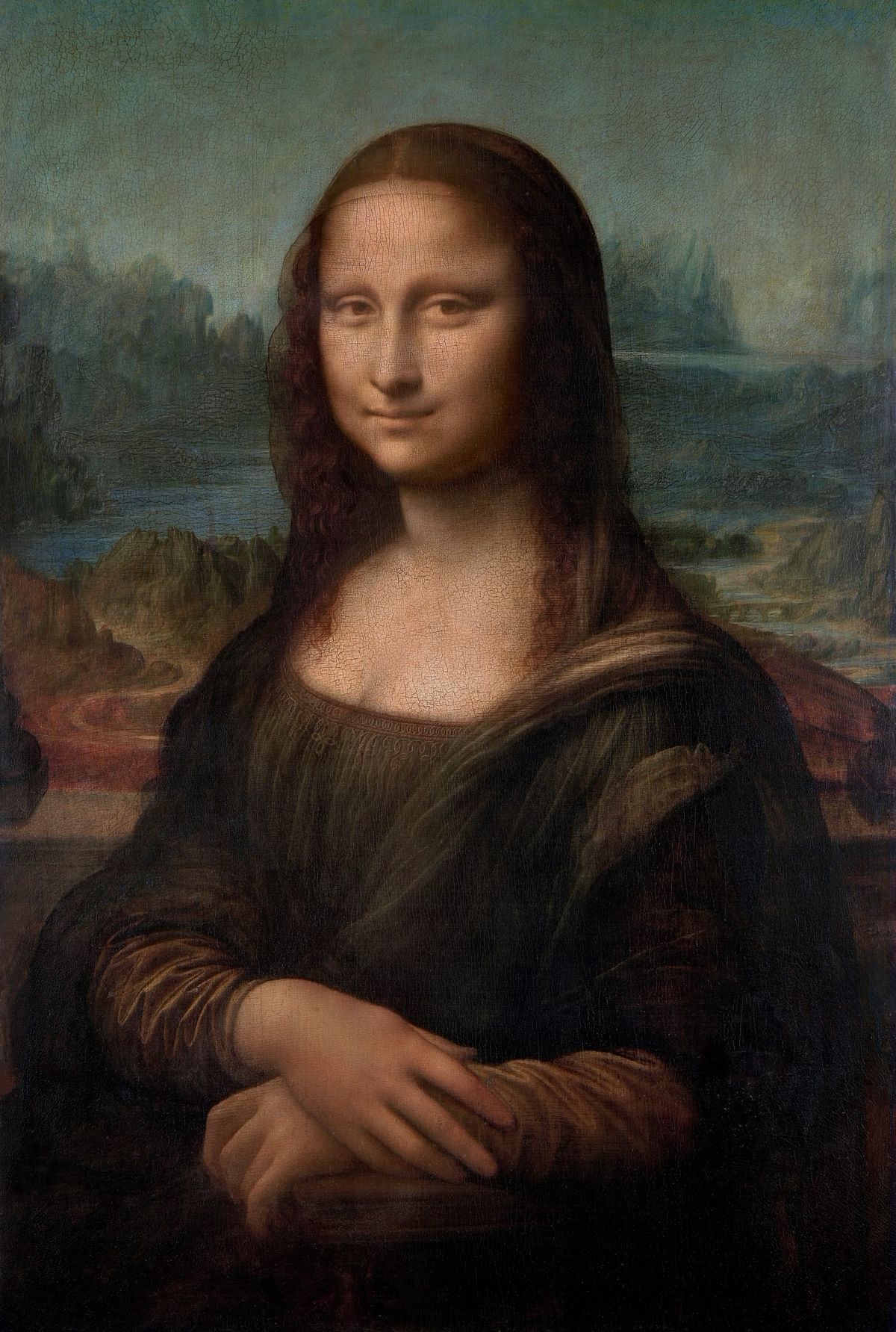
이 작품은 르네상스 시기 천재 거장 레오나르도 다 빈치(Leonardo da Vinci, 1452–1519)가 1503–1519년경 완성한 인류 역사상 가장 유명한 초상화 <모나리자 (Mona Lisa / La Gioconda)>로, 현재 프랑스 파리의 루브르 박물관(Musée du Louvre, Paris)에 소장되어 있습니다. 어두운 풍경을 배경으로 다소곳이 손을 모은 채 신비로운 미소를 머금은 여인의 자태를 고전적 품격으로 담아낸 수작입니다.
미술사학계의 도상학적 분석에 따르면, 여인이 짓고 있는 모호한 미소와 눈썹이 보이지 않는 얼굴은 당시 르네상스 시기 이상적 미학의 정수이자 내면의 영적인 우아함을 상징합니다. 배경에 배치된 지평선의 불일치와 미세하게 왜곡된 좌우 풍경은 스푸마토(Sfumato) 명암법과 대기원근법을 극대화하여 인물과 자연이 하나로 융합되는 우주적 조화를 표현합니다. 의복의 정교한 주름과 교차된 두 손의 부드러운 인체 곡선은 절제된 고전주의 미학의 완성을 명백히 보여줍니다.
이 화폭에는 대중에게 잘 알려지지 않은 대담하고 흥미로운 비하인드 스토리와 역사적 평가가 깃들어 있습니다. 흔히 <모나리자>는 완성작으로 알려져 있으나, 정밀 광학 스캔 및 적외선 레이어 분석 연구에 따르면 레오나르도는 1503년 피렌체의 비단 상인 프란체스코 델 조콘도의 의뢰를 받아 작업을 시작한 후 사망 직전까지 무려 16년이 넘도록 기법을 덧칠하며 정교화 작업을 이어갔습니다. 더욱이 이 작품이 전 세계적 대중성을 얻은 결정적 계기는 미술사적 가치뿐만 아니라 1911년 루브르 박물관의 이탈리아 출신 작업자 빈첸초 페루자에 의해 벌어진 희대의 도난 사건이었습니다. 도난 기간 동안 언론을 통해 수없이 언급되며 단순한 고전 명화를 넘어 글로벌한 pop icon(팝 아이콘)으로 도약했습니다. 후대 학자들은 이 작품을 미학적 완성도뿐 아니라 거장의 집요한 예술적 실험과 현대 매체사가 결합된 서양 미술사의 최고 유산으로 평가합니다.
이 그림을 들여다보고 있으면 보는 이의 무의식 속에서 은은한 삼각형 시선 순환 구조가 완벽하게 작동합니다. 신비롭게 비껴가는 여인의 눈빛과 입꼬리의 미소에 시선이 머문 뒤, 오른쪽 어깨를 타고 흘러내려 교차된 두 손의 따뜻한 감촉으로 내려앉습니다. 이후 배경 좌우의 불일치하는 아득한 바위산과 강줄기의 라인을 타고 다시 그녀의 그윽한 눈빛으로 피어오르는 유연한 시선 흐름을 완성합니다. 이러한 수평·수직적 시선 유도는 대뇌 시각 인지 영역에서 찰나의 긴장감을 해쇄하고, 가슴속 깊은 곳에서 밀려오는 포근한 온기와 고요한 내면의 안식을 선사합니다.
This masterpiece, titled Mona Lisa (La Gioconda), was created between 1503 and 1519 by Renaissance genius Leonardo da Vinci (1452–1519) and is permanently preserved in the Musée du Louvre in Paris, France. Depicting a serene woman with an enigmatic smile seated against a distant, winding landscape, the portrait stands as the most iconic monument in the history of art.
Art historical scholarship highlights the profound iconographic architecture of her subtle expression and posture. The imperceptible transitions of light and shadow around her eyes and mouth, achieved through Leonardo's signature sfumato technique, embody the Renaissance ideal of inner spiritual harmony. The intentional misalignment of the background horizon creates a subtle optical dynamic, unifying the human sitter with the cosmic rhythm of nature, while her folded hands project deep composure and timeless grace.
Lesser-known historical backstories and fascinating modern evaluations illuminate the legacy of this iconic panel. While widely regarded as a finished masterpiece, multi-spectral infrared analysis reveals that Leonardo continuously altered and refined the underlying composition across nearly sixteen years, never delivering it to its original patron, the Florentine merchant Francesco del Giocondo. Furthermore, its legendary global status was significantly cemented by its sensational theft from the Louvre in 1911 by Vincenzo Peruggia, which triggered an unprecedented international media frenzy. Modern art historians revere this panel not only as the pinnacle of Renaissance painting technique but also as a cultural phenomenon bridging fine art and global pop iconography.
Engaging with this enigmatic portrait gently activates a harmonious subconscious visual rhythm. The viewer’s gaze originates at her captivating eyes and subtle smile, descends along the soft contour of her mantle toward her gently rested hands, and ascends past the misty, asymmetrical background landscape back to her face. This fluid, triangular visual loop dissolves inner cognitive friction, inviting the mind into a quiet sanctuary of serene elegance and contemplation.
본 리뷰에서 작품을 제외한 컨텐츠의 저작권은 팔렛트제주에 있습니다.
"퍼블릭도메인 고전명화"를 제외한 모든 창작 콘텐츠는 저작권법 제4조 및 제10조에 의거하여 보호됩니다. 무단 도용시 저작권법 제136조(벌칙)에 의거, 당사의 사전 서면 승인 없는 저작권 침해 행위를 금지합니다.