목욕하는 밧세바(The Toilet of Bathsheba)
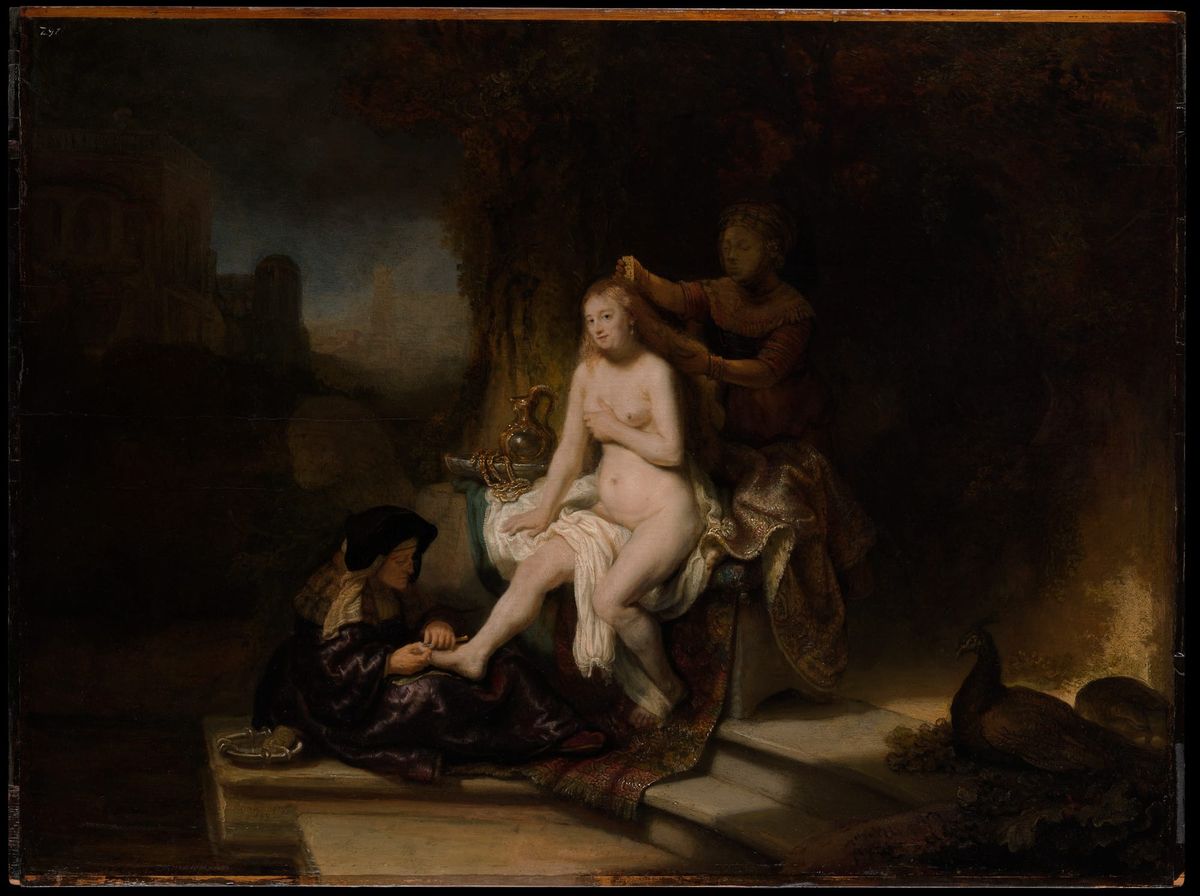
목욕하는 밧세바 - The Toilet of Bathsheba
1643년 17세기 네덜란드 황금기를 대표하는 거장 렘브란트 반 레인(Rembrandt van Rijn)이 제작한 유화 작품 《목욕하는 밧세바》는 패널에 유채로 그려진 종교 역사화로, 현재 미국 뉴욕 메트로폴리탄 미술관(The Metropolitan Museum of Art)에 소장되어 있으며 실제 크기는 약 57.2 × 76.2 cm입니다.
이 화면은 구약성경 사무엘하에 등장하는 밧세바의 목욕 장면을 렘브란트 특유의 극적인 빛과 은은한 색채 조화로 포착해 낸 걸작입니다. 화가는 목욕을 마친 후 하녀들에게 발톱을 정돈받고 머리를 매만지는 밧세바의 신체를 눈부신 빛으로 부각시켰으며, 그녀의 부드러운 피부 질감과 빛나는 금발, 어두운 배경 속 이국적인 기물들의 단정함을 섬세하게 재현해 냈습니다.
작품 속에는 성서 속 욕망과 운명의 비극을 감각적으로 담아낸 비하인드 스토리가 흐릅니다. 다윗왕은 자신의 궁전 옥상에서 목욕하는 밧세바를 매혹적인 시선으로 바라본 뒤 그녀를 끌어들였고, 이로 인해 밧세바의 남편 우리아를 죽음으로 몰아넣는 비극적 계기를 마련하게 됩니다. 렘브란트는 시선에 의한 관능성에 치우치기보다, 다가올 운명의 무게를 예감하는 듯한 밧세바의 조용하고 아련한 표정을 조명하여 성서 속 서사에 깊은 인문학적 성찰을 부여했습니다.
후대 평단과 관객들은 이 작품을 렘브란트가 빛을 다루는 명암법과 여성 누드의 정숙한 우아함을 극치로 이끌어낸 수작으로 평가합니다. 밧세바의 신체에 집중되는 은은한 연분홍빛 조명과 배경의 어두운 풍경, 그리고 오른쪽 하단에 배치된 공작새와 화려한 보석 기물들은 극적인 분위기를 완성하며 시대를 초월한 감동을 선사합니다.
이 그림을 마주하는 관람객의 무의식적 시선은 화면 중심에서 가장 눈부신 빛을 받으며 우아하게 앉아 있는 밧세바의 밝은 신체와 온화한 얼굴로 가장 먼저 끌려갑니다. 다정한 표정으로 정면을 응시하는 그녀의 정숙한 태도는 관람객의 마음에 묵직한 시각적 중심과 정적인 평온함을 선사합니다.
이어 시선은 밧세바의 머리를 정성스럽게 빗겨주는 뒤편 하녀의 손길과, 발밑에 앉아 발톱을 정돈하는 노모 형태 하녀의 차분한 포즈로 부드럽게 이동합니다. 섬세한 시중의 동작들과 밧세바 옆에 놓인 황금빛 항아리 및 장신구의 은은한 반사광은 화면 전체에 시각적 풍성함과 공간적 안정감을 더해줍니다.
마지막으로 시선은 우측 하단 어둠 속에 조용히 앉아 있는 공작새의 윤곽과, 좌측 배경 뒤편으로 아득하게 퍼지는 어두운 궁전 건축물의 여백으로 낙하하여 정착합니다. 이러한 무의식적 시선의 흐름은 운명의 소용돌이 속 고요한 순간으로 감상자를 자연스럽게 인도하며, 마음에 닿는 깊고 정갈한 정서적 여운을 오래도록 남깁니다.
In 1643, Rembrandt van Rijn, one of the paramount masters of the Dutch Golden Age, created the luminous oil painting titled "The Toilet of Bathsheba." Preserved in the renowned Metropolitan Museum of Art in New York, this original panel measures approximately 57.2 × 76.2 cm. This artwork finely captures the quiet elegance and tragic undertones of the Old Testament narrative through a theatrical application of chiaroscuro.
The painting visually manifests Bathsheba attended by her servants following her bath, her pale form brilliantly illuminated against a dark, atmospheric backdrop. Historical context highlights the story from the Second Book of Samuel, where King David spots Bathsheba from his palace roof, initiating a series of fatal events for her husband Uriah. Rather than painting a scene of overt seduction, Rembrandt depicted Bathsheba with a quiet, contemplative dignity, conveying an inner awareness of impending destiny.
Art historians and critics continuously extol this masterwork for its poetic handling of light and refined narrative subtlety, celebrating Rembrandt's ability to render glowing skin tones and intricate fabrics. The contrast between Bathsheba's radiant figure and the shadowed landscape endows the scene with profound emotional resonance and stately composure.
The moment an observer encounters this artwork, their gaze is subconsciously drawn straight to the brightly lit figure and gentle countenance of Bathsheba seated at the center. Her calm, meditative presence immediately diffuses tension, instilling a comforting sense of serenity and emotional poise.
Next, the eye glides smoothly toward the attendants tending to her hair and feet, tracing the rich textures of the jeweled vessels and carpets resting beside her. The meticulous rendering of her personal adornments lends physical realism and narrative richness to the domestic setting.
Finally, the viewer's gaze drifts toward the peacock resting in the lower right shadows before coming to rest upon the distant, shadowy architecture in the background. This natural visual journey guides the spectator into a state of quiet reflection, leaving a lasting impression of grace, narrative depth, and timeless peace.
본 리뷰에서 작품을 제외한 컨텐츠의 저작권은 팔렛트제주에 있습니다.
"퍼블릭도메인 고전명화"를 제외한 모든 창작 콘텐츠는 저작권법 제4조 및 제10조에 의거하여 보호됩니다. 무단 도용시 저작권법 제136조(벌칙)에 의거, 당사의 사전 서면 승인 없는 저작권 침해 행위를 금지합니다.