밀짚모자를 쓴 자화상 Self-Portrait with Straw Hat
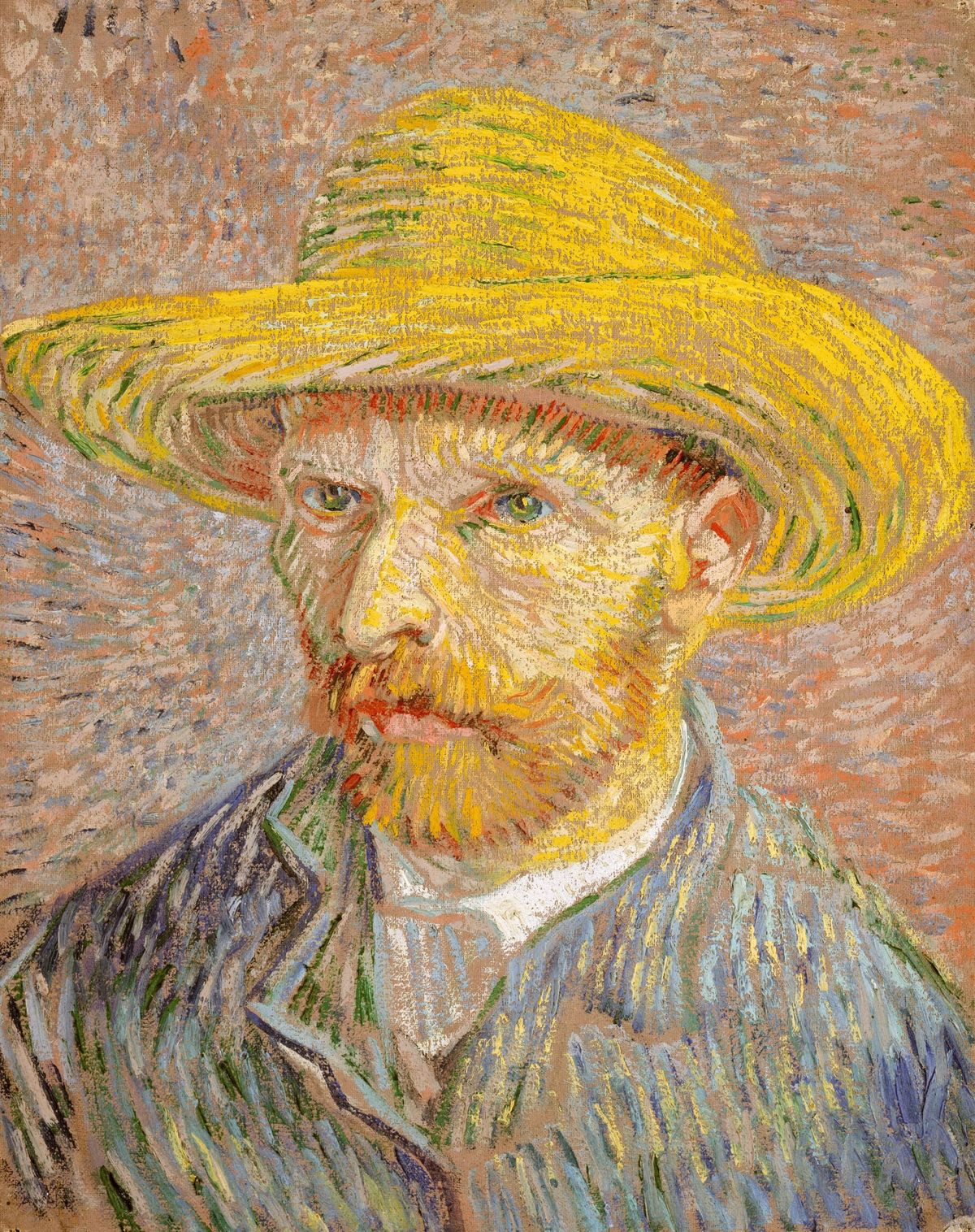
이 작품은 네덜란드의 후기 인상주의 거장 빈센트 반 고흐가 1887년 여름 프랑스 파리 체류 시기에 제작한 유화 작품입니다. 공식 소장품 등록번호는 F469이며, 마르지 않은 풀 또는 판지 위에 유채로 그려진 실제 실측 규격은 41.7 x 32.7 cm입니다. 현재 이 작품은 네덜란드 암스테르담에 위치한 반 고흐 미술관에 공식적으로 소장되어 있으며, 파리 시기 고흐가 점묘파와 인상주의의 색채 실험을 어떻게 자신의 것으로 소화했는지 보여주는 대표적인 자화상입니다.
작가의 고뇌와 창작 비하인드
파리 체류 시절 반 고흐는 가난과 고립 속에서도 당대 최신 미술 사조인 인상주의와 신인상주의의 색채 분할 기법을 적극적으로 연구하며 자신의 화풍을 혁신적으로 변화시키고 있었습니다. 당시 그는 경제적 여유가 없어 비싼 모델을 쓰는 대신 스스로를 모델 삼아 수많은 자화상을 그리며 빛과 색채의 상호작용을 실험했습니다.
작품 전경에는 노란색과 초록색의 짧은 터치로 정교하게 엮여 빛나는 밀짚모자를 쓴 고흐의 얼굴이 중심을 차지하고 있습니다. 그의 얼굴은 붉은색과 초록색, 노란색의 점묘식 붓터치가 촘촘하게 겹쳐져 강렬한 입체감을 자아내며, 깊고 맑은 녹색 눈동자는 외부를 향한 날카롭고도 예민한 시선을 품고 있습니다.
중경에는 푸른색과 보라색의 사선 터치로 거칠게 표현된 작업복 깃과 어깨가 단단한 구조감을 형성하며 화면의 무게중심을 잡아줍니다. 배경에는 붉은빛과 갈색빛의 짧은 점들이 사방으로 방사 형태로 퍼져 나가며 마치 머리 위에서 빛이 뿜어져 나오는 듯한 시각적 진동을 일으켜 파리 시절의 치열한 예술적 열정을 대변합니다.
무의식 속 시선 및 심리 흐름
관람객의 시선은 가장 먼저 생동감 넘치는 노란색 밀짚모자와 강렬한 눈빛을 품은 고흐의 얼굴로 향하며, 정면을 응시하는 그의 예리한 시선 속에서 묘한 긴장감을 느끼게 됩니다. 이어지는 시선은 아래로 이동하여 푸른빛과 보라색이 교차하는 거친 옷깃의 중경으로 닿으며, 화가로서 끊임없이 자신을 채찍질하던 치열한 일상의 무게를 체감하게 됩니다.
시선이 다시 배경의 사방으로 퍼져 나가는 방사형의 점묘 터치로 확장될 때, 공간 전체를 감싸는 미세한 대기의 진동과 작가의 내면에서 요동치는 예술적 에너지를 온몸으로 마주하게 됩니다. 이 일련의 시선 흐름은 단순한 외모의 재현을 넘어, 거장의 내면세계로 깊숙이 빨려 들어가는 듯한 고도의 심리적 몰입을 선사합니다.
미술계의 평가 및 조형미
미술사학계와 평단은 본 작품을 고흐가 파리 시기에 도달한 색채 실험의 결정체이자, 전통적인 초상화의 틀을 깨고 주관적 감정을 극대화한 현대 회화의 선구적 성과로 높이 평가합니다. 캔버스가 아닌 판지 위에 두껍고 짧은 붓터치를 촘촘히 쌓아 올린 기법은 물감 자체의 질료적 가치를 높이며, 화면 전체에 눈부신 광채를 부여합니다.
보색 관계인 적록 색채의 대담한 병치는 시각적 생동감을 극대화하고, 인물의 윤곽을 해체하면서도 에너지를 응집시키는 조형적 완성도를 보여줍니다. 제한된 조건 속에서도 빛과 색채의 마법을 창조해낸 이 작품은, 예술을 향한 영원한 열정과 불멸의 영혼을 증명하는 찬란한 유산으로 남겨져 있습니다.
Self-Portrait with Straw Hat
Executed in the summer of 1887 during his stay in Paris, this oil painting is a seminal self-portrait by the Dutch Post-Impressionist master Vincent van Gogh. Officially cataloged under inventory number F469, the work is rendered in oil on pasteboard, measuring 41.7 x 32.7 cm. Currently housed in the permanent collection of the Van Gogh Museum in Amsterdam, this piece brilliantly exemplifies how Van Gogh assimilated the color theories of Impressionism and Neo-Impressionism during his formative Paris period.
The Artist's Turmoil and Creative Background
During his time in Paris, amidst financial strain and isolation, Van Gogh intensely studied the divisionist techniques of contemporary avant-garde movements, radically transforming his artistic vocabulary. Lacking the funds to hire professional models, he turned to his own image, producing numerous self-portraits to experiment with the dynamic interplay of light and color.
In the foreground, Van Gogh's face, surmounted by a vibrantly textured straw hat composed of brisk yellow and green strokes, commands the composition. His countenance is built through dense, stippled brushstrokes of red, green, and yellow that create a striking volumetric presence, while his clear, green eyes project an acute and penetrating gaze outward.
In the middle distance, his jacket collar and shoulders, rendered in rhythmic slanting strokes of blue and violet, establish a firm structural weight. The background radiates outward with short, stippled marks of red and brown that create a halo-like vibration of light, giving visual form to the artist's intense creative fervor in Paris.
Psychological Flow and the Unconscious Gaze
The viewer's gaze is immediately drawn to the luminous straw hat and the intense, piercing eyes of the artist, establishing an instant psychological connection and palpable tension. The eye then migrates downward to the textured blue and violet garment of the middle ground, grounding the portrait in the rugged reality of the artist's daily toil.
As the gaze extends outward into the radiant, stippled background, the observer is enveloped in a vibrating field of atmospheric energy that mirrors the internal fervor of the creator. This deliberate progression pulls the viewer past mere physical representation into an intimate, empathetic communion with the artist's psyche.
Critical Acclaim and Formal Analysis
Art historians and critics widely celebrate this painting as a high-water mark of Van Gogh's chromatic experimentation in Paris, recognizing it as a pioneering modern work that shatters traditional portraiture conventions to amplify subjective emotion. The application of dense, short brushstrokes upon pasteboard emphasizes the tactile materiality of the medium while infusing the entire surface with a brilliant, shimmering luminosity.
The daring juxtaposition of complementary red and green hues maximizes visual vibrancy, demonstrating a masterclass in dissolving and re-aggregating form through pure color. Transforming everyday constraints into a dazzling triumph of light and pigment, this immortal work endures as a profound testament to Van Gogh's relentless artistic passion.
본 컨텐트의 저작권은 팔렛트제주에 있습니다. 허가없는 무단전제를 금지합니다.
Copyright © Palette Jeju. All rights reserved. Unauthorized reproduction or redistribution is strictly prohibited.