밀밭 A Wheatfield with a Wheat Stook
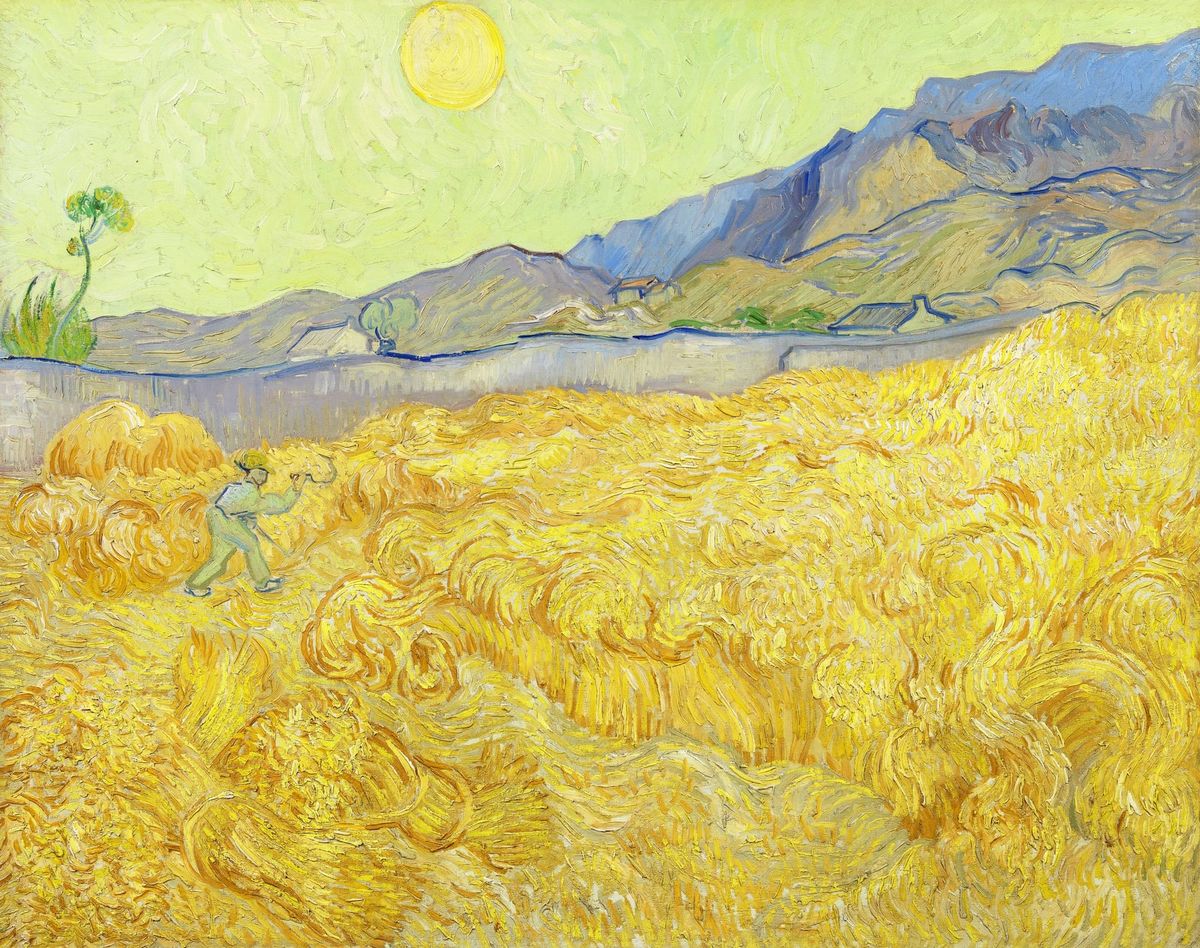
이 작품은 네덜란드의 후기 인상주의 거장 빈센트 반 고흐가 1889년 6월 프랑스 생레미드프로방스의 생폴 요양원에 머물던 시기에 제작한 유화입니다. 공식 소장품 등록번호는 F611이며, 캔버스 위에 유채로 그려진 실제 실측 규격은 50 x 64 cm입니다. 현재 이 작품은 미국 뉴욕을 대표하는 메트로폴리탄 미술관에 소장되어 있으며, 고흐가 프로방스의 강렬한 태양 아래에서 마주한 자연의 생명력을 담아낸 역작으로 인정받고 있습니다.
작가의 고뇌와 창작 비하인드
생레미 요양원 시절 반 고흐는 발작과 두려움이라는 극심한 내면의 고통 속에서도 창살 너머로 펼쳐지는 들판을 바라보며 예술을 향한 희망을 놓지 않았습니다. 당시 그는 동생 테오에게 보낸 편지를 통해 뜨거운 태양이 내리쬐는 들판에서 일하는 농부의 모습과 자연의 순환에 깊은 감명을 받았다고 토로했습니다.
화면 전경을 채운 황금빛 밀단들은 거친 바다의 파도처럼 너울거리며 농부의 고된 노동과 대지의 풍요로움을 동시에 상징합니다. 왼쪽 구석에는 낫을 든 농부가 묵묵히 일하고 있고, 그 뒤로 밀밭을 가로지르는 나지막한 돌담이 중경의 풍경과 경계를 이룹니다. 멀리 배경에는 웅장한 프로방스의 산봉우리들이 솟아 있고, 그 위로 모든 것을 녹아내릴 듯 이글거리는 태양이 연두색과 레몬빛 하늘에서 강렬한 에너지를 뿜어냅니다.
무의식 속 시선 및 심리 흐름
관람객의 시선은 가장 먼저 화면 전체를 뒤덮은 전경의 거친 밀밭으로 빨려 들어가며, 소용돌이치는 붓터치 속에서 대자연의 압도적인 생명력을 체감하게 됩니다. 이어지는 시선은 화면 왼쪽 구석에서 노동에 몰두하는 농부에게 도달하며, 거대한 자연의 기운 앞에서 홀로 맞서는 인간의 연약함과 꺾이지 않는 삶의 의지를 마주하게 됩니다.
시선을 돌담 너머로 올리면 아늑한 초가집들과 평온한 중경의 대지가 펼쳐져 마음의 안정을 찾게 되지만, 곧이어 화면을 압도하는 웅장한 산세와 이글거리는 노란 하늘로 시선이 확장됩니다. 이 마지막 단계에서 관람객은 작가가 품었던 격정적인 열정과 치열한 예술적 고뇌를 고스란히 경험하며 깊은 몰입감을 느끼게 됩니다.
미술계의 평가 및 조형미
미술사학계와 평단은 본 작품을 고흐가 생레미 시기에 도달한 회화적 정점 중 하나로 평가하며, 주관적 감정이 자연 풍경과 완벽하게 융합된 표현주의 미술의 선구적 성과로 분석합니다. 튜브에서 바로 짜낸 듯 두껍게 덧바른 임파스토 기법의 붓터치는 물감의 입체감을 극대화하여, 바람에 흔들리는 밀밭의 촉각적 실재감과 뜨거운 태양의 열기를 시각적으로 전달합니다.
화면 전체를 지배하는 노란색과 보라색의 대담한 보색 대비는 시각적 긴장을 유발하고, 전경과 중경, 원경의 조화는 평면의 캔버스 위에 놀라운 공간감과 서사적 깊이를 부여합니다. 자연의 외양을 재현하는 것을 넘어 자신이 느끼는 감정의 진동을 온몸으로 기록한 이 작품은, 오늘날에도 관람객의 마음을 뒤흔드는 영원한 예술적 울림을 선사합니다.
A Wheatfield with a Wheat Stook
This painting, executed in June 1889, is a seminal masterpiece created by the Dutch Post-Impressionist master Vincent van Gogh during his confinement at the Saint-Paul Asylum in Saint-Rémy-de-Provence, France. Officially cataloged under the inventory number F611, the oil painting on canvas measures 50 x 64 cm and is currently housed in the permanent collection of The Metropolitan Museum of Art in New York.
The Artist's Turmoil and Creative Background
During his turbulent months at the Saint-Rémy asylum, amidst crippling anxiety and despair, Van Gogh sought profound solace in the sweeping landscapes visible through his barred window. In his letters to his brother Theo, he frequently reflected on the striking beauty of the sun-scorched fields and the enduring rhythm of agricultural life, which provided him with a vital psychological anchor.
The foreground of the composition is dominated by massive stooks of harvested wheat that undulate like golden waves, simultaneously evoking the rich abundance of the earth and backbreaking labor. On the far left, a lone peasant figure clutching a sickle is caught in active toil, separated from the middle distance by a low stone wall. Beyond this barrier, rugged mountain peaks rise against the horizon in hues of purple and blue, while an enormous, searing sun commands the pale yellow-green sky, radiating palpable heat.
Psychological Flow and the Unconscious Gaze
The viewer's gaze is initially captured by the turbulent sea of golden wheat in the foreground, where Van Gogh's swirling brushstrokes induce a powerful sense of kinetic energy and raw natural vitality. The eye then migrates toward the left to settle upon the modest, bending figure of the laborer, prompting a reflective pause on human resilience in the face of overwhelming cosmic forces.
As the gaze lifts beyond the stone wall to the serene middle ground and the monumental mountain range, a momentary sense of visual calm washes over the observer. This leads upward into the blazing, luminous sky, forcing a direct confrontation with the artist's inner emotional storm and passionate psychological intensity.
Critical Acclaim and Formal Analysis
Art historians and critics widely celebrate this painting as a high-water mark of Van Gogh's Saint-Rémy period, recognizing it as a pioneering expressionist achievement where subjective emotion and landscape merge. The thick application of paint through his vigorous impasto technique emphasizes the material quality of the medium, allowing the viewer to physically sense the texture of the wheat and the suffocating warmth.
The bold orchestration of complementary colors, predominantly vibrant yellows contrasted against cool blues and greens, creates a dynamic visual tension that animates the entire surface. Through the masterful interplay of a textured foreground, a tranquil middle distance, and a monumental background, Van Gogh constructs a profound sense of spatial depth and narrative rhythm, transforming an ordinary rural harvest into an immortal icon.
본 컨텐트의 저작권은 팔렛트제주에 있습니다. 허가없는 무단전제를 금지합니다.
Copyright © Palette Jeju. All rights reserved. Unauthorized reproduction or redistribution is strictly prohibited.