메마른 대지를 일구는 농부의 굽은 등과 묵직한 삽자루, 과수원에서 땅을 파는 사람 Digger in an Orchard
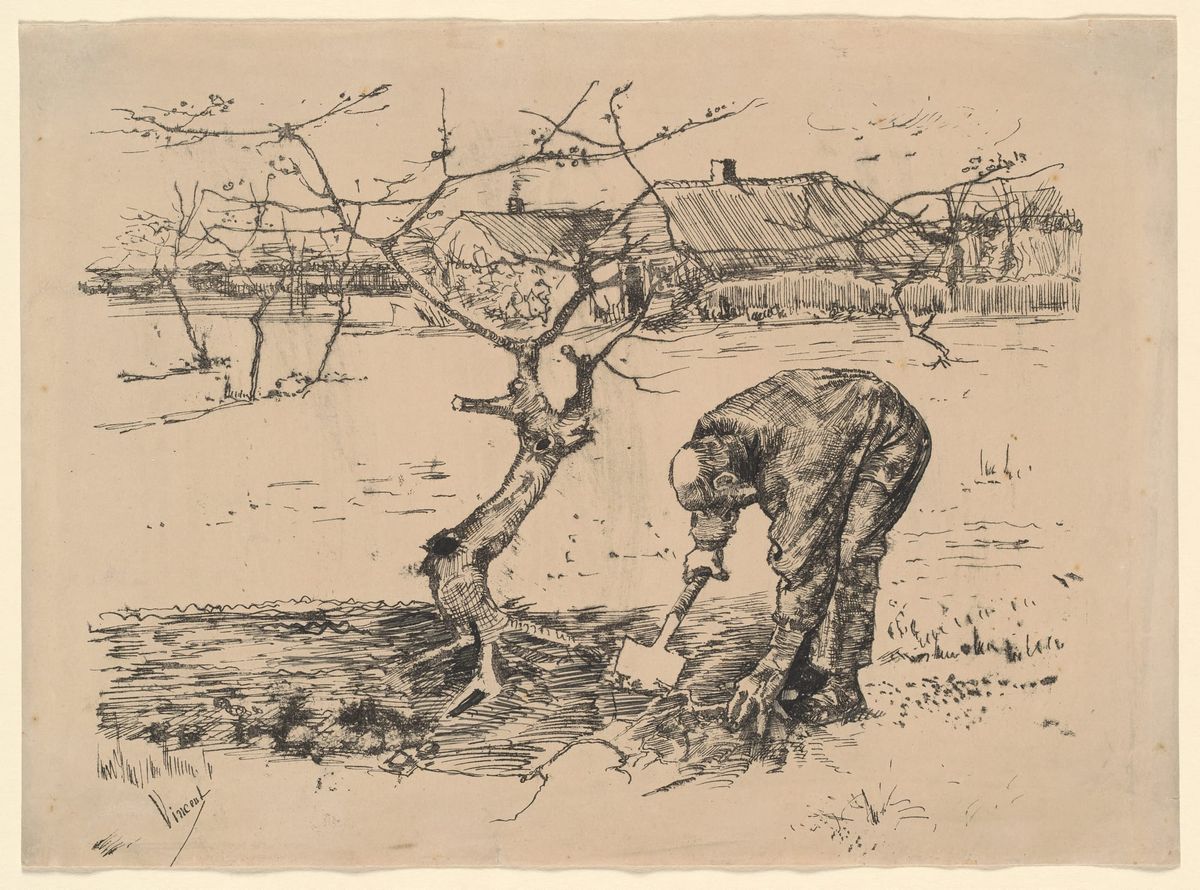
네덜란드 출신의 후기 인상주의 거장 빈센트 반 고흐(Vincent van Gogh, 1853–1890)가 1883년 10월에 네덜란드 드렌터(Drenthe) 또는 뉘넌(Nuenen) 시절을 준비하며 종이에 펜과 잉크로 완성한 드로잉 과수원에서 땅을 파는 사람(Digger in an Orchard, 네덜란드어: Spitspit in een boomgaard)은 20.4 cm × 26.6 cm 크기의 종이에 갈색 잉크와 펜으로 정교하게 그린 대표적인 초기 노동 소묘 명작입니다. 현재 미국 뉴욕의 메트로폴리탄 미술관(The Metropolitan Museum of Art, New York)에 소장되어 있습니다.
동생 테오의 호된 꾸지람과 빵 부스러기를 건네며 붙잡은 노인 모델
1880년대 초반 반 고흐는 가난한 농촌 마을에 머물며 흙을 파고 감자를 심는 시골 농부들의 거친 손발을 스케치북에 담는 일에 완전히 미쳐 있었습니다. 당시 화상으로 일하던 동생 테오는 형에게 파리의 부유한 귀부인들이 좋아할 만한 화려하고 우아한 도시 풍경을 그려야 그림이 팔린다며 편지로 호된 충고를 보냈습니다. 하지만 반 고흐는 비단옷을 입은 가짜 귀족들보다 땀방울이 밴 흙투성이 작업복을 입은 농부들이야말로 세상에서 가장 진실하고 성스러운 존재라며 동생의 제안을 단칼에 거절했습니다.
이 드로잉을 그릴 당시 마을 텃밭에서는 유쾌하면서도 눈물겨운 실랑이가 벌어졌습니다. 반 고흐는 척박한 땅을 파던 대머리 노인 농부의 굽은 허리와 단단한 팔뚝에 반해, 그 자리에서 노인을 붙잡고 제발 십 분만 그대로 멈춰 서서 포즈를 취해달라고 애원했습니다. 당장 해가 지기 전에 밭일을 끝내야 했던 노인이 버럭 화를 내며 가버리려 하자, 반 고흐는 주머니를 뒤져 자신이 점심으로 먹으려던 빵 한 덩이와 몇 닢 안 되는 동전을 노인의 손에 쥐여주며 매달렸습니다.
노인이 마지못해 삽을 땅에 박고 허리를 굽히자, 화가는 차가운 바람에 잉크병이 넘어질까 봐 한 손으로 잉크병을 꼭 쥐고 갈대 펜을 맹렬한 속도로 놀려대며 종이를 긁어내려 갔습니다. 화면 속에서 앙상하게 뒤틀린 과수원 고목 아래 묵묵히 삽질을 이어가는 노인의 굽은 등과 거친 손마디는, 가난과 굶주림 속에서도 인간 노동의 숭고한 가치를 기록하려 했던 젊은 반 고흐의 눈물겨운 진심이 잉크 자국마다 짙게 배어 있는 결과물입니다.
묵묵히 굽힌 농부의 등에서 날카로운 삽날로, 시선의 심리적 여정
그림을 마주하는 순간 관람객의 무의식적 시선은 화면 오른쪽 아래에서 대지를 향해 깊게 허리를 숙이고 있는 늙은 농부의 둥근 등과 팽팽하게 당겨진 작업복의 굵은 펜 선으로 가장 먼저 빨려 들어갑니다. 정수리가 드러난 머리를 숙인 채 온몸의 무게를 실어 땅을 파내려 가는 노인의 묵직한 자세는 보는 이에게 깊은 숙연함과 성실한 노동의 무게를 선사합니다.
이어 시선은 노인의 억센 두 손이 굳게 쥐고 있는 나무 삽자루와, 단단한 흙바닥을 깊숙이 파고든 네모난 쇠 삽날로 이동합니다. 파헤쳐진 검은 흙더미와 흩뿌려진 돌멩이들의 거친 질감을 확인하는 순간, 관람객은 종이를 사각사각 긁어낸 잉크 선의 촉감과 함께 대지를 일구는 농부의 가쁜 숨소리를 온몸으로 체감하게 됩니다.
마지막으로 시선은 노인의 바로 곁에서 고뇌하듯 굵은 줄기를 비틀며 서 있는 과수원의 앙상한 과일나무를 지나, 저 멀리 완만한 지평선 위에 아늑하게 자리 잡은 초가지붕 농가와 화면 왼쪽 아래 화가의 서명에 멈춥니다. 메마른 겨울 들판의 고즈넉한 정적과 묵묵히 삶의 터전을 일구는 한 인간의 끈질긴 생명력을 마주하며, 관람객은 화려한 겉치레를 벗어던진 소박한 삶의 숭고한 아름다움과 반 고흐가 바친 정직한 예술혼을 가슴 깊이 마주하게 됩니다.
초기 농민 사실주의와 잉크 소묘의 정점, 미술계의 평가
미술계는 과수원에서 땅을 파는 사람을 반 고흐가 훗날 감자 먹는 사람들과 같은 위대한 걸작을 완성하기 위해 인체의 비례와 노동의 무게를 집요하게 탐구했던 초기 소묘의 정수로 평가합니다.
단순한 습작의 차원을 넘어서, 펜 끝의 강약 조절만으로 농부의 거친 옷 주름과 대지의 흙먼지, 그리고 뒤틀린 나뭇가지의 유기적 생명력을 탁월한 공간감으로 구축했기 때문입니다. 화려한 유행에 굴복하지 않고 평생 가장 낮고 소외된 이들의 삶을 향해 따뜻한 시선을 던졌던 반 고흐의 이 귀중한 잉크 드로잉은, 오늘날까지도 거장의 진솔한 인간애를 증명하는 불멸의 명작으로 손꼽히고 있습니다.
The Resolute Rhythm of the Tilled Earth, Digger in an Orchard
Drawn in October 1883 in the Netherlands by the preeminent Dutch Post-Impressionist master Vincent van Gogh (1853–1890), Digger in an Orchard (Dutch: Spitter in een boomgaard) is a pen and brown ink drawing on paper measuring 20.4 cm × 26.6 cm (8.0 in × 10.5 in), preserved in the permanent collection of The Metropolitan Museum of Art in New York.
Theo's Admonitions and the Bread Crusts Offered to the Stubborn Laborer
During the early 1880s in rural Drenthe and Nuenen, Vincent van Gogh was utterly absorbed in capturing the calloused hands and weather-beaten postures of peasant laborers working the soil. His brother Theo, operating as an art dealer in Paris, frequently urged him to produce charming, elegant urban scenes that would appeal to bourgeois collectors. Van Gogh adamantly rejected this advice, asserting that poor field laborers in their soiled, worn fustian jackets possessed far greater moral purity and spiritual honesty than fashionable salon aristocrats.
A lively yet touching episode occurred in a village vegetable patch during the creation of this drawing. Van Gogh was captivated by the bowed spine and knotted muscular arms of an elderly, balding laborer digging stubborn soil. Rushing forward, the artist pleaded with the peasant to hold his position for just a few minutes. When the impatient laborer cursed and prepared to leave to finish his chores before dusk, Van Gogh reached into his coat, pressing his own lunch bread and his last remaining copper coins into the man's weathered palm to secure his patience.
As the laborer drove his spade into the dirt and bent his back, the master anchored his inkwell against the autumn wind with one hand, scratching the reed pen furiously across the paper to seize the contour of the figure. The gnarled fruit tree echoing the laborer's curved spine stands as an endearing testament to Van Gogh’s profound reverence for honest human toil amidst acute poverty.
Subconscious Trajectory of the Gaze: From Arched Spine to the Iron Spade
The observer's subconscious gaze is immediately seized by the lower-right quadrant, drawn to the heavily crosshatched form of the elderly peasant bending low over the earth. The thick ink strokes defining the tension of his coarse jacket and the bald, angled crown of his head establish an immediate atmosphere of physical weight and quiet dignity.
The visual path then shifts downward along the rigid wooden shaft clutched firmly in the laborer's hands, arriving at the rectangular iron spade biting into the soil. Observing the loose clods of earth and stippled texture of the ground, the viewer directly experiences the physical resistance of the terrain and the rhythmic cadence of agricultural toil.
Finally, the visual trajectory sweeps past the twisted, branching trunk of the young fruit tree standing beside the worker, ascending toward the modest, thatched-roof farmhouse silhouetted against the open horizon, before resting on the artist’s signature in the lower left. Taking in the harmonious resonance between the weathered laborer and the humble countryside, the spectator perceives the timeless nobility of rural existence and the profound empathy underlying Van Gogh’s early graphic work.
The Monument of Early Peasant Realism: Critical Legacy
Art historians revere Digger in an Orchard as an essential masterpiece of Van Gogh’s Dutch period, exemplifying his rigorous quest to master anatomical tension and graphic weight before executing monumental paintings like The Potato Eaters.
By utilizing expressive crosshatching, variable line weights, and atmospheric linear perspective, Van Gogh transformed a modest preparatory drawing into a profound visual hymn to human endurance. This intimate ink work endures as an inspiring testament to the artist's enduring humanism, celebrating the sacred dignity of labor and the timeless poetry of the earth.
본 컨텐트의 저작권은 팔렛트제주에 있습니다. 허가없는 무단전제를 금지합니다.
Copyright © Palette Jeju. All rights reserved. Unauthorized reproduction or redistribution is strictly prohibited.