멜랑콜리의 심연을 응시하는 의사의 초상, 가셰 박사의 초상 Portrait of Dr. Gachet
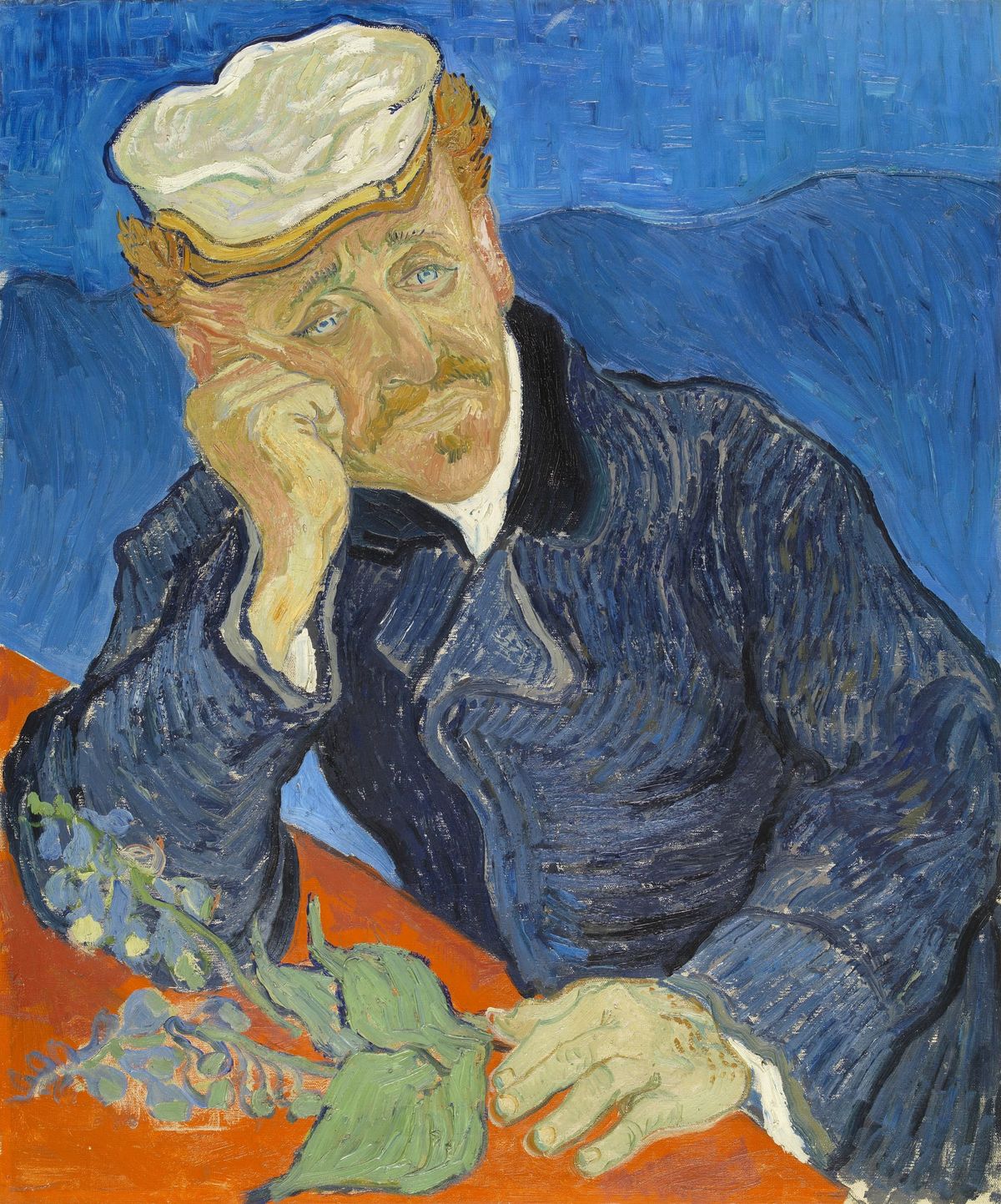
후기 인상주의의 거장 빈센트 반 고흐(Vincent van Gogh, 1853–1890)가 생애 마지막 해인 1890년 6월 프랑스 오베르 쉬르 우아즈(Auvers-sur-Oise)에서 완성한 유화 가셰 박사의 초상(Portrait of Dr. Gachet)의 두 번째 버전은 67.0 cm × 56.0 cm 크기의 캔버스에 유채로 그린 대표작으로, 현재 프랑스 파리의 오르세 미술관(Musée d'Orsay)에 영구 소장되어 있습니다.
오베르의 마지막 안식처에서 마주한 영혼의 거울
1890년 5월, 생레미 요양원을 퇴원한 고흐는 카미유 피사로의 추천을 받아 파리 근교 오베르에 정착하며 의사이자 예술 애호가였던 폴 가셰(Paul Gachet) 박사를 만났습니다. 동종요법 의사이자 정신의학에 관심이 많았던 가셰 박사는 스스로도 판화를 제작하던 열정적인 아마추어 예술가였으며, 세잔과 피사로 등 인상파 화가들의 든든한 후원자였습니다.
고흐는 가셰 박사를 처음 만났을 때 자신만큼이나 깊은 신경증과 우울에 시달리고 있다는 것을 직관적으로 간파했습니다. 동생 테오에게 보낸 편지에서 그는 "가셰 박사는 나보다 더 아파 보이거나, 적어도 나와 똑같이 앓고 있는 사람처럼 보인다. 우리는 서로에게서 완벽한 닮은꼴을 발견했다"고 적었습니다. 고흐는 박사의 책상 위에 심장 질환 치료제로 쓰이던 약초 디기탈리스(Digitalis) 꽃가지를 올려놓고, 턱을 괸 채 깊은 사색에 잠긴 그의 모습을 화폭에 담았습니다. 이 초상화는 단순한 의사의 기록화를 넘어, 19세기 말 근대인들이 앓고 있던 시대적 불안과 화가 자신의 내면적 고뇌를 가셰 박사라는 거울을 통해 투영한 영혼의 자화상이었습니다.
무의식 속 시선의 공간 유영과 침잠하는 심리적 파동
감상자의 시선은 화폭 상단에서 흰 모자 아래로 비스듬히 처진 채 허공을 응시하는 가셰 박사의 우수 어린 푸른 눈동자로 가장 먼저 이끌립니다. 오른쪽 뺨을 손에 기댄 채 굳어진 표정은 보는 이의 무의식 속에 즉각적인 멜랑콜리와 묵직한 정서적 침잠을 불러일으킵니다.
이어 시선은 얼굴의 붉은 붓 터치들을 타고 흘러내려, 온몸을 감싸며 거칠게 소용돌이치는 짙은 감청색 재킷의 굵은 붓 자국으로 이동합니다. 그 후 시선은 붉은 탁자 위로 내려와 박사의 처진 왼손과 그 곁에 놓인 청자줏빛 디기탈리스 꽃가지에 머물렀다가, 배경 전체를 파도처럼 휘감고 있는 짙푸른 언덕의 곡선으로 순환합니다. 붉은 테이블의 따스함과 인물을 지배하는 차가운 푸른색의 팽팽한 대비 속에서, 관람자는 의식하지 못하는 사이 인간 존재의 근원적 슬픔과 치유를 갈망하는 화가의 애틋한 시선에 깊이 동화됩니다.
근대 초상화의 새로운 지평과 영적 표현주의, 미술사적 평가
미술계는 《가셰 박사의 초상》을 르네상스 이래 이어져 온 전통 초상화의 관습을 완전히 타파하고 현대 심리 초상화의 새로운 장을 연 불멸의 걸작으로 평가합니다.
인물의 외형적 권위나 사회적 신분을 묘사하는 대신, 색채의 진동과 붓질의 율동만으로 근대인의 실존적 비애(Heartbroken expression)를 시각화했기 때문입니다. 고흐가 생전 "백 년 후의 사람들에게도 유령처럼 살아 숨 쉬는 감정의 초상을 남기고 싶다"고 열망했던 것처럼, 이 작품은 20세기 표현주의 초상화의 결정적 모태가 되어 현대 미술사에서 가장 숭고한 인간 탐구의 기록으로 빛나고 있습니다.
A Gaze into the Modern Abyss of Melancholy, Portrait of Dr. Gachet
Painted in June 1890 during his prolific final weeks in Auvers-sur-Oise by Vincent van Gogh (1853–1890), this second version of Portrait of Dr. Gachet is an oil on canvas measuring 67.0 cm × 56.0 cm (26.4 in × 22.0 in), preserved in the permanent collection of the Musée d'Orsay in Paris, France.
The Kinship of Ailment: An Intimate Mirror in Auvers
Arriving in Auvers-sur-Oise in May 1890 after his departure from the asylum in Saint-Rémy, Van Gogh placed his physical and psychological care in the hands of Dr. Paul Gachet. A homeopathic physician, free-thinking intellectual, and passionate amateur etcher, Gachet maintained close friendships with leading Impressionists like Cézanne and Pissarro, offering Vincent an immediately empathetic creative sanctuary.
Vincent swiftly perceived in Gachet a mirror of his own vulnerable psyche. Writing to his brother Theo, Vincent remarked that Gachet appeared to suffer just as severely from the modern nervous malady, describing the doctor as an elder brother in shared sorrow. Placing a sprig of foxglove (Digitalis)—a medicinal herb utilized as a cardiac stimulant—upon the table before him, Vincent portrayed the physician leaning heavily on his elbow in the classic posture of melancholy. Rather than producing a detached medical portrait, Vincent transformed Gachet into a profound emblem of the spiritual distress of the modern era.
Psychological Trajectory of the Gaze and Subconscious Descents
The observer’s subconscious gaze is immediately arrested by the heavy, sorrowful eyes gazing into the void beneath the tilted white cap. The languid inclination of the head and the weary cast of the facial contours establish an instantaneous psychological gravity, pulling the viewer into a state of profound contemplation.
From this introspective focal point, visual perception descends along the facial striations of ochre and vermilion into the turbulent, muscular waves of the dark ultramarine coat. The eye then tracks down to the warm terracotta tabletop, resting upon the relaxed hand and the soft blue blossoms of the medicinal foxglove before dispersing into the undulating blue hills of the background. Caught within the harmonic tension between the warm crimson ground and the cool, oceanic mantle enveloping the figure, the viewer subconsciously internalizes the quiet ache of mortal vulnerability and the shared yearning for solace.
Emancipated Psychology and the Modern Portrait: Critical Legacy
Art historians revere Portrait of Dr. Gachet as a revolutionary landmark in the history of portraiture, marking the definitive birth of modern psychological Expressionism.
By subordinating academic likeness to subjective emotional truth, Van Gogh utilized rhythmic impasto and saturated color harmonies to give physical form to what he famously termed the "heartbroken expression of our time." Fulfilling his own wish to create portraits that would appear like passionate apparitions to future generations, this masterpiece endures as one of the most poignant, emotionally transparent explorations of the human soul ever committed to canvas.
Copyright © Palette Jeju. All rights reserved. Unauthorized reproduction or redistribution is strictly prohibited.
본 컨텐트의 저작권은 팔렛트제주에 있습니다. 허가없는 무단전제를 금지합니다.