마를리 공원의 오솔길 - Allée in the Parc de Marly
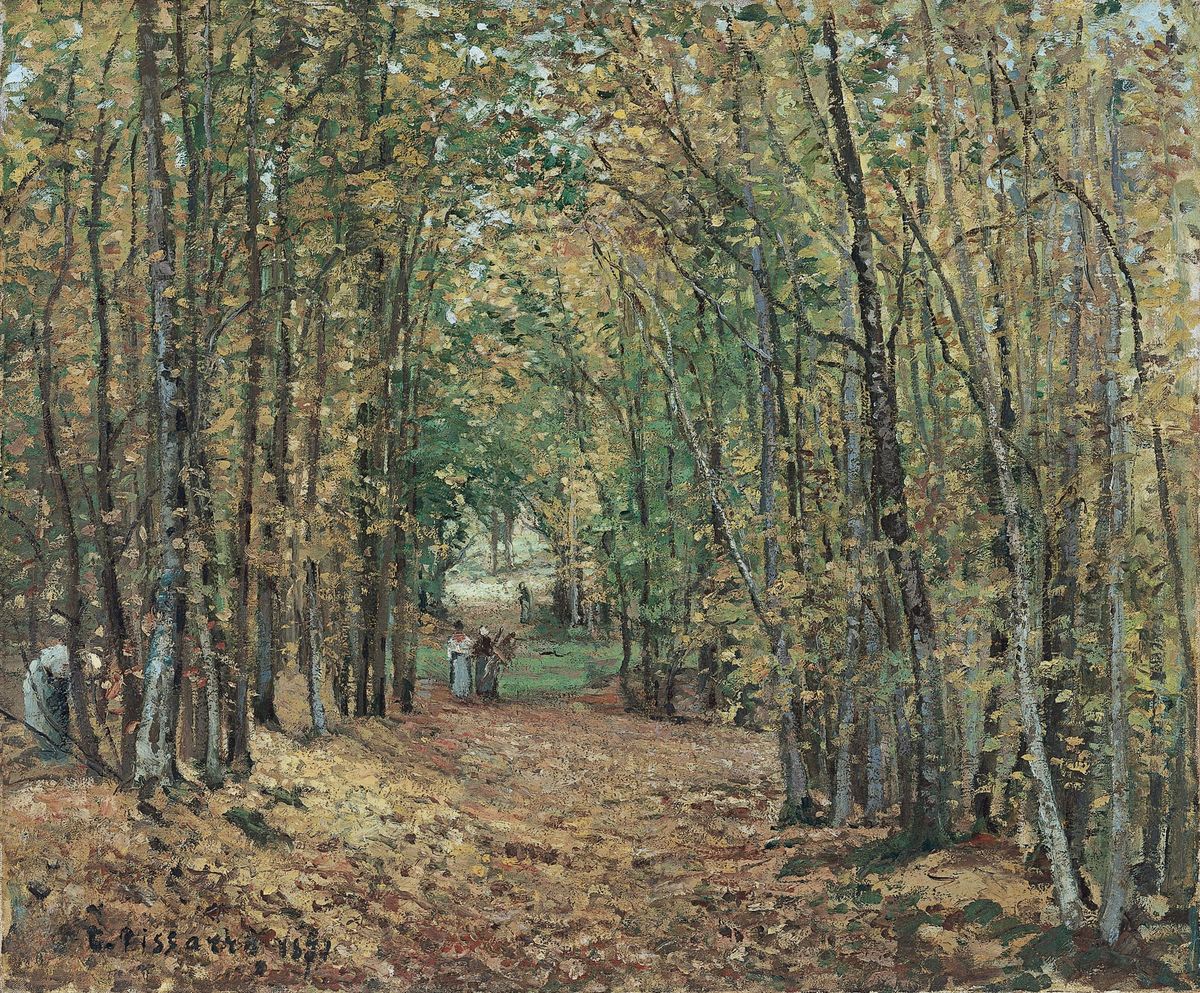
프랑스 인상주의의 위대한 스승이자 온화한 자연주의자였던 카미유 피사로(Camille Pissarro)가 1871년에 완성한 '마를리 공원의 오솔길(Allée dans le parc de Marly)'은 캔버스에 유채(Oil on canvas)로 제작된 귀중한 명작입니다. 가로 55.5cm, 세로 45cm 크기의 이 작품은 프랑스 근교의 울창한 숲이 품은 빛의 율동을 담아냈으며, 현재 개인 소장처(Private Collection)에 소중히 보관되어 있습니다.
이 그림에는 프로이센-프랑스 전쟁과 파리 코뮌의 격동기를 겪고 런던 망명에서 돌아온 직후, 피사로가 마주했던 감동적인 예술적 부활의 일화가 깃들어 있습니다. 1871년 여름, 전쟁으로 폐허가 된 루브시엔의 집으로 돌아온 피사로는 자신의 초기 캔버스 수백 점이 군홧발에 짓밟혀 파괴된 참상을 목격했습니다. 그러나 절망에 잠겨 붓을 놓는 대신, 그는 이웃 마을인 마를리 르 루아의 옛 왕실 공원을 매일같이 찾아가 깊은 숲속에 이젤을 펼쳤습니다. 과거 루이 14세가 권력을 과시하기 위해 조성했던 화려한 왕실 정원은 세월이 흘러 무성한 숲으로 변해 있었고, 피사로는 그곳에서 나무를 하거나 조용히 산책하는 평범한 사람들의 소박한 일상을 화폭에 담았습니다.
피사로는 런던 망명 시절 감탄했던 터너와 컨스터블의 대기 묘사를 프랑스 특유의 맑은 숲 풍경과 결합했습니다. 빽빽한 나뭇잎 사이로 부서져 내리는 햇살의 조각들을 표현하기 위해 그는 캔버스 위에 물감을 덧바르고 긁어내는 듯한 섬세한 터치를 구사했습니다. 훗날 미술사학자들은 이 작품을 두고 전쟁의 깊은 상처를 자연의 영원한 생명력으로 치유하며, 인상주의가 지향하는 야외 광선 회화(En plein air)의 구조적 완성을 선언한 기념비적인 전환점으로 평가하고 있습니다.
작품을 마주할 때 우리의 시선은 바스락거리는 낙엽이 카펫처럼 깔린 전면의 따스한 흙길을 딛고 자연스럽게 숲의 깊은 안쪽으로 걸어 들어가게 됩니다. 길 좌우로 솟아오른 웅장한 나무들의 수직선과 하늘을 둥글게 감싸 안은 잎사귀들의 터널을 따라 시선이 머물며, 숲속 가득 은은하게 번지는 금빛과 연둣빛 햇살의 입자들을 마주합니다.
이어 오솔길 끝에서 환하게 열리는 초록빛 양지와 그 길을 걷고 있는 작은 마을 사람들의 정겨운 실루엣으로 시선이 닿으며, 화면 저 너머로 이어지는 고요한 숲의 깊이감을 음미하게 됩니다.
이러한 시각적 흐름은 관람자의 무의식 속에 깊은 정서적 안정과 평온한 안도감을 불러일으킵니다. 화면을 가득 메운 부드러운 흙빛과 싱그러운 녹색의 조화는 일상의 피로와 시각적 긴장을 부드럽게 이완시켜 줍니다. 울창한 나무들이 아늑하게 감싸주는 자연의 품속에서 천천히 걸음을 옮기는 듯한 몰입감은, 관람자의 마음속 깊은 곳에 묵직한 평온과 함께 다시 일어설 수 있는 따스한 회복의 위로를 선물합니다.
Allée in the Parc de Marly - Allée dans le parc de Marly
Painted in 1871 by Camille Pissarro, the revered mentor and foundational pillar of French Impressionism, Allée in the Parc de Marly (Allée dans le parc de Marly) is an oil on canvas masterwork measuring 45 by 55.5 cm. This luminous woodland scene from the artist's pivotal post-war period is held in a prestigious private collection.
Behind this tranquil canvas lies an inspiring tale of emotional resilience and artistic rebirth following the turmoil of the Franco-Prussian War. Returning to Louveciennes in the summer of 1871 after his exile in London, Pissarro discovered the devastating loss of nearly all his early canvases, which had been destroyed by occupying soldiers. Refusing to succumb to grief, he carried his easel to the nearby Parc de Marly, an overgrown former royal estate once designed for King Louis XIV. Where kings once paraded in absolute grandeur, Pissarro celebrated the humble presence of local villagers gathering firewood and strolling through the quiet, sun-dappled groves.
Drawing inspiration from the atmospheric innovations of Turner and Constable that he had studied in England, Pissarro developed an intricate, layered brushwork to capture the trembling vibrance of light filtering through the dense canopy. Art historians widely celebrate this painting as a triumphant milestone in nineteenth-century landscape painting, demonstrating how the master turned a scene of historical weight into an intimate sanctuary of light, hope, and natural endurance.
Upon viewing the canvas, the spectator's gaze is effortlessly drawn along the warm, leaf-strewn forest floor in the foreground, stepping directly into the shaded embrace of the ancient trees. Following the upward rhythm of the slender, soaring trunks, our attention travels through the arching canopy of shimmering golden and emerald foliage that filters the midday sun.
The eye then gently settles upon the sunlit clearing in the distance, where the tiny, charming silhouettes of figures walk peacefully along the path, completing a harmonious spatial journey into the secluded heart of the woods.
This visual progression awakens a profound sense of psychological security and serene restoration within the subconscious. The comforting structure of the arched trees acts as a protective haven, easing daily stress and inviting mindful breathing. Experiencing the quiet vitality of the sunlit forest nurtures the spirit with timeless serenity, grounded inner peace, and the enduring comfort of nature.
본 리뷰에서 작품을 제외한 컨텐츠의 저작권은 팔렛트제주에 있습니다.
"퍼블릭도메인 고전명화"를 제외한 모든 창작 콘텐츠는 저작권법 제4조 및 제10조에 의거하여 보호됩니다. 무단 도용시 저작권법 제136조(벌칙)에 의거, 당사의 사전 서면 승인 없는 저작권 침해 행위를 금지합니다.