클레오파트라 Cleopatra
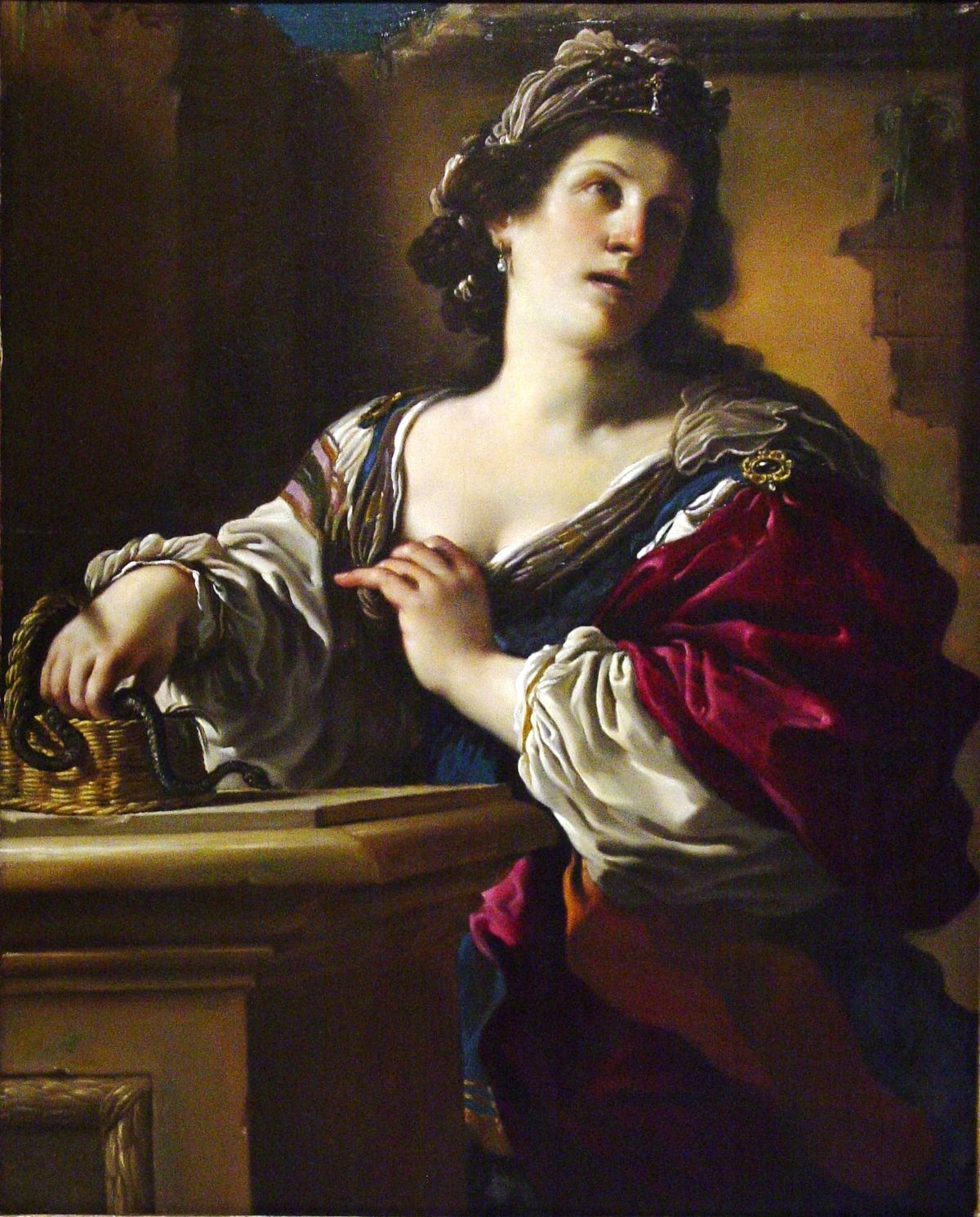
17세기 이탈리아 바로크 회화의 거장 조반니 프란체스코 바르비에리, 널리 귀에르치노(Guercino, 1591–1666)로 불리는 화가가 1648년경 완성한 유화 클레오파트라(Cleopatra, 또는 Cleopatra with the Asp, 이탈리아어: Cleopatra)는 116.0 cm × 92.5 cm 크기의 캔버스에 유채로 그린 대표적인 역사 인물화 걸작입니다. 현재 이탈리아 제노바의 스트라다 누오바 박물관 팔라초 로소(Musei di Strada Nuova - Palazzo Rosso, Genoa) 또는 로마 카피톨리니 미술관(Musei Capitolini, Rome)에 소장되어 있습니다.
바구니 속 모조 뱀과 화실에서 벌어진 깜짝 비명 소동
1640년대 후반 볼로냐에서 최고의 명성을 누리던 귀에르치노는 고대 이집트 프톨레마이오스 왕조의 마지막 여왕 클레오파트라의 비극적인 최후를 화폭에 담아내고자 깊은 고뇌에 빠졌습니다. 로마의 옥타비아누스에게 패배한 뒤 로마로 끌려가 굴욕적인 포로 행진을 겪느니, 스스로 독사를 통해 목숨을 끊어 여왕의 자존심과 품위를 지키려 했던 여인의 비장한 영혼을 그리고 싶었습니다. 화가는 웅장한 대리석 탁자 곁에 과일 바구니를 놓고, 화려한 보석 머리장식과 진홍빛 벨벳 망토를 두른 모델을 세운 뒤 맹독을 품은 독사를 손에 쥐는 긴장된 순간을 연출했습니다.
이 그림을 준비하던 날, 화실에서는 뭉클하면서도 웃음이 절로 나오는 소동이 벌어졌습니다. 귀에르치노는 여왕이 바구니 속 무화과 잎사귀 사이에 숨겨둔 독사 코브라를 꺼내어 자신의 가슴으로 가져가는 찰나의 공포와 결연한 표정을 실감 나게 포착하려 했습니다. 실감 나는 연출을 위해 화실 조수가 가죽과 철사로 정교하게 만든 가짜 뱀을 바구니에 넣어두었는데, 모델이 손을 집어넣는 순간 장난기 많은 조수가 바닥에서 실을 잡아당겨 모조 뱀을 꿈틀거리게 만들었습니다.
가짜인 줄 알면서도 손끝에 닿은 차가운 감촉에 깜짝 놀란 모델이 외마디 비명을 지르며 뒤로 물러섰고, 뱀이 튀어나오는 바람에 탁자 위의 바구니가 덜컹거렸습니다. 조수의 짓궂은 장난에 화실 안은 한바탕 웃음바다가 되었고, 모델은 가슴을 쓸어내리며 허탈한 웃음을 지었습니다. 귀에르치노는 껄껄 웃으며 조수를 가볍게 나무랐지만, 놀란 가슴을 진정시키며 숨을 고르는 모델의 살짝 벌어진 입술과 흔들리는 눈빛이야말로 죽음을 앞둔 여왕의 두려움과 결단을 보여줄 최고의 표정임을 직감했습니다. 화가는 진주 귀걸이의 영롱한 반사광, 진홍빛 벨벳 망토의 묵직한 주름, 순백의 실크 소매, 그리고 여인의 가슴을 향해 다가가는 검은 뱀의 비늘 질감까지 놀라운 정밀함으로 캔버스에 담아냈습니다. 사시라는 신체적 결함을 딛고 빛과 어둠의 완벽한 조화로 인간 영혼의 가장 극적인 순간을 포착해 낸 거장의 원숙한 예술혼이 이 고요한 화폭 속에서 영롱하게 빛나고 있습니다.
하늘을 향한 비장한 눈빛에서 바구니 속 독사와 진홍빛 벨벳으로, 시선의 심리적 여정
그림을 마주하는 순간 관람객의 무의식적 시선은 화면 상단 짙은 그림자 속에서 은은한 빛을 받아 눈부시게 밝게 빛나는 클레오파트라의 우윳빛 목덜미와 살짝 벌어진 입술, 그리고 하늘을 향해 치켜뜬 촉촉한 눈망울로 가장 먼저 빨려 들어갑니다. 다가올 죽음의 공포를 억누른 채 자신의 운명을 신에게 맡기려는 여왕의 애절하면서도 당당한 표정은 보는 이에게 깊은 시각적 전율과 함께 숨 막히는 긴장감을 선사합니다.
이어 시선은 여인의 떨리는 오른손으로 이동하여, 대리석 탁자 위 고리버들 바구니에서 기어 나오는 가느다란 검은 독사를 쥐고 있는 손가락 마디로 옮겨갑니다. 차가운 뱀의 몸통통을 쥐고 자신의 가슴 쪽으로 끌어당기는 조심스럽고도 비장한 손놀림을 확인하는 순간, 관람객은 비극적인 결말을 향해 멈추지 않고 흘러가는 역사의 순간 속으로 온몸이 빨려 들어가게 됩니다.
마지막으로 시선은 여인의 가슴을 가린 순백의 실크 셔츠와 어깨에 드리운 화려한 진홍빛 벨벳 망토의 풍성한 주름을 지나, 머리에 얹힌 정교한 보석 터번과 대리석 기둥의 차가운 나뭇결에 멈춥니다. 서늘한 궁전 안을 감도는 침묵과 굴욕 대신 죽음을 선택한 고귀한 인간의 마지막 존엄성을 마주하며, 관람객은 유한한 삶 속에서도 꺾이지 않는 영혼의 위엄과 귀에르치노가 건네는 묵직한 예술적 감동을 가슴 깊이 마주하게 됩니다.
17세기 이탈리아 바로크 역사 인물화의 정점과 조형적 완성도, 미술계의 평가
미술계는 클레오파트라를 귀에르치노가 후기 볼로냐 고전주의의 단아한 절제미와 특유의 감성적인 테네브리즘 명암법을 가장 완벽하게 결합하여 탄생시킨 불멸의 걸작으로 평가합니다.
여왕의 부드러운 살결, 벨벳의 묵직한 광택, 바구니의 거친 결, 그리고 보석과 진주의 투명한 반사광을 극도로 섬세한 명암 대비로 완벽하게 구현했을 뿐만 아니라, 죽음이라는 비극적 주제를 자극적인 공포 대신 숭고한 고전적 비장미로 승화시켰기 때문입니다. 고대 역사의 비극 속에서 인간의 흔들림 없는 품격을 찬양했던 귀에르치노의 이 서정적인 화폭은, 오늘날까지도 전 세계 수많은 감상자들에게 깊은 감탄과 잊을 수 없는 시각적 전율을 전해주는 불멸의 명작으로 손꼽히고 있습니다.
Cleopatra
Painted around 1648 in Bologna by the preeminent Italian Baroque master Giovanni Francesco Barbieri, universally celebrated as Guercino (1591–1666), Cleopatra (also titled Cleopatra with the Asp, Italian: Cleopatra) is an oil on canvas measuring 116.0 cm × 92.5 cm (45.7 in × 36.4 in), preserved in the distinguished collection of the Musei di Strada Nuova - Palazzo Rosso in Genoa, Italy.
The Prop Serpent in the Fig Basket and the Studio Fright Commotion
During the late 1640s in Bologna, Guercino dedicated his mature creative energies to monumental historical heroines from antiquity, focusing upon Queen Cleopatra VII, the last active ruler of the Ptolemaic Kingdom of Egypt. Following her defeat by Octavian, Cleopatra chose suicide by the venomous bite of an asp rather than submit to the public humiliation of a Roman triumphal procession. Guercino sought to portray the queen not merely as a tragic spectacle, but as a sovereign ruler preserving her inviolable pride and regal dignity in the face of inevitable mortality. The master arranged a classical marble pedestal with a woven fig basket in his atelier, dressing his model in an embroidered jeweled headdress and a plush crimson velvet mantle.
A delightfully memorable incident occurred while preparing the sittings for this composition. Eager to capture the delicate psychological threshold between mortal terror and heroic resolve as the queen reaches for the hidden serpent, Guercino had his workshop assistant craft a realistic prop snake using articulated leather and wire. When the model reached her hand into the basket, the mischievous assistant gently pulled a hidden wire from beneath the table, causing the coiled prop to spring upward toward her fingers.
Caught by surprise despite knowing the prop was artificial, the model gasped and recoiled with a startled cry, shaking the table. The atelier dissolved into hearty laughter as the assistant apologized, but Guercino was immediately struck by the authenticity of her parted lips, trembling neck, and upturned eyes as she recovered her breath. The master worked with extraordinary precision, recording the luminous sheen of the pearl earrings, the heavy sculptural folds of the ruby velvet drapery, the crisp white chemise, and the glistening scales of the asp coiled around her wrist. Transforming a harrowing historical suicide into a sublime visual poem, Guercino imbued this canvas with profound emotional resonance.
Subconscious Trajectory of the Gaze: From Upturned Countenance to the Coiled Asp
The observer's subconscious gaze is immediately magnetized by the upper register, drawn to the luminous, porcelain skin of Cleopatra's face and throat illuminated against the deep interior shadows. Her parted lips, upturned eyes seeking heavenly deliverance, and the ornate jeweled headdress framing her dark hair establish an instant focal point of regal majesty, tragic vulnerability, and resolute defiance.
The visual path then descends along her softly modeled left arm resting across her breast to her right hand, which reaches into the woven wicker basket on the marble plinth. Taking in the tactile realism of her fingertips gripping the dark, undulating serpent as it prepares to strike, the viewer directly experiences the chilling physical suspense of the final act.
Finally, the visual trajectory sweeps across the voluminous, shimmering folds of her crimson velvet wrap and the gathered sleeves of her white linen chemise, before resting upon the carved classical pedestal and the atmospheric architecture in the background. Observing the harmonious equilibrium between dramatic chiaroscuro, rich textural contrasts, and psychological truth, the spectator perceives the timeless nobility of sovereign dignity and the enduring aesthetic solace Guercino embedded within the monumental canvas.
The Monument of Bolognese Historical Realism: Critical Legacy
Art historians revere Cleopatra as a consummate masterpiece of Guercino’s mature period, demonstrating his synthesis of the classical balance of Guido Reni with his own signature atmospheric chiaroscuro.
By rendering delicate textural distinctions across porous marble, shimmering velvet, translucent pearls, and serpentine scales within a unified lighting scheme, Guercino elevated a historical catastrophe into an exquisite aesthetic meditation. This magnificent historical canvas stands as an inspiring testament to the master's enduring creative genius, celebrating the poetic power of human dignity and the transformative grace of living art.
본 컨텐트의 저작권은 팔렛트제주에 있습니다. 허가없는 무단전제를 금지합니다.
Copyright © Palette Jeju. All rights reserved. Unauthorized reproduction or redistribution is strictly prohibited.