클라우디우스 시빌리스의 맹세 - The Conspiracy of Claudius Civilis
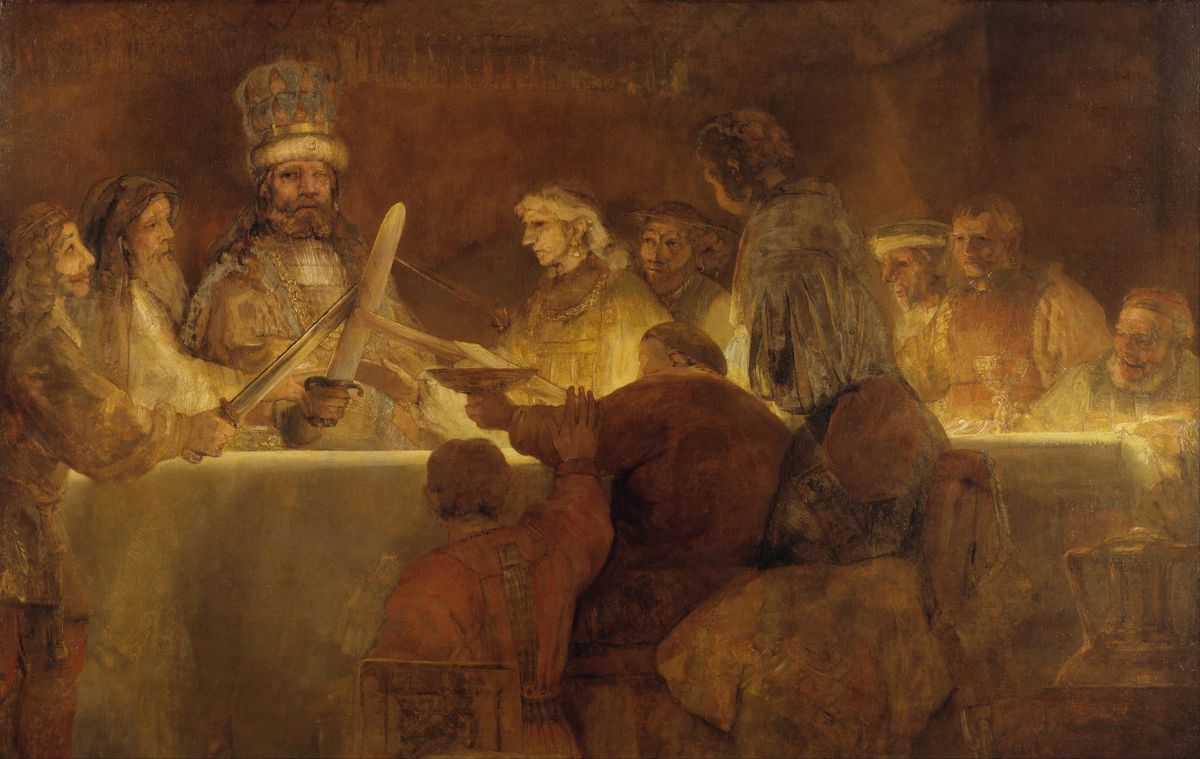
1661–1662년 17세기 네덜란드 미술의 거장 렘브란트 반 레인(Rembrandt van Rijn)이 제작한 유화 작품 《클라우디우스 시빌리스의 맹세》는 말년의 거칠고 거친 임파스토 기법과 극적인 빛의 연출이 정점에 달한 역사화의 불멸의 명작으로, 현재 스톡홀름 국립미술관(Nationalmuseum, Stockholm)에 원본 유화가 소장되어 있으며 실제 크기는 약 196 × 309 cm입니다.
이 화면은 로마 제국의 압제에 맞서 일어난 바타비아족(네덜란드인의 조상)의 수장 클라우디우스 시빌리스(Claudius Civilis)가 어두운 숲속 연회장에서 부족장 및 동맹자들을 모아놓고 칼 끝을 맞대며 로마에 맞설 신성한 반란의 맹세를 나누는 순간을 렘브란트 특유의 극적인 명암대비법(키아로스쿠로)으로 포착해 낸 명작입니다. 화가는 화면 좌측 상단에서 높다란 왕관과 단안(외눈)을 드러낸 채 거대한 칼을 쥐고 있는 시빌리스의 자태와, 탁자 아래에서 뿜어져 나오는 신비로운 광채, 그리고 칼끝을 맞대며 결의를 다지는 족장들의 모습을 묵직하고 거친 붓터치와 거대한 캔버스 위에서 부각시켰습니다.
작품 속에는 새롭게 건설된 암스테르담 시청사(현 왕궁)의 대형 장식화로 주문 제작되었다가 단 몇 달 만에 철거되고 잘려 나간 비극적이고 드라마틱한 비하인드 스토리가 흐릅니다. 네덜란드 공화국의 독립 역사와 자부심을 상징하기 위해 기획된 이 대작은 원래 5 × 5 m에 달하는 거대한 규모였습니다. 그러나 당대 시의회가 요구했던 매끈하고 화려한 고전주의 양식과 달리, 렘브란트는 외눈박이 수장 시빌리스의 야성적이고 사실적인 외모와 거칠게 짓뭉갠 물감 질감, 거친 일상의 기품을 그대로 담아냈습니다. 결국 작품은 수용되지 못하고 반납되었으며, 렘브란트는 이 그림을 판매하기 위해 중앙의 핵심 인물군만을 과감하게 절단하여 현재의 구도로 재구성했습니다.
후대 평단과 관객들은 이 잘려진 단편을 렘브란트 말년 예술이 보여주는 표현주의적 붓질과 빛의 미학이 도달한 최고의 정점이자, 불완전함 속에서 오히려 극대화된 숭고한 영웅주의의 결정체로 평가합니다. 테이블 밑에서 터져 나오는 황금빛 반사광과 동맹자들의 손에 쥐어진 칼날의 날카로운 교차, 그리고 야성적인 질감은 관객에게 시대를 초월한 압도적인 긴장감과 깊은 정서적 울림을 선사합니다.
이 그림을 마주하는 관람객의 무의식적 시선은 가장 강렬한 시각적 중심을 이루는 화면 좌측, 높다란 거대 왕관을 쓰고 한쪽 눈을 잃은 채 정면을 응시하는 클라우디우스 시빌리스의 웅장한 얼굴과 그가 거머쥔 기다란 칼날로 가장 먼저 끌려갑니다. 거친 역사적 시련 속에서도 고귀한 결의를 품은 수장의 모습은 관람객의 마음에 묵직한 시각적 중심과 숭고한 숙연함을 안겨줍니다.
이어 시선은 시빌리스의 칼날과 교차하며 맹세를 다지는 동맹자들의 칼끝을 따라 우측으로 이동하여, 테이블 중앙 아래에서 위로 솟구치는 신비로운 황금빛 광채와, 잔을 들어 올리거나 칼을 맞대는 족장들의 거칠고 당당한 포즈로 자연스럽게 이동합니다. 두꺼운 임파스토 붓터치로 올려진 물감의 양감과 빛의 반사광은 화면 전체에 팽팽한 서사적 긴장감과 거대한 조형적 안정감을 더해줍니다.
마지막으로 시선은 인물들 뒤편을 높고 웅장하게 에워싸고 있는 어두운 숲과 연회장의 묵직한 음영 속으로 낙하하여 정착합니다. 이러한 무의식적 시선의 흐름은 민족의 운명과 신성한 결의가 교차하는 거룩하고 웅장한 역사적 현장으로 감상자를 자연스럽게 인도하며, 마음에 닿는 차분하고 정갈한 여운을 오래도록 남깁니다.
In 1661–1662, Rembrandt van Rijn, one of the paramount masters of the Dutch Golden Age, created the monumental historical masterpiece titled "The Conspiracy of Claudius Civilis." Preserved in the Nationalmuseum in Stockholm, this remaining oil canvas measures approximately 196 × 309 cm. This artwork finely captures the sacred oath of the Batavian rebellion against Rome through an extraordinary, unmatched mastery of late-period impasto, expressive brushwork, and atmospheric light.
The painting visually manifests the Batavian leader Claudius Civilis—depicted frontally wearing an imposing crown and displaying his lost eye with raw candor—joining swords with his chieftain allies across a glowing banquet table in a sacred grove. Historical context reveals the dramatic genesis of this canvas; commissioned as the largest painting for the new Amsterdam Town Hall to celebrate Dutch national identity, the original composition measured an astounding five by five meters. However, Rembrandt's unsparing realism, rough paint handling, and rejection of idealized classical decorum led to the canvas being returned. To make the painting salable, Rembrandt personally cut down the work to focus solely on the intense central nocturnal oath.
Art historians and critics continuously extol this majestic fragment as one of the ultimate triumphs of Rembrandt's late career, celebrating his ability to evoke ancient mythic power through glowing golden light and heavily applied paint layers. The striking contrast between the radiant, internal illumination glowing from beneath the white tablecloth, the glinting steel of the crossed swords, and the surrounding atmospheric gloom creates an enduring atmosphere of sacred gravity and emotional permanence.
The moment an observer encounters this artwork, their gaze is subconsciously drawn straight to the majestic, crowned silhouette of Claudius Civilis standing on the left, holding his broadsword at the center of the oath. His resolute, unblinking presence immediately diffuses tension, instilling a comforting sense of heroic fortitude and quiet composure.
Next, the eye glides smoothly along the fan of clashing sword blades toward the right, tracing the robed chieftains leaning over the glowing table and reaching out with their goblets and weapons. The rich, tactile definition of the thick impasto paint and radiant light endows the scene with monumental physical weight and structural clarity.
Finally, the viewer's gaze drifts past the dark figures gathered on the far right before coming to rest upon the shadowy background of the hall. This natural visual journey guides the spectator into a state of quiet, reverent reflection, leaving a lasting impression of courage, unity, and timeless peace.
본 리뷰에서 작품을 제외한 컨텐츠의 저작권은 팔렛트제주에 있습니다.
"퍼블릭도메인 고전명화"를 제외한 모든 창작 콘텐츠는 저작권법 제4조 및 제10조에 의거하여 보호됩니다. 무단 도용시 저작권법 제136조(벌칙)에 의거, 당사의 사전 서면 승인 없는 저작권 침해 행위를 금지합니다.